Home ›
Home & Kitchen › Why an Oxygen Absorber Is Sized to the Void, Not the Bag
Home & Kitchen
Why an Oxygen Absorber Is Sized to the Void, Not the Bag
PBy the Pickpedia Team·5 picks compared·Last verified October 2026
Affiliate disclosure: As an Amazon Associate, Pickpedia earns from qualifying purchases. Links on this page are paid links, and we may earn a commission at no extra cost to you. This never affects our picks or scores.
This page contains affiliate links. If you buy through one we may earn a
commission, at no cost to you.
Larvae in a seed tub almost always means the storage was airtight and the oxygen was not
removed, and the reason the oxygen was not removed is usually an absorber matched to the wrong
number. There is one identity behind this and it is worth carrying around: the capacity an
absorber needs is 0.2095 multiplied by the void fraction of the packed food multiplied by the
container volume. Oxygen is 20.95 percent of air by volume, the air sits only in the
spaces between the pieces, and the void fraction is the term nobody publishes and nobody
estimates.
Which turns a shopping question into an arithmetic one with a surprise in it. Put the same
300 cubic centimetre absorber in the same published 3.6 litre jar and it leaves 0.81
percent oxygen under rice and 8.67 percent under penne. A factor of 10.7, and the only
thing that changed is the shape of the food. Insects do not notice the second case at all.
The rating is a volume of oxygen, not a volume of bag
Start with the pouch, because it is where the two published numbers are. A
Wallaby bundle of 100 oxygen absorbers rated
at 300cc with ten MRE Mylar bags publishes bags of 6.5 by 8 inches at 7.5 mil, absorbers that
ship in heat sealed packs of ten and are never repackaged, and a stated fit for powders, spices,
grains, beans, pasta, cereal and freeze dried foods.
A flat pouch of width W fills out to roughly a cylinder of circumference twice W, so the radius
is W divided by pi, which is 2.069 inches, and the cross section is 13.45 square inches. Allow an
inch and a half at the top for the heat seal above the zipper and the usable height is 6.5 inches:
87.42 cubic inches, or 1,432 cubic centimetres.
Now take 20.95 percent of that, which is the oxygen in the bag when it is completely empty.
300.1 cubic centimetres. Which is the rating of the absorber that ships with it, to
one part in three thousand.
That is not luck and it is not generosity. The absorber is sized to an empty bag of its
own size, which means the void fraction of whatever you put in it is the entire safety
margin. At that size the margin is enormous and the product never fails, which is exactly
why nobody learns the rule before they need it. Full record in our
review of the
Wallaby 300cc bundle, whose own drawbacks name the limit in five words: "300cc may be light for
very large containers."
The seal allowance is ours rather than published, and it is the one soft input in that
paragraph, so here is what moving it does. At one inch the empty bag carries 323.2 cubic
centimetres of oxygen and the absorber is 7 percent short. At two inches it carries 277.1 and the
absorber is 8 percent over. The rating sits inside the allowance either way, which is the honest
version of the result.
The void fractions, which are the whole of it
A void fraction is one minus the bulk density over the true density, and three representative
pairs cover most of what goes into a bag like this:
White rice, 850 against 1,450 kilograms per cubic metre, gives 0.414. Penne
pasta, 450 against 1,400, gives 0.679, because a tube is mostly a hole. A parrot
seed mix heavy in unhulled sunflower, 400 against 1,100, gives 0.636.
Run the identity on the 6.5 by 8 inch pouch and the oxygen comes out at 124 cubic centimetres
under rice, 191 under the seed mix and 204 under penne. One 300cc absorber covers all three with
between 47 and 142 percent to spare. At pouch size the question genuinely does not arise.
The cc rating is a volume of oxygen, so it has to
be matched to the air between the pieces of food rather than to the container. On a published
3.6 litre jar one 300cc absorber leaves 0.81 percent oxygen under rice and 8.67 percent under
penne, a factor of 10.7, and nothing changed but the shape of the food.
Where it breaks, on a volume somebody published
Step up one container size and the margin is gone. A
DWELLZA KITCHEN set of four flour and
sugar canisters publishes a uniform 3.6 litre capacity, which is 3.8 quarts, with side locking
lids on a black silicone gasket, food grade BPA free bodies that nest when empty, and reusable
labels with a marker so the contents can be switched. Its own drawbacks are candid about the
consequence of one size for everything: "Tiny ingredients still fill a large canister."
So put the same 300cc absorber in that jar.
Rice. Void 0.414 on 3,600 cubic centimetres is 1,490 of air, carrying 312 of
oxygen. The absorber is 3.9 percent short. The residue is 12 cubic centimetres in 1,490, which is
0.81 percent oxygen.
Penne. Void 0.679 is 2,443 of air, carrying 512 of oxygen. The absorber is 41.4
percent short. The residue is 212 cubic centimetres in 2,443, which is 8.67
percent.
The seed mix. Void 0.636 is 2,291 of air, carrying 480 of oxygen. Residue 180 in
2,291, which is 7.85 percent.
A factor of 10.7 between the first and the second, from one absorber in one jar. And the
threshold matters here in a way it did not in the pouch. Controlled atmosphere work on stored
product insects puts complete mortality at oxygen below roughly one percent held for one to three
weeks at room temperature, with two percent slow and five percent barely an inconvenience. That
band is a representative figure from the entomological literature rather than anything either
listing publishes, and it is the single input this page leans on hardest. On it, the rice jar works
slowly and the seed jar does nothing.
The fix is arithmetic rather than a different product. Two 300cc absorbers carry 600 cubic
centimetres against the seed mix's 480 and the penne's 512, and the bundle above ships a hundred of
them.
Inverting it gives the number you actually want
Divide the rating by 0.2095 times the void fraction and you get the largest container one
absorber can clear:
A 300cc unit covers 3,461 cubic centimetres of rice, 2,250 of seed mix and
2,110 of penne.
A 400cc unit covers 4,615, 3,000 and 2,814.
Two things fall out of those six numbers. The step from 300 to 400 buys exactly 1.333 times the
container, which is just the ratio of the ratings. The step from rice to penne costs 1.640.
The food moves the answer further than the product does, which is the reason a
rating on its own cannot be matched to a jar, and the reason both of the obvious upgrades, a bigger
absorber or a smaller jar, are weaker levers than simply noticing what you are storing.
The 400cc end of that comes from a
Wallaby 30 count set of MRE Mylar bags
supplied with 400cc oxygen absorbers, which publishes 15 mil total thickness with an internal
aluminium layer, a width of about 6.5 inches, BPA free food grade Mylar that is heat sealable above
the zipper, and tolerance of boiling water so the pouch doubles as the cooking vessel. Its own
drawbacks end on the sentence this entire page is an expansion of: "Absorber capacity must
match bag contents." That is exactly right, and it is the only listing in this catalogue
that says it. More in our
review of the Wallaby
400cc Mylar set.
Three gaps in our own records, one of which cannot be settled
Worth stating plainly, because they are the numbers a buyer would need.
The 400cc listing publishes a bag count and an absorber rating and no absorber
count. Thirty bags, 400cc each, and no statement of how many absorbers are in the box. On
a product sold as the two halves of one job, that is the figure that decides whether the set is
complete.
It also publishes a width and no height, about 6.5 inches, while the 300cc
bundle publishes 6.5 by 8. So the bag that ships with the larger absorber is the one whose size is
less specified, and the interior volume calculation above can only be done on the smaller one.
And the film thickness cannot be compared at all. One record says 15 mil total
and the other says 7.5 mil, and 15 is exactly twice 7.5. A pouch has two walls. So these may be a
single film described by two conventions, a two wall sum against a one wall figure, or they may be
genuinely different films. Neither record says which, so we are not arbitrating it, and it is the
one measurement on these two listings that a buyer cannot use. The same two conventions problem,
worked properly in a different category, is the subject of our page on
why two 5 micron filters are not the
same filter.
A smaller one in the right direction. A
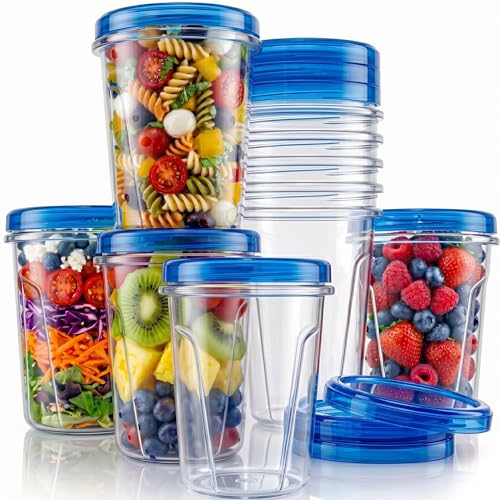
Tafura 10 pack of 32 ounce leakproof
freezer containers describes 32 ounces as "one quart, or one liter", and those differ by 5.7
percent. On this arithmetic 5.7 percent of the absorber's duty is well inside every other
uncertainty on the page, so it is a rounding rather than a contradiction. It is worth naming only
because the same record publishes the figure that matters more and gets it right: 32 ounces is 946
cubic centimetres, which under the seed mix carries 126 of oxygen, so one 300cc absorber covers
that tub two and a half times over. Our
review of the Tafura
containers has the rest, including the gap that the listing does not state exact
dimensions.
The other route, and why it stops somewhere else
A vacuum is the obvious alternative and it does not land in the same place. A
Gyreuni 95kPa vacuum sealer machine
publishes 95 kilopascals of suction across a 12 in 1 function set. Our page on
what kPa means on a vacuum sealer establishes
the conversion that makes the figure readable, that a suction number is a fraction of one fixed
atmosphere of about 101 kilopascals, so this page takes it rather than redoing it.
Ninety five out of 101.3 leaves 6.3 kilopascals absolute, which is 6.22 percent
of the gas that was there. The composition does not change, so the oxygen partial pressure is
0.2095 times 6.3, which is 1.320 kilopascals. Expressed the way the kill band is
expressed, as a sea level equivalent, that is 1.30 percent.
So a 95 kilopascal vacuum arrives at the top of the band rather than under it, and a correctly
sized absorber goes below it. More importantly the two residues are not the same kind of thing. A
pressure deficit is restored by any leak, and the atmosphere is pressing on the bag the whole time
looking for one. A chemical sink keeps absorbing until it is spent, so a small leak is consumed
rather than admitted. That is why the two are not interchangeable even where the arithmetic puts
them close, and it is also why the sealer is the better tool for a week in a freezer and the
absorber the better tool for a year on a shelf.
Our guide to
choosing oxygen absorbers for food
storage gets the direction right and stops short of the line: "Capacity is rated in cc. A 300cc
unit suits meal-size pouches, while larger buckets need higher totals." That is correct. The line
is at 2,110 to 3,461 cubic centimetres for a 300cc unit, and which end you land on is decided by
the food. Our page on
storing long term food in Mylar bags
safely says the same thing from the other side, "A 400cc absorber suits many meal-size pouches,
while larger buckets need more", and adds the sentence that is the best single check on all of
this: "About four-fifths of the air volume simply remains inside the pouch." That is 79.05 percent,
and it is right, and it is the identity at the top of this page read backwards.
The honest limit, and what it leaves undone
What is exact here is the identity and every ratio built from it. Required capacity is 0.2095
times the void fraction times the volume, so the 1.333 between the two ratings and the 1.640
between rice and penne are exact whatever the densities are, because they are ratios of the same
expression. The 1,432 cubic centimetre pouch interior follows from two published dimensions and one
stated assumption. The 3.6 litre jar and the 300 and 400 cubic centimetre ratings are published.
The 6.22 percent and the 1.320 kilopascals follow from one published suction figure and one
constant.
What is representative rather than published is the rest, and the list is short but load
bearing. The bulk and true densities of rice, penne and seed mix are typical values, not
measurements, and the void fraction is as good as they are. The inch and a half seal allowance is
ours. The filled pouch is treated as a cylinder, which overstates a pouch that is still slack and
understates one that is packed tight. And the one to two percent oxygen mortality band is from the
entomological literature rather than from any listing, which makes it the real limit on the central
result: move that threshold to three percent and the rice jar succeeds comfortably while the seed
jar still fails, and move it to five and both the single absorber cases that matter here are
rescued. The direction of the finding survives any plausible threshold, because the 10.7 between
the two residues does not depend on where the line is drawn. Which case falls on which side of it
does.
Two things this page deliberately does not compute. It does not give a shelf life in years for
anything, because that needs the film's oxygen transmission rate, and neither Mylar listing
publishes one, so the oxygen that gets back in over a year is simply unknown. And it does not
compute a time to mortality at any oxygen level, because that needs a named species and a
temperature, and the vault question names neither. The absorber's own activation is a third
unstated input worth flagging in the same breath: iron based absorbers need moisture to start
working, and nothing on either record says how much, so a very dry freeze dried product may reach
its rating slowly or not at all. The related mould argument, which runs on water activity rather
than on oxygen, is worked properly in our page on
why an airtight box does not stop
bread going stale, and the trick of turning a solid food into a bed volume through a packing
fraction is borrowed from
why 5 kilograms of meat needs a 12
litre pressure cooker, which does the same algebra pointed at liquid instead of air.
Three numbers to carry. The rating is a volume of oxygen, so multiply 0.2095 by the void
fraction by the container volume and compare. A 300cc absorber is sized to an empty bag of 6.5 by
8 inches and runs out somewhere between two and three and a half litres of packed food depending
entirely on what the food is. And if the honest answer to which food it is happens to be
unhulled sunflower seed, which is two thirds air, the jar that looked full is mostly the problem,
and the correct response is to use two absorbers instead of one.
Why an Oxygen Absorber Is Sized to the Void, Not the Bag at a glance
Airtight bag sealing of food to cut waste and freezer burn
Powerful 95kPa suction for tight seals
External sealer needs textured bags, an ongoing cost
Why you can trust this guide
We compared these picks using verified manufacturer specifications, current retailer listings, and patterns in owner feedback, alongside editorial research. We focus on measurable differences such as performance, capacity, usability, and build quality. Pickpedia does not present editorial research as laboratory testing, and we do not claim hands-on testing unless it was actually performed.
Best for batch-storing dry goods and freeze-dried foods
8.8/ 10 Pickpedia editorial score
This Wallaby bundle pairs 100 oxygen absorbers rated at 300cc with ten MRE Mylar bags around 6.5 by 8 inches at 7.5 mil. Absorbers ship in sealed sets of ten and are never repackaged, which the maker says preserves potency. The 300cc capacity suits meal-size pouches and airtight containers for powders, grains, beans and freeze-dried foods. Fill the bags with dry goods, add absorbers and store your own survival meals.
Best for organizing baking staples in matching canisters
8.4/ 10 Pickpedia editorial score
DWELLZA KITCHEN flour and sugar containers are a set of four matching 3.6L (3.8 qt) canisters for pantry staples. Side-locking lids with a black silicone seal keep air and water out to hold food fresh. Made from food-grade, BPA-free plastic, they stack to save space and are dishwasher safe. Reusable labels and a marker are included so you can switch contents anytime.
Wallaby MRE Mylar Bags let you assemble and store homemade ready-to-eat meals. The 30-count set pairs 15-mil-total pouches with 400cc oxygen absorbers, sized around 6.5 inches wide. An internal aluminum layer resists punctures and blocks air and moisture. Bags withstand boiling water, so you open, pour and reconstitute dry or freeze-dried meals. The BPA-free, food-grade Mylar is heat sealable above the zipper for backpacking and long-term storage.
Best for leakproof storage of soups and batch meals
8.4/ 10 Pickpedia editorial score
Tafura Freezer Storage Containers come as a 10-pack of 32-ounce tubs with leakproof twist-top lids. Each holds one quart, or one liter, and creates an airtight seal for soups, sauces, broths and batch meals. Made from BPA-free food-grade polypropylene, they are microwave and freezer safe and resist cracking. A uniform, stackable shape saves fridge, freezer and pantry space while keeping portions organized.
Best for Airtight bag sealing of food to cut waste and freezer burn
8.8/ 10 Pickpedia editorial score
A countertop external vacuum sealer machine with a 230W motor and strong 95kPa suction sealing in around 5 to 18 seconds, 12-in-1 settings with dry, moist and liquid modes, double seal strength and temperature options, app control and an included bag kit, for airtight food storage.
BrandGyreuni
TypeExternal bag vacuum sealer
Suction95kPa, 230W motor
Seal timeAbout 5 to 18 seconds
Modes12-in-1: dry, moist, liquid
SealingDouble seal, high/low temp
ControlButtons, digital display, app
KitBags included
ColourSilver
Pros
Powerful 95kPa suction for tight seals
Dry, moist and liquid modes
Double seal strength and temperature options
Fast 5 to 18 second cycles
App control plus on-machine buttons
Comes with bags to start
Cons
External sealer needs textured bags, an ongoing cost