Why a Pressure Cooker's Minimum Liquid Is Not Steam
PBy the Pickpedia Team·7 picks compared·Last verified October 2026
Affiliate disclosure: As an Amazon Associate, Pickpedia earns from qualifying purchases. Links on this page are paid links, and we may earn a commission at no extra cost to you. This never affects our picks or scores.
This page contains affiliate links. If you buy through one we may earn a
commission, at no cost to you.
Because the liquid at the bottom of the pot is not there to make steam, and the alert is
telling you about the only job it does have. Work out how much steam a six quart pressure
cooker actually holds at full pressure and the number is 4.82 grams. Less than a teaspoon.
Everything else in that cup of water is doing something else entirely, and when it stops
doing it, the machine complains.
This also answers the quieter question that sits behind every pressure cooker recipe,
which is how much water to put in for pasta or rice. The honest answer has two terms and
neither of them is steam.
The entire steam charge, weighed
Six US quarts is 5.6781 liters. Put a liter of water in the bottom and the headspace
above it is 4.678 liters.
Our page on
why steam cannot get hotter than
100 degrees establishes the operating band and this page takes its figure rather than
re-deriving it: 11.6 pounds per square inch of gauge pressure, which is 79.98 kilopascals,
is the top of the usual electric range. Add atmospheric and the absolute pressure is 181.31
kilopascals. Water boils there at 117.1 degrees Celsius, and saturated steam at that
pressure has a density of 1.030 kilograms per cubic meter.
So the mass of steam needed to fill the entire headspace is 4.678 liters times 1.030
kilograms per cubic meter, which is 4.82 grams. A US teaspoon is 4.93 milliliters. The whole
steam inventory of the appliance is 98 percent of one teaspoon of water, and its latent heat
is 4.82 grams times 2,215 kilojoules per kilogram, which is 10.67 kilojoules.
That is the number that makes the rest of the page obvious. Whatever the minimum liquid
is for, it is not for that.
What the cup of water is actually buying
An
Instant Pot Pro 6 Qt 10-in-1
electric pressure cooker publishes 1200 watts, 28 one-touch programs, a 6 quart
stainless inner pot and a 120 volt 60 hertz supply, and that wattage is what turns this from
a thermodynamics exercise into a clock. Lay out the energy needed to get the thing to
pressure with one liter of water and no food in it.
Heating the water from 20 to 117.1 degrees is one kilogram times 4.186 kilojoules per
kilogram per kelvin times 97.1 kelvin, so 406.5 kilojoules. Heating the inner pot, taking a
mass of 1.1 kilograms and a specific heat of 0.50 for stainless, is 53.4 kilojoules. Making
the steam is 10.67 kilojoules. The total is 470.6 kilojoules, and the split is 86.4 percent
water, 11.3 percent pot, and 2.3 percent steam.
At 1200 watts with 85 percent of it reaching the contents rather than the housing, that
is 461 seconds, or 7.69 minutes.
Now price a cup. Two hundred and thirty-six point six milliliters of water is 96.2
kilojoules of sensible heat, which at the same power is 94 seconds. One cup of water costs
you a minute and a half of preheating and supplies nine times more energy than the entire
steam charge requires. Per 100 milliliters it is 40 seconds.
And here is the part that is genuinely backwards from the way this gets explained. Go
from one liter to two. The water now takes 813.0 kilojoules instead of 406.5 and the total
climbs to 874.8 kilojoules, which is 14.29 minutes. The time to pressure has risen 86
percent. Meanwhile the headspace has shrunk from 4.678 liters to 3.678, so the steam the
cooker has to make has fallen from 4.82 grams to 3.79, a drop of 21.4 percent.
Adding water reduces the steam requirement and lengthens the time to meet it. The second
liter removes work from the one stage people believe it is there to supply.
The inventory is exact arithmetic on steam table values. At 181.31 kilopascals absolute,
which is the 11.6 pounds per square inch of gauge pressure our own page on steam
temperature establishes as the top of the usual electric band, saturation is 117.1 degrees
Celsius, saturated vapor has a density of 1.030 kilograms per cubic meter and a latent heat
of 2,215 kilojoules per kilogram. Multiplying a headspace by a density is not an estimate.
The published inputs are the 6 quart and 3 quart and 6.5 quart capacities, the 1,200 and 700
watt figures, and the 8 minute rice time. Representative rather than published: the inner
pot mass of 1.1 kilograms, which no listing states and which contributes 11.3 percent of the
preheat; the 85 percent of element power that reaches the contents rather than the housing;
the 0.50 kilojoules per kilogram per kelvin for stainless; and the 1.5 grams of water taken
up per gram of dry pasta. The two conclusions that do not depend on any of those are the
ones worth keeping: the steam charge is a handful of grams because it is a volume times a
vapor density, and it gets smaller as you add liquid because liquid displaces headspace. The
0.0356 square meter base area and the 33.7 kilowatts per square meter of flux are taken from
our own pressure cooker geometry page rather than recomputed here.
So what is the liquid for
Two things, and they are the two things that actually set how much to use.
It gets absorbed. This is the whole of the pasta answer. Dry pasta takes
up roughly 1.5 grams of water per gram of itself on the way to being cooked, so 500 grams of
dry pasta needs about 750 grams of water taken up into the food and gone from the pot. That
is 3.2 times the usual one cup minimum and 156 times the steam charge. Rice is the same
argument with a different ratio. If you put in one cup for a pound of pasta, the pasta wins
the argument with the base of the pot, and the alert is the pot telling you so.
It keeps the base wet. Our page on
why a pressure cooker is tall
and its pot is not works out the geometry this needs and this page takes those figures:
the pot's base is 0.0356 square meters and the flux through it at 1200 watts is 33.7
kilowatts per square meter. That element does not modulate the way a stovetop flame does.
The only thing holding the base at 117 degrees instead of running away is liquid water
touching it, because boiling water pins a surface to its saturation temperature and nothing
else in the pot can.
A two millimeter film of water over that base is 71.2 milliliters. At 1200 watts of pure
evaporation it would be gone in 131 seconds, which sounds alarming until you remember the lid
is shut. In a sealed vessel at steady pressure, net evaporation is zero: every gram that
leaves the surface condenses on the lid and runs back. So the film does not go anywhere, and
that is why a pressure cooker never needs topping up and an open pot does.
Put a number on the contrast. An open pot boiling at 2000 watts sheds 2000 times 600
seconds divided by 2,257 kilojoules per kilogram, which is 532 grams of water in ten
minutes. Half a liter, straight up the extractor. The sealed cooker sheds none, which means
every gram of water you add to a pressure cooker ends up in the dish. That, and not the
steam, is the reason the advice for pressure-cooked pasta is a fraction of the water you
would boil it in.
The published cook time that leaves out the longer half
A
Instant Pot Duo 6 Qt 7-in-1
electric pressure cooker publishes 13 one-touch smart programs, an 18/8 stainless pot
with a tri-ply bottom and six servings of capacity, and its record is unusually frank about
what the programs are: they "act mainly as preset timers for specific foods" and are "not
fully automatic, so adjust time by quantity and food type". That is exactly right, and the
arithmetic above says why the quantity term is so strong. A program is a timer that starts
after pressure is reached, and the thing it does not time is the 7.69 minutes.
A
Ninja HyperHeat 9-in-1 pressure
cooker is the listing that does the honest thing here, and it deserves saying. It
publishes 6.5 quarts, white rice "in as little as 8 minutes" and quinoa in as little as 5,
and then states plainly in its own drawbacks that "Rice and grain times exclude pressure
build/release". Most of this category leaves that unsaid.
What it cannot do is tell you how big the excluded part is, because it publishes no
wattage. Borrow the 1200 watts from the machine above and run a rice-sized charge in a 6.5
quart pot, two cups of rice and two cups of water, and the preheat comes to about 5.2
minutes. So an 8 minute published figure is roughly 61 percent of a 13.2 minute reality, and
the missing 39 percent is the part that scales with how much water you poured in. The
listing's honesty about the exclusion is worth more than the 8, and the number that would
make the 8 usable is the wattage it does not give.
A record that admits the gap, and one that cannot
A
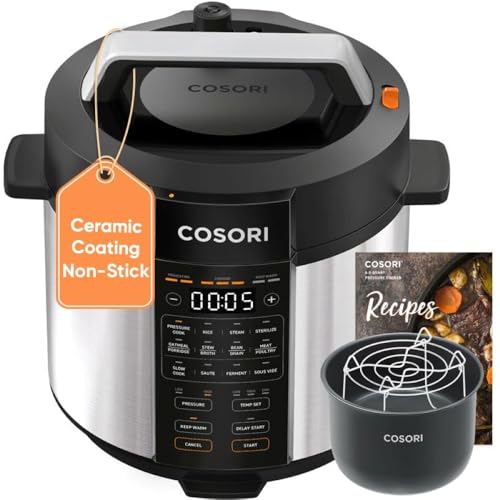
Cosori 6QT pressure cooker
is the clearest case of a listing knowing what it is missing. It publishes 13 modes against
a 9-in-1 badge, which is a pleasant direction for a discrepancy to run, a ceramic-coated
inner pot, 12 safety features, a steam release angled 30 degrees backward and a pot gap
widened by half an inch. Then its own drawbacks say: "No explicit mention of pressure levels
or wattage; check listing for details."
That single sentence is the most useful thing in the category, because it is true of
almost all of it. Not one of the seven pressure cookers we carry publishes an operating
pressure in any unit. Only two publish a wattage, and the two stovetop models cannot. None
publishes an inner pot mass, which is 11.3 percent of the preheat above and had to be
assumed. And not one of the seven publishes a minimum liquid volume, which is the single
number every recipe written for these machines depends on and the subject of the question
this page answers.
An
Instant Pot Duo 7-in-1 Mini
publishes 3 quarts, 700 watts, 11 programs and a stainless tri-ply pot, and it is worth
running the inventory on because the result is so small. Three quarts is 2.839 liters, and
with half a liter of water the headspace is 2.339 liters, which is 2.41 grams of steam.
Under half a teaspoon, for an entire appliance at full pressure. Its preheat on the same
assumptions is 242.6 kilojoules, or 6.8 minutes at 700 watts, and the steam is 2.2 percent of
it, the same fraction as the larger machine. The share does not change with size, because
both terms scale with volume.
On the 700 watt figure itself, that record lists as a drawback that "700-watt power may
heat slower than higher-wattage models". Our geometry page has already shown why that is
inverted at a proportionate fill, and the finding stands rather than being repeated here.
What the inventory adds is the smaller point that the Mini's steam charge is half the larger
machine's while its element is 58 percent of the size, so on the steam stage alone the small
machine is ahead.
Three speed claims that cannot be ranked
Four of the seven machines make a speed claim and they are not in the same units, which
is a problem that gets worse the closer you look.
Three of them, including both Instant Pots above, publish "up to 70% faster than slow
cooking". The Ninja publishes "up to 2 times faster than traditional slow cooking". Those
sound like the same kind of statement. They are not, because "70 percent faster" has two
ordinary readings and nothing on any listing says which is meant.
Read it as a 70 percent reduction in time and the speed ratio is one divided by
0.30, which is 3.333. On that reading the Instant Pots claim 3.333 and the Ninja claims 2,
so the Instant Pots win by 67 percent.
Read it as a 70 percent increase in speed and the ratio is 1.70, with time
falling 41.2 percent. On that reading the Ninja's 2 wins by 18 percent.
The ranking reverses. One phrasing, two readings, opposite answers, on a claim that three
of our seven machines carry in identical words. And then a
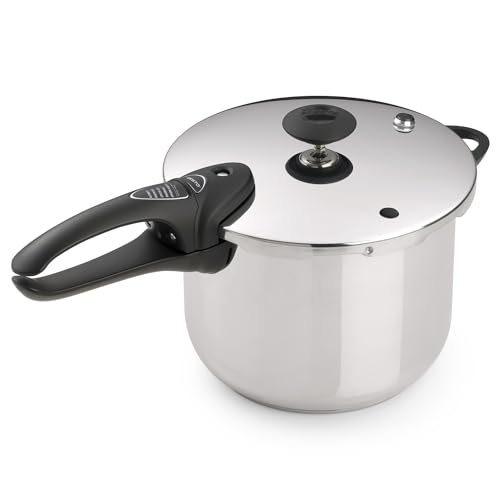
Presto 01365 6-quart stainless
steel pressure cooker publishes "3 to 10 times faster than traditional methods", which is
a third baseline: traditional methods means boiling and braising, not slow cooking, so its
range cannot be compared with either of the others even after you pick a reading.
What the physics allows is more than any of them claim, which is worth saying because it
means the claims are vague rather than inflated. Our page on
why a slow cooker low setting is a
wattage puts slow cooking at 85 to 95 degrees, and the steam page gives the conventional
Q10 band of 2 to 4 for food reactions. From 90 degrees to 117.1 is 27.1 kelvin, so the rate
ratio is somewhere between 2 to the power 2.71 and 4 to the power 2.71, which is 6.5 to 42.8.
Against boiling at 100 degrees the gap is 17.1 kelvin and the ratio is 3.3 to 10.7, which is
almost exactly the Presto's published 3 to 10. The stovetop model with no electronics has the
most defensible number on the shelf.
The stovetop case, and one claim nobody can check
The Presto is useful here for a second reason. It has no element, no board and no minimum
liquid problem of the electric kind, because the heat arrives through the base from a burner
you control, and its record notes it is "fully immersible and dishwasher safe" precisely
because there is nothing inside to protect. A burner you can turn down is a different machine
from a 33.7 kilowatt per square meter element you cannot, and the burn alert exists only on
the appliance that cannot modulate.
A
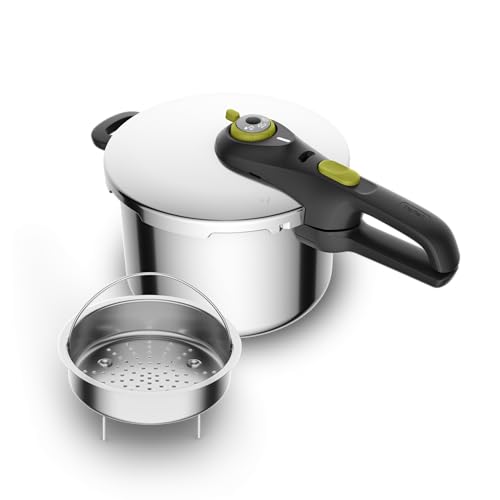
T-Fal Secure stainless steel
stovetop pressure cooker is the same idea at 6.3 quarts with a 5-point security system, a
rotating lock with an audible click, induction compatibility and two programs. It publishes
"up to 2x faster than conventional methods", which is a fourth phrasing of the speed claim
and the lowest number on the shelf for a machine that reaches the same temperature as every
other one here.
It also publishes the one figure across all seven listings that cannot be checked in
either direction: its vegetable program "preserves up to 80% of vitamin C in veggies". There
is no baseline named, no cooking time, no vegetable and no comparison method, so there is no
arrangement of numbers that would make it true or false. Every other claim on these seven
pages is at least the right shape to be tested. This one is not, and it is the only
percentage in the category that is about the food rather than the clock.
The honest limit, and the two numbers to take away
What is exact on this page is the inventory, and it is exact because it is a volume times
a density. At 181.31 kilopascals absolute, saturation is 117.1 degrees, saturated steam
weighs 1.030 kilograms per cubic meter and carries 2,215 kilojoules per kilogram. Multiply by
a headspace and you have grams. Nothing in that depends on the appliance, the food or the
recipe, which is why the 4.82 grams and the fact that it falls as you add liquid are the two
results worth keeping.
What is representative rather than published is most of the clock. The inner pot mass of
1.1 kilograms is not stated by any of the seven, and it is 11.3 percent of the preheat. The
85 percent of element power reaching the contents is a reasonable figure for an appliance
with a sleeved element and a plastic shell, and it scales every time on this page directly:
at 95 percent the 7.69 minutes becomes 6.88, and at 70 percent it becomes 9.34. The specific
heat of stainless at 0.50 and the 1.5 grams of water taken up per gram of dry pasta are both
representative. So read the minutes as the right size and the ratios as firm, which is the
same division as every other page here.
What this page deliberately does not compute is a cooking time for anything. That needs a
rate constant for the specific food and the specific texture you want, and not one listing in
this category publishes one, nor does any of them state a pressure that a rate could be
attached to. The Q10 band of 2 to 4 is wide enough that a ten minute boil maps to anywhere
between 56 seconds and three minutes under pressure, which is a factor of three, and quoting
a single figure out of that range would be inventing precision. Nor has this page said
anything about what is safe to cook or for how long, because that is not a question
arithmetic on a headspace can answer.
And the practical residue. For pasta or rice in one of these, the water you need is the
water the food will absorb, plus a shallow film to keep the base wet, and nothing at all for
steam. Everything above that is 40 seconds of preheating per 100 milliliters and it stays in
the pot, because a sealed vessel does not evaporate. If you are getting the burn alert, the
fix is almost never more total water: it is water that is free and in contact with the base
rather than locked up in something starchy sitting on it, which is why the standard advice to
layer liquid first and not stir the sauce in works, and why it works on a 1200 watt machine
more than on a burner. Our roundup of
electric pressure cookers worth the counter
space is the place to compare the machines themselves. Read the wattage first, because on
two of the seven it is the only number that connects a published cook time to a real one.
Why a Pressure Cooker's Minimum Liquid Is Not Steam at a glance
Instant Pot Pro 6 Qt 10-in-1 Electric Pressure Cooker
Families and meal preppers who want a versatile, fast cooking appliance.
10 cooking functions in one device 28 one-touch smart programs Cooks up to 70% faster than slow methods 6-quart capacity for up to 6 servings 1200 watts for quick preheating UL and ULC listed for safety
Bulky and heavy, requires ample storage Many programs can be confusing initially Some functions (sterilize, yogurt) may be rarely used Not ideal for small households or singles
Instant Pot Duo 6 Qt 7-in-1 Electric Pressure Cooker
Families and meal preppers who want a versatile, reliable multi-cooker.
7-in-1 functionality replaces multiple appliances Cooks up to 70% faster than slow cooking Stainless steel pot with tri-ply bottom for even heating and searing 6-quart capacity fits up to 6 servings 13 one-touch smart programs for convenience Easy to clean and maintain
Manual pressure release requires attention Interface is basic compared to newer models No Wi-Fi or app connectivity Slow cook function may not be as precise as dedicated slow cookers
Busy families who want quick, versatile meals without multiple appliances.
9-in-1 versatility replaces multiple appliances HyperHeat cooks up to 2x faster than traditional slow cooking 6.5-qt capacity fits a 4-lb chicken or 5-lb roast PFAS-free ceramic nonstick pot for easy cleanup Fast rice and grains: white rice in 8 minutes, quinoa in 5 minutes Space-saving design for everyday meals
Nonstick coating may wear over time Rice and grain times exclude pressure build/release No stainless steel pot option Some functions may require trial and error
Small to medium households wanting a versatile, safe, and easy-to-clean multi-cooker.
13 cooking functions in one appliance Safety-focused design with angled steam release and 12 safety features Ceramic-coated inner pot is non-stick and dishwasher-safe Fingerprint-resistant stainless steel housing Widened pot gap for easier cleaning Includes sous vide and ferment modes, which are uncommon at this level
Ceramic coating is less durable than stainless steel 6-quart capacity may be small for large households No explicit mention of pressure levels or wattage; check listing for details Dishwasher-safe parts may still require hand washing to preserve ceramic coating
Instant Pot Duo 7-in-1 Mini Electric Pressure Cooker
Singles, couples, and small households
Seven cooking functions in one compact unit 11 one-touch smart programs for easy operation Cooks up to 70% faster than slow cooking Stainless steel inner pot with tri-ply bottom for even heating Includes free app with over 1900 recipes UL and ULC listed for safety
3-quart capacity is small for larger meals 700-watt power may heat slower than higher-watt models Slow cooker function is limited by small size No advanced features like Wi-Fi or Bluetooth
Home cooks who want fast, efficient stovetop cooking and don't mind manual control.
Cooks 3-10x faster than traditional methods Includes stainless steel rack and 64-page recipe book Fully immersible and dishwasher safe 12-year limited warranty Stainless steel construction is durable Simple, classic design
Stovetop only, requires manual heat adjustment No digital controls or preset programs May have a learning curve for beginners Takes up stovetop space
Home cooks who want a safe, stovetop pressure cooker for faster meals and meal prep.
Cooks up to 2x faster than conventional methods. 5-point security system with audible lock confirmation. Two simple cooking settings for vegetables and meat. Includes a steam basket for added versatility. Stainless steel construction is durable and induction compatible. 6.3 quart capacity suits family meals and meal prep.
Stovetop use requires monitoring and adjusting heat. Only two cooking programs, less versatility than multi-function electric models. No built-in timer or automatic shutoff. May be heavier and bulkier than some electric models.
Why you can trust this guide
We compared these picks using verified manufacturer specifications, current retailer listings, and patterns in owner feedback, alongside editorial research. We focus on measurable differences such as performance, capacity, usability, and build quality. Pickpedia does not present editorial research as laboratory testing, and we do not claim hands-on testing unless it was actually performed.
Best for Families and meal preppers who want a versatile, fast cooking appliance.
8.8/ 10 Pickpedia editorial score
The Instant Pot Pro 6 Qt is a multi-functional electric pressure cooker with 10 cooking functions and 28 smart programs, making it a strong contender for family meals. It promises faster preheating and cooking compared to slow methods, and its 6-quart capacity suits up to six servings. While it excels in versatility, its size and feature set may be overkill for small households or beginners.
10 Cooking FunctionsPressure cook, slow cook, sous vide, sauté, steriliz
Customizable Smart ProgramTackle every recipe with 28 one-touch options coveri
Good Food Done FasterPreheat 20% faster and cook up to 70% faster compare
Family-Sized CapacityThe 6-quart capacity is perfect for up to 6 servings
Power Packed Performance1200 watts, 120 V 60 Hz, UL & ULC Listed
Pros
10 cooking functions in one device 28 one-touch smart programs Cooks up to 70% faster than slow methods 6-quart capacity for up to 6 servings 1200 watts for quick preheating UL and ULC listed for safety
Cons
Bulky and heavy, requires ample storage Many programs can be confusing initially Some functions (sterilize, yogurt) may be rarely used Not ideal for small households or singles
Best for Families and meal preppers who want a versatile, reliable multi-cooker.
8.8/ 10 Pickpedia editorial score
The Instant Pot Duo 6 Qt is a popular multi-cooker that combines seven cooking functions into one appliance. It offers 13 smart programs for one-touch cooking, and its stainless steel pot is durable and good for searing. The 6-quart size suits families or meal preppers. However, it lacks some advanced features like Wi-Fi or a sous-vide mode, and its interface may feel basic to some.
7 Cooking FunctionsPressure cook, slow cook, sauté, steam, make rice, y
Customizable Smart ProgramTackle every recipe with 13 one-touch options, from
Good Food Done FasterCook up to 70% faster compared to slow cooking metho
Pro-Grade Cooking PotCrafted from stainless steel (18/8) with a tri-ply b
Family-Sized CapacityThe 6-quart capacity is perfect for up to 6 servings
Pros
7-in-1 functionality replaces multiple appliances Cooks up to 70% faster than slow cooking Stainless steel pot with tri-ply bottom for even heating and searing 6-quart capacity fits up to 6 servings 13 one-touch smart programs for convenience Easy to clean and maintain
Cons
Manual pressure release requires attention Interface is basic compared to newer models No Wi-Fi or app connectivity Slow cook function may not be as precise as dedicated slow cookers
Best for Busy families who want quick, versatile meals without multiple appliances.
8.8/ 10 Pickpedia editorial score
The Ninja HyperHeat 9-in-1 Pressure Cooker combines multiple cooking functions in one appliance, promising faster cooking times with its HyperHeat technology. It has a 6.5-quart capacity, a PFAS-free ceramic nonstick pot, and can handle everything from pressure cooking to sous vide. While it excels at speed and versatility, its nonstick surface may be a concern for those who prefer stainless steel. It's a solid choice for families needing quick, everyday meals.
All-in-one Electric PressuReplace multiple appliances with one 9-in-1 multi co
Cook Up To 2x Faster*HyperHeat technology builds pressure quickly to spee
Family-sized 6.5 Qt CapaciCook for a crowd with a large-capacity pot that fits
Fast Rice And GrainsMake white rice in as little as 8 minutes or quinoa
Easy Cleanup, Pfas-free NoThe removable ceramic nonstick pot is made 100% PFAS
Pros
9-in-1 versatility replaces multiple appliances HyperHeat cooks up to 2x faster than traditional slow cooking 6.5-qt capacity fits a 4-lb chicken or 5-lb roast PFAS-free ceramic nonstick pot for easy cleanup Fast rice and grains: white rice in 8 minutes, quinoa in 5 minutes Space-saving design for everyday meals
Cons
Nonstick coating may wear over time Rice and grain times exclude pressure build/release No stainless steel pot option Some functions may require trial and error
Best for Small to medium households wanting a versatile, safe, and easy-to-clean multi-cooker.
8.8/ 10 Pickpedia editorial score
The Cosori Pressure Cooker 6QT offers a wide range of cooking functions, from pressure cooking to sous vide, in a single appliance. Its ceramic-coated inner pot and dishwasher-safe parts make cleanup easier, while the angled steam release and 12 safety features aim to reduce risk. However, the 6-quart capacity may not suit larger families, and the ceramic coating requires gentle handling to avoid chipping.
𝗦𝗮𝗳𝗲𝗿 𝗩𝗲𝗻𝘁𝗶𝗻𝗴 𝗗𝗲𝘀𝗶𝗴𝗻The Seal/Vent button away from the steam release val
𝗘𝗮𝘀𝘆 𝗧𝗼 𝗖𝗹𝗲𝗮𝗻Stainless steel, fingerprint-resistant housing, the
𝟭𝟮 𝗦𝗮𝗳𝗲𝘁𝘆 𝗙𝗲𝗮𝘁𝘂𝗿𝗲𝘀The pressure cooker is designed with a double-layer
Pros
13 cooking functions in one appliance Safety-focused design with angled steam release and 12 safety features Ceramic-coated inner pot is non-stick and dishwasher-safe Fingerprint-resistant stainless steel housing Widened pot gap for easier cleaning Includes sous vide and ferment modes, which are uncommon at this level
Cons
Ceramic coating is less durable than stainless steel 6-quart capacity may be small for large households No explicit mention of pressure levels or wattage; check listing for details Dishwasher-safe parts may still require hand washing to preserve ceramic coating
The Instant Pot Duo 7-in-1 Mini is a 3-quart electric pressure cooker that combines seven cooking functions in one appliance. It features 11 one-touch smart programs and a stainless steel inner pot, making it versatile for small households. While it cooks up to 70% faster than slow cooking, its small capacity limits batch cooking. It includes a free app with over 1900 recipes to help you get started.
7 Cooking FunctionsPressure cook, slow cook, sauté, steam, make rice, y
Compact Yet CapableA 3-quart capacity makes it perfect for small househ
Good Food Done FasterCook up to 70% faster compared to slow cooking metho
Pro-Grade Cooking PotCrafted from stainless steel (18/8) with a tri-ply b
Power-Packed Performance700 watts, 120 V 60 Hz, UL & ULC Listed.
Pros
Seven cooking functions in one compact unit 11 one-touch smart programs for easy operation Cooks up to 70% faster than slow cooking Stainless steel inner pot with tri-ply bottom for even heating Includes free app with over 1900 recipes UL and ULC listed for safety
Cons
3-quart capacity is small for larger meals 700-watt power may heat slower than higher-watt models Slow cooker function is limited by small size No advanced features like Wi-Fi or Bluetooth
Best for Home cooks who want fast, efficient stovetop cooking and don't mind manual control.
8.8/ 10 Pickpedia editorial score
The Presto 01365 is a 6-quart stainless steel pressure cooker designed for fast, efficient cooking. It promises meals 3 to 10 times faster than traditional methods, which is a significant time-saver. It comes with a stainless steel rack and a 64-page recipe guide, and it is fully immersible and dishwasher safe for easy cleaning. The 12-year limited warranty offers peace of mind, though it's important to note that this is a stovetop model requiring a compatible burner.
Fast & Efficient CookingCooks 3, 10x faster than traditional methods, saving
Includes Rack & Recipe BooComes with stainless steel rack and 64-page instruct
12-year Limited WarrantyLong-lasting performance backed by extended manufact
Pros
Cooks 3-10x faster than traditional methods Includes stainless steel rack and 64-page recipe book Fully immersible and dishwasher safe 12-year limited warranty Stainless steel construction is durable Simple, classic design
Cons
Stovetop only, requires manual heat adjustment No digital controls or preset programs May have a learning curve for beginners Takes up stovetop space
Best for Home cooks who want a safe, stovetop pressure cooker for faster meals and meal prep.
8.8/ 10 Pickpedia editorial score
The T-Fal Secure 6.3 qt pressure cooker promises faster cooking with a 5-point safety system and simple controls. It includes a steam basket and offers two cooking programs to preserve nutrients and tenderize meat. While it requires stovetop supervision, its robust stainless steel build and induction compatibility make it a versatile kitchen tool.
Dinner In Half The TimeCook up to 2x faster* with our Secure 6.3 quart pres
Designed With Your Safetythe Secure pressure cooker features a 5-point securi
Easy To UseTwo simple cooking settings optimize the cooking tem
Pros
Cooks up to 2x faster than conventional methods. 5-point security system with audible lock confirmation. Two simple cooking settings for vegetables and meat. Includes a steam basket for added versatility. Stainless steel construction is durable and induction compatible. 6.3 quart capacity suits family meals and meal prep.
Cons
Stovetop use requires monitoring and adjusting heat. Only two cooking programs, less versatility than multi-function electric models. No built-in timer or automatic shutoff. May be heavier and bulkier than some electric models.