PBy the Pickpedia Team·4 picks compared·Last verified October 2026
Affiliate disclosure: As an Amazon Associate, Pickpedia earns from qualifying purchases. Links on this page are paid links, and we may earn a commission at no extra cost to you. This never affects our picks or scores.
This page contains affiliate links. If you buy through one we may earn a
commission, at no cost to you.
Because there is no other way to make steam hotter than 100 degrees, and a steamer
that cannot get hotter than 100 degrees has no settings at all. The question treats
pressure as something the appliance adds on top of steaming. It is not an addition. Put
water in a sealed vessel and heat it, and the steam has nowhere to go, so the pressure
rises on its own. The only decision available to the designer is where to let the valve
open, and that decision is the entire temperature control.
At zero gauge pressure, steam is at 100.0 degrees. At 11.6 pounds per square inch,
the top of the usual electric range, it is 117.3. That 17.3 degrees is worth between
three and ten times the cooking rate, and it is the whole reason the lid locks.
Water and steam only coexist along one line
This is the fact the question runs into. Liquid water and its vapour can sit together
at one temperature for any given pressure and no other, and the relationship between the
two is fixed by physics rather than by design. It is the saturation curve, and you can
compute any point on it from the latent heat of vaporisation.
Anchoring at 100 degrees and 101.325 kilopascals, with a latent heat of 2,257
kilojoules per kilogram, the Clausius Clapeyron relation gives 115.6 degrees at 10.2
pounds per square inch of gauge pressure, 117.3 degrees at 11.6 pounds, and 121.2
degrees at 15. Those agree with published steam tables to within a tenth of a
degree.
So an open steamer basket over a pan is a 100 degree device. Not approximately: an
exactly 100 degree device, because the steam cannot be anything else while liquid water
is present and the lid is off. Turning the burner up makes more steam at 100 degrees.
There is no dial. A sealed vessel is the only way to get a steamer with a temperature
setting, and the setting is spelled in pounds per square inch.
Notice the shape of the curve as well, because it explains where the ceiling comes
from. Each further degree needs more pressure than the last, and the vessel has to get
heavier to hold it. That is why domestic cookers stop somewhere near 15 pounds rather
than carrying on: the metal mass climbs faster than the temperature does, and the last
few degrees are not worth what they take.
What 17 degrees is worth
Chemistry does not care much about temperature in a linear way. Reaction rates follow
an Arrhenius dependence, exponential in inverse temperature, which in food work is
usually written as a Q10: the factor by which a rate multiplies for every ten kelvin.
For the reactions that matter in cooking, starch gelatinisation, collagen hydrolysis,
pectin breakdown, Q10 runs somewhere between 2 and 4.
Run the 17.3 kelvin rise through that. A Q10 of 2 gives a rate multiplier of 3.25. A
Q10 of 3 gives 6.47. A Q10 of 4 gives 10.56. At the 21.2 kelvin rise available from a
15 pound stovetop pot, the same three assumptions give 4.29, 10.05 and 18.38.
Which makes a claim in one of our own listings worth checking, because figures like
it are usually indefensible. A
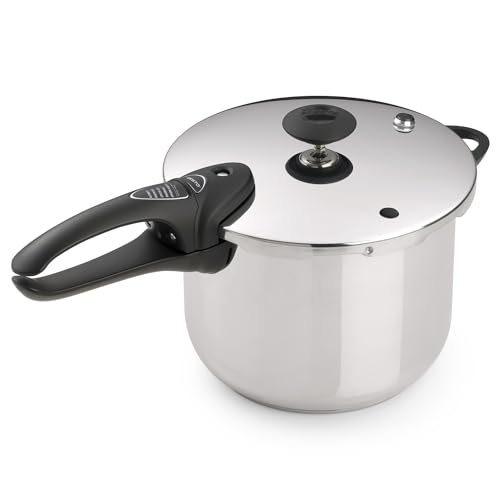
Presto 01365 6 quart stainless
steel pressure cooker states that it cooks meals "3 to 10 times faster than
traditional methods". Set against the band above, that is inside the range and, for a
stovetop pot, at the conservative end of it. Published multipliers are usually the
weakest sentence in a listing. This one is the arithmetic.
The same Arrhenius pattern turns up elsewhere on this site in a completely different
field. Our page on
what a 100,000 hour LED
rating actually promises works with the same law for lumen depreciation, where the
chemistry is a phosphor degrading rather than a collagen unwinding. Same exponential,
same habit of being written as a factor per ten degrees, opposite desired outcome.
Saturation temperatures are the Clausius Clapeyron relation anchored at 100 C and
101.325 kPa, with a latent heat of 2,257 kJ per kilogram and a gas constant of 461.5
joules per kilogram kelvin, and they agree with published steam tables to within a
tenth of a degree across this range. The 10.2 and 11.6 pound figures are the usual
operating band for an electric cooker and 15 is the long standing stovetop figure, none
of which any listing we carry states. Q10 is the conventional way of writing an
Arrhenius rate dependence in food work and 2 to 4 is the ordinary range, so the spread
in the second panel is real uncertainty rather than rounding. Build and release times
assume 1.5 litres of water, about a kilogram of stainless pot, and roughly 50 watts of
wall loss on an insulated electric body.
The second reason the lid locks, which nobody mentions
Temperature is the headline, and there is a quieter reason that matters for an
appliance running on a kitchen socket. Steam carries its latent heat with it. Every
kilogram that leaves a pot takes 2,257 kilojoules out of the building.
Put a number on that. An electric multicooker's element delivers roughly a kilowatt.
If all of it went into evaporation, that is 1,000 divided by 2,257,000, which is 0.443
grams of steam a second, or 1.60 kilograms an hour. An unsealed steamer is therefore a
machine that boils a litre and a half of water away every hour and runs its element flat
out to do it, because the energy is leaving as fast as it arrives.
Seal it and the steam stays. Once the vessel is at temperature the element has
nothing to supply but the heat leaking through the walls, which on an insulated body is
perhaps 50 watts. So sealing drops the steady draw by something like a factor of twenty,
and that is the difference between an appliance that can hold a long programme on a
120 volt socket and one that cannot.
A pressure cooker is the one appliance that reaches the conduction floor
Here is the part worth knowing if you have read our page on
why an air fryer
browns the crust before the middle cooks. That page works out that every
convection appliance is fighting a floor set by conduction through the food, and that no
fan or wattage gets past it. A pressure cooker is the machine that actually arrives
there.
The reason is condensation. When steam condenses on a cold surface it gives up all
2,257 kilojoules per kilogram at the surface, which makes the heat transfer coefficient
enormous, in the region of 5,000 to 10,000 watts per square metre kelvin against the 70
of an air fryer. For a 40 millimetre potato with a conductivity of 0.55, that puts the
Biot number between 182 and 364. Effectively infinite. All of the resistance is inside
the food and none of it is at the surface.
Which has two consequences. The first is uniformity: condensing steam is isothermal,
so every exposed surface in the vessel is at exactly the saturation temperature and
there are no hot spots to manage. The second is that the remaining time is pure
conduction, and conduction is a square law.
So for that 40 millimetre potato, with a thermal diffusivity of 1.4 times ten to the
minus seven, the centre reaches 96 degrees in 34.0 minutes at 117.3 degrees and 62.5
minutes at 100. The pressure buys 1.84 times on the time to temperature, and then
separately buys 3 to 10 times on the rate of everything that happens once it is there.
Two different mechanisms, often conflated into one claim.
The minutes that are not in the programme
Every electric pressure cooker displays a cooking time, and that time begins when
pressure is reached and ends when the programme ends. Both ends have a real duration and
one listing in our catalogue is straight about it.
A Ninja HyperHeat 9-in-1
pressure cooker says in its own drawbacks that "Rice and grain times exclude
pressure build/release". That is an honest and unusual disclosure, and it is worth
computing what it excludes.
Building pressure means heating the contents and the pot from room temperature to
117 degrees. Take 1.5 litres of water, which needs 1.5 times 4,186 times 97, or 609
kilojoules, plus about a kilogram of stainless inner pot at 48.5 kilojoules, plus around
10 kilojoules to fill the headspace with steam. Call it 667 kilojoules. At a kilowatt
that is 11.1 minutes.
And it scales with the element, which gives the one wattage in our catalogue
something to do. An
Instant Pot Duo 7-in-1 Mini
publishes, among its drawbacks, that its "700-watt power may heat slower than
higher-watt models". Divide the same 667 kilojoules by 700 watts and it is 15.9 minutes
rather than 11.1. The drawback is correct, and in a 3 quart pot with less water in it
the gap narrows again, which is the sort of thing a published figure lets you work out
and an unpublished one does not.
The other end is longer and more consequential. Natural release means waiting for the
vessel to cool from 117 degrees back to 100 so the lid will unlock, and that heat has to
leave through the walls. The thermal mass is about 6.78 kilojoules per kelvin for the
water and pot together, so 17.3 kelvin is 117 kilojoules, and at 50 watts of loss that
takes 2,346 seconds. Thirty nine minutes, during which the food is sitting somewhere
between 117 and 100 degrees and still cooking at between 1 and 10 times the rate it
would at room temperature.
Quick release moves the identical 117 kilojoules out as steam instead of through the
walls. At 2,257 kilojoules per kilogram that is 51.9 grams of steam, which at any
plausible vent flow is about a minute. Same energy, same temperature drop, two routes,
and a difference of thirty eight minutes in how long the food stays hot.
That is a genuinely useful thing to hold onto. The release method is not a
convenience setting, it is a second cooking stage of about forty minutes that you either
include or skip, and most recipes that specify natural release are relying on it without
saying so.
The number the whole category does not publish
Everything above hangs on the operating pressure, and not one pressure cooker listing
on this site states one. Not in pounds per square inch, not in kilopascals, not as a
pair of high and low figures. The programmes are named after foods instead.
One of our own records says so, which is more useful than any of the others. A
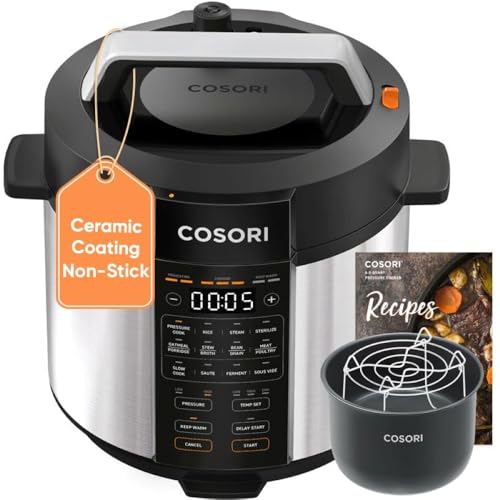
Cosori 6 quart pressure
cooker lists among its drawbacks: "No explicit mention of pressure levels or
wattage; check listing for details." That line is correct and it is the right complaint,
because pressure is not a secondary specification on this appliance. It is the
temperature, and the temperature is the product. A cooker at 10.2 pounds and one at 15
differ by 5.6 degrees, which on a Q10 of 3 is a rate ratio of 1.7, and no buyer can see
which one they are getting.
Our electric pressure cooker
coverage describes the programmes and the release step carefully and does not state
a pressure either, because there is nothing to state it from. That is worth fixing
upstream rather than arguing about here, and in the meantime the honest position is that
a stated cooking time without a stated pressure is not a comparable figure.
The honest limit, and the free lever
Two soft spots. The Q10 band of 2 to 4 is wide, and it is wide because different
reactions in the same pot have different activation energies: the collagen in a joint
and the starch in a potato do not accelerate at the same rate, so a single multiplier is
a convenience rather than a fact. And the 50 watts of wall loss behind the 39 minute
natural release figure is an estimate for an insulated electric body, not a published
number, so read that one as tens of minutes rather than as 39.
The saturation temperatures are not soft. They are a physical relationship, they agree
with steam tables, and they are the part of this page that does not move.
Which leaves one lever, and it is free. Since the vessel is already at the conduction
floor, the only remaining variable is the size of the pieces, and conduction is a square
law. That 40 millimetre potato takes 34.0 minutes. Cut to 20 millimetres it takes 8.5.
Four times faster for nothing, from a knife you already own, and no appliance in this
category offers an improvement remotely that large. Our
moka pot
page makes the same point from the other direction about a device where the steam
pressure is doing a mechanical job rather than a thermal one, and the same relation sets
both.
And the second free move: decide the release method deliberately. If the food was
done when the timer ended, vent it, because natural release is another forty minutes of
cooking. If it needed longer, leave it, and stop adding minutes to the programme to
compensate for a stage you were already getting.
Why Steam Cannot Get Hotter Than 100 Degrees at a glance
Home cooks who want fast, efficient stovetop cooking and don't mind manual control.
Cooks 3-10x faster than traditional methods Includes stainless steel rack and 64-page recipe book Fully immersible and dishwasher safe 12-year limited warranty Stainless steel construction is durable Simple, classic design
Stovetop only, requires manual heat adjustment No digital controls or preset programs May have a learning curve for beginners Takes up stovetop space
Busy families who want quick, versatile meals without multiple appliances.
9-in-1 versatility replaces multiple appliances HyperHeat cooks up to 2x faster than traditional slow cooking 6.5-qt capacity fits a 4-lb chicken or 5-lb roast PFAS-free ceramic nonstick pot for easy cleanup Fast rice and grains: white rice in 8 minutes, quinoa in 5 minutes Space-saving design for everyday meals
Nonstick coating may wear over time Rice and grain times exclude pressure build/release No stainless steel pot option Some functions may require trial and error
Instant Pot Duo 7-in-1 Mini Electric Pressure Cooker
Singles, couples, and small households
Seven cooking functions in one compact unit 11 one-touch smart programs for easy operation Cooks up to 70% faster than slow cooking Stainless steel inner pot with tri-ply bottom for even heating Includes free app with over 1900 recipes UL and ULC listed for safety
3-quart capacity is small for larger meals 700-watt power may heat slower than higher-watt models Slow cooker function is limited by small size No advanced features like Wi-Fi or Bluetooth
Small to medium households wanting a versatile, safe, and easy-to-clean multi-cooker.
13 cooking functions in one appliance Safety-focused design with angled steam release and 12 safety features Ceramic-coated inner pot is non-stick and dishwasher-safe Fingerprint-resistant stainless steel housing Widened pot gap for easier cleaning Includes sous vide and ferment modes, which are uncommon at this level
Ceramic coating is less durable than stainless steel 6-quart capacity may be small for large households No explicit mention of pressure levels or wattage; check listing for details Dishwasher-safe parts may still require hand washing to preserve ceramic coating
Why you can trust this guide
We compared these picks using verified manufacturer specifications, current retailer listings, and patterns in owner feedback, alongside editorial research. We focus on measurable differences such as performance, capacity, usability, and build quality. Pickpedia does not present editorial research as laboratory testing, and we do not claim hands-on testing unless it was actually performed.
Best for Home cooks who want fast, efficient stovetop cooking and don't mind manual control.
8.8/ 10 Pickpedia editorial score
The Presto 01365 is a 6-quart stainless steel pressure cooker designed for fast, efficient cooking. It promises meals 3 to 10 times faster than traditional methods, which is a significant time-saver. It comes with a stainless steel rack and a 64-page recipe guide, and it is fully immersible and dishwasher safe for easy cleaning. The 12-year limited warranty offers peace of mind, though it's important to note that this is a stovetop model requiring a compatible burner.
Fast & Efficient CookingCooks 3, 10x faster than traditional methods, saving
Includes Rack & Recipe BooComes with stainless steel rack and 64-page instruct
12-year Limited WarrantyLong-lasting performance backed by extended manufact
Pros
Cooks 3-10x faster than traditional methods Includes stainless steel rack and 64-page recipe book Fully immersible and dishwasher safe 12-year limited warranty Stainless steel construction is durable Simple, classic design
Cons
Stovetop only, requires manual heat adjustment No digital controls or preset programs May have a learning curve for beginners Takes up stovetop space
Best for Busy families who want quick, versatile meals without multiple appliances.
8.8/ 10 Pickpedia editorial score
The Ninja HyperHeat 9-in-1 Pressure Cooker combines multiple cooking functions in one appliance, promising faster cooking times with its HyperHeat technology. It has a 6.5-quart capacity, a PFAS-free ceramic nonstick pot, and can handle everything from pressure cooking to sous vide. While it excels at speed and versatility, its nonstick surface may be a concern for those who prefer stainless steel. It's a solid choice for families needing quick, everyday meals.
All-in-one Electric PressuReplace multiple appliances with one 9-in-1 multi co
Cook Up To 2x Faster*HyperHeat technology builds pressure quickly to spee
Family-sized 6.5 Qt CapaciCook for a crowd with a large-capacity pot that fits
Fast Rice And GrainsMake white rice in as little as 8 minutes or quinoa
Easy Cleanup, Pfas-free NoThe removable ceramic nonstick pot is made 100% PFAS
Pros
9-in-1 versatility replaces multiple appliances HyperHeat cooks up to 2x faster than traditional slow cooking 6.5-qt capacity fits a 4-lb chicken or 5-lb roast PFAS-free ceramic nonstick pot for easy cleanup Fast rice and grains: white rice in 8 minutes, quinoa in 5 minutes Space-saving design for everyday meals
Cons
Nonstick coating may wear over time Rice and grain times exclude pressure build/release No stainless steel pot option Some functions may require trial and error
The Instant Pot Duo 7-in-1 Mini is a 3-quart electric pressure cooker that combines seven cooking functions in one appliance. It features 11 one-touch smart programs and a stainless steel inner pot, making it versatile for small households. While it cooks up to 70% faster than slow cooking, its small capacity limits batch cooking. It includes a free app with over 1900 recipes to help you get started.
7 Cooking FunctionsPressure cook, slow cook, sauté, steam, make rice, y
Compact Yet CapableA 3-quart capacity makes it perfect for small househ
Good Food Done FasterCook up to 70% faster compared to slow cooking metho
Pro-Grade Cooking PotCrafted from stainless steel (18/8) with a tri-ply b
Power-Packed Performance700 watts, 120 V 60 Hz, UL & ULC Listed.
Pros
Seven cooking functions in one compact unit 11 one-touch smart programs for easy operation Cooks up to 70% faster than slow cooking Stainless steel inner pot with tri-ply bottom for even heating Includes free app with over 1900 recipes UL and ULC listed for safety
Cons
3-quart capacity is small for larger meals 700-watt power may heat slower than higher-watt models Slow cooker function is limited by small size No advanced features like Wi-Fi or Bluetooth
Best for Small to medium households wanting a versatile, safe, and easy-to-clean multi-cooker.
8.8/ 10 Pickpedia editorial score
The Cosori Pressure Cooker 6QT offers a wide range of cooking functions, from pressure cooking to sous vide, in a single appliance. Its ceramic-coated inner pot and dishwasher-safe parts make cleanup easier, while the angled steam release and 12 safety features aim to reduce risk. However, the 6-quart capacity may not suit larger families, and the ceramic coating requires gentle handling to avoid chipping.
𝗦𝗮𝗳𝗲𝗿 𝗩𝗲𝗻𝘁𝗶𝗻𝗴 𝗗𝗲𝘀𝗶𝗴𝗻The Seal/Vent button away from the steam release val
𝗘𝗮𝘀𝘆 𝗧𝗼 𝗖𝗹𝗲𝗮𝗻Stainless steel, fingerprint-resistant housing, the
𝟭𝟮 𝗦𝗮𝗳𝗲𝘁𝘆 𝗙𝗲𝗮𝘁𝘂𝗿𝗲𝘀The pressure cooker is designed with a double-layer
Pros
13 cooking functions in one appliance Safety-focused design with angled steam release and 12 safety features Ceramic-coated inner pot is non-stick and dishwasher-safe Fingerprint-resistant stainless steel housing Widened pot gap for easier cleaning Includes sous vide and ferment modes, which are uncommon at this level
Cons
Ceramic coating is less durable than stainless steel 6-quart capacity may be small for large households No explicit mention of pressure levels or wattage; check listing for details Dishwasher-safe parts may still require hand washing to preserve ceramic coating