Home ›
Electronics › Why a Power Bank Is 3 Times Short on Energy and 75 on Power
Electronics
Why a Power Bank Is 3 Times Short on Energy and 75 on Power
PBy the Pickpedia Team·7 picks compared·Last verified October 2026
Affiliate disclosure: As an Amazon Associate, Pickpedia earns from qualifying purchases. Links on this page are paid links, and we may earn a commission at no extra cost to you. This never affects our picks or scores.
This page contains affiliate links. If you buy through one we may earn a
commission, at no cost to you.
Not from anything you can carry in a bag, and the interesting part is which number stops you. A
battery has two specifications and people instinctively check the wrong one. The energy gap
is a factor of 3.29. The power gap is a factor of 75. So the thought that follows
naturally, get a bigger pack, closes the smaller of the two problems and leaves the larger one
exactly where it was.
Both numbers come out of published figures on our own shelves. A 20,000 milliamp hour pack holds
74 watt-hours and delivers about 48 of them. Boiling the water in a published 1.7
litre kettle takes 158 watt-hours. And that kettle's element wants
1,500 watts, which from a 3.7 volt cell stack is 405 amps.
Turning the headline figure into the right unit
Milliamp hours are a charge, not an energy, and the conversion needs a voltage. A
Luvknit 20,000mAh solar power bank with
USB-C publishes a 20,000 milliamp hour battery, USB-C and USB-A outputs, a
15 watt USB-C input, a built-in LED torch, multi-protection safety, a built-in
solar panel for emergency trickle charging, 0.65 inches of thickness, around 230 grams, and
"roughly two to three full charges of a modern phone".
Lithium cells sit at a nominal 3.7 volts, so twenty amp hours is 74 watt-hours.
Our own guide to power
banks, mAh and real output publishes the usable fraction and gets it right: "Realistically, you
get around 60 to 70 percent of the printed capacity as usable output." Take 65 and
48.1 watt-hours leave the pack.
That conversion is worth checking rather than asserting, and a second record checks it. An
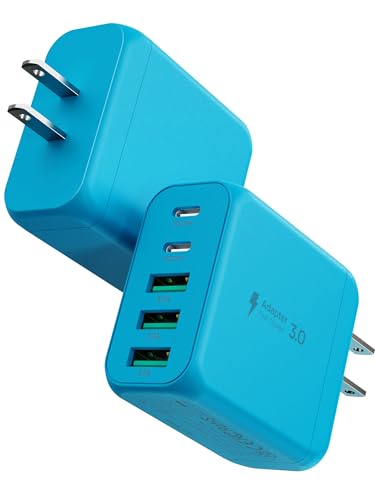
EIZLXQ 50W 5-port USB-C charger block in a
two-pack publishes five ports, two USB-C and three USB-A, a single USB-C port delivering up to
20 watts, IEC 62368-1 and FCC certification, fireproof ABS and PC housing, and the detail that does
the work here: it "can take an iPhone from empty to 50 percent in about 35 minutes".
Twenty watts for 35 minutes is 11.67 watt-hours for half a battery, so
23.3 for a full one. Divide 48.1 by 23.3 and the pack is good for
2.06 phone charges, which lands precisely on the low end of its own claim of
roughly two to three. Two records, one conversion, and they agree, which is why
the 74 watt-hours can be trusted for the harder comparison that follows. Its own drawbacks are a
model of the right kind of honesty, including "50W is a shared total, not per port", and the detail
is in our review of the EIZLXQ
block.
A 20,000 milliamp hour pack is 74 watt-hours and
delivers about 48, so it is 3.29 times short of boiling a published 1.7 litre kettle. Its output is
75 times short of that kettle's element, which makes power the gap that matters and a bigger battery
the wrong purchase.
The appliance the question names does not publish the number it needs
An
Instant Pot Duo 6 Qt 7-in-1 electric
pressure cooker publishes six quarts, seven functions, thirteen smart programs, an 18/8
stainless pot with a tri-ply bottom, a pressure release valve and locking lid, and a claim to cook
"up to 70% faster than slow cooking methods". It does not publish a wattage.
Which means the energy for one cook cannot be computed from our own record, and nor can the time
to come to pressure that a second person in the vault is asking about. That second question has a
one line answer in principle, the liquid mass times its specific heat times the temperature rise,
divided by the element power, and the element power is exactly the figure the listing withholds.
So the honest position is that we cannot answer it, and the reason is one missing
number. Our pages on
why a pressure cooker's minimum
liquid is not steam and
why 5 kilograms of meat needs a 12
litre pressure cooker work the volume side of the same appliance properly, and neither of them
needs a wattage, which is how they got written.
What does survive is the preheat, because that only needs the liquid. A 6 quart cooker running a
representative 1.5 litres of liquid from 20 to 100 degrees needs 1.5 times 4,186 times 80, which is
502 kilojoules, or 139.5 watt-hours. That is 2.90 times the pack's entire
usable energy, before the cooker has started cooking anything. See our
review of the Instant Pot
Duo 6 Qt for the rest of what it does publish.
The measuring stick that does publish both numbers
One kitchen appliance in this catalogue publishes a volume and a wattage together, which makes it
the right yardstick. A
Zulay Kitchen glass electric kettle at 1.7
litres and 1500 watts publishes a borosilicate glass body with stainless components,
auto shut-off and boil-dry protection, a cool-touch handle, a 360 degree cordless base and a spout
scale filter.
Heating 1.7 kilograms of water from 20 to 100 degrees takes 1.7 times 4,186 times 80, which is
569 kilojoules, or 158.1 watt-hours, and at 1,500 watts that is
6.33 minutes of element time before the kettle's own mass and losses are added.
Our page on
why boiling milk breaks an electric
kettle works the flux through that same plate and is the companion to this.
So the energy comparison, finally. 48.1 watt-hours against 158.1: the pack is 3.29 times
short of one kettle of water. Bad, but not absurd. Three packs and you have boiled a
kettle. More in our
review of the Zulay glass
kettle.
Now the gap that does not close
Energy is how much. Power is how fast it can leave, and a resistive heating element has no
patience at all: it either gets its wattage or it does not heat. So line up every published output
figure in this catalogue against 1,500 watts.
A single USB-C port at 20 watts is 75 times short. The whole
five-port block at 50 watts shared is 30 times short.
A
140W Smart Auto-Stop USB-C charger,
which publishes up to 140 watts, smart full-charge detection that physically cuts the connection
when charging completes, and a compact single-port body, is 10.7 times short.
The energy gap is 3.29 and the power gap is 75, so power is 22.8 times the worse
problem. And the ceiling of the whole route is not the pack at all: the fattest cable we
carry tops out at 240 watts, which is still a sixth of what the smallest mains cooking appliance in
the catalogue wants. Our page on
why a 240 watt cable can charge at 60
watts works through why even that figure is conditional, and the condition is on the listing
itself: "Both the device and charger must support these levels to reach full 240W."
At the cell the arithmetic is blunt enough to end the conversation. Fifteen hundred watts
from a 3.7 volt stack is 405 amps. Two hundred and forty watts of Power Delivery is five
amps at 48 volts. The pack publishes a 15 watt input and, revealingly,
no output wattage at all, so the two records that should carry the two numbers
this question needs each carry the other one's.
What a fuel carries, and why this is not an engineering problem
A
Flintex portable propane tabletop
grill publishes 240 square inches of cooking area for four to six servings, foldable legs with
a built-in handle, a lid thermometer, an adjustable gas valve, push-to-start ignition, a
powder-coated body with enamelled grates and a stainless burner, and operation on standard one
pound propane cylinders.
Four hundred and fifty four grams of propane at 46.4 megajoules a kilogram is 21.1 megajoules,
which is 5,854 watt-hours of chemical energy. Against the pack's 48.1 usable, that
is 121.7 times. At a representative fifty percent transfer into a pot it is 2,927
watt-hours, which is 18.5 kettles of water.
And the reason is specific energy rather than cleverness. Propane carries
12,889 watt-hours per kilogram. The pack carries 74 watt-hours in 230 grams, which
is 321.7. A factor of 40.1 before any efficiency is applied, and
after it, with fire at about half and a pack at about two thirds into a resistive element, still
about 31.
So the honest answer to the question as asked is to stop carrying the energy as electricity.
That is not a defeat for the battery, which is extraordinary at what it is for: the pack weighs 230
grams, slips into a bag and runs a phone for a weekend, and the same arithmetic that says it cannot
boil a kettle says it can do that twice over. It is a statement about cooking, which is the one
domestic job whose power demand sits two orders of magnitude above everything else a person
carries. Details in our
review of the Flintex tabletop grill,
and the honest gap on that record is its own: it publishes a cooking area and
no BTU rating, so its fire cannot be set against an element without an
assumption.
The honest limit, and what it leaves undone
What is exact here is the conversion chain and every ratio in it. Twenty amp hours times 3.7
volts is 74 watt-hours. One point seven kilograms times 4,186 joules per kilogram kelvin times
eighty kelvin is 158.1 watt-hours. Fifteen hundred watts divided by twenty, fifty, 140 and 240
gives 75, 30, 10.7 and 6.25. Fifteen hundred over 3.7 is 405 amps. And the 2.06 phone charges comes
from two published figures on two separate records, which is why it is the strongest number on the
page: it was derived to test the method rather than to make a point.
What is representative rather than published is a short list. The 3.7 volt nominal cell voltage
is a convention and a particular pack might be 3.6 or 3.85, which moves the 74 watt-hours by a few
percent in either direction and moves nothing else. The 65 percent usable fraction is the midpoint
of the 60 to 70 our own page publishes, and taking the generous end gives 51.8 watt-hours and a
3.05 energy gap rather than 3.29. The 1.5 litres of liquid in a 6 quart cooker is an assumption and
scales the 139.5 watt-hours directly. The 46.4 megajoules a kilogram for propane is a standard
figure, and the fifty percent transfer into a pot is a conventional estimate that could plausibly be
thirty or seventy, which moves the 18.5 kettles between 11 and 26 without touching the 121.7 in
stored energy. The one assumption that would change a conclusion is the phone battery, and it is
the one the cross-check pinned.
Four things this page deliberately does not compute. It does not give the energy of a complete
pressure cooking cycle, or the time for any Instant Pot to come to pressure, because no pressure
cooker in this catalogue publishes a wattage and both answers are that figure divided into
something. It does not compute how long the pack's solar panel takes to refill it, because no panel
area or rating is published, and our own power bank page already declines the same thing for the
same reason, correctly: "Recharging a large bank from the panel alone would take many days of
perfect sunlight." And it does not work out an inverter and leisure battery setup, which is the
answer a lot of people actually want, because this catalogue carries no inverter and no deep cycle
battery, and sizing one from products we do not stock would be arithmetic with nothing underneath
it. What can be said without any of them is the shape: a 12 volt route needs 124 amps rather than
405, which is why that is where the real solutions live, and why the cable gets thick.
Three numbers to carry. Milliamp hours become watt-hours when you multiply by about 3.7 volts,
so a 20,000 pack is 74 watt-hours and delivers about 48. A kettle of water is 158 watt-hours, so
the energy shortfall is only about three to one. And the element wants 1,500 watts against a
catalogue that tops out at 240, so the shortfall that matters is twenty two times worse than the one
everybody checks.
Why a Power Bank Is 3 Times Short on Energy and 75 on Power at a glance
Instant Pot Duo 6 Qt 7-in-1 Electric Pressure Cooker
Families and meal preppers who want a versatile, reliable multi-cooker.
7-in-1 functionality replaces multiple appliances Cooks up to 70% faster than slow cooking Stainless steel pot with tri-ply bottom for even heating and searing 6-quart capacity fits up to 6 servings 13 one-touch smart programs for convenience Easy to clean and maintain
Manual pressure release requires attention Interface is basic compared to newer models No Wi-Fi or app connectivity Slow cook function may not be as precise as dedicated slow cookers
Real grilling on the go for small groups, outdoors
Roomy 240 sq in grate cooks for four to six
Compact single burner, not for large cookouts
Why you can trust this guide
We compared these picks using verified manufacturer specifications, current retailer listings, and patterns in owner feedback, alongside editorial research. We focus on measurable differences such as performance, capacity, usability, and build quality. Pickpedia does not present editorial research as laboratory testing, and we do not claim hands-on testing unless it was actually performed.
Best for Portable phone charging for travel, camping and emergencies
8.6/ 10 Pickpedia editorial score
A slim, light 20,000mAh power bank with USB-C and USB-A outputs, 15W USB-C input, a built-in LED flashlight, multi-protection safety and a built-in solar panel for emergency trickle-charging, delivering roughly two to three full phone charges.
BrandLuvknit
TypeSolar power bank
Capacity20,000mAh
Real outputRoughly 2 to 3 phone charges
OutputsUSB-C and USB-A
Input15W USB-C
SolarBuilt-in panel, trickle charge
WeightAbout 230g (0.5 lb), 0.65 in thin
ExtrasLED flashlight, safety protection
ColourOrange
Pros
Useful 20,000mAh, 2 to 3 phone charges
Slim and light for the capacity
USB-C and USB-A outputs
Solar panel as an off-grid backup
Built-in torch and safety protections
Good value
Cons
Solar only trickle-charges, not a real solar charger
Best for Charging several devices from one outlet at home or travel
8.8/ 10 Pickpedia editorial score
A compact 50W USB wall charger with five ports (dual USB-C and three USB-A), a 20W single USB-C fast-charge port, IEC 62368-1 and FCC certification with multiple safety protections, and a fireproof housing, sold as a two-pack for home and travel.
BrandEIZLXQ
TypeMulti-port USB wall charger
Total output50W shared
Ports5 total: 2 USB-C, 3 USB-A
Single USB-CUp to 20W
CertificationIEC 62368-1, FCC
ProtectionOverheat, overcurrent, overcharge, short circuit, auto-stop
HousingFireproof ABS and PC
Pack2 chargers
ColourBlue
Pros
Five ports, dual USB-C and three USB-A
20W USB-C port for fast phone top-ups
One outlet replaces a cluster of chargers
IEC and FCC certified with safety protections
Compact and travel-friendly
Good-value two-pack
Cons
50W is a shared total, not per port
Simultaneous charging is slower per device
Value brand, so you trust the stated certifications
Best for Families and meal preppers who want a versatile, reliable multi-cooker.
8.8/ 10 Pickpedia editorial score
The Instant Pot Duo 6 Qt is a popular multi-cooker that combines seven cooking functions into one appliance. It offers 13 smart programs for one-touch cooking, and its stainless steel pot is durable and good for searing. The 6-quart size suits families or meal preppers. However, it lacks some advanced features like Wi-Fi or a sous-vide mode, and its interface may feel basic to some.
7 Cooking FunctionsPressure cook, slow cook, sauté, steam, make rice, y
Customizable Smart ProgramTackle every recipe with 13 one-touch options, from
Good Food Done FasterCook up to 70% faster compared to slow cooking metho
Pro-Grade Cooking PotCrafted from stainless steel (18/8) with a tri-ply b
Family-Sized CapacityThe 6-quart capacity is perfect for up to 6 servings
Pros
7-in-1 functionality replaces multiple appliances Cooks up to 70% faster than slow cooking Stainless steel pot with tri-ply bottom for even heating and searing 6-quart capacity fits up to 6 servings 13 one-touch smart programs for convenience Easy to clean and maintain
Cons
Manual pressure release requires attention Interface is basic compared to newer models No Wi-Fi or app connectivity Slow cook function may not be as precise as dedicated slow cookers
Best for Fast, everyday boiling for tea, coffee and instant meals
9.0/ 10 Pickpedia editorial score
A 1.7 litre, 1500W electric kettle with a borosilicate glass body and stainless steel components, auto shut-off and boil-dry protection, a cool-touch handle, a 360-degree cordless base and a spout scale filter, backed by a lifetime guarantee.
Best for Safe overnight and high-power USB-C charging
8.8/ 10 Pickpedia editorial score
A compact 140W USB-C fast charger with smart full-charge detection that physically cuts the connection when charging completes, made for safe overnight use.
TypeUSB-C wall charger
Max powerUp to 140W
Smart featureFull-charge detection and physical auto disconnect
Device supportWide USB-C: phones, tablets, many laptops
Best for tidy high-speed Thunderbolt 4 desk setups
8.8/ 10 Pickpedia editorial score
The Yiicumhh Thunderbolt 4 cable combines a 90 degree connector with full USB4 capability. It moves data at 40Gbps, charges at up to 240W over PD 3.1, and drives a single 8K or dual 4K display. The right-angle plug keeps the cable flat against a device for tidy routing. A nylon braid, quadruple shielding, and zinc alloy shell target long-term durability.
Connector90 degree right angle
StandardThunderbolt 4 / USB4
Data rate40Gbps
ChargingUp to 240W PD 3.1
VideoSingle 8K or dual 4K
JacketNylon braided
ShellZinc alloy
Bend ratingOver 49,000 bends
Pros
90 degree plug keeps routing flat and tidy
40Gbps speed handles large file transfers fast
240W PD 3.1 charging with backward compatibility
Drives single 8K or dual 4K displays
Nylon braid rated for over 49,000 bends
Quadruple shielding and zinc alloy resist wear and heat
Cons
Full 40Gbps speed needs a Thunderbolt 4 device
Video output requires DP Alt Mode support
Dual-monitor setups need two cables
Speed, wattage, and bend ratings are maker-stated, not lab-verified
Best for Real grilling on the go for small groups, outdoors
8.8/ 10 Pickpedia editorial score
A portable tabletop propane grill with a 240 square inch cooking area for four to six servings, foldable legs and a built-in handle, a lid thermometer, adjustable gas valve and push-to-start ignition, running on standard 1-pound propane tanks, built with a powder-coated body, enameled grates and a stainless burner.
BrandFlintex
TypePortable tabletop propane grill
Cooking area240 square inches
Serves4 to 6 servings
FuelStandard 1-lb propane tanks
IgnitionPush-to-start
ControlLid thermometer, adjustable valve
PortabilityFoldable legs, built-in handle
Pros
Roomy 240 sq in grate cooks for four to six
Foldable with a handle, fits a car trunk
Lid thermometer and adjustable valve for real control