Pressure Cookers 4 Multi-Cookers That Replace Several Machines
P
By the Pickpedia Team
·4 picks compared
·Last verified September 2026
Affiliate disclosure: As an Amazon Associate, Pickpedia earns from qualifying purchases. Links on this page are paid links, and we may earn a commission at no extra cost to you. This never affects our picks or scores.
Quick answer
Pick a multi-cooker by how you actually cook. Instant Pot Duo suits fast weeknight pressure meals for families. Ninja PossibleCooker fits slow, batch, and oven-finish dishes. Cosori favors safety and easy cleanup. OLIXIS works for one or two people in tight kitchens.
4 Multi-Cookers That Replace Several Machines at a glance
Why you can trust this guide
We compared these picks using verified manufacturer specifications, available manuals and documentation, current retailer listings, and patterns in owner feedback, alongside editorial research. We focus on measurable differences such as performance, capacity, usability, and build quality. Pickpedia does not present editorial research as laboratory testing, and we do not claim hands-on testing unless it was actually performed.
How we chose: We compared four multi-cookers across function count, capacity, cooking speed, safety design, and how easily each fits a real kitchen.
Multi-cookers promise to replace several machines at once, and these four make different trade-offs on how they do it. Some lean into fast pressure cooking, while others prioritize slow, low-heat methods or oven finishing. Capacity ranges widely too, from compact single-servings up to large batches meant for a crowd.
Our picks below are grounded in each maker's stated features and how owners tend to use these machines. No single unit wins for everyone, so we flag who each one genuinely suits. Read the tags and the who-its-for lines to match one to your kitchen and household size.
Our top picks
Instant Pot's Duo covers seven functions, handling pressure cooking, slow cooking, sautéing, steaming, rice, yogurt, and keeping food warm from one machine. Based on specifications, it cooks up to 70 percent faster than slow methods, which reviewers note is its main draw for busy evenings. The 6-quart pot serves roughly six, so it fits meal prep and batch cooking. Its stainless steel 18/8 pot with a tri-ply bottom sears well before pressure cooking. The Easy-Release steam switch aims to make venting simpler and safer. One limitation: at 6 quarts it can feel oversized for a single person cooking small portions.
Functions7-in-1, 13 programs
Capacity6 quarts
Pot materialStainless steel 18/8, tri-ply base
SpeedUp to 70% faster than slow cooking
Pros
- Seven functions plus 13 one-touch programs in one unit
- Durable tri-ply stainless pot sears and sautés well
- Family-sized 6-quart capacity suits batch cooking
Cons
- Larger pot feels excessive for single-person portions
- Countertop footprint takes real kitchen space
Check price on Amazon ›
Ninja frames the PossibleCooker as a stand-in for a dozen tools, from a Dutch oven to a bread maker. Its six functions cover slow cook, sear or sauté, keep warm, sous vide, braise, and proof. You sear proteins right in the pot using bottom heating elements, skipping the transfer to a stovetop pan. The removable pot is oven safe to 500 degrees Fahrenheit, so you can finish dishes with a crispy top. At 8.5 quarts it handles chili for around 20 people, which reviewers highlight for gatherings. One limitation: it skips pressure cooking, so it will not deliver the fast results a pressure model gives.
Functions6 functions, replaces 12 tools
Capacity8.5 quarts
Oven safeUp to 500 degrees Fahrenheit
SpeedUp to 30% faster than conventional ovens
Pros
- Very large 8.5-quart capacity handles crowds
- Sear and sauté directly in the pot
- Oven-safe pot finishes dishes with a crispy top
Cons
- No pressure cooking, so meals take longer
- Big size is impractical for small households
Check price on Amazon ›
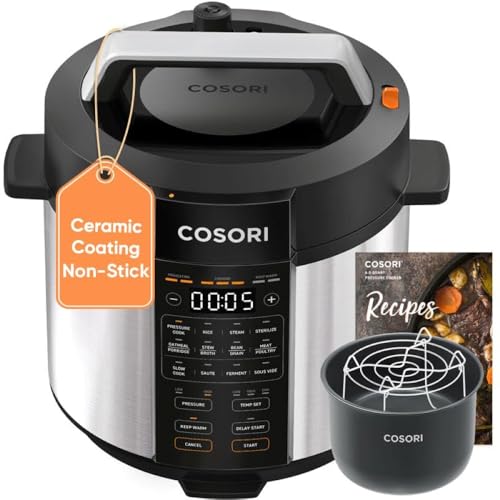
Cosori packs nine machines into one, spanning pressure cook, rice, steam, sterilize, stew, slow cook, sauté, ferment, sous vide, and more. Cleanup is a stated strength, with a fingerprint-resistant stainless housing, a widened pot gap, and a dishwasher-safe lid and ceramic-coated inner pot. Safety gets real attention here: 12 features include a double-layer anti-scald lid and overheat protection. The vent button sits away from the steam release, and a 30-degree backward-angled release aims to make venting safer. Owners report the lid-locking alignment dots make sealing straightforward. One limitation: ceramic coatings can wear over time and need gentle handling to last.
Functions9-in-1, many presets
Capacity6 quarts
Inner potCeramic coating, dishwasher safe
Safety12 safety features
Pros
- Twelve safety features including anti-scald lid
- Ceramic pot and lid are dishwasher safe
- Fingerprint-resistant housing wipes clean easily
Cons
- Ceramic coating can wear with heavy use
- Requires gentle handling to protect the pot
Check price on Amazon ›
OLIXIS keeps things compact with a 3-quart pot built for small households. It offers ten smart presets, including rice, meat, stew, yogurt, canning, and steam, all through one-touch controls. Based on specifications, its high-pressure technology finishes dishes up to 70 percent faster than traditional methods while using less energy. A 24-hour delay-start timer and automatic keep-warm mode mean a hot meal waits for you. The ceramic non-stick inner pot releases food easily and cleans quickly, wrapped in a scratch-resistant stainless shell. One limitation: at 3 quarts it is too small for large families or big-batch cooking.
Functions10-in-1 presets
Capacity3 quarts
Timer24-hour delay start
Inner potCeramic non-stick
Pros
- Compact 3-quart size fits small kitchens
- 24-hour delay start with auto keep-warm
- Ceramic non-stick pot cleans quickly
Cons
- Too small for large families or big batches
- Limited output for entertaining or meal prep
Check price on Amazon ›
What to look for
Match capacity to your household
Capacity drives most of the decision. A 3-quart pot suits one or two people and tight counters, while 6 quarts covers a typical family and meal prep. Go to 8.5 quarts only if you regularly cook for gatherings, since a big pot wastes energy on small portions.
Pressure cooking versus slow cooking
Pressure models finish many dishes up to 70 percent faster, which matters on weeknights. Slow-focused cookers trade that speed for gentler, hands-off results and oven finishing. Decide which fits your routine, because a machine strong at one is often weaker at the other.
Inner pot material
Stainless steel pots sear well and shrug off heavy use, while ceramic non-stick coatings release food and clean fast. Ceramic can wear over time, so it needs gentler handling. Weigh durability against convenience based on how hard you cook.
Safety and cleanup
Look at how a unit vents steam and locks its lid, since these affect daily safety. Anti-scald lids and overheat protection add peace of mind. Dishwasher-safe lids and pots plus wipe-clean housings save time you would otherwise spend scrubbing.
Frequently asked questions
Can one multi-cooker really replace several machines?
Yes, within reason. Each unit here combines many functions, from pressure and slow cooking to sautéing and steaming. It will not match a dedicated appliance in every task, but it consolidates the common jobs into one countertop machine.
Which size should I choose?
Base it on servings. Three quarts suits one or two people, six quarts fits families and meal prep, and 8.5 quarts handles crowds. Oversizing wastes energy and counter space on small meals, so match the pot to your usual portions.
Is pressure cooking much faster?
Reviewers note it is. Pressure models here finish up to 70 percent faster than slow methods by trapping heat and moisture. That speed is the main reason many people choose a pressure model for weeknight dinners.
Are ceramic pots better than stainless steel?
They serve different needs. Ceramic non-stick releases food and cleans quickly but can wear over time. Stainless steel sears better and lasts through hard use. Pick based on whether cleanup ease or long-term durability matters more to you.
Can I sear meat right in the cooker?
Several models let you. The stainless and sear-capable units use bottom heating elements to brown proteins in the pot, so you skip a separate stovetop pan. This keeps flavor in one vessel and cuts cleanup.
How safe are electric pressure cookers?
Modern units add multiple safeguards. Owners report features like anti-scald lids, overheat protection, lid-locking, and angled steam release. Following the venting and locking instructions keeps operation safe and predictable.
Can these cook while I am away?
Some can, using a delay-start timer and automatic keep-warm mode. You set a start time up to 24 hours ahead, and the machine holds the meal hot after cooking so it is ready when you return.
Which one is best for a small kitchen?
The compact 3-quart OLIXIS fits tight counters and small households best. Larger 6 and 8.5-quart units take more space and suit families or entertaining rather than singles or couples.
The verdict
Instant Pot Duo 6 Qt 7-in-1 Electric Press...
9.2/10
For most families, the Instant Pot Duo is our top pick, balancing seven functions, a durable stainless pot, and fast pressure cooking. Choose the Ninja PossibleCooker if you cook big batches or want oven finishing, since it skips pressure for slow, roomy versatility. Cosori suits cooks who prize safety and easy cleanup, while the compact OLIXIS is the clear match for singles, couples, and tight kitchens.
Check price on Amazon ›
Our top pick, secure checkout via Amazon
Note: Availability and specifications change often. Always confirm the current details on Amazon before buying.