Home ›
Electronics › Why Your Speakers Hum When Everything Is Plugged In
Electronics
Why Your Speakers Hum When Everything Is Plugged In
PBy the Pickpedia Team·2 picks compared·Last verified October 2026
Affiliate disclosure: As an Amazon Associate, Pickpedia earns from qualifying purchases. Links on this page are paid links, and we may earn a commission at no extra cost to you. This never affects our picks or scores.
This page contains affiliate links. If you buy through one we may earn a
commission, at no cost to you.
The first thing to say is that it is almost certainly not the speaker, and it is
almost certainly not the cable either. A hum that appears when everything is plugged in
and vanishes when you unplug one thing is not a component failing. It is a circuit you
did not know you had built, and it closes through your house.
The second thing to say, before anything else, is the one piece of advice you will be
given repeatedly and should not take. Do not lift the earth pin. There is a specific
reason rather than a general one and it is at the end of this page, and the short version
is that it does not even remove the connection it claims to remove.
The loop, and where the voltage comes from
Take two pieces of equipment with earthed metal chassis, plugged into two different
outlets, and joined to each other by one signal cable. Trace a path: out of the first
chassis down its earth wire, through the building's protective earth conductor to the
second outlet, up into the second chassis, and then back to the first along the screen of
the signal cable. That path closes. It is a loop of wire, several metres around, and it is
sitting inside a building full of alternating current.
A closed loop in a changing magnetic field has a voltage induced in it, equal to two pi
times the frequency, times the field strength, times the area the loop encloses. All the
mains wiring and every transformer in the house is producing that field. A cable carrying
10 amps puts out 40 microtesla at 5 centimetres, 20 at 10 centimetres and 6.67 at 30, so a
loop that runs anywhere near domestic wiring is sitting in something of the order of a
microtesla on average.
Put the numbers in. Two boxes three metres apart with their mains and signal paths
running about half a metre apart enclose roughly 1.5 square metres. At 60 hertz in a 1
microtesla average field, the induced voltage is 0.565 millivolts.
That voltage appears along the signal screen, and the screen is the conductor that both
pieces of equipment are using as their zero reference. So the amplifier is not being fed
your signal. It is being fed your signal plus the difference between what it thinks zero
is and what the source thinks zero is, and that difference is the hum.
Which locates the whole problem precisely. It is not noise getting into a cable through
its shielding, which is what the word shielding makes everyone assume. The screen is doing
its shielding job perfectly. The screen itself is the thing carrying the interference,
because it has been asked to be two things at once: a barrier against external fields, and
a voltage reference shared between two devices at different potentials.
Field from a straight conductor as the permeability of free space times current over two
pi r. Induced voltage as two pi f B A, at 60 Hz. Loop areas and the 1 microtesla average
are worked examples for a domestic installation and not measurements of any particular
room, because nothing in this category publishes either. Signal levels are the standard
nominal figures for a moving magnet cartridge and for a consumer line output, and the
phono gain is the nominal 40 dB such a stage applies. Nothing here states that any
installation is safe.
Why it is always the turntable
Here is the part that explains why one person has a system full of equipment and no
audible hum while another cannot get rid of it. The induced voltage does not care what it
is being added to. The signal does.
A consumer line output sits around 316 millivolts. Against that, 0.565 millivolts of hum
is 54.9 decibels down, which in a real room with any music playing is inaudible and would
be ignored even if you could hear it.
A moving magnet phono cartridge puts out about 5 millivolts. Against that, the identical
0.565 millivolts is 18.9 decibels down. Nineteen decibels is not a noise floor, it is an
accompaniment. And the gap between those two outcomes, 36 decibels, is nothing more than
the level difference between a phono signal and a line signal. The hum was the same in both
cases. Only the thing it had to hide under changed.
Then it gets worse, because a phono input is not just quiet, it is followed by gain. A
phono stage applies roughly 40 decibels, a factor of a hundred, to lift a cartridge to line
level. It cannot distinguish the hum from the music, so it lifts both. Our 0.565 millivolts
arrives at the output as 56.5 millivolts, which is a hundred times, or 40 decibels, worse
than the same hum injected at a line input would have been. A turntable is not more
sensitive to ground loops by bad luck. It is the only input in a domestic system where a
loop voltage of this size is comparable to the signal and then gets amplified.
An
Andover Audio Spinbase 2 turntable
speaker system is therefore the most exposed product we carry, and it is exposed for a
good reason rather than a bad one. Its record describes a built-in phono input, and notes
that this removes the component most new record buyers do not know they need. That is
genuinely useful and it is the right design. It also means the lowest level signal in the
system and the gain stage that amplifies it are inside the same chassis as a power amplifier
and a mains supply, which is the arrangement every one of the numbers above is about.
And then the finding that makes this product worth writing about. Its record lists four
inputs besides phono: Bluetooth, analog, optical digital and USB. The optical one is a
galvanic break. An optical digital connection carries the signal as light down a plastic
fibre, so there is no electrical conductor between the two devices at all, which means it
cannot complete a loop no matter what the two chassis are sitting at. For the commonest
version of this complaint, which is hum that appears when a television is connected, the
cure is already in the box and costs nothing: use the optical input rather than the analog
one. Neither the listing nor our own record says this. It is one bullet in a connectivity
list. Our
Andover Audio Spinbase
2 review also flags the two real gaps on that record, which are that no power rating
and no dimensions are published at all, and on a base a turntable has to physically fit on,
the second of those matters more than anything on this page.
Six zones, six loops
A
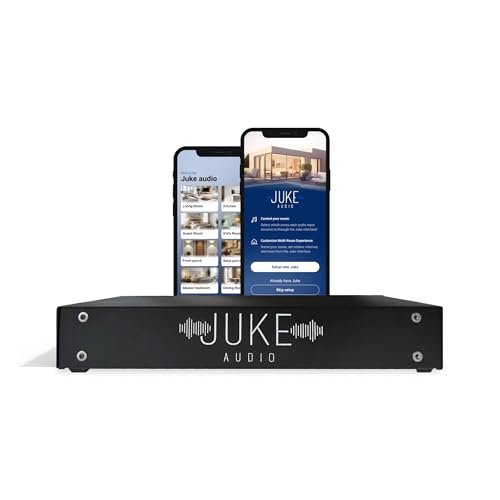
Juke Audio Juke-6 6-zone audio
amplifier is the opposite case and the harder one. Its record publishes 40 watts per
channel into 8 ohms across six zones and twelve channels, each channel stable down to 2
ohms, and it names in-ceiling, in-wall and landscape speakers as the intended partners.
Read that as geometry. Six zones means six cable runs leaving one chassis and travelling
to six different parts of a building, and landscape means at least one of them goes outside.
Every one of those runs is a conductor heading away from the amplifier's earth reference
toward somewhere else, and the enclosed area between a ceiling speaker run and the mains
circuit feeding that room is not 1.5 square metres, it is whatever the building happens to
make it. This is the worst case for loop area in domestic audio.
Two things make it much better than it sounds, and they are worth knowing because they
explain why installers do not spend their lives fighting this. A speaker output is a high
level signal, several volts, so 0.565 millivolts against it is better than 70 decibels down
and simply does not matter. And a speaker output is driven from a low impedance, which makes
it hard for an induced voltage to do anything. The vulnerable side of this amplifier is not
its twelve outputs. It is its inputs, and in this design most of them are not wires at all:
the record describes AirPlay 2, Spotify Connect, Bluetooth and DLNA, which arrive over the
network rather than over a cable from another earthed box.
That is a real and underrated advantage of streaming into an amplifier rather than
feeding it from a source component, and no listing presents it that way. The record does
note that the smoothest television path runs through an Apple device over AirPlay 2, which
it frames as an ecosystem limitation. In loop terms it is an improvement, because it
replaces an analog cable between two earthed chassis with a radio link. Our
Juke Audio Juke-6 review covers
the ecosystem question and the missing warranty term, which is the gap on that record.
For the separate question of what those wattage figures do and do not buy you, batch six
worked that out on these same two products in
why 100 watts is not twice as loud as
50. Different mechanism, same shelf.
The pitch tells you which problem you have
Before changing anything, listen to the note. This is free and it halves the search.
A ground loop induces the mains fundamental, so in the United States it is 60 hertz, a
low smooth hum roughly two octaves below middle C. A power supply problem sounds different,
because a full wave rectifier conducts twice per mains cycle, so its ripple is at twice the
mains frequency, 120 hertz, an octave higher and buzzier. If what you hear is the higher,
harder, buzzing note, the loop advice on this page will not fix it and you are looking at a
supply, a failing filter capacitor, or a dimmer on the same circuit chopping the waveform.
The other free diagnostic is subtraction. Unplug every signal cable from the amplifier.
If the hum stops, it is arriving through a signal connection and it is a loop. If it does
not, the loop is inside the amplifier's own supply and nothing you do with cabling will
help. Then put the cables back one at a time and the hum will appear on a specific one,
which identifies the second device in the loop. It is the whole diagnosis and it takes five
minutes.
Why not to lift the earth pin, specifically
The advice to fit a ground lift adapter circulates widely and is sometimes offered with
an assurance that it is safe when other equipment is still earthed. It is not, and the
reason is more specific than a general warning about electricity.
The protective earth exists to give fault current a path. If a live conductor touches the
chassis, current flows to earth, the current is large because the path is good, and the
breaker or fuse opens quickly. That sequence is the entire safety design, and it depends on
the path being there and being able to carry the fault.
Lift the pin and the chassis is not isolated. It is still bonded to every other device in
the system through the screens of the signal cables, which is precisely why lifting it
changes the hum. So a live-to-chassis fault on the lifted device now routes its current along
a signal screen to find the earth of the next box. A screen braid might be a twentieth of a
square millimetre of copper. A 15 amp fault through that is about 300 amps per square
millimetre, against roughly 100 to 200 before copper fuses. So it fails, and in the interval
before it does, the chassis of every connected device in the system is sitting at fault
potential, including the one with the turntable on it. The earth did not go away. It was
replaced by the thinnest conductor in the room.
If you genuinely need to break the loop rather than shrink it, the thing to break is the
signal path, not the safety path. An audio isolation transformer in the signal line, a
balanced connection where both devices support one, or an optical link all remove the
electrical continuity while leaving every earth pin exactly where the manufacturer put it.
Those are the correct interventions and they are the only ones this page recommends. Anything
involving the mains wiring itself belongs with a qualified electrician, and nothing on this
page establishes that any particular installation is safe.
The honest limit, and the free technique
The limit is total. Not one audio product in our catalogue publishes anything that would
let you predict this: no input impedance, no common mode rejection figure, no statement of
whether an input is balanced, no isolation specification, and in the Spinbase 2's case no
power rating and no dimensions. The loop voltage depends on your building's wiring and the
area your cables enclose, and no manufacturer can know either. So this is a category where
the specification sheet is genuinely useless and the technique is everything.
Fortunately the technique is free, and it follows straight from the formula. The induced
voltage is proportional to the enclosed area and to nothing else you can change. So shrink
the area.
Put every piece of equipment in the system on the same outlet, through one power strip.
That is the first and best move, and it is the one most often recommended without a reason:
the reason is that it collapses the long run through the building's earth conductor down to
the few inches inside the strip, which is most of the loop gone. Then run the signal cables
alongside the mains cables rather than apart from them, bundled together, which sounds wrong
and is right, because what matters is the area between them and not the distance. Going from
1.5 square metres to 0.3 is 14 decibels, which is the difference between an obvious hum and
one you have to go looking for. It costs nothing, and no purchase on this page or any other
will beat it.
One caution on the strip, since it is the recommendation. A power strip is a convenience
and not a protective device in this context, so use one of adequate rating for what is
plugged into it and do not daisy chain strips, which is a separate hazard with nothing to do
with hum.
And if you have a turntable, the remaining move is also free: the ground wire
that comes off most turntables, which people often leave dangling because it fits nothing
obvious, goes to the earth terminal on the phono stage. Its entire job is to bond the
cartridge's chassis to the same reference as the input it feeds, so that the loop never gets
to include the most sensitive node in the system. On an integrated base like the Spinbase 2
that terminal is where the phono input is, and connecting it is a thirty second job that
addresses the exact mechanism this page is about.
Why Your Speakers Hum When Everything Is Plugged In at a glance
Homes with passive in-ceiling or in-wall speakers already installed, run from Apple or Spotify devices
Six audio zones and up to twelve speaker channels from one box
No manufacturer's warranty recorded on the listing
Why you can trust this guide
We compared these picks using verified manufacturer specifications, current retailer listings, and patterns in owner feedback, alongside editorial research. We focus on measurable differences such as performance, capacity, usability, and build quality. Pickpedia does not present editorial research as laboratory testing, and we do not claim hands-on testing unless it was actually performed.
Best for Anyone wanting a complete record setup on one shelf, with no separate amplifier or speaker stands
8.6/ 10 Pickpedia editorial score
A powered speaker base designed to sit under a turntable, using patented ISOGroove anti-feedback technology, with a built-in phono input plus Bluetooth, analog, optical digital and USB, and an IR remote for input, volume and tone.
BrandAndover Audio
ModelSpinbase 2
Part numberAAMD4SB2BK01NA
TypePowered speaker base for turntables
Anti-feedbackISOGroove, patented
AmplificationDual Direct Drive
Phono inputYes
WirelessBluetooth
Wired inputsAnalog, optical digital, USB music files
RemoteIR, for input, volume and tone
GrillHeathered fabric wrap
FinishBlack
DimensionsNot published on the listing
Power ratingNot published on the listing
Warranty1 year manufacturer
Pros
Patented ISOGroove technology lets a turntable sit directly on top
Built-in phono input, so no separate preamp is needed
Bluetooth, analog, optical digital and USB inputs as well
IR remote covers input, volume and tone
Tone controls, not just volume
Heathered fabric wrap grill reads as furniture
One box replaces a phono stage, amplifier and speakers
Warranty clearly stated at 1 year from the manufacturer
Cons
No dimensions published, on a product a turntable must physically fit
No power rating or driver details given
Dual Direct Drive amplification is named but not explained
Single enclosure means narrower stereo separation than spaced speakers
No isolation measurement published for the anti-feedback claim
Best for Homes with passive in-ceiling or in-wall speakers already installed, run from Apple or Spotify devices
8.8/ 10 Pickpedia editorial score
A six-zone, twelve-channel amplifier delivering 40 watts per channel into 8 ohms, with each zone appearing individually in AirPlay 2 and Spotify, plus Bluetooth and DLNA, and support for simultaneous streams from different users.