PBy the Pickpedia Team·8 picks compared·Last verified October 2026
Affiliate disclosure: As an Amazon Associate, Pickpedia earns from qualifying purchases. Links on this page are paid links, and we may earn a commission at no extra cost to you. This never affects our picks or scores.
This page contains affiliate links. If you buy through one we may earn a
commission, at no cost to you.
Less important than the number suggests, and not for the reason people assume. The
problem is not that revolutions a minute is irrelevant. It is that half the specification
is missing. What a blade does to food is set by how fast its tip is moving, and tip speed
is pi times the diameter times the rotation rate, so an rpm figure with no diameter beside
it cannot be compared with anything.
Here is the cancellation that makes that concrete. A three and a half inch blade at
15,000 revolutions a minute and a two and a half inch blade at 21,000 both reach 69.82
metres a second. Exactly the same, because 3.5 over 2.5 is 1.4 and 21,000 over 15,000 is
also 1.4. The personal blender with the much higher rpm figure is doing precisely what the
full-size one is doing, and a shopper comparing the two numbers has learned nothing.
And then there is the awkward part. Not one of the nine blenders in this catalogue
publishes an rpm at all. Exactly one publishes a blade diameter.
The one blade we can measure, and its claim runs backwards
An
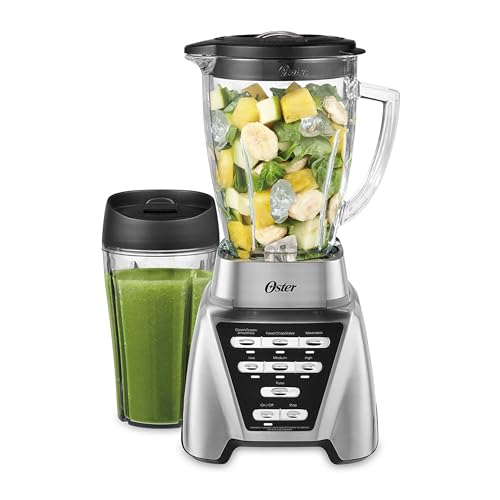
Oster Pro 1200 smoothie blender
is the single product here with a published blade geometry, and it publishes it as a selling
point: "a 3.5-inch blade system, 50% larger than previous Oster models, paired with
dual-direction blade technology". It also publishes 1200 watts, 7 speeds and a 6-cup glass
jar.
So run the only scaling law that matters. The power a rotating element absorbs in a
liquid goes as the cube of its rotation rate and the fifth power of its diameter. That
fifth power is not a typo and it is the whole story.
Hold the rotation rate fixed and make the blade 50 percent larger. The power required
rises by 1.5 to the fifth, which is 7.594 times. The 1200 watts would have to become 9,113.
Nothing in a domestic kitchen supplies that, so the rotation rate cannot have stayed
fixed.
Solve it the other way, at constant power. The rotation rate has to fall as the
diameter to the power of five thirds, which for a 1.5 times diameter means dropping to 50.9
percent. And then the tip speed, which is the product of the two, falls as the diameter to
the power of two thirds, which is 76.3 percent.
A 50 percent larger blade on the same motor is 23.7 percent slower at the tip.
What it gains is area. Swept area goes as the square of the diameter, so 2.25 times, a
125 percent increase. That is a real and useful trade, and the record states the objective
in the right direction without the number: "Better ingredient flow and smoother results are
the aim." Flow is throughput, and more swept area at a lower tip speed is exactly how you
buy throughput. What it is not is more shear, and it is sold in a sentence that sounds like
more of everything.
Every relation here is exact and dimensionless. Tip speed is pi times diameter times
rotation rate. Impeller power goes as the cube of rotation rate and the fifth power of
diameter, which is the standard scaling for a rotating element in a liquid and holds
whatever the fluid is, so the 7.594, the 50.9 percent, the 76.3 percent and the 2.25 are
exact consequences of the published 1.5 ratio. The third panel is the cube root of each
published wattage normalised to the smallest, which is exact given a fixed diameter. The
published inputs are the 3.5 inch blade, the 50 percent claim, and the wattages of 250,
900, 1200 on three machines, 1400, one horsepower and 2.2 horsepower. What is
representative rather than published is the rotation rate itself, because not one blender
we carry states one: the 15,000 and 21,000 are illustrative values chosen to make the
cancellation visible, and any other pair in the same 1.4 ratio gives the same result.
Whether the 50 percent claim means diameter or swept area is also not stated. Read as area
the diameter ratio becomes 1.225 instead of 1.5, the tip speed falls 13.3 percent instead
of 23.7, and the power at fixed rpm rises 2.76 times instead of 7.594. The direction is
identical either way, because the exponent on diameter in the power law is larger than the
exponent in the tip speed.
What the entire published power ladder is worth
Since nobody publishes an rpm, the only route to blade speed is through the wattages,
and at a fixed blade diameter the rotation rate goes as the cube root of the power. So does
the tip speed. That cube root compresses the category savagely.
Lay the published figures out. A
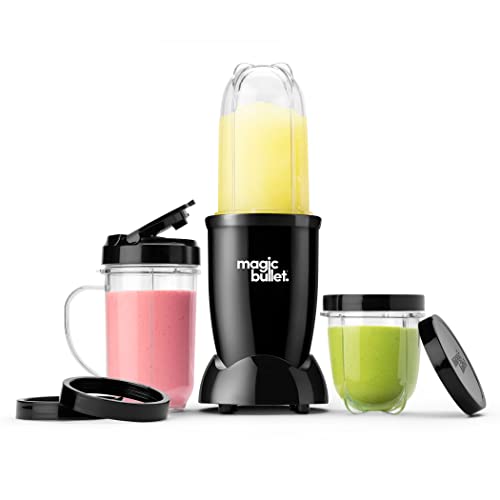
magic bullet blender publishes
250 watts, and its record is refreshingly clear about where that leaves it: "Crushing ice or
grinding hard items like coffee beans is off the table." At the other end a
Ninja Professional Plus
blender publishes 1400 watts with a 72 ounce pitcher marked to a 64 ounce liquid
maximum, and makes an explicit generational comparison: its "1400-watt motor steps up from
the 1000-watt motor in the older BL610".
Two hundred and fifty to 1400 watts is a 5.6 fold range in power. Take the cube root and
it is 1.776, so 78 percent in blade speed, end to end, from the weakest personal blender in
the catalogue to the strongest full-size one.
Now the comparisons people actually agonise over. Three machines here publish 1200 watts.
Against the 1400 watt machine that is a ratio of 1.0528, so 5.3 percent more blade speed.
Against the 900 watt
nutribullet Pro personal blender
it is 1.159, so 16 percent.
Five percent. That is what 200 watts buys at the blade, and it is the gap that most of
the shelf is arranged around. The Ninja's own step from 1000 to 1400 watts, which its
record presents as the headline improvement, is a cube root of 1.4, which is 1.119, or 12
percent at the tip.
None of which makes wattage useless, and it is worth being precise about what it does
buy. Power is what stops the blade stalling when the load rises, which is a completely
different property from how fast it turns unloaded. A
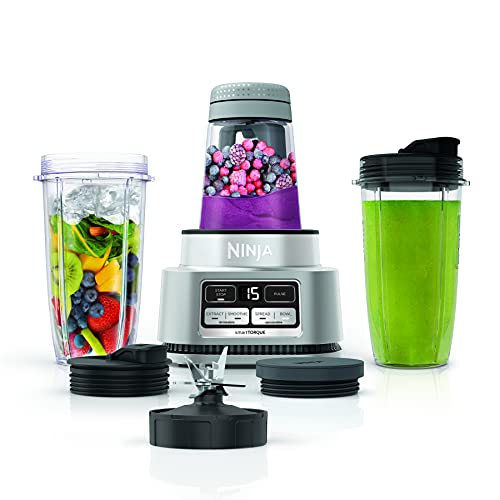
Ninja Foodi personal blender and
smoothie bowl maker publishes 1200 peak watts and names that property directly, with a
motor "claimed to push through heavy loads without stalling or stirring". Not stalling is
the real benefit of a big number. Spinning faster is barely a benefit at all.
A horsepower figure that will not fit through the wall
A
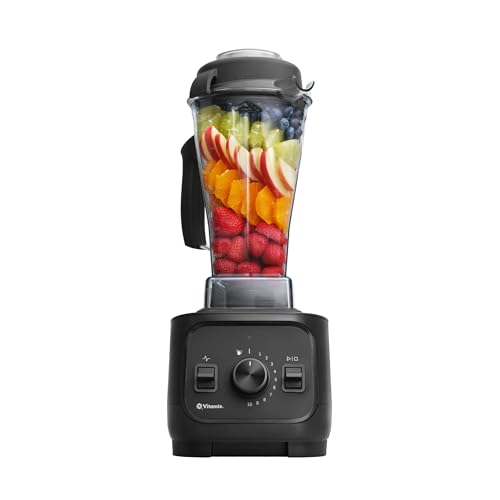
Vitamix Explorian with programs
publishes a 2.2 HP motor alongside a 64 ounce low-profile container, three automatic
programs and 10 variable speeds. Two point two horsepower is 1,641 watts at the output
shaft.
Our page on
blender horsepower versus
watts establishes the distinction this needs, that a horsepower figure is measured at
the shaft and a wattage at the plug, with 50 to 65 percent efficiency between them for
motors of this class. Work it forward. To deliver 1,641 watts at the shaft the motor must
draw between 2,525 and 2,984 watts from the socket, which at 120 volts is 21.0 to 24.9
amps.
And our page on
whether kettle wattage really matters
establishes the ceiling that blocks it: a standard North American outlet on a 15 amp circuit
is 1,800 watts at the absolute maximum. The 2.2 horsepower claim needs 1.40 to 1.66 times
the entire circuit.
So it cannot be a continuous rating, and it is not being offered as one: a peak
horsepower figure on a motor is the momentary output at a particular slip, reached for a
second or two as the load spikes. That is a legitimate thing to specify and it is genuinely
relevant to a machine whose job is surviving a wedge of frozen fruit. It is simply not
comparable with a continuous wattage, and the two numbers appear side by side on the same
shelf as though they were. A
Cuisinart Velocity Ultra Trio rated
at 1 horsepower sits in the middle of the same confusion, with a record that reads the
figure sensibly as "Decent for home use" and a 56 ounce jar, a 3 cup processor and two 16
ounce travel cups. One horsepower is 746 watts at the shaft, which draws 1,148 to 1,492 at
the plug, and that does fit on a 15 amp circuit with room to spare.
The blender none of this can be run on
A
Vitamix VX1 professional-grade
blender is worth naming because it is the most specified and the least computable
product in the group. It publishes a 64 ounce container, precisely engineered container
geometry, stainless steel blades, an included tamper and a 5 year limited warranty, which is
the longest cover here and a real statement.
It publishes no power figure in any unit. No watts, no horsepower, no peak anything. Its
record is candid about the pattern in a neighbouring field, noting "no preset programs or
digital display", and the same minimalism has reached the specification sheet. Which means
this is the one blender in the catalogue where neither rpm, nor tip speed, nor the cube root
of anything can be estimated, and the only honest thing to say about its blade speed is
nothing at all.
The gap is close to category-wide and worth listing properly, because the question asked
how important rpm is and the answer partly depends on being able to find out. Not one of our
nine blenders publishes an rpm. Not one publishes a no-load speed. Not one publishes a blade
count or a blade pitch. Not one publishes the jar's inside diameter, which sets how much of
the contents the blade can reach. Exactly one publishes a blade diameter.
Two numbers in one record with the same unit and different meanings
One more thing fell out of the Oster record while checking the blade claim, and it is in
the performance text: "With 1200 power watts and 900 watts of ice crushing power, this
blender targets tough ingredients".
Two figures, both in watts, for one machine, with no definition of either. Power watts
and ice crushing watts are not two measurements of the same quantity at different operating
points in any standard sense, and nothing on the listing says what distinguishes them.
Plausibly the first is the peak and the second a continuous or loaded figure, which would be
a useful pair if labelled. As published they are a 25 percent discrepancy inside one
sentence.
The same ambiguity runs across the group in a quieter form. The Ninja Foodi publishes
"1200-peak-watt". The Nutribullet full-size combo publishes 1200 watts with no qualifier.
The Oster publishes 1200 power watts. Three machines carry the same number meaning at least
two and possibly three different things, and the Oster's own drawbacks concede the related
gap: "No specific blending time or capacity limits given."
Why the same law shows up on an angle grinder
It is worth noting that the relation at the top of this page is not a kitchen fact. Our
page on
why a disc diameter is really a
speed limit runs the identical pi times diameter times rotation rate on abrasive discs
and finds that the whole industry ladder of printed rpm markings is one constant divided by
diameter, because what a disc is rated for is a rim speed of 80 metres a second.
Which puts the blender in interesting company. A blender blade at 69.82 metres a second
is running at 87 percent of the speed at which a bonded abrasive disc is considered to be at
its structural limit. The two tools are constrained by opposite things, the grinder by what
its material can survive and the blender by what its motor can supply, and they arrive at
roughly the same number from different directions.
It also explains the one practical thing a blender buyer can act on. If tip speed is what
matters and the motor caps it, then how close the food gets to the tip is the remaining
variable, and it is a jar shape question rather than a power question. The tamper that ships
with both Vitamix machines and the Ninja Foodi's built-in tamper are not accessories for
awkward recipes. They are the mechanism that moves food into the fast part of the blade, and
the Ninja Professional Plus record names the consequence of not having one: "Very thick
mixtures may still need the tamper (not included) or a stop and stir."
The honest limit, and what to compare instead
What is exact on this page is every relation in it, and none of them depends on a
product. Tip speed is pi times diameter times rotation rate. Impeller power goes as the cube
of the rotation rate and the fifth power of the diameter, which is the standard scaling for a
rotating element in a liquid and holds whatever the liquid is. So the 7.594, the 50.9
percent, the 76.3 percent and the 2.25 are exact consequences of a published 1.5, and the
cube roots in the third panel are exact consequences of published wattages.
What is representative is the rotation rate itself, because nothing states one. The
15,000 and 21,000 in the first panel are illustrative, chosen to make the cancellation
visible, and any other pair in the same 1.4 ratio gives the same two identical tip speeds.
The absolute figure of 69.82 metres a second should be read as an order of magnitude and the
equality as exact.
The other unstated input is what "50% larger" refers to. Read as diameter the ratio is
1.5 and the tip speed falls 23.7 percent. Read as swept area the ratio is 1.225 and the tip
speed falls 13.3 percent, with the power at fixed rpm rising 2.76 times instead of 7.594.
The direction is identical in both readings and cannot be reversed, because the exponent on
diameter in the power law is always larger than the exponent in the tip speed. Which of the
two readings is intended is not stated anywhere.
What this page deliberately does not compute is anything about ice, and the omission is
deliberate rather than lazy. Breaking ice is a fracture problem that depends on the blade's
edge geometry, its angle of attack and the size of the pieces, and not one listing in this
category publishes an edge angle, a blade thickness or a rake. The three records that make
ice claims make them in watts, which is the one unit that cannot answer the question. So the
honest output is a blade speed and a swept area, and anything further would be invention.
Which leaves what to compare instead, and it is the thing the whole catalogue publishes
well. Nobody states an rpm, but everybody states a jar volume, a blade arrangement and
whether a tamper is included. Those three decide whether the food reaches the blade, and
reaching the blade is worth more than the 5.3 percent of tip speed that 200 extra watts buys.
A 72 ounce pitcher with no tamper and a 14 ounce bowl with one built in are two different
machines in a way that no wattage difference in this category comes close to matching.
Why Blender RPM Needs a Blade Diameter at a glance
Everyday smoothies, shakes, and ice crushing in a home kitchen.
1200 power watts for strong blending 900 watts of ice crushing power 7 speeds with 3 pre-programmed settings Pulse feature for manual control 50% larger blade system compared to previous models Dishwasher safe Boroclass glass jar that withstands thermal shock
To-go cup details are not provided in the specs Glass jar is heavier than plastic alternatives No specific blending time or capacity limits given May not handle very hard ingredients like whole nuts or grains without additional effort
Compact and space-saving design Easy to clean, dishwasher-safe cups Multiple cups and lids for versatility Simple twist-on blade assembly Includes recipe guide for inspiration 1-year limited warranty
250-watt motor is not very powerful Plastic cups may not be very durable No variable speed settings Not suitable for heavy-duty blending
Large-batch frozen drinks and smoothies for families.
1400W motor is more powerful than the original BL610 Three Auto-iQ presets automate blending for consistent results 72-oz pitcher with 64-oz max liquid capacity suits family batches Stacked blade assembly crushes ice and frozen fruit effectively Modern design with clear markings on the pitcher Includes recipe guide and quick start instructions
Plastic pitcher may scratch and stain over time No tamper included for thick mixtures Motor is loud during operation Auto-iQ programs are limited to three presets, not customizable
Daily smoothies and shakes with frozen or fibrous ingredients.
900 watts of power for tough ingredients Simple twist-and-blend operation Includes two cup sizes (32 oz and 24 oz) Flip-top travel lid for on-the-go Compact footprint Easy to clean (cups and blades are dishwasher safe, though not stated, but typical)
Loud motor No preset programs or speed settings Plastic cups may scratch or stain over time Only two cups included, no additional accessories
Ninja Foodi Personal Blender & Smoothie Bowl Maker
Individuals who enjoy thick smoothie bowls and want a portable, powerful personal blender.
Powerful 1200-peak-watt motor with smartTORQUE technology prevents stalling Built-in tamper in the bowl maker helps achieve thick blends without excess liquid 4 preset Auto-iQ programs for one-touch convenience Includes 2 cups and 1 bowl with to-go lids for portability Manual speed and pulse options for custom control Compact design for easy storage
Bowl capacity is only 14-oz, which may be small for some users No specific details on cup materials or dishwasher safety Preset programs may not suit all recipes perfectly Not suitable for large batches or family-sized portions
Families and home cooks who want versatile, high-performance blending with automated convenience.
Powerful 2.2 HP motor handles tough ingredients Three automatic programs for consistent results Large 64-ounce low-profile container fits under cabinets Self-cleaning in 30-60 seconds 10 variable speeds and pulse for precise control BPA-free, dishwasher-safe container
Renewed product may show signs of prior use Noisy operation (typical of high-power blenders) Large footprint requires counter space Programs are limited to three presets
Individuals or small households who want a compact blender and food processor combo for daily smoothies and small prep tasks.
1-horsepower motor handles ice and frozen ingredients well Pre-programmed smoothie and ice crush functions for easy operation Includes a 3-cup food processor with slicer/shredder disc for versatility Two 16-ounce travel cups are included for on-the-go use BPA-free materials and a limited 3-year warranty for peace of mind Tight-seal lid with measuring cap allows adding ingredients while running
Food processor capacity is only 3 cups, limiting batch sizes Travel cups are not designed for blending directly, so you must pour Plastic jars may scratch or retain odors over time Die-cast base is heavy and takes up counter space
Home cooks who want a reliable, powerful blender for daily use and don't need preset programs.
Powerful blending performance Large 64-ounce capacity Includes tamper for thick blends Durable stainless-steel blades 5-year warranty Versatile for hot and cold recipes
No preset programs Manual speed control only No digital display Requires manual cleaning
Why you can trust this guide
We compared these picks using verified manufacturer specifications, current retailer listings, and patterns in owner feedback, alongside editorial research. We focus on measurable differences such as performance, capacity, usability, and build quality. Pickpedia does not present editorial research as laboratory testing, and we do not claim hands-on testing unless it was actually performed.
Best for Everyday smoothies, shakes, and ice crushing in a home kitchen.
8.8/ 10 Pickpedia editorial score
The Oster Pro 1200 is a countertop blender that brings 1200 watts of power, a large 3.5-inch dual-direction blade system, and 7 speeds including 3 pre-programmed settings for convenience. Its 6-cup Boroclass glass jar is dishwasher safe and designed to withstand thermal shock. However, the 24-ounce to-go cup is mentioned in the name but not detailed in the specs, so confirm its inclusion and capacity. This blender is best for everyday blending tasks, but it may not suit heavy-duty crushing or single-serve needs without verification.
FeatureSmart settings technology and 7 speeds including 3 p
FeatureDual direction blade technology for extra blending p
Feature1200 power watts and 900 watts of ice crushing power
Feature6 cup dishwasher safe Boroclass glass jar withstands
FeaturePulse feature for added control and precision; Featu
Pros
1200 power watts for strong blending 900 watts of ice crushing power 7 speeds with 3 pre-programmed settings Pulse feature for manual control 50% larger blade system compared to previous models Dishwasher safe Boroclass glass jar that withstands thermal shock
Cons
To-go cup details are not provided in the specs Glass jar is heavier than plastic alternatives No specific blending time or capacity limits given May not handle very hard ingredients like whole nuts or grains without additional effort
Best for Quick single-serve smoothies and simple sauces.
8.8/ 10 Pickpedia editorial score
The Magic Bullet Blender, Small, Black, 11 Piece Set is a compact personal blender powered by a 250-watt motor. It includes multiple cups, lids, and a cross-blade for various blending tasks. Cleaning is straightforward, and it comes with a 1-year limited warranty. While it lacks advanced features, it's a solid choice for simple blending needs.
FeatureHigh-torque 250-watt motor powers the machine's vers
Included(1) 250W motor base, (1) cross-blade, (1) tall cup
FeatureHassle-free cleaning - simply twist off the blade, r
FeatureItem Includes 10 Piece Cook Set and one Recipe Guide
Pros
Compact and space-saving design Easy to clean, dishwasher-safe cups Multiple cups and lids for versatility Simple twist-on blade assembly Includes recipe guide for inspiration 1-year limited warranty
Cons
250-watt motor is not very powerful Plastic cups may not be very durable No variable speed settings Not suitable for heavy-duty blending
Best for Large-batch frozen drinks and smoothies for families.
8.8/ 10 Pickpedia editorial score
The Ninja Professional Plus Blender BN701 is a 1400-watt upgrade over the classic Ninja Professional, designed for large batches. It features three Auto-iQ preset programs that automate pulsing and blending for consistent results. The 72-ounce pitcher, with a 64-ounce max liquid capacity, suits family needs. It's a straightforward, capable blender for frozen drinks, smoothies, and more.
Increased Motor PowerThe Ninja Professional Plus features a new modern de
Intelligent Auto-iq PrograTake the guesswork out of drink making with 3 Auto-i
Family-size PitcherThe 72-oz. pitcher is great for making large batches
What's Included1400-Peak-Watt Motor Base, 72-oz. Total Crushing Pit
Pros
1400W motor is more powerful than the original BL610 Three Auto-iQ presets automate blending for consistent results 72-oz pitcher with 64-oz max liquid capacity suits family batches Stacked blade assembly crushes ice and frozen fruit effectively Modern design with clear markings on the pitcher Includes recipe guide and quick start instructions
Cons
Plastic pitcher may scratch and stain over time No tamper included for thick mixtures Motor is loud during operation Auto-iQ programs are limited to three presets, not customizable
Best for Daily smoothies and shakes with frozen or fibrous ingredients.
8.8/ 10 Pickpedia editorial score
The nutribullet Pro is a 900-watt personal blender designed for making smoothies, shakes, and food prep. It comes with two cups, a to-go lid, and a simple push-and-twist operation. While it lacks preset programs, its raw power makes it effective for frozen and fibrous ingredients. The main trade-off is noise and limited capacity.
FeatureWith 900 Watts of power, the nutribullet Pro is fast
Power Your Day900 watts of power in this compact powerhouse turns
Included(1) 900W Motor Base, (1) Extractor Blade, (1) 32 oz
Pros
900 watts of power for tough ingredients Simple twist-and-blend operation Includes two cup sizes (32 oz and 24 oz) Flip-top travel lid for on-the-go Compact footprint Easy to clean (cups and blades are dishwasher safe, though not stated, but typical)
Cons
Loud motor No preset programs or speed settings Plastic cups may scratch or stain over time Only two cups included, no additional accessories
Best for Individuals who enjoy thick smoothie bowls and want a portable, powerful personal blender.
8.8/ 10 Pickpedia editorial score
The Ninja Foodi Personal Blender & Smoothie Bowl Maker (SS101) is a compact yet powerful appliance designed for making thick smoothie bowls and smooth nutrient-packed drinks. It features a 1200-peak-watt smartTORQUE motor that handles frozen ingredients without stalling, and includes a 14-oz bowl with a built-in tamper for thick blends, plus a 24-oz cup for smoothies. With 6 functions including 4 Auto-iQ presets, it offers convenience for various recipes. Its portability and included to-go cups make it easy for on-the-go use.
Thick Smoothie Bowls14-oz. Smoothie Bowl Maker with built-in tamper blen
Smooth Nutrient Extraction24-oz. Cup with better breakdown delivers smoother e
Powerful Smarttorque Motor1200-peak-watt power-dense motor with smartTORQUE te
6 Versatile Functions4 preset Auto-iQ programs for one-touch smoothies, e
Easy Storage & Portability2 cups and 1 bowl are easy to take on the go or stor
Pros
Powerful 1200-peak-watt motor with smartTORQUE technology prevents stalling Built-in tamper in the bowl maker helps achieve thick blends without excess liquid 4 preset Auto-iQ programs for one-touch convenience Includes 2 cups and 1 bowl with to-go lids for portability Manual speed and pulse options for custom control Compact design for easy storage
Cons
Bowl capacity is only 14-oz, which may be small for some users No specific details on cup materials or dishwasher safety Preset programs may not suit all recipes perfectly Not suitable for large batches or family-sized portions
Best for Families and home cooks who want versatile, high-performance blending with automated convenience.
8.8/ 10 Pickpedia editorial score
The Vitamix Explorian with Programs is a high-performance blender that simplifies making smoothies, soups, and frozen desserts with its three automatic programs. It features a 2.2 HP motor and a large 64-ounce container, making it suitable for big batches. The self-cleaning function is convenient, but as a renewed product, buyers should verify its condition. Overall, it's a solid choice for those wanting reliable blending without manual adjustments.
IncludedExplorian with Programs Renewed Premium blender moto
Three Blending ProgramsThree automatic Blending Programs for Smoothies, Hot
2.2 Hp MotorEquipped with a high-performance motor, this counter
64-Ounce ContainerThe BPA-free, dishwasher-safe blending container is
Self-CleaningSimply add warm water, a drop of dish soap to the co
Pros
Powerful 2.2 HP motor handles tough ingredients Three automatic programs for consistent results Large 64-ounce low-profile container fits under cabinets Self-cleaning in 30-60 seconds 10 variable speeds and pulse for precise control BPA-free, dishwasher-safe container
Cons
Renewed product may show signs of prior use Noisy operation (typical of high-power blenders) Large footprint requires counter space Programs are limited to three presets
Best for Individuals or small households who want a compact blender and food processor combo for daily smoothies and small prep tasks.
8.8/ 10 Pickpedia editorial score
The Cuisinart BFP-650P1 combines a 1-horsepower motor with a blender jar, a food processor attachment, and travel cups in one unit. It offers pre-programmed smoothie and ice crush functions, plus a slicer/shredder disc for added versatility. While it performs well on basic tasks, the 56-ounce jar and 3-cup processor may feel limited for larger batches. The included travel cups are a nice touch, but the overall design has some ergonomic quirks.
Superior PerformanceHigh-performance 1-horsepower motor with 3-in-1 blen
Must-have FeaturesPre-programmed smoothie and ice crush functions, tig
Included56-ounce BPA-free Tritan plastic jar, 3-cup food pro
Limited 3-year WarrantyRefer to user manual for troubleshooting steps and q
Pros
1-horsepower motor handles ice and frozen ingredients well Pre-programmed smoothie and ice crush functions for easy operation Includes a 3-cup food processor with slicer/shredder disc for versatility Two 16-ounce travel cups are included for on-the-go use BPA-free materials and a limited 3-year warranty for peace of mind Tight-seal lid with measuring cap allows adding ingredients while running
Cons
Food processor capacity is only 3 cups, limiting batch sizes Travel cups are not designed for blending directly, so you must pour Plastic jars may scratch or retain odors over time Die-cast base is heavy and takes up counter space
Best for Home cooks who want a reliable, powerful blender for daily use and don't need preset programs.
8.8/ 10 Pickpedia editorial score
The Vitamix VX1 is a professional-grade blender that delivers the iconic Vitamix performance with a 64-ounce container and stainless-steel blades. It is built to last with a 5-year warranty, making it a reliable choice for heavy daily use. However, it lacks preset programs and digital controls, so you'll need to manually adjust speed and time. It is ideal for those who want a straightforward, high-performance blender without extra features.
Classic 64 Oz. ContainerThe precisely engineered geometry of the container a
5-Year Limited WarrantyBuilt to last and backed by our industry-leading war
Pros
Powerful blending performance Large 64-ounce capacity Includes tamper for thick blends Durable stainless-steel blades 5-year warranty Versatile for hot and cold recipes
Cons
No preset programs Manual speed control only No digital display Requires manual cleaning