PBy the Pickpedia Team·4 picks compared·Last verified October 2026
Affiliate disclosure: As an Amazon Associate, Pickpedia earns from qualifying purchases. Links on this page are paid links, and we may earn a commission at no extra cost to you. This never affects our picks or scores.
This page contains affiliate links. If you buy through one we may earn a
commission, at no cost to you.
Summer is the clue and the high endurance part is the red herring. Endurance
describes how many times a cell can be erased and rewritten, and at a realistic dash
cam write rate that allowance takes years to exhaust. What fails in July and not in
January is a temperature problem, and temperature attacks a different property
entirely: how long a cell holds its charge once written.
There is also an arithmetic result worth having before any of that, because it
changes what to buy. Program and erase cycles per year are simply the bytes written per
year divided by the capacity of the card. So capacity and endurance are the same lever,
one for one, and capacity is the number that is always printed while endurance never
is. A 512 GB ordinary card outlasts a 64 GB high endurance card.
Every rating on a card is a speed floor
Start with what the marks mean, because none of them is about the failure in
question. A Kingston Canvas Go
Plus 256GB microSD card is described in its record as carrying "U3 and V30 ratings
[which] ensure consistent performance", along with an A2 classification. Those are
three statements about speed and nothing else.
U3 means a minimum sustained sequential write of 30 megabytes a second. V30 means a
minimum sustained sequential write of 30 megabytes a second. They are the same promise
in two notations, which is why cards print both and why nobody notices that one of the
two marks is redundant. A2 is a random operations per second floor, aimed at running
applications off the card. UHS-I and UHS-II are bus interfaces with theoretical
ceilings of 104 and 312 megabytes a second. The Speed Class number is another
sequential write minimum.
Now the demand. A 1080p dash cam running at 15 megabits a second writes 1.875
megabytes a second. Against a V30 guarantee of 30, that is 6.25 percent of the floor,
a headroom of 16 times. A 4K camera at 60 megabits writes 7.5 megabytes a second, which
is still only a quarter of the guarantee.
So every rating on the card describes a quantity the application never comes close
to needing, which is worth saying because of what our own page recommends. Our
dash cam coverage advises planning for "a high
endurance card rated for continuous recording to avoid dropouts". The first half of
that is the subject of the next section and the second half is a category error:
dropouts are a write speed failure, and endurance has nothing to do with them. A card
that drops frames is failing its V30 floor. A card that is out of endurance does not
drop frames, it stops accepting writes. Our
microSD card roundup gets this right, treating
"a string of ratings like u3, v30 and a2" as the speed marks they are.
Endurance is capacity, and capacity is published
Here is the part that makes the purchase decision. Flash wears out by program and
erase cycles on each block, and a card's controller spreads writes across all of it. So
the number of times the whole card has been cycled in a year is the total written in
that year divided by how big it is.
At 1.875 megabytes a second, a camera writes 6.75 gigabytes an hour. Two hours of
driving a day is 13.5 gigabytes a day, which is 4.93 terabytes a year. Leave parking
mode recording around the clock and it is 162 gigabytes a day, 59.1 terabytes a
year.
Divide by capacity and the cycles follow. In parking mode, a 64 gigabyte card is
cycled 924 times a year, a 256 is cycled 231 times, and a 512 is cycled 115.5 times.
Consumer flash is generally good for somewhere between 500 and 1,000 cycles, and a part
sold as high endurance is typically rated nearer 3,000.
So, with parking mode running: a 64 gigabyte ordinary card lasts between six and
thirteen months. A 64 gigabyte high endurance card lasts 3.25 years. A 256 gigabyte
ordinary card lasts 2.2 to 4.3 years. And a
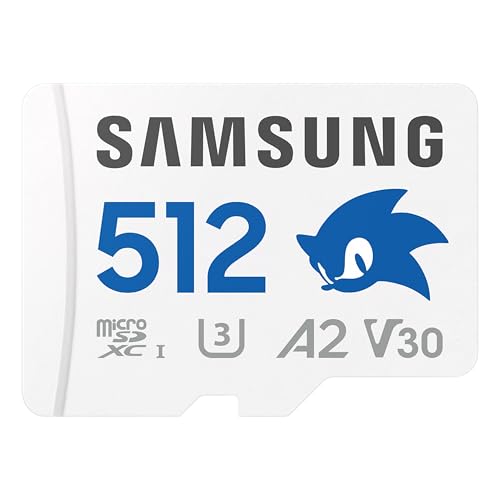
Samsung PRO Plus 512GB
microSDXC lasts 4.3 to 8.7 years, which is longer than the high endurance card at
a quarter the capacity, for the simple reason that there is eight times as much silicon
to spread the same writes across.
That card's record has an irony in it. Its drawbacks note that the "Speed class
(U3/V30) not specified", so the one card in our catalogue whose capacity makes it the
strongest endurance choice is the one that does not print the only class it carries.
And its 180 megabytes a second read with 130 write is far beyond anything a dash cam
asks of it, which is the pattern of the whole category: generous on the published
number, silent on the governing one.
The conclusion is worth stating plainly because it inverts the usual advice. Buying
four times the capacity buys exactly four times the endurance. Buying a high endurance
label buys perhaps three to six times the cycles, and the label is not a number, and no
card on this site publishes one. Our
memory storage guide suggests considering "cards
with a higher endurance rating", which is sensible and unactionable, because there is no
rating to compare.
Write rates assume 15 megabits a second for 1080p and 60 for 4K, which are ordinary
dash cam bitrates and are not published by any camera we carry. Cycle life assumes 500
to 1,000 program and erase cycles for consumer flash and 3,000 for a high endurance
part, neither of which any card listing on this site states. The retention ratios are
Arrhenius with an activation energy of 1.1 electron volts, a representative figure for
NAND charge loss rather than a measured one, so read them as orders of magnitude. The
camera temperature is computed from a 70 by 50 by 30 mm body, an effective 12 watts per
square metre kelvin in still air, 2.5 watts of internal dissipation and 800 watts per
square metre of direct sun at 0.8 absorptivity.
The part that fails in summer
None of the above explains a seasonal failure, and seasonal is what the question
describes. The mechanism is retention rather than endurance, and it is the same
Arrhenius law that turns up all over this site in different disguises.
A flash cell stores a few hundred electrons on a floating gate behind an insulating
oxide. They leak out, slowly, and the leak is thermally activated with an activation
energy somewhere near 1.1 electron volts. Put that through the Arrhenius expression and
the retention time shortens by a factor of 3.84 for every ten kelvin, by 136 times going
from 30 degrees to 70, and by 391 times going from 30 to 80.
Three hundred and ninety one. A card that would hold its contents for a year on a
shelf at 30 degrees holds them for less than a day at 80.
The same law, with different numbers, drives our page on
what a 100,000 hour LED
rating actually promises, where the degrading thing is a phosphor, and it drives the
cooking rate arithmetic in our page on
why steam cannot get hotter
than 100 degrees, where the same exponential is the reason a sealed pot is quick.
Three different products, one relationship, and in this case it is working against
you.
How hot the card actually gets
So the question is whether a dash cam reaches those temperatures, and it does,
computably.
A summer cabin behind closed glass sits in the fifties Celsius, and the air near the
windscreen is the hottest part of it. Call it 55 degrees. The camera adds its own heat:
a body of roughly 70 by 50 by 30 millimetres has 142 square centimetres of surface,
and in the still air behind a windscreen the effective coefficient for convection plus
radiation is something like 12 watts per square metre kelvin. Two and a half watts of
electronics then sits 14.7 kelvin above ambient, which puts the card at about 70.
Then put the sun on it. Direct solar radiation is around 800 watts per square metre,
the camera presents perhaps 35 square centimetres to it, and a dark plastic case absorbs
most of what lands. That is 2.24 watts, which is comparable to the entire power
consumption of the camera, so it very nearly doubles the self heating and takes the
total rise to 27.8 kelvin. Eighty three degrees at the card.
The usual operating ceiling for a microSD card is 85 degrees. So a camera in full
sun on a hot day is operating its card at the edge of its specification, and a dark
dashboard surface or a car parked facing the afternoon sun comfortably exceeds it.
And here is the gap. Not one card listing in our catalogue publishes an operating
temperature range. One of them says so itself, which is more useful than the rest: a
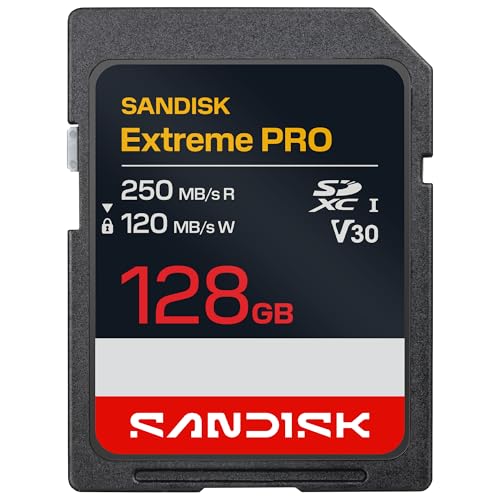
SanDisk 128GB Extreme PRO SD
card lists among its drawbacks "No specific temperature or waterproof ratings
provided". That is precisely the figure this question needs, identified as missing in
our own record, on a card otherwise described in terms of 250 megabytes a second of read
speed that no dash cam will ever use.
The durability language that does appear is worth reading carefully too. A
SanDisk 256GB Extreme microSD
card with adapter is described as robust enough "to withstand harsh conditions", and
its own drawbacks are straight about what that means: "Durability claims are based on
SanDisk testing, not independent." Those claims are generally about water, shock,
X-rays and magnetic fields, which are the hazards a card in a pocket faces. None of them
is sustained operation at 80 degrees, which is the hazard a card glued to a windscreen
faces.
Why the card dies rather than just losing clips
One more piece, because it explains the severity. If retention were the whole story
you would expect corrupted video and nothing worse, and in fact the video is the one
thing that does not care. Loop recording overwrites every file within hours, so a clip
only has to survive until the next pass. A retention time of a day is ample for the
footage.
What does not get rewritten is the card's own bookkeeping. A flash controller keeps a
flash translation layer, a set of tables mapping logical blocks to physical ones along
with wear counts and bad block lists, and those are written rarely and must stay
readable. Lose enough of that and the controller cannot find anything, which is why a
heat damaged card does not come back as a card with some bad files. It comes back as
read only, or as zero bytes, or not at all.
There is also an awkward asymmetry in flash physics that makes a hot camera the worst
case on both counts. Cells program more reliably when hot and retain worse when hot, so
the controller writes the tables with high confidence into cells that will lose them
fastest, and it has no way of knowing the difference.
The honest limit
Three soft numbers here and it is worth being clear which. The activation energy of
1.1 electron volts is representative for NAND charge loss rather than measured on any
particular part, and it varies with process and with how worn the cell already is, so
treat the 391 as an order of magnitude and not a figure. The 500 to 1,000 and 3,000
cycle endurances are typical values for consumer and high endurance flash, published by
nobody. And the 15 megabit bitrate is an ordinary dash cam figure that no camera listing
we carry states.
What is firm is the structure. Cycles per year is bytes divided by capacity, which is
arithmetic, so the capacity for endurance substitution holds exactly whatever the cycle
rating turns out to be. The temperature calculation uses the camera's own power and the
solar constant and nothing proprietary. And the distinction between a speed mark and an
endurance property is a fact about the specifications rather than an estimate.
What to do, and the three free moves
First and largest: turn parking mode off, or set it to trigger on impact or motion
rather than recording continuously. That is a twelvefold cut in the write load, and it
takes a 64 gigabyte ordinary card from six to thirteen months up to six and a half to
thirteen years. No card on the market offers an improvement of that size. If you need
parking surveillance, accept that you have chosen to consume a card and plan on
replacing it rather than on finding one that survives.
Second: buy capacity rather than a label. It is the same lever, it is always
published, and it comes with the side benefit of a longer loop before footage is
overwritten.
Third: get the camera out of direct sun. The solar gain was very nearly as large as
the camera's own dissipation, so simply mounting behind the rear view mirror, in the
shadow it casts, removes roughly half the temperature rise. In Arrhenius terms, 13
kelvin is a factor of about five on the retention clock, for a mount position that is
free.
And one diagnostic, also free, which settles the question the asker was really
asking. Endurance failure is gradual and aseasonal: writes slow down, the camera starts
reporting errors on particular files, and eventually the card goes read only, at any
time of year. Thermal failure is abrupt and seasonal, and it happens to cards that were
working perfectly in April. Two cards killed in one summer is the second pattern, and no
amount of endurance rating addresses it.
Why a Dash Cam Kills Memory Cards in Summer at a glance
4K video recording on action cameras and drones, and Android gaming.
Fast read speeds up to 200MB/s U3 and V30 ratings for smooth 4K video A2 class for better app performance Suitable for action cameras, drones, and consoles Comes with SD adapter (implied by standard packaging) 256GB capacity for ample storage
Write speed not specified Actual speeds depend on device and reader Not all devices support microSDXC No durability ratings provided
Samsung PRO Plus Sonic The Hedgehog 512GB microSDXC+Adapter
Action cameras, drones, and handheld gaming consoles
Fast read/write speeds up to 180/130 MB/s 6-proof protection with 10-year warranty Includes SD adapter Samsung Magician software for health monitoring Available in multiple capacities up to 1TB Fun Sonic the Hedgehog design
Speed class (U3/V30) not specified Sonic branding may not appeal to everyone Real-world speeds may vary Warranty conditions not detailed
SANDISK 128GB Extreme PRO SD UHS-I Card - Up to 250MB/s
4K UHD video recording and high-res stills in a durable, reliable SD card.
Fast read speeds up to 250MB/s U3 and V30 ratings for smooth 4K UHD video Durable design for extreme conditions Large capacity options up to 2TB Comes with desktop app for content management Reliable brand reputation
Write speed on 128GB model may be lower than advertised maximum No specific temperature or waterproof ratings provided Desktop app may not be available on all platforms Capacity and speed trade-off
Content creators shooting 5K video or high-res photos in challenging environments.
High read/write speeds up to 245MB/s and 170MB/s Supports 5K video with U3 and V30 ratings Durable: waterproof, shockproof, X-ray proof, etc. Large capacity options up to 2TB Includes SD adapter for versatility Compatible with SanDisk Memory Zone app for easy management
No USB card reader included Memory Zone app only for Android and desktop, not iOS Actual speeds may vary by device Durability claims are based on SanDisk testing, not independent
Why you can trust this guide
We compared these picks using verified manufacturer specifications, current retailer listings, and patterns in owner feedback, alongside editorial research. We focus on measurable differences such as performance, capacity, usability, and build quality. Pickpedia does not present editorial research as laboratory testing, and we do not claim hands-on testing unless it was actually performed.
Best for 4K video recording on action cameras and drones, and Android gaming.
8.8/ 10 Pickpedia editorial score
The Kingston Canvas Go Plus 256GB microSD card offers fast transfer speeds up to 200MB/s, making it suitable for quick file transfers and smooth 4K video recording. Its U3 and V30 ratings ensure consistent performance for action cameras and drones, while A2 classification enhances app performance on Android devices. However, actual speeds may vary depending on your device and card reader, and it is not ideal for devices that require microSDXC support.
FeatureLightning-Fast Transfers , Speeds up to 200MB/s let
Feature4K Ultra-HD Ready , U3 and V30 speed ratings support
FeatureOptimized for Mobile Gaming & Consoles , A2 Applicat
Pros
Fast read speeds up to 200MB/s U3 and V30 ratings for smooth 4K video A2 class for better app performance Suitable for action cameras, drones, and consoles Comes with SD adapter (implied by standard packaging) 256GB capacity for ample storage
Cons
Write speed not specified Actual speeds depend on device and reader Not all devices support microSDXC No durability ratings provided
Best for Action cameras, drones, and handheld gaming consoles
8.8/ 10 Pickpedia editorial score
The Samsung PRO Plus Sonic The Hedgehog 512GB microSDXC card offers fast read/write speeds (up to 180/130 MB/s) and a rugged 6-proof design, making it a solid choice for action cameras, drones, or handheld gaming. It comes with an SD adapter and includes Samsung Magician software for health monitoring and authenticity checks. However, the Sonic branding is cosmetic, and you'll need to confirm your camera supports UHS-I and the card's speed class for 4K video recording.
Read/write Speeds Up To 18Load fast and play faster. With read and write speed
Storage Capacities From 12Level up your gaming library with a wide range of st
6-proof Protection With 10The Sonic the HedgehogTM PRO Plus microSD card stand
Magician SoftwareSamsung Magician Software helps you unlock unstoppab
Pros
Fast read/write speeds up to 180/130 MB/s 6-proof protection with 10-year warranty Includes SD adapter Samsung Magician software for health monitoring Available in multiple capacities up to 1TB Fun Sonic the Hedgehog design
Cons
Speed class (U3/V30) not specified Sonic branding may not appeal to everyone Real-world speeds may vary Warranty conditions not detailed
Best for 4K UHD video recording and high-res stills in a durable, reliable SD card.
8.8/ 10 Pickpedia editorial score
The SanDisk Extreme PRO SD UHS-I card offers impressive read speeds up to 250MB/s and write speeds up to 170MB/s, making it a solid choice for 4K UHD recording and rapid photo bursts. It carries U3 and V30 speed ratings, ensuring smooth video capture, and is built to withstand harsh conditions. However, the maximum write speed is only available on higher capacity models, and the 128GB version may have lower write speeds. It's a dependable card for enthusiasts, but not the absolute fastest for sustained writes.
FeatureCAPTURE LARGER THAN LIFE. Unlock 4K UHD(3) brillianc
FeatureSPEED BARRIERS SHATTERED. Save precious moments with
FeatureMAXIMIZE WITH MASSIVE CAPACITY. Capture for longer a
FeatureDEFY THE ELEMENTS. Unrelentingly resilient, Sandisk
FeatureCONTENT MANAGEMENT, SIMPLIFIED. Back up, organize, a
Pros
Fast read speeds up to 250MB/s U3 and V30 ratings for smooth 4K UHD video Durable design for extreme conditions Large capacity options up to 2TB Comes with desktop app for content management Reliable brand reputation
Cons
Write speed on 128GB model may be lower than advertised maximum No specific temperature or waterproof ratings provided Desktop app may not be available on all platforms Capacity and speed trade-off
Best for Content creators shooting 5K video or high-res photos in challenging environments.
8.8/ 10 Pickpedia editorial score
The SanDisk 256GB Extreme microSD card offers impressive read and write speeds, making it a solid choice for capturing 5K video and high-resolution photos. Its robust durability features ensure it can withstand harsh conditions, and the included adapter adds versatility. While it excels in performance, the lack of a USB reader in the package may be a minor inconvenience for some users.
FeatureCAPTURE LARGER THAN LIFE. Unlock startling 5K[3] poi
FeatureSPEED BARRIERS SHATTERED. Save precious moments with
FeatureMAXIMIZE WITH MASSIVE CAPACITY. Record longer and st
FeatureDURABILITY YOU CAN COUNT ON. SANDISK microSD cards a
FeatureEASY CONTENT MANAGEMENT. Easily back up, organize, a
Pros
High read/write speeds up to 245MB/s and 170MB/s Supports 5K video with U3 and V30 ratings Durable: waterproof, shockproof, X-ray proof, etc. Large capacity options up to 2TB Includes SD adapter for versatility Compatible with SanDisk Memory Zone app for easy management
Cons
No USB card reader included Memory Zone app only for Android and desktop, not iOS Actual speeds may vary by device Durability claims are based on SanDisk testing, not independent