Tools & DIY How to Drill Accurate Holes in Tile and Masonry
P
By the Pickpedia Team
·1 picks compared
·Last verified October 2026
Affiliate disclosure: As an Amazon Associate, Pickpedia earns from qualifying purchases. Links on this page are paid links, and we may earn a commission at no extra cost to you. This never affects our picks or scores.
Accurate holes in tile and masonry come down to control, not force. A few habits keep every hole where you want it. Here is how.
Position before you power up
Mark the spot and steady the bit before pulling the trigger. A slant or eccentric head helps here, since it resists sliding across slick glazed surfaces at the start.
Match method to material
Softer stock like wood, brick, and cement drills dry. Hard tile, porcelain, and marble need water or coolant to protect the tip and keep the cut clean.
Choose a carbide tip
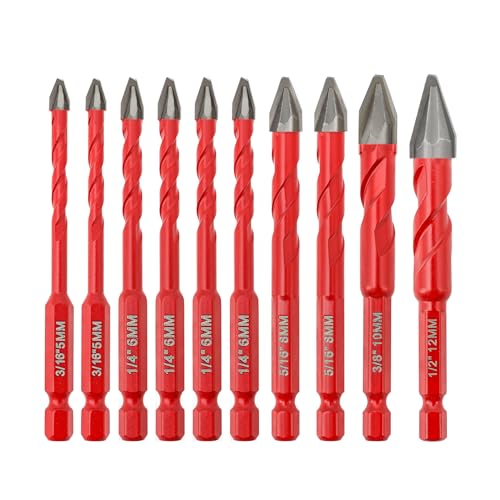
Masonry and tile chew up soft bits. Tungsten carbide tips resist abrasion on dense surfaces. An eccentric tile drill bit set pairs that tip with a positioning head for tricky starts.
Set the right speed
Follow the maker's guidance, often at least 2000 RPM. Steady pressure beats brute force, which only builds heat and shortens the life of any bit.
Watch for hidden hazards
In concrete, avoid embedded reinforcing steel, which can grab a bit and ruin a cut. Scan the wall and plan your hole placement around it.
The bottom line
Position first, match wet or dry to the material, use carbide, and control speed. Follow those and accurate holes in tile or masonry stop being a gamble.
How to Drill Accurate Holes in Tile and Masonry at a glance
Why you can trust this guide
We compared these picks using verified manufacturer specifications, current retailer listings, and patterns in owner feedback, alongside editorial research. We focus on measurable differences such as performance, capacity, usability, and build quality. Pickpedia does not present editorial research as laboratory testing, and we do not claim hands-on testing unless it was actually performed.
Our top picks
This FOCSTOL set holds ten skewed-head eccentric bits sized from 5mm to 12mm. Each carries an industrial tungsten carbide tip welded to a high-strength steel body, plus a quick-change hex shank. The slant-head design aims for precise positioning, fast drilling, and easy chip removal. Dry use suits softer materials like wood and cement, while glass and porcelain tile call for water or coolant.
Pieces10 bits
Diameters5, 6, 8, 10, 12mm
Total length90mm
Working length54mm
Cutter head length9 to 20mm
ShankQuick-change hex, 6.35mm
TipWelded tungsten carbide
Recommended speedAt least 2000 RPM
Pros
- Slant head aids precise positioning
- Tungsten carbide tips resist abrasion
- Ten sizes cover common hole needs
- Quick-change hex shank speeds swaps
- Spiral grooves clear chips well
- Drills or guides other bits into place
Cons
- Wear and life claims are maker-stated
- Hard tile needs water or coolant
- Must avoid embedded reinforcing steel
- Angle grinder needs a separate chuck
Read our full review → Check price on Amazon ›
Note: Availability and specifications change often. Always confirm the current details on Amazon before buying.