Tools & DIY Tire Pressure Explained: Why It Matters and How to Check It
P
By the Pickpedia Team
·1 picks compared
·Last verified August 2026
Affiliate disclosure: As an Amazon Associate, Pickpedia earns from qualifying purchases. Links on this page are paid links, and we may earn a commission at no extra cost to you. This never affects our picks or scores.
Correct tire pressure saves fuel, makes tires last longer and keeps you safer. Get it wrong and you lose on all three. Use the number on your door jamb, not the tire wall. Check the tires cold. The whole job takes about two minutes once you know how.
Why the right pressure matters so much
A tire is really a balloon of air doing a hard job. The air, not the rubber, carries the weight of the car. Run it too low and more of the tire drags on the road. That raises rolling resistance, wastes fuel, makes steering feel vague, and wears the tire edges early while running them hot, a real safety risk. Pump it too high and the opposite happens. A smaller patch touches the road, so grip and braking suffer and the center of the tread wears faster. The correct pressure is the sweet spot for safety, economy and tire life.
Where to find your correct pressure
Almost everyone makes the same mistake. They use the number printed on the tire itself. That figure is the tire's maximum pressure, not the right pressure for your car. Your vehicle maker sets the correct number and prints it on a sticker in the driver's door jamb, and in the owner's manual. Use that one. It usually comes in PSI. Larger vehicles and heavier loads sometimes call for a higher figure, which the sticker will show.
Check them cold
Pressure rises as tires heat up from driving, so a reading after a long drive runs higher than the true figure. Always check when the tires are cold. That means the car has sat for a few hours or driven only a short distance. Topping up while they are warm? Aim slightly above target, since the pressure settles down as they cool. First thing in the morning is ideal.
How to check and correct it
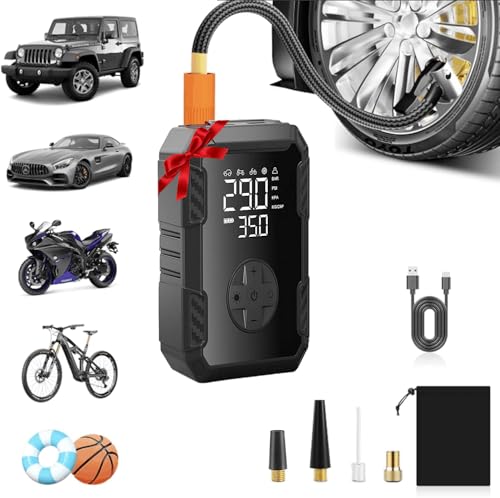
The routine is simple. Unscrew the valve cap. Press a gauge onto the valve for a reading. Compare it to your door-sticker figure. Low? Add air. High? Press the little pin in the valve to release some, then re-check. A gas-station machine works, but many sit out of order or read inaccurately, and the drive there warms the tires before you start. A cordless unit like the Lazyshine portable tire inflator we looked at turns this into a two-minute job on the driveway, since you set the target and it stops there on its own. Do not forget the spare, easy to neglect until you need it.
How often should you check?
Tires lose a little air naturally, roughly one to two PSI a month, and more in cold weather, since pressure drops as temperature falls. Check about once a month, and before any long trip. Does one tire keep needing air far more than the rest? That points to a slow puncture or a leaking valve worth getting looked at, rather than something to keep topping up forever.
A note on warning lights
Many modern cars carry a tire pressure monitoring system that lights a dashboard warning when a tire runs low. Treat it as a last line of defence, not your routine check, because it usually triggers only once pressure is already well down. A monthly manual check keeps you ahead of it. Remember that the light in cold weather is often just the temperature drop, so check and top up rather than panic.
The bottom line
Right pressure means safer braking, better fuel economy and longer-lasting tires, for nothing more than a couple of minutes a month. Use the figure from your door jamb, not the tire wall. Check them cold. Keep a gauge or a small inflator handy. It is one of the simplest, highest-value habits in car ownership.
Tire Pressure Explained: Why It Matters and How to Check It at a glance
Why you can trust this guide
We compared these picks using verified manufacturer specifications, current retailer listings, and patterns in owner feedback, alongside editorial research. We focus on measurable differences such as performance, capacity, usability, and build quality. Pickpedia does not present editorial research as laboratory testing, and we do not claim hands-on testing unless it was actually performed.
Our top picks
A cordless, rechargeable portable tire inflator with four preset modes for car, motorcycle, bike and ball, a digital gauge and auto shut-off that stops at your set pressure, plus a built-in LED work and emergency light.
BrandLazyshine
TypeCordless portable air inflator
PowerBuilt-in rechargeable battery
Modes4 presets: car, motorcycle, bike, ball
ControlDigital gauge, auto shut-off at target
LightBuilt-in LED, 3 modes
PortabilityLightweight, glovebox size
ColourDark black
Pros
- Fully cordless and rechargeable
- Smart presets with auto shut-off at target
- Clear digital pressure gauge
- Built-in LED light for roadside use
- Handles car, bike, motorcycle and balls
- Compact glovebox size
Cons
- A top-up tool, slow to fill large tires from flat
- Battery warms up and gives limited inflations per charge
- Re-inflates but does not repair a puncture
Read our full review → Check price on Amazon ›
Note: Availability and specifications change often. Always confirm the current details on Amazon before buying.