Tools & DIY 9 Water Pressure Booster Pumps for Weak Faucets
P
By the Pickpedia Team
·9 picks compared
·Last verified September 2026
Affiliate disclosure: As an Amazon Associate, Pickpedia earns from qualifying purchases. Links on this page are paid links, and we may earn a commission at no extra cost to you. This never affects our picks or scores.
Quick answer
For weak faucets across a whole home, a variable speed permanent magnet booster with automatic constant pressure suits most houses. Diaphragm pumps fit RVs and single fixtures. Match head, flow, and PSI range to your floors, then confirm inlet type and self priming depth before buying.
9 Water Pressure Booster Pumps for Weak Faucets at a glance
Why you can trust this guide
We compared these picks using verified manufacturer specifications, available manuals and documentation, current retailer listings, and patterns in owner feedback, alongside editorial research. We focus on measurable differences such as performance, capacity, usability, and build quality. Pickpedia does not present editorial research as laboratory testing, and we do not claim hands-on testing unless it was actually performed.
How we chose: We compared nine water pressure booster pumps across flow rate, maximum head, adjustable PSI range, noise level, motor type, and built in protections.
Weak faucet pressure usually traces back to low incoming supply, long pipe runs, or upper floors starved of flow. A booster pump raises pressure on demand so showers and taps behave normally. Choosing well means reading real specifications rather than marketing claims.
Our picks split into two camps. Whole house variable speed models hold constant pressure across many fixtures, while compact diaphragm pumps switch on and off for RVs and single points. Every product below is grounded in its listed features, including one honest limitation each.
Our top picks
Aquastrong lists a fully integrated Smart 45 pump that monitors demand and holds constant pressure at every tap. Specs cite up to 1500 GPH flow, 150 ft head, and an adjustable 22 to 80 PSI range preset near 44 PSI. A stainless steel impeller handles water up to 175F, while a permanent magnet motor and inverter run around 55 dB with claimed energy savings over 50 percent. Owners get dry run, overheat, leakage, and block protections plus a maintenance free tank. One limitation, based on specifications, is a shallow well suction ceiling near 26 ft, so deep wells fall outside its stated scope.
Max flow1500 GPH
Max head150 ft
Pressure range22 to 80 PSI
Noisearound 55 dB
Pros
- Constant pressure across all house taps
- Stainless impeller rated to 175F
- Broad set of automatic protections
Cons
- Suction limited to shallow wells near 26 ft
- Louder than water cooled rivals
Check price on Amazon ›
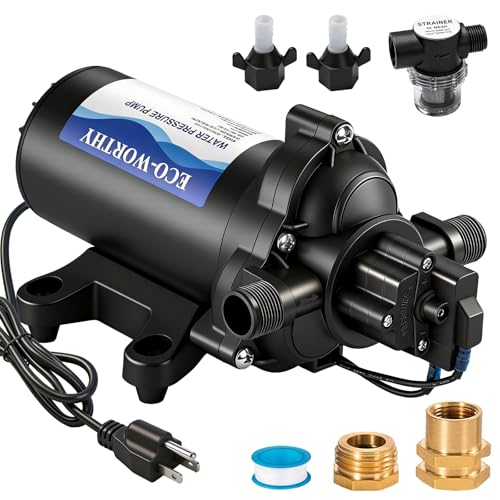
ECO-WORTHY builds this as a 110V AC diaphragm pump rated for 4.0 GPM and 50 PSI, drawing only 1.3 max amps. Its pressure switch turns the motor on and off automatically, so it quiets down when faucets close. Listed self priming reaches 9.8 vertical feet with lift up to 131 feet, and thermal overload protection cuts power above 203F. Reviewers note versatility across RV, marine, sprinkler, and faucet duty. Based on specifications, continuous operation is rated for roughly one hour, so it favors intermittent draw rather than nonstop whole house service.
Flow4.0 GPM
Switch on pressure50 PSI
Adjustable range45 to 70 PSI
Self priming9.8 ft
Pros
- Runs on AC without a battery
- Automatic demand switching
- Thermal overload cutoff built in
Cons
- Rated for about one hour continuous
- Flow trails whole house models
Check price on Amazon ›
This V3-45 PRO pairs a 1.35 HP motor with a stated 180 ft maximum head and 1600 GPH flow, one of the strongest here. Its adjustable range spans 15 to 90 PSI, though listings note mains water caps near 80 PSI and tank feeds near 58 PSI. A high speed 8000 RPM permanent magnet motor and water cooling technology keep noise around 30 dB. The SmartFarintl app allows remote monitoring plus OTA firmware upgrades. Based on specifications, that firmware dependency is the tradeoff, since resolving fault codes may require app updates rather than a purely manual fix.
Motor1.35 HP
Max head180 ft
Max flow1600 GPH
Noisearound 30 dB
Pros
- Highest listed head in this lineup
- Quiet water cooled operation
- Remote app monitoring and OTA updates
Cons
- Fault fixes may need app firmware updates
- Mains pressure capped below the 90 PSI headline
Check price on Amazon ›
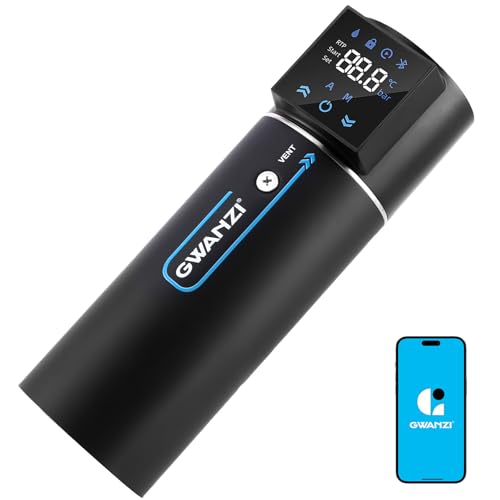
GWANZI positions the K90S600L with an 800W motor, 150 ft maximum head, and 1320 GPH flow. Its adjustable 15 to 90 PSI range covers kitchens, baths, and whole house needs, with mains capped near 80 PSI. A 304 stainless steel pump body targets clean delivery, while water cooling holds noise near 30 dB. The SmartFarintl app enables wireless control within roughly 30 feet plus OTA upgrades. Based on specifications, that short connection distance means app control works best nearby, and remote access away from home depends on the app rather than a direct link.
Motor800W
Max head150 ft
Max flow1320 GPH
Noisearound 30 dB
Pros
- 304 stainless steel internal body
- Quiet water cooled running
- Wireless control with OTA updates
Cons
- App connection reaches only about 30 feet
- Mains pressure sits under the headline figure
Check price on Amazon ›
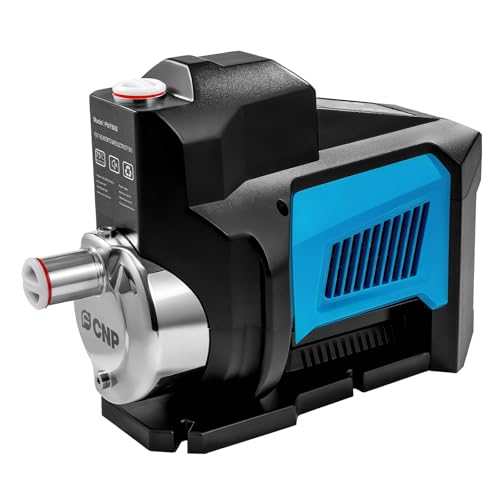
FCNP rates the PM750S at 750W, 1532 GPH flow, and 164 ft head, targeting stable pressure for 10 faucets across three floors. Its 22 to 80 PSI range is managed by microcomputer control that slows and stops the motor when draw ends. A multi stage centrifugal permanent magnet design and variable frequency drop noise as low as 25 to 40 dB. Thickened stainless steel resists heat to 167F plus acid and corrosion. Based on specifications, the shallow well suction limit near 26.25 feet is the main constraint, so deeper sources need a different pump.
Power750W
Max flow1532 GPH
Max head164 ft
Noise25 to 40 dB
Pros
- Very low noise floor
- Handles ten faucets over three floors
- Corrosion resistant stainless head
Cons
- Shallow well suction capped near 26 ft
- Peak pressure tops out at 80 PSI
Check price on Amazon ›
SCALA1 leans on protection logic built for residential pressure boosting and groundwater intake. Listed safeguards include dry running stop during shortage, cycling protection that blocks frequent starts from minor leaks, and a maximum runtime cutoff that guards against flooding if a pipe breaks. That layered safety focus reassures owners leaving the unit unattended. Reviewers note its reputation for quiet, integrated operation. Based on specifications, the listing here is light on published flow and head figures, so buyers wanting exact GPH and PSI numbers should confirm them from the full manual before committing.
UsePressure boosting
SourceResidential groundwater
Dry runAuto stop
RuntimeMax runtime cutoff
Pros
- Sophisticated dry run and cycling logic
- Max runtime flood protection
- Trusted integrated build
Cons
- Published flow and head figures are sparse
- Confirm exact specs from the manual
Check price on Amazon ›
Aidpath equips the EVO BOOST5 with a 1.2 HP permanent magnet motor rated for 1590 GPH, 197 ft head, and a 22 to 92 PSI range. It targets steady pressure for up to eight faucets across three floors, with 1 inch MNPT ports for straightforward installation. Smart Life app control covers pressure, energy, and temperature, and the unit is FCC certified with dry run, overcurrent, and voltage protections. Noise sits near 50 dB. Based on specifications, the stainless body supports liquids to 167F, and the shallow well suction limit near 26 ft remains its ceiling.
Motor1.2 HP
Max head197 ft
Pressure range22 to 92 PSI
Noisearound 50 dB
Pros
- Highest head and PSI ceiling here
- FCC certified with layered protections
- Backed by a three year warranty
Cons
- Louder than water cooled units near 50 dB
- Suction limited to shallow wells near 26 ft
Check price on Amazon ›
This GWANZI variable speed pump runs a 900W motor with a 170 ft maximum head and 1500 GPH flow across a 15 to 90 PSI range. Water cooling technology keeps noise near 30 dB, and the SmartFarintl app handles wireless adjustment within about 30 feet plus OTA upgrades. A 304 stainless steel internal body aims for clean delivery. Based on specifications, the outer shell here is thickened ABS plastic rather than stainless, so the housing feels lighter but less rugged than fully steel rivals when installed in exposed or high traffic spots.
Motor900W
Max head170 ft
Max flow1500 GPH
Noisearound 30 dB
Pros
- Strong head from a compact frame
- Quiet water cooled operation
- 304 stainless internal pump body
Cons
- Outer shell is ABS plastic not steel
- App range limited to about 30 feet
Check price on Amazon ›
Tdrsuper delivers a 110V AC diaphragm pump rated for 5.0 GPM, with self priming to 9.8 vertical feet and lift up to 164 feet. It starts automatically when a tap opens and stops when closed, factory set near 70 PSI but adjustable. Pure copper motors, CE certification, and corrosion resistant valves target durability, while an anti vibration bracket and rubber feet cut noise. The kit ships with a filter, fittings, tape, and tools. Based on specifications, this diaphragm design suits point of use and mobile duty more than constant pressure whole house supply across many simultaneous taps.
Flow5.0 GPM
Set pressure70 PSI
Self priming9.8 ft
Max lift164 ft
Pros
- Complete kit with filter and fittings
- Copper motor with run dry tolerance
- Anti vibration mounting reduces noise
Cons
- Diaphragm design favors single fixtures
- Less suited to many taps at once
Check price on Amazon ›
What to look for
Match head and flow to your home
Head measures how high a pump can push water, while flow sets how much arrives per hour. Taller homes and long pipe runs need more head, and multiple simultaneous taps demand higher GPH. Undersizing either leaves upper floors weak, so read both figures before deciding.
Variable speed versus diaphragm
Variable speed permanent magnet pumps hold constant pressure across many fixtures and ramp quietly with demand. Diaphragm pumps switch fully on or off, which fits RVs, campers, and single points. Whole house comfort leans variable speed, while mobile and point of use tasks favor diaphragm designs.
Noise, cooling, and placement
Air cooled pumps often run louder, near 50 to 55 dB, while water cooled models here drop toward 30 dB. Placement near bedrooms rewards quieter units. Check suction depth too, since most listed pumps cap shallow well draw around 26 feet and are not built for deep wells.
Protections and app control
Look for dry run, overheat, overcurrent, and leakage protections that shut the motor down safely. App control adds remote monitoring and firmware updates, though connection range and app reliance vary. Certification marks such as FCC or CE signal the unit passed recognized safety checks.
Frequently asked questions
Will a booster pump fix weak faucet pressure?
Usually yes, when the cause is low incoming supply, long runs, or upper floors. A pump raises pressure on demand. If the problem is a clogged aerator or partly closed valve, fix that first before adding a pump.
Whole house or single fixture pump?
Whole house variable speed models hold steady pressure across many taps at once. Single fixture diaphragm pumps suit one point, an RV, or a camper. Count how many faucets run together, then size the pump to that simultaneous demand.
How much head do I actually need?
Estimate the vertical rise from pump to your highest tap, then add friction from pipe length and fittings. Homes over two floors benefit from higher head ratings. Several picks here list 150 to 197 ft, covering most residential layouts comfortably.
Are these pumps loud?
It varies by cooling method. Water cooled models here run near 30 dB, quiet enough for living spaces. Air cooled units sit closer to 50 to 55 dB. Placement away from bedrooms and on rubber feet reduces perceived noise further.
Can these draw from a well?
Most whole house picks list shallow well suction around 26 feet. That covers many surface tanks and shallow sources. Deep wells exceed these ratings and need a dedicated deep well pump instead, so confirm your source depth first.
Do I need the app to run the pump?
No, the pumps operate on their own automatic pressure logic. The app adds remote monitoring, adjustment, and firmware updates. On app connected models, resolving certain fault codes may require updating firmware, so keep the app installed if you buy one.
What maintenance do booster pumps need?
Several models advertise maintenance free tanks and stainless bodies. Periodically clean inlet filters, check fittings for leaks, and confirm protections still respond. Diaphragm kits often include a mesh screen filter that benefits from regular rinsing to keep flow strong.
Will a booster raise pressure beyond its headline number?
Not always. Listings note that mains water often caps below the peak figure, sometimes near 80 PSI, while tank feeds sit lower. The adjustable range is a ceiling under ideal supply, so real output depends on your incoming source.
The verdict
Aquastrong Whole House Water Pressure Boos...
9.2/10
For most homes, the Aquastrong Smart 45 is our top pick, blending constant pressure, strong protections, and steady whole house flow. Large households running many fixtures should look at the Aidpath EVO BOOST5 for its higher head and pressure ceiling. RV owners and single fixture users are better served by the ECO-WORTHY or Tdrsuper diaphragm pumps. Match head, flow, and suction depth to your setup, and favor water cooled models where quiet operation matters.
Check price on Amazon ›
Our top pick, secure checkout via Amazon
Note: Availability and specifications change often. Always confirm the current details on Amazon before buying.