Tools & DIY 5 Tankless Water Heaters for Endless Hot Showers
P
By the Pickpedia Team
·5 picks compared
·Last verified September 2026
Affiliate disclosure: As an Amazon Associate, Pickpedia earns from qualifying purchases. Links on this page are paid links, and we may earn a commission at no extra cost to you. This never affects our picks or scores.
Quick answer
The best tankless water heater for most homes is the Rinnai RX160iN, because it delivers up to 9.0 GPM of endless hot water on natural gas or propane, runs at a condensing UEF near 0.96, and installs indoors or outdoors with flexible venting. Larger propane setups suit the Ranein gas unit, while the APUS 27kW covers whole home electric where the panel allows. A 14kW electric fits a small kitchen and bath, and the 110V under-sink model is a tidy single-sink helper. Match fuel and flow to your home first, then confirm electrical or venting requirements.
5 Tankless Water Heaters for Endless Hot Showers at a glance
Why you can trust this guide
We compared gas and electric tankless heaters using manufacturer and retailer specifications, current listings, and patterns in owner feedback.
We checked fuel type, flow in GPM, heating capacity, efficiency, and electrical or venting requirements. We do not present this as hands on laboratory testing.
How we chose: We compared five tankless water heaters across gas and electric fuel, flow rate, installation demands, and where each realistically fits.
Choosing a tankless water heater comes down to how much hot water you need at once and what fuel your home supports. Gas models generally deliver higher flow for busy households, while electric units shine in compact spaces and single-point setups. Every option here promises hot water on demand with no storage tank sitting idle.
Our picks are grounded in each unit's published specifications and what owners commonly report. Flow ratings, breaker requirements, and venting all matter more than headline wattage. Read the specs closely, since a heater sized for a sink will disappoint anyone expecting a full shower.
Our top picks
Rinnai's condensing model installs indoors or outdoors via its Versa Vent and runs on propane or natural gas through a Smart Sense control system. Roughly the size of a small suitcase, it supplies up to 9 GPM, enough for six fixtures at once. A UEF of .97 signals strong efficiency, and a Quick Flush feature simplifies maintenance. Optional WiFi control comes through a separate Controlr module. The warranty runs a limited 15 years on the heat exchanger. The catch: Rinnai strongly recommends professional installation, so factor in a qualified technician rather than a self-install.
FuelNatural gas or propane
Heating capacity160,000 BTU, 0.13 to 9.0 GPM
EfficiencyUEF 0.96, condensing
InstallIndoor or outdoor, 15 year heat exchanger warranty
Pros
- Indoor or outdoor Versa Vent flexibility
- High flow supporting six fixtures
- Strong efficiency rating and long exchanger warranty
Cons
- Professional installation strongly advised
- WiFi module sold separately
Who should buy it
- You want whole home hot water on natural gas or propane
- You want condensing efficiency with up to 9.0 GPM
- You want flexible indoor or outdoor venting
Skip it if
- You cannot run a gas line or proper venting
- You only need hot water at a single sink
Check price on Amazon ›
Rated at 190,000 BTU and up to 8.5 GPM, this propane unit targets four to six outlet points, enough to serve a whole family. Fans mounted underneath aim to reduce smoke backflow and adjust blower speed with wind pressure and water temperature for fuller combustion. Standard 3/4 inch NPT fittings and a compact body keep installation manageable, and a 2-year warranty backs it. One real limitation stands out: the maker advises against use above 2,000 feet, and in cold spells you must drain residual water through the pressure relief valve.
FuelPropane gas
Heating capacity190,000 BTU
Max flow8.5 GPM
Water inlet3/4 inch NPT
Pros
- High flow for multiple fixtures
- Underneath fan design for safer combustion
- Compact footprint with standard fittings
Cons
- Not recommended above 2,000 feet elevation
- Needs manual draining in cold weather
Who should buy it
- You run propane and want high flow up to 8.5 GPM
- You want strong heating for several fixtures at once
- You have a 3/4 inch gas connection
Skip it if
- You want natural gas or condensing efficiency
- You only serve one or two fixtures
Check price on Amazon ›
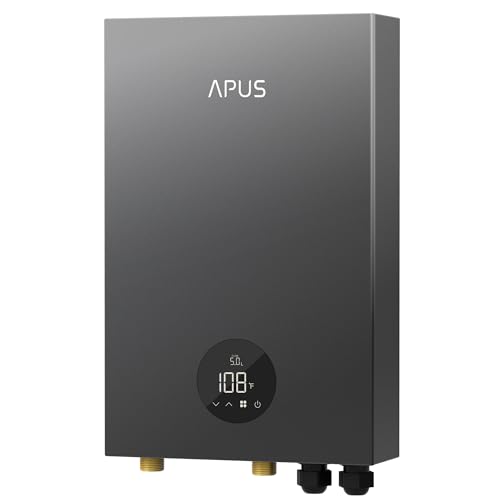
APUS pushes 27kW to reach up to 6.5 GPM, enough for three to four simultaneous uses across showers, sinks, and laundry. Self-modulating technology matches power to real-time flow and demand, aiming for stable outlet temperature while trimming wasted electricity. A digital display sets temperature from 86 to 140 degrees Fahrenheit in 1 degree steps, and a memory function recalls your last setting. Standard 3/4 inch NPT connections ease plumbing. The demanding limitation: it needs three 40-amp breakers and 6 by 8 AWG cable, plus professional installation and grounding, making it a serious electrical commitment.
FuelElectric 240V
Power27kW
Max flowUp to 6.5 GPM
WiringThree 40-amp breakers
Pros
- High flow for multiple fixtures
- Self-modulating output for stable temperature
- Memory function recalls last setting
Cons
- Heavy electrical demand with three breakers
- Professional installation recommended
Who should buy it
- You want whole home electric with up to 6.5 GPM
- You have panel capacity for three 40 amp breakers
- You prefer no gas line or venting
Skip it if
- Your electrical panel cannot support the load
- You want gas level flow in a cold climate
Check price on Amazon ›
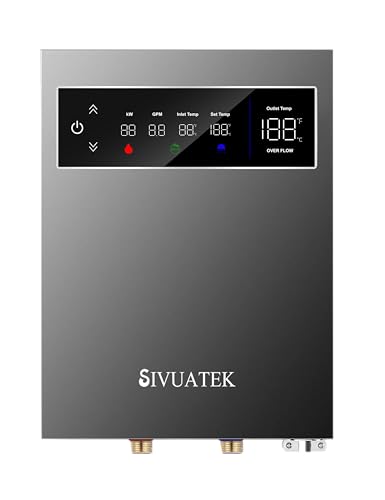
This 14kW, 240V electric heater delivers instant hot water for one to two simultaneous points, such as a kitchen tap and a bathroom. Thermal efficiency reaches up to 99.8 percent, and an LED display sets temperature from 86 to 131 degrees Fahrenheit in 1 degree steps. A slim housing installs under-sink or on-wall using standard 1/2 inch NPT connections, with no need to open the case for wiring. Safety features include leakage, overheating, and auto shut-off protection. The main limitation: it demands a dedicated 60-amp circuit breaker, so verify your panel can handle it before buying.
FuelElectric 240V
Power14kW
Temperature range86F to 131F
Breaker60-amp required
Pros
- High thermal efficiency
- Precise 1 degree temperature control
- Compact under-sink or wall mounting
Cons
- Requires a dedicated 60-amp breaker
- Handles only one to two points at once
Who should buy it
- You serve a small kitchen and bath
- You can run a 60 amp breaker
- You want a compact electric unit
Skip it if
- You need whole home flow for many fixtures
- You lack the breaker capacity
Check price on Amazon ›
Running on standard 110V and 3000W, this compact heater warms water in seconds, moving 0.3 GPM at higher rise and 0.5 GPM at moderate rise. Stainless steel and ABS construction pairs with an LCD display that switches between Fahrenheit and Celsius. Multiple protections cover IPX4 water resistance, leakage, dry-boil, and overheating shut-off, and thermal efficiency runs as high as 98 percent. A wall-mounted design suits kitchens, apartments, RVs, and camping. The honest drawback: the maker states it is not suitable for showers, which typically need at least 1.8 GPM, so keep it to sinks.
FuelElectric 110V
Power3000W
Flow0.3 to 0.5 GPM
EfficiencyUp to 98 percent
Pros
- Plugs into standard 110V wiring
- Very compact for tight spaces
- Multiple built-in safety protections
Cons
- Not suitable for showers
- Low flow limits it to one fixture
Who should buy it
- You want instant hot water at one sink
- You want a simple 110V plug in unit
- You have a low flow point of use need
Skip it if
- You need shower or whole home flow
- You want high GPM output
Check price on Amazon ›
What to look for
Gas versus electric
Gas heaters usually push higher flow and suit whole homes with several fixtures running together. Electric models install more simply and run cleaner indoors, but flow depends on your panel and incoming water temperature. Match the fuel to what your home already supports before anything else.
Sizing by flow rate
Flow, measured in gallons per minute, decides how many taps you can run at once. A single sink needs well under one GPM, while a busy household may want six or more. Cold inlet water lowers real output, so size with a margin above your peak demand.
Check your electrical or venting
Electric units can require dedicated 60-amp or multiple 40-amp breakers plus heavy gauge cable. Gas units need proper venting, and some support indoor or outdoor placement. Confirm these requirements against your home before committing, since retrofits add real work.
Installation and upkeep
Many condensing gas models and high-power electric units call for professional installation and grounding. Periodic flushing keeps performance steady, and features like a quick-flush port simplify that chore. In cold climates, draining residual water protects the unit during long idle stretches.
Frequently asked questions
Do tankless heaters really give endless hot water?
They heat water on demand rather than storing it, so supply does not run out the way a tank drains. Output is capped by flow rate, though. Exceed the rated GPM and temperature will drop, so size the unit to your peak use.
Gas or electric, which should I choose?
Gas models generally deliver higher flow for whole homes, while electric units install simply and run clean indoors. Your existing fuel line or electrical panel often decides for you. Compare the requirements of each before buying.
Can a 110V electric unit run a shower?
Usually not. Small 110V models like the 3000W option here move only a fraction of a gallon per minute, and the maker states it is not suitable for showers. Showers typically need at least 1.8 GPM, so reserve these for sinks.
What electrical service do 240V units need?
It varies by power. A 14kW model may need a single 60-amp breaker, while a 27kW unit can require three 40-amp breakers and heavy gauge cable. Check your panel capacity first, since upgrades may be necessary.
Do I need professional installation?
For condensing gas units and high-power electric models, makers strongly recommend a qualified technician. Venting, gas connections, and heavy wiring carry real safety stakes. Simpler 110V sink heaters are more DIY-friendly, but always follow the manual.
How does elevation affect gas units?
Some gas heaters are rated only for lower elevations. The Ranein model, for example, is not recommended above 2,000 feet. Combustion changes with altitude, so confirm your location falls within the maker's stated range.
How do I maintain a tankless heater?
Periodic flushing clears scale and keeps flow steady, and features like a quick-flush port make it easier. In cold weather, drain residual water if the unit sits unused. Register the product to protect warranty coverage.
Will a tankless heater save energy?
By skipping standby storage losses, these units only heat water when you draw it. Reported thermal efficiency runs high, often above 97 percent on the electric models here. Actual savings depend on your usage patterns and inlet water temperature.
The verdict
Rinnai RX160iN Condensing Smart Sense Tank...
9.3/10
For most homes, the Rinnai RX160iN is the best overall, pairing flexible indoor or outdoor venting with up to 9.0 GPM and strong condensing efficiency on gas or propane. Larger propane setups suit the Ranein gas unit, while the APUS 27kW covers whole home electric where the panel allows. The 14kW electric fits a small kitchen and bath, and the 110V under-sink model is a tidy single-sink helper. Match fuel and flow to your home first, then confirm the electrical or venting requirements before buying.
Check price on Amazon ›
Our top pick, secure checkout via Amazon
Note: Availability and specifications change often. Always confirm the current details on Amazon before buying.