Tools & DIY 7 Solder Fume Extractors for Cleaner Bench Air
P
By the Pickpedia Team
·7 picks compared
·Last verified October 2026
Affiliate disclosure: As an Amazon Associate, Pickpedia earns from qualifying purchases. Links on this page are paid links, and we may earn a commission at no extra cost to you. This never affects our picks or scores.
Quick answer
Pick a fume extractor by how you solder. Bench hobbyists do well with a compact carbon fan that pulls smoke five to six inches from the tip. Frequent or fine work benefits from HEPA plus activated carbon staged filtration and a flexible hood you can aim precisely at the joint.
7 Solder Fume Extractors for Cleaner Bench Air at a glance
Why you can trust this guide
We compared these picks using verified manufacturer specifications, available manuals and documentation, current retailer listings, and patterns in owner feedback, alongside editorial research. We focus on measurable differences such as performance, capacity, usability, and build quality. Pickpedia does not present editorial research as laboratory testing, and we do not claim hands-on testing unless it was actually performed.
How we chose: We compared seven solder fume extractors across suction airflow, filter type and staging, hood reach, noise, and how easily filters swap out.
Soldering releases flux smoke and fine particles that linger over the bench and drift toward your face. A good extractor pulls that plume away at the source before it reaches your eyes and lungs. Some units use a single activated carbon pad, while others stack a pre-filter, HEPA, and carbon for finer capture.
This roundup ranks options based on published specifications, filter design, and what owners report in listings. Simple carbon fans suit occasional bench work, and staged HEPA systems with gooseneck hoods fit anyone soldering for long stretches. We flag one honest limitation on every pick so you know the tradeoff going in.
Our top picks
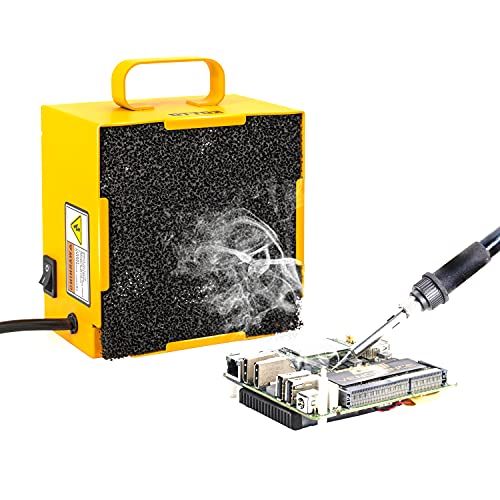
KOTTO keeps things straightforward with a 3000 RPM fan and a 0.4 inch activated carbon pad that traps solder, flux, and gas fumes before they spread. Positioned five to six inches from the tip, it pulls the plume down and away while staying low on noise. Four heavy duty rubber feet anchor it steadily, and a carrying handle makes it easy to reposition. The 30W draw runs cool, and swapping the filter takes seconds with the included spare. The single carbon pad handles odors and visible smoke well, but it will not match the sub-micron particle capture of a staged HEPA system for heavy daily use.
Fan speed3000 RPM
Filter0.4 in activated carbon
Capture distance5 to 6 inches
Power120V, 30W
Pros
- Quiet high-suction fan for its size
- Non-slip feet and carry handle
- Filter swaps out quickly, spare included
Cons
- Single carbon pad, no HEPA stage
- Fixed hood angle limits aiming
Check price on Amazon ›
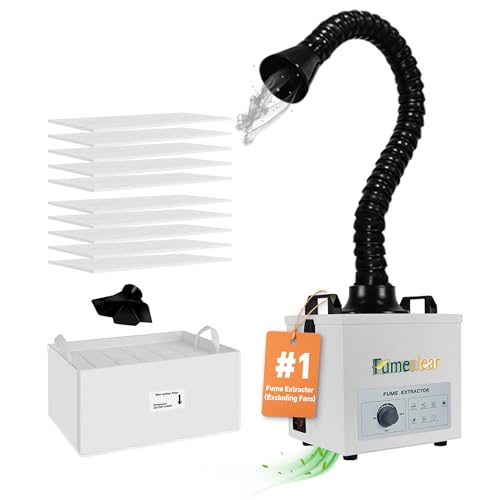
FumeClear stacks three filter layers to reach a claimed 99.97 percent capture of particles below 0.3 microns, which is where flux smoke does the most damage. The high-iodine carbon core adsorbs harmful gases better than standard carbon and is rated to last around 3000 hours before replacement. Suction runs up to 200 cubic meters per hour, strong enough to pull exhaust, powder, and iron filings near the hood. Ten pre-filters ship in the box to catch coarse dust and extend the main cartridge. Rated at 100W with CE and FCC marks. Note it is built for small bench soldering, not large laser engravers, so match it to your workload.
AirflowUp to 200 m3/h
Filtration3-layer, HEPA + carbon
Carbon typeHigh-iodine activated
Filter lifeAbout 3000 hours
Pros
- Captures fine sub-0.3 micron particles
- High-iodine carbon lasts a long time
- Ten pre-filters included
Cons
- Not suited to large laser engravers
- Higher wattage than simple carbon fans
Check price on Amazon ›
YIHUA's 948DQ-I adds a 30 degree tiltable stand so you can point the intake exactly where the smoke rises. Dual filtration pads sit at the front and rear, filtering harmful particles and cutting odors from both directions. Side fenders reduce stray airflow that would otherwise scatter the plume, keeping capture tight within about ten centimeters. A five-blade fan moves air steadily with a longer service life and modest noise. The kit ships with eight replacement adsorbers, two fenders, and the stand. Effective range is short, so the unit needs to sit close to the joint, and it runs only on 110 to 127V with a US plug.
Stand30 degree tiltable
FiltrationDual front and rear pads
Fan5-blade
In box8 adsorbers, 2 fenders, stand
Pros
- Tilt stand aims the capture zone
- Side fenders steady the airflow
- Generous supply of spare pads
Cons
- Short effective capture range
- US voltage and plug only
Check price on Amazon ›
KQZ pairs a centrifugal motor rated at 168 cubic meters per hour with a 360 degree gooseneck hose, so you aim the hood precisely and let strong instant suction do the rest. A 9mm pre-filter feeds an H13 HEPA cartridge with coal-based activated carbon, together claiming 99.99 percent capture of fume, dust, odors, and 0.3 micron particles, including heavy metal and chemical vapors. The metal body stays compact and portable, and wide 110 to 220V input suits many outlets. Beyond soldering it covers 3D printing, light welding, and nail or dental work. The gooseneck is fairly short at 66mm, so the whole unit still needs to sit near your work.
Airflow168 m3/h
FilterH13 HEPA + coal carbon
Hose66mm 360 degree gooseneck
Voltage110 to 220V
Pros
- Adjustable 360 degree gooseneck aim
- H13 HEPA captures very fine particles
- Sturdy compact metal body
Cons
- Short gooseneck keeps the base close
- Small hood suits bench work only
Check price on Amazon ›
Buhobha folds three tools into one, combining an extractor, a bright LED work light, and two flexible helping hands with alligator clips. The dual-side filtration widens the capture zone versus single-filter fans, and the motor spins 2400 to 2700 RPM to pull smoke at the source within five to six inches. An adjustable-angle bracket sets the suction head, and the articulated arms lock components right where you need them. It runs on standard 110V for plug-and-play use across soldering and general DIY. The tradeoff is focus: an integrated all-rounder like this trades some raw filtration depth for its light and clamp convenience, so heavy daily solderers may want a dedicated HEPA unit.
Fan speed2400 to 2700 RPM
FiltrationDual-side design
ExtrasLED light + 2 helping hands
Power110V AC
Pros
- Built-in light and clamps save space
- Dual-side filters widen capture
- Fully adjustable head and arms
Cons
- Filtration depth trails dedicated HEPA units
- 110V only
Check price on Amazon ›
Hakko's FA400-04 is the workhorse many benches trust, absorbing soldering smoke quickly and safely with a design that has earned a long track record. Filters pop out and replace easily, and the unit works either standing up or laid flat in a low-profile position to fit tight setups. The standard activated carbon filter pulls up to 80 percent of odors from the air, and an optional high-efficiency filter lifts particle removal to around 90 percent. That flexibility lets you start simple and upgrade capture later. Worth knowing: the higher-grade filter is sold separately, so out of the box it leans on carbon odor control rather than fine-particle capture.
OrientationVertical or low-profile
Standard filterUp to 80% odor removal
Optional filterUp to 90% particle removal
FiltersTool-free replacement
Pros
- Proven, widely trusted design
- Works standing or laid flat
- Optional high-efficiency filter upgrade
Cons
- High-efficiency filter sold separately
- No gooseneck or aiming hood
Check price on Amazon ›
SainSmart leans into portability with a magnetic cone base that sticks to vertical metal surfaces, plus a clamp for non-metal spots. Its 3700 RPM silent fan reaches an effective smoke capture distance of up to ten inches, among the longest here. A 400mm memory stainless steel gooseneck holds its shape without sagging even fully extended, so the head stays aimed. Adjustable LED lighting shifts between 3000K and 6000K for soft, glare-free visibility that eases eye strain. The activated carbon cotton traps contaminants through its porous structure. It relies on a carbon cotton pad rather than a HEPA cartridge, so it favors odor and visible smoke capture over the finest particle filtration.
Fan speed3700 RPM
Capture distanceUp to 10 inches
Gooseneck400mm memory steel
Lighting3000K to 6000K LED
Pros
- Magnetic base and clamp mounting
- Long ten-inch capture reach
- Sturdy no-sag gooseneck with LED
Cons
- Carbon cotton pad, no HEPA stage
- Gooseneck diameter is narrow
Check price on Amazon ›
What to look for
Match suction to your workload
Occasional bench soldering needs only a compact carbon fan that pulls smoke a few inches from the tip. If you solder for hours or work with fine components, look for higher airflow rated in cubic meters per hour and a fan that stays effective from farther away. Stronger suction lets you keep the hood off the joint without losing the plume.
Filter type matters most
A single activated carbon pad neutralizes odors and grabs visible smoke, which suits light use. Staged systems add a pre-filter and a HEPA layer to trap sub-0.3-micron particles, the fraction that actually reaches your lungs. High-iodine carbon adsorbs gases better and lasts longer than standard carbon, so check what the main cartridge uses.
Positioning and hood flexibility
Extraction only works when the intake sits between the joint and your face. Gooseneck hoses and tiltable stands let you aim capture precisely, while side fenders steady the airflow so the plume does not scatter. Magnetic or clamp mounts help when you solder on vertical or awkward surfaces.
Filter upkeep and noise
Filters load up over time and lose efficiency, so favor units with tool-free swaps and readily stocked replacements. Check the rated filter life in hours if the maker publishes it. Noise matters for long sessions, and most quality fans stay quiet, so read owner reports on sound before committing.
Frequently asked questions
Do I really need a fume extractor for soldering?
Yes if you solder often. Flux smoke carries fine particles and irritants that linger over the bench and drift toward your face. An extractor pulls that plume away at the source, sparing your eyes and lungs. Even occasional hobbyists benefit from basic capture.
What is the difference between carbon and HEPA filtration?
Activated carbon adsorbs gases and odors, so it handles the smell and visible smoke of flux. HEPA traps fine solid particles down to around 0.3 microns. Staged units combine both, which is why they capture more of what actually reaches your lungs.
How close should the extractor be to my work?
Position the intake between the solder joint and your face, usually within a few inches for compact fans. Units with stronger airflow can pull the plume from farther away. A gooseneck or tiltable head helps you aim the capture zone exactly where smoke rises.
How often do I replace the filters?
It depends on use and filter type. Carbon pads load up faster and need swapping when odor control fades. Some HEPA and high-iodine carbon cartridges are rated for around 3000 hours. Owners report checking pads regularly and keeping spares on hand.
Can these extractors handle laser engraving or heavy welding?
Most bench units here are built for soldering and light tasks like 3D printing or small welds. Larger laser engravers and serious welding produce far more smoke and need dedicated high-capacity systems. Match the extractor to the workload rather than overloading a small fan.
Are magnetic or gooseneck mounts worth it?
They help a lot if you work on vertical metal surfaces or awkward angles. A magnetic base frees your hands and holds the head in place, while a memory gooseneck keeps the hood aimed without sagging. For a fixed bench, a stable stand may be enough.
Will a fume extractor make my workspace loud?
Quality fans are engineered to stay quiet even at high RPM, and several models here emphasize low-noise operation. Noise still varies unit to unit, so read owner reports if you solder for long stretches. A steadier five-blade fan often runs smoother than a basic one.
Do these units filter smoke or just blow it around?
Real extractors draw air through a filter and trap contaminants, rather than simply pushing air past you. Check that the model has a genuine carbon or HEPA cartridge, not just a fan. Filterless fans move smoke without cleaning it, which defeats the purpose.
The verdict
KOTTO Solder Smoke Absorber Remover Fume E...
9.0/10
For most benches the KOTTO absorber wins on simple, quiet, effective capture. Choose the FumeClear FC-100A when fine-particle filtration matters, or the KQZ B1 for its H13 HEPA and aimable gooseneck. YIHUA's tilt stand suits precise angling, Buhobha packs in light and clamps, Hakko brings a trusted upgradeable design, and SainSmart travels well with its magnetic base and long reach. Match filter type and hood flexibility to how you solder.
Check price on Amazon ›
Our top pick, secure checkout via Amazon
Note: Availability and specifications change often. Always confirm the current details on Amazon before buying.