Tools & DIY 9 RV Water Heaters for Hot Showers on the Road
P
By the Pickpedia Team
·9 picks compared
·Last verified September 2026
Affiliate disclosure: As an Amazon Associate, Pickpedia earns from qualifying purchases. Links on this page are paid links, and we may earn a commission at no extra cost to you. This never affects our picks or scores.
Quick answer
Pick a gas or dual-power tank unit like the Suburban SW6D for real shower flow off-grid, or the VEVOR 42,000 BTU tankless for endless heat. Compact electric mini tanks suit sinks and hookups. Match power source, gallon capacity, and shower demand before choosing.
9 RV Water Heaters for Hot Showers on the Road at a glance
Why you can trust this guide
We compared these picks using verified manufacturer specifications, available manuals and documentation, current retailer listings, and patterns in owner feedback, alongside editorial research. We focus on measurable differences such as performance, capacity, usability, and build quality. Pickpedia does not present editorial research as laboratory testing, and we do not claim hands-on testing unless it was actually performed.
How we chose: Nine RV water heaters compared across specifications and owner reports, weighing power source, capacity, heating speed, and whether each truly supports showers.
Getting a warm shower on the road depends less on brand hype and more on how a unit makes its heat. Gas and tankless models deliver continuous flow for full showers, while small electric tanks are built mainly for sinks, dishes, and hookup use. Knowing that split saves disappointment at the campsite.
This roundup groups nine units by how they fit real rig life. Some install permanently in a heater bay, others mount under a sink or on a wall for point-of-use heat. Read each honest limitation carefully, since flow rate and gallon capacity decide whether a shower is realistic or just wishful.
Our top picks
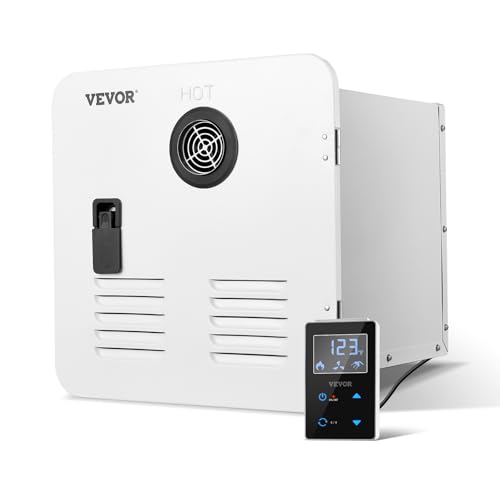
Rated at 42,000 BTU, this gas tankless unit heats water on demand, so showers and dishwashing do not drain a finite tank. Segmented combustion adjusts output to the season, easing summer overheating and trimming waste. An LED display with touch controls handles temperature, and a front outlet lets you rinse pets or gear outside. A 15 by 15 inch door, 1/2 inch NPT connectors, and a slim exhaust pipe fit many rigs. Being propane fed, it needs proper gas plumbing and ventilation, so installation is more involved than a plug-in electric model. Based on specifications, it best suits owners chasing endless hot water rather than a quick setup.
TypeGas tankless
Output42,000 BTU
Connections1/2 inch NPT
Door size15 x 15 inches
Pros
- Continuous on-demand hot water for showers
- Seasonal temperature adjustment reduces waste
- Extra front outlet for outdoor rinsing
Cons
- Requires propane plumbing and ventilation
- Setup is more involved than plug-in units
Check price on Amazon ›
Holding eight gallons, this electric tank gives more reserve than most mini units, useful when several sinks or a quick rinse compete for hot water. A 316 stainless heating element reaches up to 99 percent thermal efficiency, with temperature adjustable from 86 to 167 degrees Fahrenheit. The 304 stainless tank is laser welded for a crack and leak resistant build, and ISO plus FCC certifications back reliability. Owners can wall, rack, or floor mount it, and it runs on 110 to 120 volts at up to 1,500 watts. It draws real amperage, so a 20 amp breaker is required, meaning shore or generator power is essential. Practical for hookup travel, less so for boondocking.
Capacity8 gallons
Power1440 to 1500W, 110/120V
Max temp167 degrees F
Max pressure120 PSI
Pros
- Larger reserve than typical mini tanks
- High thermal efficiency stainless element
- Three flexible mounting options
Cons
- Needs a dedicated 20 amp breaker
- Depends on shore or generator power
Check price on Amazon ›
This wall-mount tankless unit warms water in seconds with no preheat, delivering roughly 82 to 131 degrees Fahrenheit depending on flow. Lower flow raises temperature, giving flexible control for dishes, food, and handwashing. Safety covers IPX4 waterproofing, leakage and dry-burn protection, and auto shut-off, all tracked on an LCD readout that switches between Celsius and Fahrenheit. Variable frequency technology tunes power to flow for up to 99 percent efficiency. Reviewers note the honest catch clearly stated by the maker: it is not suitable for showers, needing at least 1.8 GPM, and demands heavy 13 AWG wiring with a 32 amp breaker. Best kept to point-of-use sink duty in small rigs.
TypeElectric tankless
Temp range82 to 131 degrees F
Connections1/2 inch NPT
Wiring13 AWG, 32A breaker
Pros
- Instant heat with no preheating
- Compact wall-mount saves space
- Clear LCD with unit switching
Cons
- Not suitable for showers
- Requires heavy wiring and large breaker
Check price on Amazon ›
A thickened 304 stainless tank with seamless welding aims for leak-proof service in this compact 2.5 gallon unit. Its 1500 watt L-shaped element spreads heat widely, reaching temperature in about five to eight minutes. Insulation is a strong point, with a CFC-free polyurethane layer holding warmth up to 48 hours to trim reheating. A mechanical knob sets 86 to 149 degrees Fahrenheit, and included pipes and a relief valve mean no extra parts. Measuring roughly 11 inches on each side, it wall or floor mounts under a counter. Capacity is the honest limit, as 2.5 gallons handles dishes and handwashing rather than showers. UL certification supports the safety claims.
Capacity2.5 gallons
Power1500W, 120V
Heat time5 to 8 minutes
Temp range86 to 149 degrees F
Pros
- Long 48-hour insulation retention
- Complete install accessories included
- UL certified safety features
Cons
- Capacity too small for showers
- Knob control lacks digital readout
Check price on Amazon ›
Built for the long haul, this eight gallon electric tank uses a three-layer body with fused porcelain enamel lining and an extra-thick anode rod to fight corrosion and scale. An Incoloy 800 heating element resists corrosion far better than copper, reaching up to 99 percent efficiency. A 10,000-cycle impulse test and UL listing, plus an approved T&P valve, back the durability story. Temperature spans 50 to 149 degrees Fahrenheit, and 30mm CFC-free insulation holds heat longer. It plugs into a standard 120 volt outlet at 1440 watts. At about 27 pounds and 17.7 inches per side, it is bulkier and heavier than mini tanks, so it needs real cabinet room and steady electric power.
Capacity8 gallons
Power1440W, 120V
ElementIncoloy 800 stainless
Weight27 lbs
Pros
- Corrosion-resistant enamel-lined tank
- Long anode rod extends lifespan
- UL listed with approved T&P valve
Cons
- Heavier and bulkier than mini tanks
- Needs generous cabinet space
Check price on Amazon ›
CAMPLUX keeps things straightforward with a six gallon glass-lined tank that plugs into a 120 volt outlet and mounts on a shelf, wall, or floor with an included bracket. Built-in insulation foam curbs heat loss, and a thermostat offers three settings across 50 to 149 degrees Fahrenheit. The streamlined cover looks tidy in a galley, and a CSA-listed T&P valve is included for safety. It taps directly into the cold line, running standalone or in-line with a larger source. Note the 3/4 inch NPT connections, which differ from the 1/2 inch fittings on many rivals, so owners may need adapters. A dependable, low-fuss pick for sink-side warmth rather than showering.
Capacity6 gallons
Power1440W, 120V
Connections3/4 inch NPT
Max pressure150 PSI
Pros
- Simple plug-in standalone operation
- Glass-lined tank for longevity
- Three easy thermostat settings
Cons
- 3/4 inch fittings may need adapters
- Capacity better for sinks than showers
Check price on Amazon ›
This compact 2.5 gallon unit pairs a digital screen with a manual knob so temperature stays clear from 86 to 149 degrees Fahrenheit. A 1500 watt L-shaped element maximizes heat exchange for up to 99 percent efficiency, delivering hot water in as little as six minutes. The inner tank was thickened from 0.8mm to 1.0mm for durability, and insulation foam reduces standby loss. Standard 1/2 inch NPT connections fit most American plumbing, and it wall or floor mounts under a sink on a 120 volt outlet. An automatic relief valve and enamel lining handle safety and corrosion. Like other 2.5 gallon tanks, reserve is modest, so plan it for dishes and washing, not full showers.
Capacity2.5 gallons
Power1500W, 110V
Heat timeabout 6 minutes
Max pressure150 PSI
Pros
- Digital display plus knob control
- Thickened inner tank for durability
- Standard 1/2 inch NPT fittings
Cons
- Small reserve unsuited to showers
- Requires steady electric hookup
Check price on Amazon ›
KENUOS stands out with a three-way diverter valve that lets this 2.5 gallon tank supply two sinks, handy in a galley plus bathroom layout. An LED display shows real-time temperature, and the tank wall was thickened to 0.04 inch for longer life. A 1500 watt L-shaped element cuts heat time to roughly four to six minutes, and an intelligent chip switches to insulation once your set point is reached. The kit ships complete with a T&P valve, diverter, conversion pipes, and a guide pipe, all 1/2 inch NPT. It runs on 110 to 120 volts and is UL certified. Rated pressure tops out at 116 PSI, a bit lower than some rivals, and capacity still limits it to sink duty.
Capacity2.5 gallons
Power1500W, 110V
Heat time4 to 6 minutes
Max pressure116 PSI
Pros
- Three-way valve feeds two sinks
- LED real-time temperature display
- Complete accessory kit included
Cons
- Lower pressure rating than some rivals
- Capacity limited to sink use
Check price on Amazon ›
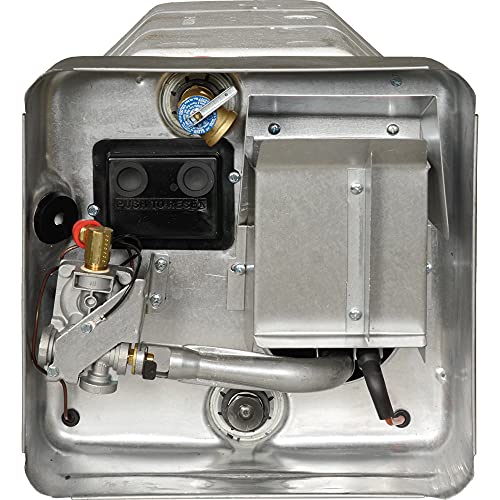
A purpose-built RV tank heater, the Suburban SW6D uses a porcelain-lined steel tank meant to mirror residential longevity. Direct spark ignition and 12,000 BTU gas heating recover about 10.1 gallons per hour, enough for genuine showers off-grid. A replaceable anode rod guards against corrosion and doubles as a drain for easier upkeep. An optional electric element adds flexibility on campsite or generator power, while an exclusive flue-tube design slows combustion for efficient heat transfer. Warranties cover the unit and tank separately. Being a fixed bay-mount gas appliance sized around 12.7 by 12.7 by 19.2 inches, it needs proper propane connection and a matching cutout, so it replaces an existing heater rather than adding one casually.
Capacity6 gallons
Output12,000 BTU gas
IgnitionDirect spark
Gas recovery10.1 gal/hour
Pros
- Real gas recovery supports showers
- Replaceable anode rod eases maintenance
- Optional electric element adds flexibility
Cons
- Fixed bay install with propane needed
- Requires matching cutout dimensions
Check price on Amazon ›
What to look for
Decide gas, electric, or dual power
Your power source shapes everything else. Gas and dual-power tanks like the Suburban recover fast enough for showers while boondocking, needing only propane. Electric mini tanks are simpler but lean on shore or generator power, and tankless electric units often demand heavy wiring. Match the heater to how you actually camp.
Weigh capacity against shower goals
Gallon count decides realistic use. A 2.5 gallon tank suits dishes and handwashing, while six to eight gallons stretches further for quick rinses. For true showers, continuous gas tankless or a gas tank with strong recovery beats a small electric reserve every time. Be honest about your demand.
Check fittings and mounting space
Connections vary, with most units using 1/2 inch NPT but some, like the CAMPLUX, using 3/4 inch, meaning adapters. Larger eight gallon tanks weigh more and need real cabinet room. Confirm door or cutout size on gas models before ordering to avoid a heater that will not fit your bay.
Confirm electrical and safety ratings
Amp draw matters in a rig with limited supply. Some tankless units require a 32 amp breaker, and several tanks call for 15 to 20 amps. Look for UL or CSA listing, a T&P relief valve, and dry-burn or overheat protection so the unit stays safe under travel vibration and pressure swings.
Frequently asked questions
Can an electric mini tank really run a shower?
A 2.5 gallon electric tank is built for sinks and handwashing, not showers. It runs out quickly and recovers too slowly for a comfortable rinse. For real showers, choose a gas tank with strong recovery or a gas tankless unit that heats continuously as water flows.
What size heater do I need for two people?
Two people taking short showers generally want a six gallon gas tank or a tankless unit for continuous flow. Electric tanks under three gallons cover only sink chores. Match capacity and recovery rate to how many rinses you expect between reheating cycles or refills.
Is a gas or electric RV water heater better?
Neither wins outright. Gas heats fast and works off-grid with only propane, ideal for boondocking. Electric is simpler and quieter but depends on shore or generator power. Dual-power tanks give both options. Base the choice on where and how you typically camp.
How long do these units take to heat water?
Small electric mini tanks reach temperature in roughly four to eight minutes depending on the model and element. Gas tankless units deliver hot water almost instantly with no preheating. Larger eight gallon tanks take longer to fully heat but hold more reserve once warm.
Do I need special wiring for a tankless electric heater?
Often yes. Electric tankless units such as the LFEVTZ can require 13 AWG wiring and a breaker around 32 amps because they heat water instantly at high draw. Check the amperage and wiring specs against your rig's electrical capacity before buying to avoid tripping breakers.
Will these fit any RV?
Not automatically. Gas bay-mount units like the Suburban replace an existing heater and need a matching cutout, propane line, and vent. Electric tanks mount under a sink or on a wall and are more flexible, but larger models still need adequate cabinet space and a suitable outlet.
What safety features should I look for?
Prioritize a UL or CSA listing, a temperature and pressure relief valve, and overheat protection. Many units add dry-burn protection and leakage cutoff. These matter more in a moving rig, where vibration and pressure changes stress plumbing and electrical connections over time.
Can I use these units at home too?
Many electric point-of-use tanks work in kitchens, bathrooms, garages, food trucks, and cabins as well as RVs. Owners report using them wherever a compact hot water source helps. Just confirm the outlet, breaker, and plumbing at the location match the unit's requirements.
The verdict
VEVOR RV Tankless Water Heater, 42,000 BTU...
9.2/10
For genuine showers off-grid, the Suburban SW6D and its gas recovery lead the pack, while the VEVOR 42,000 BTU tankless suits those wanting endless flow. The ThermoMate 8 gallon rewards owners who prize durability and reserve. If you only need sink-side warmth in tight quarters, the Fisoceny or CAMPLUX keep setup simple. Choose by power source and capacity first, since those decide whether a hot shower is realistic in your rig.
Check price on Amazon ›
Our top pick, secure checkout via Amazon
Note: Availability and specifications change often. Always confirm the current details on Amazon before buying.