Camera Tripods 6 L-Brackets That Speed Up Your Tripod Swaps
P
By the Pickpedia Team
·6 picks compared
·Last verified October 2026
Affiliate disclosure: As an Amazon Associate, Pickpedia earns from qualifying purchases. Links on this page are paid links, and we may earn a commission at no extra cost to you. This never affects our picks or scores.
Quick answer
An L-bracket lets you flip between landscape and portrait without re-leveling a ball head, so tripod swaps take seconds. Pick one matched to your quick-release standard, with enough 1/4 inch and 3/8 inch holes for your accessories and a rated load above your heaviest camera and lens.
6 L-Brackets That Speed Up Your Tripod Swaps at a glance
Why you can trust this guide
We compared these picks using verified manufacturer specifications, available manuals and documentation, current retailer listings, and patterns in owner feedback, alongside editorial research. We focus on measurable differences such as performance, capacity, usability, and build quality. Pickpedia does not present editorial research as laboratory testing, and we do not claim hands-on testing unless it was actually performed.
How we chose: We lined up six aluminum L-brackets, weighing mounting standards, thread options, cable clearance, and stated load capacity.
Switching a camera from horizontal to vertical usually means loosening a ball head and hunting for level again. An L-bracket removes that step by giving your body two mounting faces at a right angle, so a quick release swap keeps you shooting instead of fiddling.
These six brackets share aviation-grade aluminum bodies and Arca-style plates, yet they differ in thread count, gimbal compatibility, and load rating. Owners report the biggest headaches come from mismatched quick-release standards, so we grounded each pick in its listed specs to help you match one to your rig.
Our top picks
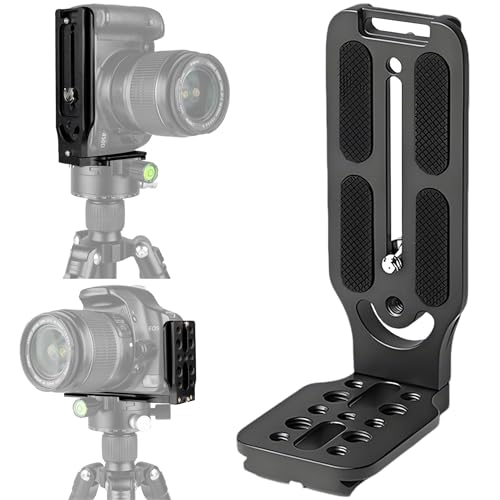
UTEBIT builds this bracket from aviation aluminum alloy, and the spec sheet lists a body weighing about 134 grams while supporting up to 11 pounds. That ratio explains why it lands as our all-rounder. It fits most cameras with a 1/4 inch threaded hole, from Canon and Nikon DSLRs to Sony mirrorless bodies, and mounts on tripod and stabilizer heads. Four non-slip rubber pads on the base add grip and guard against scratches, according to the listing. Multiple 1/4 inch holes let you add mics, lights, or monitors. The trade-off is a single-thread focus, so 3/8 inch accessory users may want more options.
MaterialAviation aluminum alloy
WeightAbout 134 grams
Rated loadUp to 11 pounds (5 kg)
ThreadsMultiple 1/4 inch
Pros
- Light body paired with a generous stated load
- Non-slip rubber pads protect the camera base
- Wide 1/4 inch compatibility across brands
Cons
- Focused on 1/4 inch threads, fewer 3/8 inch options
- No 3/8 inch mounting for heavier rigs
Check price on Amazon ›
Bestoct leans into expansion, listing seven 1/4 inch holes and four 3/8 inch holes on a CNC-machined aerospace aluminum plate. That count makes it a natural hub for a rigged-up shooting setup. A built-in dovetail clamp works with the Arca standard, and the design leaves dedicated space for USB cables so you can charge or tether while mounted. It fits common Canon, Sony, and Nikon bodies plus some gimbals, though the listing notes it is not compatible with Manfrotto models. Anti-slip screws at the base help keep the camera from sliding. The main caveat is that Manfrotto users will need a workaround.
MaterialAerospace-grade aluminum, CNC
1/4 inch holesSeven
3/8 inch holesFour
ClampArca-standard dovetail
Pros
- Abundant thread holes for accessories
- Built-in Arca dovetail clamp included
- Cable channel supports charging and tethering
Cons
- Not compatible with Manfrotto models
- Heavier feel once fully loaded
Check price on Amazon ›
Aylthyo pitches this bracket at panorama work, noting it keeps the camera on the same plane across an entire sequence. That consistency matters when you stitch frames later. Crafted from aviation-grade aluminum with high-precision CNC, it stays light while fitting standard Canon, Sony, and Nikon bodies plus stabilizer gimbals. You can bolt it directly to a tripod head or drop it into a quick release clamp, and the cutout leaves room for a USB cable to charge or connect to a computer. Stop screws underneath resist accidental slips. One limitation: the listing centers on 1/4 inch threads, so 3/8 inch accessory mounting is not called out.
MaterialAviation-grade aluminum, CNC
ThreadsMultiple 1/4 inch
MountingTripod head or QR clamp
Cable accessUSB cutout
Pros
- Keeps camera on one plane for panoramas
- USB cutout allows charging while mounted
- Stop screws reduce slide-off risk
Cons
- Listing emphasizes 1/4 inch threads only
- Gimbal fit varies by stabilizer model
Check price on Amazon ›
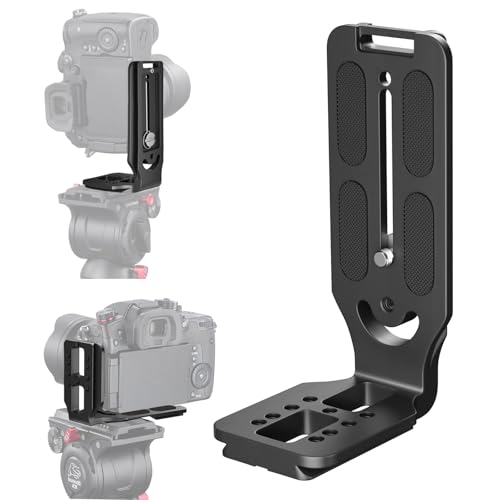
This bracket uses a real single-piece design with no linking screws, which the maker says makes it simpler and more stable. Fewer joints mean fewer things to work loose mid-shoot. It mounts directly onto an Arca-Swiss quick release plate, and the listing is blunt that Manfrotto or Camvate bases require the original plate first. Built from aviation aluminum with CNC machining, it switches freely between portrait and landscape without a ball joint and fits a broad list of DSLR and mirrorless bodies. On a Ronin S or gimbal it attaches to the existing plate rather than replacing it. The clear limitation is the Arca-only direct mount.
MaterialAviation aluminum, CNC
DesignSingle-piece, no link screws
Direct mountArca-Swiss plates only
Gimbal useAttaches to existing plate
Pros
- One-piece build with no screws to loosen
- Free vertical and horizontal switching
- Broad DSLR and mirrorless compatibility
Cons
- Direct mount limited to Arca-Swiss plates
- Manfrotto and Camvate need an adapter plate
Check price on Amazon ›
This bracket covers the streaming basics well, with several 1/4 inch holes for a mic, speedlite, panel light, or field monitor. That flexibility suits an Instagram or IGTV setup. Made from aviation aluminum with precise CNC machining, it stays light yet sturdy and switches from landscape to portrait without a ball joint, which the maker notes also keeps panoramas on the same plane. Mount it straight to a tripod head via screw holes or into a quick release clamp, and leave room for a USB cable to charge or connect a computer. Stop screws at the base help prevent slides. It ships as a bracket only, so a plate for non-Arca heads is separate.
MaterialAviation aluminum, CNC
ThreadsSeveral 1/4 inch
MountingTripod head or QR clamp
Cable accessUSB clearance
Pros
- Multiple 1/4 inch holes for streaming gear
- USB clearance for charging or tethering
- Handles portrait, landscape, and panoramas
Cons
- No dedicated 3/8 inch accessory holes
- May need a separate plate for non-Arca heads
Check price on Amazon ›
DINESK keeps things pared down, offering both 3/8 inch and 1/4 inch screw holes on a light aviation aluminum plate. That dual-thread mix covers most fluid heads and quick release plates without extra adapters. The maker highlights high corrosion resistance and advanced anodizing for a durable finish, which helps on humid or outdoor shoots. You can attach articulated arms, rods, batteries, and converter boxes to build out a support system. It is the simplest option here, so the listing skips detailed compatibility lists and load figures. Buyers who want a spelled-out camera compatibility chart or a stated weight rating will find less information to go on.
MaterialAviation aluminum, CNC
Threads3/8 inch and 1/4 inch
FinishAdvanced anodizing
ExtrasArms, rods, converter boxes
Pros
- Dual 3/8 inch and 1/4 inch threads
- Corrosion-resistant anodized finish
- Simple, light plate for minimal rigs
Cons
- Listing omits detailed compatibility and load specs
- Fewer thread holes than accessory-heavy rivals
Check price on Amazon ›
What to look for
Match the quick-release standard first
Most of these plates follow the Arca-Swiss profile, but your tripod head may use Manfrotto or a proprietary clamp. Confirm your head before buying, since a mismatch forces you to stack the original plate underneath and defeats the quick-swap benefit.
Count the thread holes you actually need
A run-and-gun body wants a couple of 1/4 inch holes, while a rigged setup with monitor, mic, and light benefits from many holes plus 3/8 inch options. More holes add flexibility, though they can also add weight and bulk you may not use.
Check load rating against your heaviest lens
Aluminum brackets stay light, yet stated load figures vary and some listings skip them entirely. Add up your body and largest lens, then leave headroom so the bracket flexes as little as possible during long exposures or windy outdoor sessions.
Look for cable clearance and grip
Owners report that a USB cutout lets you charge or tether without removing the bracket, which saves time on tethered shoots. Rubber pads or stop screws on the base help keep the camera from sliding, protecting both your gear and your framing.
Frequently asked questions
What does a camera L-bracket actually do?
It gives your camera two perpendicular mounting faces so you can switch between landscape and portrait without loosening a ball head or re-leveling. The optical axis stays close to centered, which speeds up composition and helps with panoramas.
Will these brackets fit my tripod?
Most use an Arca-Swiss profile, so they drop into Arca clamps directly. For Manfrotto or other proprietary heads, you often mount the bracket onto your existing quick release plate first. Always confirm your head standard before buying.
Are L-brackets compatible with gimbals?
Several listings say they work with stabilizer gimbals, but usually by attaching to the gimbal's own plate rather than replacing it. Some explicitly exclude certain models, so check the compatibility notes for your specific stabilizer.
Do I need 3/8 inch holes or just 1/4 inch?
Cameras and most small accessories use 1/4 inch threads. The 3/8 inch holes matter for heavier support arms and some fluid heads. If you rig up lights, monitors, or arms, a plate with both sizes offers more room to grow.
How heavy are these brackets?
Aviation aluminum keeps them light, with one listing citing about 134 grams. Others do not publish a figure, so treat the material as a guide. A lighter plate is easier to travel with, while a denser one may feel more rigid under load.
Can I charge my camera while it is mounted?
Many of these designs leave a cutout for a USB cable so you can charge or tether without dismounting. If tethered shooting matters to you, look for the models that specifically mention cable clearance.
Will the camera slide off the bracket?
Most include stop screws or anti-slip screws at the base, and some add rubber pads for grip. These features reduce accidental slides, but you should still tighten the mounting screw firmly and check it before each session.
Are these brackets durable enough for outdoor use?
They use CNC-machined aviation aluminum, and one notes anodizing for corrosion resistance. Owners report solid performance on trails and outdoor shoots. As with any gear, wipe them down after damp or dusty conditions to protect the finish and threads.
The verdict
UTEBIT Camera L Bracket with 1/4 inch Scre...
9.2/10
For most shooters the UTEBIT stands out, pairing a light body with a generous stated load and reliable 1/4 inch fit. Rig-builders should look at the Bestoct for its many thread holes and Arca clamp, while panorama fans lean toward the Aylthyo. The single-piece pick suits Arca-Swiss loyalists, and DINESK keeps things simple with dual threads. Match the plate to your tripod head first, then choose by how much gear you mount.
Check price on Amazon ›
Our top pick, secure checkout via Amazon
Note: Availability and specifications change often. Always confirm the current details on Amazon before buying.