Camera Tripods 6 Carbon Fiber Tripods That Stay Light and Solid
P
By the Pickpedia Team
·6 picks compared
·Last verified October 2026
Affiliate disclosure: As an Amazon Associate, Pickpedia earns from qualifying purchases. Links on this page are paid links, and we may earn a commission at no extra cost to you. This never affects our picks or scores.
Quick answer
A carbon fiber tripod earns its keep when it stays light in your bag yet steady in wind. Pick by real load rating, folded length, and head type. Travelers want compact folds near 16 inches, while pros shooting heavy glass need higher capacity and metal spikes for uneven ground.
6 Carbon Fiber Tripods That Stay Light and Solid at a glance
Why you can trust this guide
We compared these picks using verified manufacturer specifications, available manuals and documentation, current retailer listings, and patterns in owner feedback, alongside editorial research. We focus on measurable differences such as performance, capacity, usability, and build quality. Pickpedia does not present editorial research as laboratory testing, and we do not claim hands-on testing unless it was actually performed.
How we chose: We compared six carbon fiber tripods across folded length, rated load, maximum height, head style, and portability so different shooters can match one to their kit.
Carbon fiber tripods promise a rare combination: light enough to carry all day, rigid enough to hold a full camera and lens without flex. Marketing makes them all sound identical, so we sorted through the specifications that actually change how one feels in the field.
This roundup ranges from a sub two pound travel model to a heavy duty bowl tripod rated for cinema rigs. Weight, folded size, rated load, and head design guided our picks. Every claim below is grounded in the listed specifications, and each product lists one honest tradeoff so you know what you accept.
Our top picks
SIRUI packs a striking capacity into a light frame here. Ten layer carbon tubes with a 32mm top diameter keep weight near 3 lbs while carrying a rated 44 lbs. Height adjusts from 3.1 inches up to 57 inches, so low angle and eye level shots both work. Twist locks with anti slip rubber pads and silica gel sleeves set up with a half turn. Three leg angles at 22, 55, and 85 degrees, plus an Allen key for fine tightness, add versatility. Skipping a center column improves rigidity and low shooting. Exchangeable rubber feet and metal spikes grip mud, ice, or sand. The tradeoff: no center column means quick vertical tweaks take longer.
Max load44 lbs (20 kg)
WeightAbout 3 lbs
Max height57 inches
Leg sections4, three angles
Pros
- High rated load for such a light body
- No center column boosts stability and low shots
- Swappable rubber feet and metal spikes
Cons
- No center column slows height changes
- Head must be bought to suit your rig
Check price on Amazon ›
NEEWER positions this as a no frills line, and the specs back a genuinely flexible tool. Rated to hold DSLR bodies up to 13.2 lbs, it pairs a weight hook and non slip feet for extra stability. Reversible legs fold to 16.3 inches and one leg converts to a monopod for run and gun work. Height spans 21.3 to 47.2 inches, with a two section column reaching 63.8 inches or inverting for macro. A 360 degree ball head, Arca type plate, and included phone mount cover cameras and smartphones. The tradeoff: an economical line means fewer premium touches than boutique rivals.
Max load13.2 lbs (6 kg)
Folded length16.3 inches
Max height63.8 inches
Head360 ball head, Arca plate
Pros
- Converts to a monopod without extra gear
- Weight hook and non slip feet add steadiness
- Phone mount included for content creators
Cons
- Basics line skips premium refinements
- Two section column can flex at full extension
Check price on Amazon ›
K&F leans hard on portability, and the numbers deliver. Aerospace grade carbon keeps this one near 2.2 lbs, easy to carry into mountains or deserts. Five section legs and metal knob locks stretch working height from 18 to 60 inches, covering most needs. A 180 degree reflex fold drops it to 13.8 inches, inside typical airline length limits. The 25mm ball head claims an 8kg safe load with a 360 degree horizontal scale for precise framing. One leg detaches into a monopod running 14.6 to 62 inches, and the reversible column enables ground level macro. The tradeoff: five leg sections mean more locks to set, which slows deployment.
Weight2.2 lbs (1 kg)
Folded length13.8 inches
Max height60 inches
Head load8 kg ball head
Pros
- Very light and packs airline friendly
- Detachable monopod adds reach and flexibility
- Reversible column for low macro work
Cons
- Five leg sections slow setup
- Slim tubes suit lighter kits best
Check price on Amazon ›
Cayer aims squarely at packability with the CH35. At just 1.54 lbs, it slips into a daypack without complaint. A 42mm ball head offers 45 degree tilt, 360 degree pan, and 90 degree side tilt, with an Arca plate and 1/4 inch screw for cameras or phones. The clever Y shaped center column folds the legs tightly to 17.7 inches. It extends to 53.6 inches for standing shots and drops to 6.1 inches with the included short column for macro and tabletop use. A phone clamp and carrying case round out the kit. The tradeoff: its featherweight build is best suited to compact cameras rather than heavy professional rigs.
Weight1.54 lbs (0.7 kg)
Folded length17.7 inches
Max height53.6 inches
Head42mm ball, Arca plate
Pros
- Extremely light for all day carry
- Short column drops to 6.1 inches for macro
- Ships with phone clamp and case
Cons
- Light build limits heavy lens use
- Modest maximum height for tall users
Check price on Amazon ›
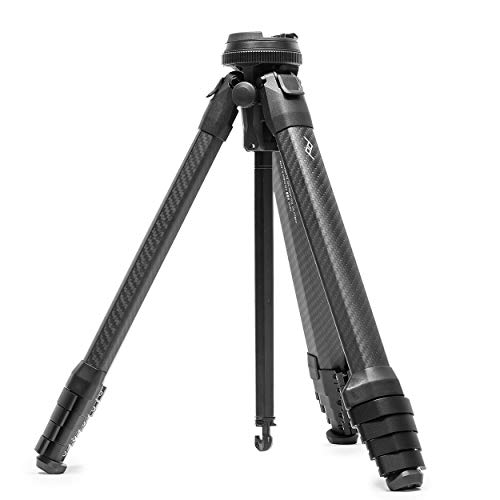
Peak Design rethought the travel tripod, and the design shows. It packs down to roughly the diameter of a water bottle, yet the unique leg system deploys and locks in seconds with no flipping or twisting. Owners praise the quick release lever for smooth mounting. Despite the slim form, it supports up to 20 lbs, enough for a full frame DSLR with a telephoto lens. The omnidirectional ball head uses a single adjustment ring for intuitive control, and a mobile mount pops out of the center column. You can invert the setup without tools or hang weight from the hook. The tradeoff: the clever ring mechanism has a learning curve at first.
Max load20 lbs
Pack sizeWater bottle diameter
HeadSingle ring ball head
ExtrasBuilt in phone mount
Pros
- Packs remarkably small for its capacity
- Setup and takedown are genuinely fast
- Built in phone mount and weight hook
Cons
- Single ring head takes practice
- Slim packed form favors organization over bulk kit
Check price on Amazon ›
INNOREL built the RT90C for serious loads. Leg tubes run up to 40mm with a 29mm minimum, wider than most rivals, made from ten layer carbon for a strong strength to weight ratio and a rated 88 lbs. It folds to 23 inches and weighs about 6 lbs, extending from 22 to 63 inches. An aluminum alloy anodized mounting pan, oversized weight hook, and set screw hold heads securely, and it fits 75mm or 100mm bowls plus fluid or ball heads. Three leg angles and interchangeable rubber and steel spikes handle uneven terrain. The kit adds an adapter, bowl, Allen keys, spikes, and a bag. The tradeoff: at 6 lbs it is the heaviest here, built for capacity over easy carry.
Max load88 lbs (40 kg)
Weight6 lbs (2.72 kg)
Folded length23 inches
Mount75mm and 100mm bowl
Pros
- Very high rated load for heavy rigs
- Bowl mount suits fluid video heads
- Interchangeable rubber and steel spikes
Cons
- Heaviest option in this lineup
- Longer folded size than travel models
Check price on Amazon ›
What to look for
Weight versus stability
Carbon fiber lets a tripod stay light while resisting flex, but lighter is not always better. A featherweight model can dance in wind or under a heavy lens. Match rated load to your kit with headroom, and use the weight hook when a design offers one for extra ballast.
Folded length and travel
Folded size decides whether a tripod rides in a backpack or gets left at home. Reflex folding legs, where they invert around the head, cut packed length dramatically. If you fly often, look for a folded measurement inside common airline length limits so it fits carry on bags.
Leg sections and locks
More leg sections pack shorter but add joints, more locks to set, and slightly more flex. Twist locks seal tightly against grit, while lever locks read status at a glance. Fewer, thicker sections feel more rigid, so weigh setup speed against packed size for your style.
Head and mount choices
A ball head suits fast stills and general use, while bowl mounts and fluid heads serve video. Confirm the plate standard, since Arca type is widely compatible. Some tripods ship without a head so you can choose your own, so factor that into what you actually receive in the box.
Frequently asked questions
Is carbon fiber really better than aluminum?
Carbon fiber weighs less at the same strength and dampens vibration well, which helps sharpness during long exposures. Aluminum remains sturdy and more economical. If you carry gear far or shoot in wind, the lighter, stiffer carbon build usually earns its place in your bag.
How much load capacity do I need?
Add up your heaviest camera body plus its largest lens, then choose a tripod rated well above that figure. Extra headroom keeps the setup steady and reduces creep. Models here range from about 13 lbs up to 88 lbs, so match capacity to your actual kit.
What folded length is good for travel?
Anything folding near 16 to 18 inches slips into most backpacks and often meets airline carry on length limits. Reflex folding legs help shrink packed size. If travel is your priority, the K&F and Cayer models fold especially short in this roundup.
Do these work with smartphones?
Several include a phone mount or clamp. The NEEWER ships with a cellphone holder, Cayer includes a universal clamp, and Peak Design hides a phone mount in the center column. Any tripod with a 1/4 inch screw and Arca plate also accepts most third party phone adapters.
What is a monopod conversion good for?
A convertible leg becomes a monopod for sports, wildlife, and events where you move constantly and need quick support. It steadies long lenses without the footprint of full legs. The NEEWER and K&F models here both offer a detachable monopod for that flexibility.
Why choose no center column?
Removing the center column lowers the tripod for ground level macro and improves rigidity, since the column can act as a weak point. The SIRUI uses this layout for a more compact, stable base. The tradeoff is slower vertical height changes during quick shooting.
Are bowl tripods worth it for video?
Bowl mounts let you level a fluid head fast without adjusting each leg, which matters for smooth pans. The INNOREL fits 75mm and 100mm bowls and handles heavy rigs. For stills only, a standard flat mount with a ball head is simpler and lighter.
How do I keep a light tripod steady?
Hang your bag or a sandbag from the weight hook, splay the legs wider, and keep the center column low or retracted. Use metal spikes on soft or icy ground and rubber feet indoors. On windy days, shield the setup and trigger with a remote or timer.
The verdict
SIRUI 57 inch Carbon Fiber Camera Tripod A...
9.3/10
For most shooters the SIRUI AM-324 balances a light frame with a genuinely high rated load, making it our top overall pick. Choose the Peak Design when fast setup and tiny packed size matter most, or the K&F and Cayer models when every ounce counts on the trail. Video shooters with heavy rigs should look to the INNOREL bowl tripod, while the NEEWER suits hybrid stills and monopod use.
Check price on Amazon ›
Our top pick, secure checkout via Amazon
Note: Availability and specifications change often. Always confirm the current details on Amazon before buying.