Tools & DIY 6 Garden Water Pumps for Easy Outdoor Watering
P
By the Pickpedia Team
·6 picks compared
·Last verified September 2026
Affiliate disclosure: As an Amazon Associate, Pickpedia earns from qualifying purchases. Links on this page are paid links, and we may earn a commission at no extra cost to you. This never affects our picks or scores.
Quick answer
For most gardens, pick a shallow well jet pump sized to your flow and lift needs. Higher horsepower models push water farther and faster across large plots, while a compact diaphragm or transfer pump suits barrels, basements, and light irrigation where portability matters more than raw output.
6 Garden Water Pumps for Easy Outdoor Watering at a glance
Why you can trust this guide
We compared these picks using verified manufacturer specifications, available manuals and documentation, current retailer listings, and patterns in owner feedback, alongside editorial research. We focus on measurable differences such as performance, capacity, usability, and build quality. Pickpedia does not present editorial research as laboratory testing, and we do not claim hands-on testing unless it was actually performed.
How we chose: Six garden water pumps compared across flow rate, lift height, suction depth, priming behavior, build materials, and included fittings.
Choosing a garden pump comes down to how far and how fast you need water to move. Shallow well jet pumps handle sprinklers, long hose runs, and drawing from ponds or rain barrels. Diaphragm and transfer pumps favor portability and on demand pressure for smaller jobs.
Our picks below range from a compact lightweight transfer unit to high flow stainless steel jet pumps rated well past a thousand gallons per hour. Every claim here is grounded in the manufacturer specifications, so match the numbers to your yard before deciding.
Our top picks
A 1.6 HP motor drives this stainless steel jet pump to a rated 1320 GPH at 5 feet of head, with water delivery up to 164 feet and shallow well depth reaching 26 feet. Stainless casing and an aluminum motor housing resist corrosion, and a waterproof switch keeps operation safe. Automatic thermal overload and dry run shutoff protect the motor. A carbon ceramic mechanical seal guards against leaks. One real limitation stands out: it is not self priming, so you must fill the pump head with water before every use. A two year warranty backs it.
Motor1.6 HP
Max flow1320 GPH at 5 ft head
Suction depthUp to 26 ft
Discharge1 in NPT, 3/4 in hose adapter
Pros
- Strong flow and delivery distance for big yards
- Corrosion resistant stainless and aluminum build
- Dry run and thermal overload protection
Cons
- Not self priming, needs manual filling each use
- Works with a pressure regulator only as a separate add on
Check price on Amazon ›
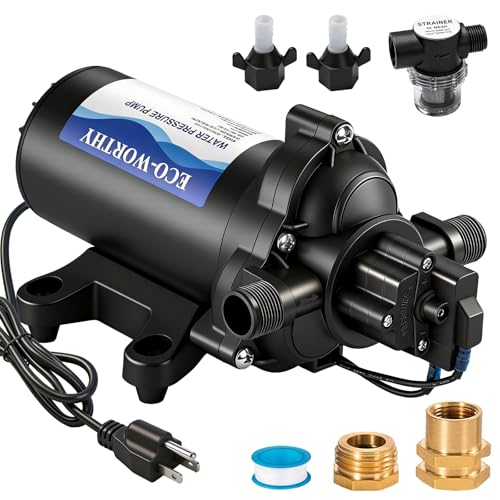
This 110V diaphragm pump delivers 4.0 GPM and cycles on and off automatically at 50 PSI, drawing just 1.3 amps at peak. A smart pressure switch runs it only when a faucet opens, and the range adjusts from 45 to 70 PSI to suit your setup. Self priming up to 9.8 vertical feet and lifting as high as 131 feet, it handles irrigation, sprinklers, and boat plumbing. Built in thermal overload disconnects the circuit above 95C. One caveat: continuous running is rated for a little over an hour, so it favors intermittent tasks rather than marathon transfers.
Flow4.0 GPM
Pressure50 PSI, adjustable 45 to 70
Self primingUp to 9.8 vertical ft
Max lift131 ft
Pros
- Automatic on demand pressure switch
- Quiet and low amp draw
- Self priming with strong lift
Cons
- Continuous run rated only above an hour
- Lower flow than dedicated jet pumps
Check price on Amazon ›
Weighing little and fitted with a carry handle, this 1/10 HP transfer pump moves a rated 330 GPH through a 3/4 inch discharge. Setup is simple: fill the head, connect the hose, plug in, and pump. A 6 foot suction hose plus a strainer let it draw water down to about 1/8 inch from the surface, handy for flooded basements, aquariums, and rain barrels. Metal hose connectors add reliability over plastic threads, and each unit is factory tested. Keep in mind it is non submersible, so the motor must stay dry, and its modest flow suits light duty rather than large irrigation.
Motor1/10 HP
Max flow330 GPH
Max lift40 ft
Suction lift6 ft
Pros
- Compact, portable, and easy to carry
- Draws water down to a thin surface layer
- Includes suction hose, strainer, and spare impeller
Cons
- Non submersible, motor must stay dry
- Lower flow limits it to small jobs
Check price on Amazon ›
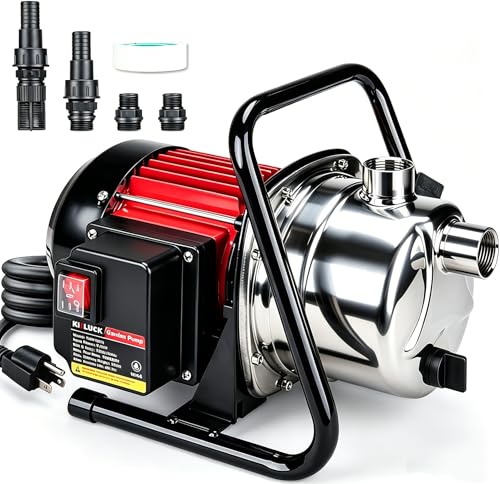
Running on 115 volts with a 1.6 HP motor, this KITLUCK jet pump transfers a rated 1000 GPH and lifts water as high as 150 feet, with suction reaching 26 feet. A stainless steel head and aluminum alloy body resist rust and wear, and a tight seal design limits leakage. What sets it apart is the included fittings set: a 1 inch inlet adapter, a filter with non return valve, garden hose adapters, and sealing tape, so you can start without extra shopping. The filter helps keep debris from clogging the motor. Note that the head, and ideally the inlet pipe, must be filled with water before use.
Motor1.6 HP, 115V
Max flow1000 GPH
Max lift150 ft
Suction lift26 ft
Pros
- Comprehensive fittings and filter kit included
- Inlet filter reduces clogging risk
- Portable handle and 6.5 ft cord
Cons
- Requires filling the head before each use
- Waste water must be drained after use
Check price on Amazon ›
This 1 HP stainless steel pump reaches a rated 900 GPH, lifts up to 144 feet, and suctions from 26 feet, spraying around 350 GPH at 40 PSI. Maximum output pressure of 65 PSI lets it double as a sprinkler booster. Maintenance is a strong point: dedicated priming and drain ports with a rotary knob let you prime before use and clear leftover water afterward without tools. A waterproof switch, overheat protection, and a wear resistant seal round it out, plus a kit of clamps, adapters, and a check valve. One limitation matters: it is designed for clean water only, so keep sediment and debris out of the intake.
Motor1 HP
Max flow900 GPH
Max lift144 ft
Output pressureUp to 65 PSI
Pros
- Tool free priming and drain ports
- Doubles as a sprinkler booster
- Includes clamps, adapters, and check valve
Cons
- Rated for clean water only
- Lower flow than the top jet pumps
Check price on Amazon ›
With a 1.6 HP motor and a rated 1600 GPH, this FOTING jet pump posts the strongest flow in the group, pushing through large draining jobs in less time. Maximum lift climbs to 147 feet and suction depth reaches 26 feet. A stainless steel head and aluminum body fight corrosion and abrasion, while a waterproof switch keeps operation safe. It is self priming and adds thermal overload plus dry run shutoff to guard the motor. A 6.6 foot cord and iron handle make it easy to move indoors or out. Do note that water hoses are not included, and you still fill it before the first use.
Motor1.6 HP, 115V
Max flow1600 GPH
Max lift147 ft
Suction depth26 ft
Pros
- Highest rated flow for fast draining
- Self priming with overheat and dry run protection
- Corrosion resistant stainless and aluminum build
Cons
- Water hoses are not included
- Needs filling before the first use
Check price on Amazon ›
What to look for
Match flow rate to your yard
Flow, measured in gallons per hour, decides how quickly a pump moves water. Small barrels and light drainage need only a few hundred GPH, while sprinkler systems and large plots benefit from a thousand or more. Oversizing wastes energy on tiny jobs, so pick a rating that fits your typical task.
Understand lift and suction
Two numbers matter here. Lift height tells you how far up or along a pipe the pump can push water. Suction depth tells you how far down it can draw from a well, pond, or barrel. Most shallow well models here reach about 26 feet of suction, plenty for backyard sources.
Self priming versus manual filling
Self priming pumps pull water into the head on their own once started. Non self priming models, common among high flow jet pumps, require you to fill the head with water first. Neither is wrong, but manual filling adds a step every time, so factor that into how often you will use it.
Build materials and protection
Stainless steel heads and aluminum bodies resist rust and wear, which extends service life outdoors. Look for a waterproof switch, thermal overload protection, and dry run shutoff, since these guard the motor from overheating and running empty. A quality mechanical seal reduces leaks over the long haul.
Frequently asked questions
What is the difference between a jet pump and a transfer pump?
A jet pump uses suction to draw from wells or open water and pushes it under pressure for irrigation. A transfer pump simply moves water from one place to another. Jet pumps tend to offer higher lift and flow, while transfer pumps favor portability and simple drainage.
Do I need a self priming pump?
It depends on convenience. Self priming pumps load water into the head automatically once started. Non self priming pumps must be filled by hand before each use. If you run the pump often, self priming saves a repeated step, though many strong jet pumps still require manual filling.
Can these pumps handle dirty or muddy water?
Most models here are designed for clean water. Sediment and debris can clog impellers and shorten motor life. If your source carries grit, use an intake filter or strainer, and check the listing to confirm the pump tolerates anything beyond clean water.
How far can a garden pump move water?
Lift ratings in this roundup range from around 40 feet on a compact transfer unit to roughly 164 feet on the strongest jet pumps. Actual distance depends on elevation change, hose diameter, and fittings, so allow margin below the maximum rating.
What does GPH mean and how much do I need?
GPH stands for gallons per hour, the volume of water a pump moves. Rain barrels and small chores manage with a few hundred GPH. Sprinkler systems and large gardens run better with a thousand or more. Match the number to your busiest watering task.
Are these pumps safe to leave running?
Many include thermal overload protection that cuts power if the motor overheats, and dry run shutoff that stops the pump when water runs out. Even so, some models rate continuous operation for only about an hour, so read the specification before long unattended sessions.
Do I need to drain the pump after use?
Yes, draining leftover water is good practice. It prevents residue buildup and protects internal parts, especially before storage in cold weather. Some pumps include dedicated drain ports with a knob so you can clear water quickly without tools.
Can a garden pump boost my sprinkler pressure?
Several models here double as booster pumps and reach output pressures in the 50 to 65 PSI range. A few are compatible with a pressure regulator for finer control. Confirm the pressure rating matches what your sprinkler heads require before relying on it.
The verdict
Aquastrong 115V Shallow Well Garden Pump,...
9.2/10
For most gardeners, the Aquastrong 1320 GPH jet pump balances strong flow, sturdy stainless build, and solid motor protection, making it our top overall pick. Need the fastest draining? The FOTING 1600 GPH pushes the highest volume. For barrels and small drainage, the lightweight TecHome is simplest to carry, while the ECO-WORTHY suits on demand faucet fed pressure. Choose by matching flow, lift, and priming to how you actually water.
Check price on Amazon ›
Our top pick, secure checkout via Amazon
Note: Availability and specifications change often. Always confirm the current details on Amazon before buying.