Tools & DIY 5 Automotive Borescopes for Engine Inspections
P
By the Pickpedia Team
·5 picks compared
·Last verified October 2026
Affiliate disclosure: As an Amazon Associate, Pickpedia earns from qualifying purchases. Links on this page are paid links, and we may earn a commission at no extra cost to you. This never affects our picks or scores.
Quick answer
For general engine bay checks, a rigid handheld unit with a bright color screen works well. If you inspect cylinders or tight passages, choose an articulating probe that steers around bends. Match probe diameter and length to the openings you actually reach through, then weigh recording needs.
5 Automotive Borescopes for Engine Inspections at a glance
Why you can trust this guide
We compared these picks using verified manufacturer specifications, available manuals and documentation, current retailer listings, and patterns in owner feedback, alongside editorial research. We focus on measurable differences such as performance, capacity, usability, and build quality. Pickpedia does not present editorial research as laboratory testing, and we do not claim hands-on testing unless it was actually performed.
How we chose: We compared five automotive borescopes across probe diameter, screen quality, articulation, illumination, and how each records and stores images.
A borescope turns guesswork into a clear look inside cylinders, intake ports, and spots your eyes cannot reach. Owners rely on them to spot carbon buildup, scored walls, or a dropped bolt before pulling a component apart. The right one depends on the openings you inspect and whether you need to steer around corners.
We compared these five on specifications and reviewer feedback, not lab testing. Probe diameter decides which spark plug holes and passages you fit through. Screen size, LED brightness, and articulation shape how much you actually see once the camera is inside.
Our top picks
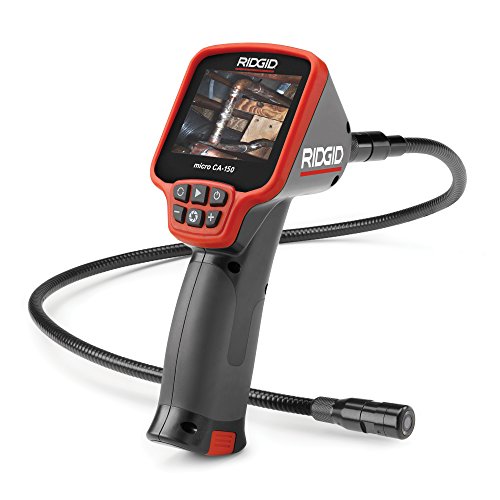
RIDGID pairs a 3.5 inch color display with a 3 foot cable and an ergonomic one-hand grip that steadies the camera in awkward spots. Four adjustable LEDs at the head brighten dark cavities under the hood, and reviewers note the image quality holds up in dim corners. Bundled mirror, hook, and magnet attachments retrieve dropped hardware while you inspect. It stores up to 20 still images for later playback, so you can review findings away from the vehicle. The main limitation is that short frame count and stills-only capture, since it records no video for longer diagnostic clips.
Display3.5 inch color
Cable length3 feet
LEDs4 adjustable
StorageUp to 20 stills
Pros
- Comfortable one-hand grip for steady control
- Useful mirror, hook, and magnet attachments included
- Bright adjustable LED head lights dark spaces
Cons
- Records stills only, no video
- Holds just 20 images at a time
Check price on Amazon ›
Extech's detachable 3.5 inch color monitor separates from the handle and works wirelessly up to roughly 32 feet away. That lets one person feed the 39 inch gooseneck while another watches from a distance. The waterproof 9 mm camera head carries two built-in LEDs, and a microSD card captures both JPEG images and AVI video for review on a PC. A full kit with adapters, extension tools, USB and video cables, stand, and case ships in the box. Reviewers point out the 9 mm head is thicker than newer probes, so very small openings can be tight.
Camera diameter9 mm
Gooseneck39 inches
Wireless rangeUp to 32 feet
CaptureJPEG and AVI
Pros
- Wireless detachable display for remote viewing
- Waterproof head with video recording
- Comprehensive accessory kit included
Cons
- 9 mm head too wide for tiny ports
- Two LEDs may underlight deep cavities
Check price on Amazon ›
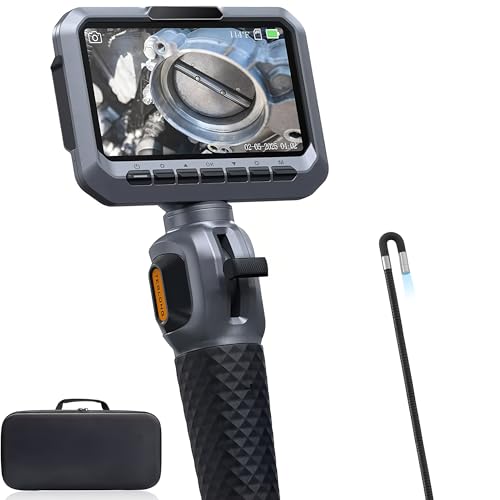
A slim 5.5 mm probe and two-way articulation up to 210 degrees let this scope bend around valves and curved passages that fixed cameras miss. The 5 inch IPS screen shows a sharp WVGA image, and six LEDs with three brightness steps adapt to different depths. It captures 1080P stills and 720P video, and a 3000mAh battery keeps sessions going. Optimal focus sits around 3 to 8 cm, so owners report the clearest detail comes at close range. The 5 foot probe suits most engine work, though the narrow field of view means you scan slowly to cover a full cylinder wall.
Probe diameter5.5 mm
ArticulationTwo-way to 210 degrees
Screen5 inch IPS
Battery3000mAh
Pros
- Slim probe reaches very tight openings
- Two-way articulation steers around bends
- Adjustable six-LED brightness for varied depths
Cons
- Narrow 75 degree field of view
- Best focus limited to close range
Check price on Amazon ›
ECG keeps things basic with a removable 3.5 inch LCD monitor and a small 9 mm waterproof camera head for peeking into hard to reach areas. It records color video straight to the included 2GB SD card, so you can save what you find without extra software. Reviewers appreciate the plain, no-frills operation for occasional jobs around the shop or driveway. The detachable screen adds flexibility when the handle sits at an awkward angle. Its specifications stay modest, and the 9 mm head plus limited included storage make it better for wider access points than the tightest engine passages.
MonitorRemovable 3.5 inch LCD
Camera head9 mm
RecordingColor video
Storage2GB SD card
Pros
- Simple plug and inspect operation
- Removable LCD adds positioning flexibility
- Waterproof head for damp inspections
Cons
- Small 2GB card fills quickly
- 9 mm head limits access to narrow ports
Check price on Amazon ›
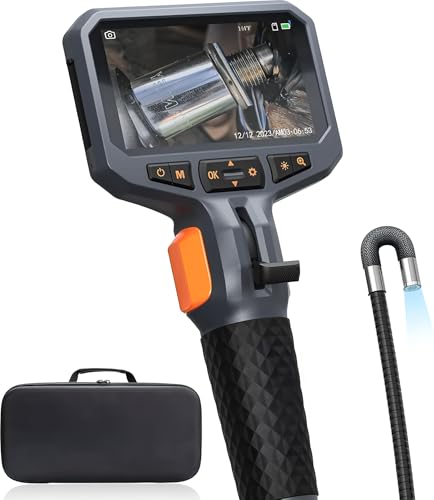
The TD450s offers single or dual lens options on an 8.5 mm stainless probe, letting you view forward and side angles without repositioning as often. Two-way 210 degree articulation on a roughly 5 foot probe steers into curved passages, and ring LEDs light the darkest recesses. It captures 1080P photos and 720P video, storing everything on the included 32GB microSD card, which owners note is far roomier than smaller bundled cards. That generous storage suits long inspection sessions. The 8.5 mm diameter is thicker than 5.5 mm probes, so the very smallest openings stay out of reach.
Probe diameter8.5 mm
LensSingle or dual
ArticulationTwo-way to 210 degrees
Storage32GB microSD
Pros
- Dual-lens option covers side and forward views
- Large 32GB card handles long sessions
- Durable stainless steel probe
Cons
- 8.5 mm probe too wide for tiny openings
- Dual-lens setup adds a learning curve
Check price on Amazon ›
What to look for
Match probe diameter to your openings
Probe width decides everything. A 5.5 mm probe slips into most spark plug holes and narrow ports, while 8.5 mm and 9 mm heads suit wider access points. Measure the smallest opening you inspect before choosing, since a probe that will not fit is no use at all.
Decide if you need articulation
Fixed cameras look straight ahead, which is fine for open cavities. Cylinder walls, intake runners, and curved passages call for two-way articulation that steers the tip around bends. If you plan to trace faults deep inside an engine, steering pays off quickly.
Weigh screen size against portability
Larger 5 inch IPS screens reveal fine detail like scoring or carbon, helping faster diagnosis. Smaller 3.5 inch displays stay compact and easier to hold one-handed. A detachable or wireless screen lets a helper watch while you feed the probe into tight spots.
Check lighting and recording
LED count and brightness control decide how much you see in dark chambers. Adjustable brightness prevents glare up close. For records, confirm whether the unit saves stills only or full video, and how much storage ships with it, since small cards fill fast during long jobs.
Frequently asked questions
What size borescope probe fits a spark plug hole?
Most spark plug openings accept a probe around 5.5 mm or slimmer. Thicker 8.5 mm and 9 mm heads may not pass through, so check your engine's port and the probe diameter before buying.
Do I need an articulating borescope for engine inspections?
Not always. Open engine bay checks work fine with a fixed camera. But inspecting cylinder walls or curved passages is far easier with two-way articulation that steers the tip around bends.
Can a borescope record video?
Some can. Units like the Extech BR250 and the articulating models capture both photos and video to an SD card. Others, such as the RIDGID CA-150, store still images only for later playback.
Are automotive borescopes waterproof?
Many camera heads are waterproof or water resistant, which suits damp or oily inspections. The Extech, ECG, and similar heads list waterproof ratings, though check whether the handle and screen share that protection.
How far can I inspect with a borescope?
Reach depends on probe length. These units run roughly 3 to 5 feet of cable or gooseneck. For engine work that covers most cylinders and passages, though longer runs exist for deeper industrial jobs.
What screen size is best for reading detail?
Larger 5 inch IPS screens show fine detail like scoring and carbon more clearly, aiding diagnosis. Compact 3.5 inch displays trade some clarity for easier one-hand handling and portability.
Does a wireless borescope help in a garage?
Yes, when you inspect alone or at awkward angles. A detachable wireless monitor, like the Extech's, lets you watch from a distance while feeding the probe, or hand the screen to a helper.
How much storage do I need?
Enough for your session length. Bundled cards range from a small 2GB up to 32GB. Video eats space fast, so a roomier card, as included with the TD450s, saves swapping mid-job.
The verdict
RIDGID 36848 Micro CA-150 Hand-Held Inspec...
9.1/10
The RIDGID CA-150 earns our top pick for its steady grip, bright LEDs, and handy retrieval attachments, ideal for everyday engine bay checks. Choose the 5.5 mm articulating scope when you inspect tight cylinders and curved passages. The TD450s suits users wanting dual-lens views and roomy storage, while the Extech fits remote viewing and the ECG covers simple, occasional video jobs. Match probe size and steering to your work.
Check price on Amazon ›
Our top pick, secure checkout via Amazon
Note: Availability and specifications change often. Always confirm the current details on Amazon before buying.