INSAUTO Custom Fit Windshield Sun Shade for Dodge Challenger Review
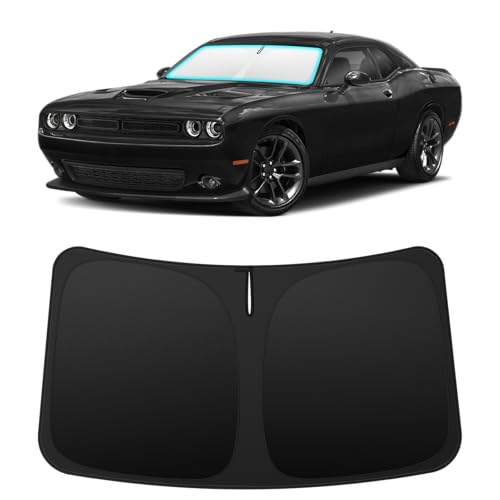
Cut for one windscreen rather than folded to fit any, in 240T reflective polyester blocking up to 99 percent of UV.
| Brand | INSAUTO |
|---|---|
| Part number | SC-Challenger-2015 |
| Vehicle | Dodge Challenger |
| Model years | 2015 to 2023 |
| Fit | Custom cut |
| Fabric | 240T reflective polyester |
| Best for | Dodge Challenger owners who park outside and are tired of a universal shade leaving gaps |
Product Overview
Universal sun shades are a compromise by definition. A windscreen is a curved trapezoid specific to the car, and a rectangular folding shade either leaves triangles of exposed glass at the corners or buckles trying to cover them. Those gaps are where the heat gets in, so a shade that half fits does rather less than half the job.
A custom-cut shade removes that problem. This one is made for the Dodge Challenger across the 2015 to 2023 model range, and INSAUTO states a perfect fit for that shape. The practical consequence is edge-to-edge coverage with no exposed corners, which is the only way a shade stops the dashboard getting direct sun.
The protection claim is specific and worth noting: 240T reflective polyester with a UV-resistant coating, blocking up to 99 percent of harmful UV. The fabric designation and the UV figure together give you something to judge, which is more than most shades offer.
Score Breakdown
This verdict is based on the manufacturer's stated specifications, the current Amazon listing and its product images, the confirmed materials and design, real buyer ratings, and our research into the product category. Scores are consistent editorial judgments, not laboratory measurements, and we did not receive a paid sample.
Key Features
Matched to the Challenger windscreen, so there are no exposed triangles at the corners where a universal shade lets heat in.
A dense weave, and density is what stops light passing through the fabric rather than only bouncing off its surface.
A reflective outer layer bounces sunlight away and an insulating inner layer slows what gets through. Two different mechanisms.
From a UV-resistant coating, protecting the dashboard, steering wheel and seats from the cracking and fading that sun causes.
A cooler cabin takes less work to bring down to temperature, which is the benefit you feel on setting off rather than on parking.
Unfold and place. A custom shade has only one correct orientation, so there is no alignment to judge or corners to tuck.
A custom shade does not fold into a neat rectangle, so a pouch matched to its folded shape stops it creasing loose in a boot.
Design and Build Quality
The material is 240T reflective polyester, where 240T refers to the thread count of the weave. A higher thread count makes a denser fabric, which matters on a sun shade because density is what stops light passing through rather than only reflecting off the surface.
Construction is dual layer, and INSAUTO is clear about the division of labour: a reflective outer layer bounces sunlight away, and an insulating inner layer slows the heat that gets through. That is the correct arrangement, because reflection and insulation are different mechanisms and a single-layer shade only does the first.
What the shade protects is worth spelling out, because sun damage is cumulative and permanent. INSAUTO names cracking, fading and warping of the dashboard, steering wheel and seats. Those are the three components that fail from UV exposure, and a dashboard crack in particular is a repair most owners never bother with and simply live with.
Storage is handled with a compact pouch, which matters more than it sounds on a custom shade. A shade shaped to one windscreen does not fold into a neat rectangle, so having a pouch sized for its actual folded shape is what stops it living loose in a boot and getting creased.
Performance in Everyday Use
Fit is the whole proposition and the thing to verify. INSAUTO lists every model year from 2015 through 2023 individually, which is the right way to publish compatibility because body shapes change between generations. Check your own year against that list rather than assuming a Challenger is a Challenger, and note that anything outside that range needs a different part.
On heat reduction, the dual-layer approach is the mechanism that works. Reflecting light before it enters the cabin prevents heat being created in the first place, and insulating behind that slows what does get through. INSAUTO also notes it reduces air conditioning load, which is the knock-on benefit: a cooler cabin takes less work to bring down to temperature when you set off.
The 99 percent UV figure is the one to read carefully. Up to 99 percent is a ceiling rather than a guarantee, and UV blocking depends on the fabric being intact and correctly positioned. It is a credible figure for a coated 240T polyester, and the practical point stands: the dashboard behind it is substantially protected.
Installation is unfold and place, with folding back taking seconds. Custom shades are generally easier to fit than universal ones for a straightforward reason: there is only one way they go in, because the shape matches the aperture. You are not judging alignment or tucking corners.
The honest limitation is the obvious one. A shade cut for a Challenger fits a Challenger. Sell the car and the shade goes with it, where a universal shade moves to the next vehicle. That is the trade for actually fitting, and for most owners it is the right trade.
How It Performs: The Evidence
| Decision factor | What we found | Evidence and measurement | Score | Why it matters |
|---|---|---|---|---|
| Fit | Custom cut for the Challenger across a 2015 to 2023 range | Listing states it is designed specifically for the 2015 through 2023 Dodge Challenger, offering a perfect fit | 9.8 | Corner gaps are exactly where a universal shade lets heat into the cabin |
| Fabric | 240T reflective polyester with a UV-resistant coating | Listing states construction from upgraded 240T reflective polyester with UV-resistant coating | 9.3 | Thread count determines density, and density stops light passing through the weave |
| UV protection | Blocks up to 99 percent of harmful UV | Listing states the coating effectively blocks sunlight and up to 99 percent of harmful UV rays | 9.3 | UV is what cracks a dashboard and fades upholstery, cumulatively and permanently |
| Thermal construction | Reflective outer and insulating inner layers | Listing states the reflective outer layer and insulating inner layer work together to lower interior temperature and reduce air conditioning load | 9.5 | Reflection and insulation are different mechanisms, and a single layer only does one |
| Component protection | Dashboard, steering wheel and seats | Listing states it blocks harsh sunlight and heat to prevent cracking, fading and warping of the dashboard, steering wheel and seats | 9.3 | Those are the three components UV exposure actually ruins |
| Fitting | Unfold for instant use, folds back in seconds | Listing states you simply unfold for instant use and fold back within seconds | 9.5 | A custom shape has one correct orientation, so nothing needs aligning or tucking |
| Storage | Compact storage pouch included | Listing states it comes with a compact storage pouch for convenient organisation when not in use | 9.3 | A custom shade does not fold flat, so a matched pouch stops it creasing in a boot |
| Transferability | Fits one model range only | The part number and size attribute both specify the 2015 to 2023 Dodge Challenger exclusively | 3.0 | Change car and the shade is worthless, which is the trade for actually fitting |
Who Should Buy It
- Dodge Challenger owners parking outside
- Hot climates and summer parking
- Protecting a dashboard from cracking
- Reducing cabin temperature before driving
- Anyone frustrated by universal shades leaving gaps
- Anyone wanting a shade that transfers between vehicles, or a different model year range
- Fits one model range only, so it does not transfer to another car
- The 99 percent UV figure is a ceiling rather than a guarantee
- No thickness or R-value figure for the insulating layer
- Outside the stated model years you need a different part
Full Specifications
How It Compares
| Feature | INSAUTO | Typical budget | Premium option |
|---|---|---|---|
| Fit | Custom cut to the windscreen | Rectangular, folds to approximate | Custom cut |
| Corner coverage | Edge to edge | Gaps at the corners | Edge to edge |
| Fabric | 240T reflective polyester | Not stated | Reflective film |
| Layers | Reflective plus insulating | Single layer | Dual layer |
| UV blocking stated | Up to 99 percent | Not stated | Stated |
| Fitting | One orientation, seconds | Align and tuck | One orientation |
| Transfers to another car | No | Yes | No |
| Storage | Shaped pouch included | Folds flat | Pouch included |
Alternatives Worth a Look


The right answer if you own the car it is cut for. A custom shape gives edge-to-edge coverage with no exposed corners, which is precisely where a universal shade fails and lets the heat in, and the dual-layer construction does both jobs: reflecting light away and insulating against what gets through. 240T polyester with a UV coating blocking up to 99 percent protects the dashboard, wheel and seats that sun damage actually ruins. Just check your model year against the list.
Frequently Asked Questions
Will it fit my car?
Only if it is a Dodge Challenger within the stated range, and INSAUTO lists every model year from 2015 through 2023 individually. Check your own year against that list rather than assuming, because body shapes change between generations and a custom shade only works on the shape it was cut for.
Why not just buy a universal shade?
Because a windscreen is a curved trapezoid and a universal shade is a rectangle. It either leaves triangles of exposed glass at the corners or buckles trying to cover them, and those gaps are exactly where the heat enters. A shade that half fits does rather less than half the job.
Does it really block 99 percent of UV?
That is the manufacturer's ceiling figure, so read it as up to rather than guaranteed. It is credible for a coated 240T polyester, and the practical point stands regardless: the dashboard, wheel and seats behind it are substantially protected from the UV that cracks and fades them.
How does the dual layer help?
The two layers do different jobs. The reflective outer surface bounces sunlight away so the heat is never created inside the cabin, and the insulating inner layer slows whatever does get through. A single-layer shade only reflects, which is why dual construction is worth having.
Will it make the car cooler to drive?
That is the knock-on benefit INSAUTO names. A cabin that did not heat up in the first place takes less work to bring to temperature, so the air conditioning has less to do when you set off. The effect is most noticeable after the car has been parked for hours.
Is it awkward to fit?
Less than a universal shade, counterintuitively. A custom shape has only one correct orientation because it matches the aperture, so there is nothing to align and no corners to tuck. INSAUTO describes unfolding for instant use and folding back within seconds.
Where do I keep it?
In the supplied pouch, which matters more than it sounds here. A shade cut to a windscreen shape does not fold into a neat rectangle, so a pouch sized for its actual folded form is what stops it living loose in a boot and picking up permanent creases.
Can I use it on my next car?
Almost certainly not, and that is the one real cost of a custom shade. It is cut for this model range and nothing else, so it stays with the car when you sell it. A universal shade transfers; this one actually fits. For most owners that is the better trade.
This review is based on the manufacturer's stated specifications, the current product listing and its images, the confirmed vehicle and model year compatibility, fabric designation and coating, the stated UV blocking figure, dual-layer construction, named protected components, installation and storage arrangements, colour and part number, plus our own research into why universal shades leave gaps and how reflection differs from insulation. It is editorial analysis, not laboratory testing. We have not fitted this shade or measured cabin temperature, and the 99 percent figure is the manufacturer's own ceiling.