GOL-SIV 32dB Folding Safety Ear Muffs Review
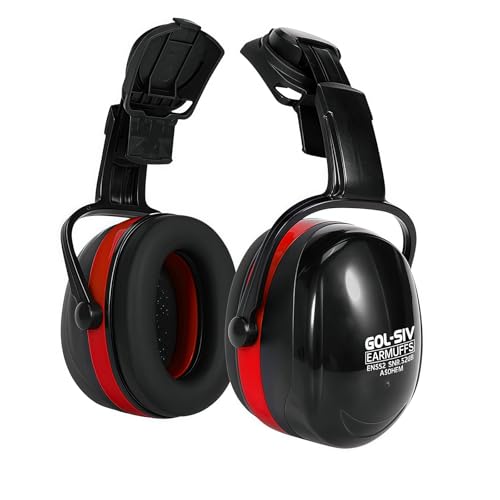
Folding ABS ear defenders with a stated 32 dB of noise reduction and 360 degree adjustable cups.
| Brand | GOL-SIV |
|---|---|
| Stated reduction | 32 dB |
| Standard reference | ANSI S3.19 |
| Shell | ABS composite, impact resistant |
| Fill | High-density soundproofing foam |
| Pads | Soft foam, skin friendly |
| Best for | Mowing, power tool work and range use, where a high stated reduction and a pair that folds into a bag both matter |
Product Overview
Hearing damage is the workshop injury nobody notices happening. It accumulates quietly across years of mowing, cutting and grinding, and unlike a cut or a burn there is no moment that tells you it occurred. That is why the stated reduction figure is the specification that matters most.
GOL-SIV states 32 dB, referenced to ANSI S3.19. That is at the upper end of what passive ear muffs achieve, because a muff works by sealing a volume of air around the ear and physical limits apply to how much a cup and a seal can block.
Treat any single-number rating as a laboratory figure rather than a promise. Real-world reduction depends almost entirely on seal quality: glasses arms, long hair, a hat brim or a poorly adjusted band all break the seal, and a broken seal loses far more than the difference between one rating and another.
The folding design is the feature that decides whether they get used. Protection that lives in a garage because it will not fit in a bag is protection you do not have when you are using a strimmer at someone else's house.
Score Breakdown
This verdict is based on the manufacturer's stated specifications, the current Amazon listing and its product images, the confirmed materials and design, real buyer ratings, and our research into the product category. Scores are consistent editorial judgments, not laboratory measurements, and we did not receive a paid sample.
Key Features
At the upper end of what passive muffs achieve, since a cup and seal face physical limits on how much they can block.
Cited against a recognised hearing protection standard rather than being presented as a bare marketing figure.
The feature that decides whether they get used, because protection that will not fit in a bag is not with you when the noise is.
The cup is structural rather than cosmetic, and its stiffness is part of the mechanism that blocks sound.
Density is the right property to cite, because mass is what attenuates sound inside a stiff cup.
Comfort is protection here, since muffs that hurt get lifted for a minute and a minute of full noise undoes a lot.
A cup that cannot rotate sits at an angle on some heads, lifting one edge of the seal and leaking exactly where it matters.
Continuous noise from mowing and machinery, and impulse noise at a range where one unprotected shot can do harm.
Design and Build Quality
The housing is described as a robust ABS shell with composite construction, impact and wear resistant. ABS is the sensible material for a cup that gets dropped on concrete, and the cup is a structural component rather than a cover: its stiffness is part of what blocks sound.
Inside, GOL-SIV cites high-density soundproofing foam. Density is the correct property to mention rather than thickness, because mass is what attenuates sound, and a dense fill inside a stiff cup is the whole mechanism of a passive muff.
The ear pads are soft foam with skin-friendly materials, and comfort here is not a luxury. Muffs that hurt get lifted off for a minute, and a minute of a chainsaw at full noise undoes a great deal of protection, so pad comfort directly affects how much protection you actually receive.
The 360 degree adjustable cups are what make one size work across head shapes. A cup that cannot rotate sits at an angle on some heads, which lifts one edge of the seal, and a lifted edge is exactly the leak that loses the stated reduction.
There is a clear contradiction to resolve before buying. The title describes these as ear muffs for hard hats, while the features describe an ergonomic headband. Hard hat muffs clip into slots on a helmet shell and have no headband at all, so these are two different products and the listing does not say which arrives.
Performance in Everyday Use
The named environments are all appropriate: construction sites, gun ranges, lawn mowing and heavy machinery. Those cover both continuous noise, where mowing and machinery do the damage over hours, and impulse noise at a range, where a single unprotected shot can cause harm.
Range use is worth a note. Muffs and glasses together are standard there, and the arm of a pair of safety or shooting glasses passing under the cup seal is the single most common cause of a muff underperforming. Thin-armed glasses exist specifically to address this.
Folding and portability is where this design earns its place in practice. GOL-SIV states they fit into most bags or backpacks, and for a tool that must be present at the moment of noise, portability is more valuable than a marginally higher rating sitting at home.
The stated weight is modest for ear defenders, which supports the all-day comfort claim. Weight on a headband translates to pressure on the top of the head, and that is where long sessions become uncomfortable rather than at the ears.
One small sign of listing quality: a phrase in Spanish is left untranslated in the middle of the English feature text. It does not affect the product, but it is a reminder to verify the fitting type directly with the seller rather than trusting the description to be carefully assembled.
How It Performs: The Evidence
| Decision factor | What we found | Evidence and measurement | Score | Why it matters |
|---|---|---|---|---|
| Stated reduction | 32 dB against ANSI S3.19 | Listing states 32dB ear muffs featuring advanced noise reduction technology, certified for ANSI S3.19 standards | 9.5 | At the top of the range passive muffs achieve, since a cup and seal face physical limits on attenuation |
| Shell | ABS composite, impact resistant | Listing states a robust ABS shell that is impact-resistant and wear-resistant with durable composite housing | 9.3 | The cup is a structural part of the attenuation mechanism, not a cover, and it has to survive being dropped |
| Fill | High-density soundproofing foam | Listing states high-density soundproofing foam inside the durable composite housing | 9.3 | Density rather than thickness is the correct property, because mass is what attenuates sound |
| Comfort | Soft foam pads and ergonomic band | Listing states soft foam ear pads, skin-friendly materials and an ergonomic headband for comfort during extended use | 9.3 | Muffs that hurt get lifted off briefly, and a minute of unprotected machinery noise undoes a great deal of protection |
| Fit adjustment | 360 degree adjustable cups | Listing states the 360 degree adjustable ear cups ensure a fit for most head sizes, reducing fatigue | 9.4 | A cup that sits at an angle lifts one edge of the seal, and a lifted edge leaks more than any rating difference |
| Portability | Compact and foldable | Listing states the compact foldable design makes them easy to store and carry, fitting into most bags or backpacks | 9.5 | Protection that will not travel is not present at the moment the noise is, which is when it has to be |
| Environments | Construction, ranges, mowing, machinery | Listing names high-noise environments such as construction, gun ranges, lawn mowing and heavy machinery operation | 9.2 | Covers both continuous exposure, which accumulates over hours, and impulse noise, where a single event can cause harm |
| Listing clarity | Title and features describe different products | The title describes ear muffs for hard hats while the features describe an ergonomic headband, and a Spanish phrase is left in the English text | 3.5 | Hard hat muffs clip into helmet slots and have no headband, so these are two different products and the listing does not resolve which |
Who Should Buy It
- Lawn mowing and strimming
- Power tool and workshop use
- Gun and shooting ranges
- Construction sites
- Heavy machinery operation
- Anyone who needs protection that travels in a bag
- Buyers specifically needing helmet slot mounting, until the fitting type is confirmed
- Title says hard hat mounted, features describe a headband
- No clarity on which fitting type actually ships
- Untranslated foreign-language text left in the listing
- Size attribute reads Small with no explanation
- Rating is a laboratory figure, not a real-world guarantee
Full Specifications
How It Compares
| Feature | GOL-SIV | Typical option | Higher-tier option |
|---|---|---|---|
| Stated reduction | 32 dB | Lower | Similar |
| Standard cited | Yes | No | Yes |
| Folding | Yes | No | Yes |
| Shell | ABS composite | Thin plastic | ABS |
| Foam | High density | Not stated | Standard |
| Cup rotation | 360 degrees | Fixed | Partial |
| Fitting type clarity | Contradictory | Clear | Clear |
| Impulse noise suitability | Stated | Not stated | Stated |
Alternatives Worth a Look


A high stated reduction in a pair that folds into a bag, which is the right combination, because protection left at home protects nothing. The important thing to understand is that any single rating is a laboratory figure and real-world performance is almost entirely about seal quality: glasses arms, a hat brim or a badly adjusted band lose more than the gap between two ratings ever would. Confirm the fitting type first, since the title and the features disagree.
Frequently Asked Questions
Do these mount to a hard hat or sit on a headband?
The listing contradicts itself, and this is the thing to resolve before ordering. The title says hard hats while the features describe an ergonomic headband. Hard hat muffs clip into slots on a helmet shell and have no band at all, so confirm with the seller.
Is 32 dB a lot?
It is at the upper end of what passive ear muffs achieve, because a muff works by sealing air around the ear and there are physical limits to what a cup and seal can block. Treat it as a laboratory figure rather than a guaranteed real-world result.
What actually determines how much protection I get?
Seal quality, almost entirely. Glasses arms, long hair, a hat brim or a poorly adjusted band all break the seal, and a broken seal loses far more protection than the difference between one rating and another ever would.
Can I wear them with safety glasses?
Yes, but understand the cost. A glasses arm passing under the cup seal is the single most common reason muffs underperform, which is why thin-armed safety and shooting glasses exist specifically for use with hearing protection.
Why does the folding matter?
Because protection only works when it is present. A pair that will not fit in a bag stays in the garage, which means you do not have it when you are using a strimmer at someone else's house. Portability beats a marginally higher rating left at home.
Are they suitable for a shooting range?
GOL-SIV names gun ranges specifically, and the stated reduction is appropriate for impulse noise. Range noise differs from machinery noise in that a single unprotected shot can cause damage, rather than harm accumulating over hours of exposure.
Why does high-density foam matter?
Because mass is what attenuates sound. Density is the correct property to cite rather than thickness, and a dense fill inside a stiff cup is the entire mechanism by which a passive muff works. Thin or soft fill in a flexible cup does much less.
Will comfort really affect protection?
Directly. Muffs that press uncomfortably get lifted off for a minute, and a minute of a chainsaw or a mower at full noise undoes a substantial share of the protection the rest of the session provided. Pads and band comfort are protective features.
This review is based on the manufacturer's stated specifications, the current product listing and its images, the stated noise reduction figure and standard reference, the shell and foam descriptions, the pad and headband descriptions, the cup adjustment range, the folding claim, the stated weight and the named environments, plus our own research into how passive muffs attenuate sound, why seal integrity dominates real-world performance, and how hard hat mounted muffs differ from headband muffs. It is editorial analysis, not laboratory testing. We have not worn these, and we have flagged the contradiction between the title and the feature text.