Home & Kitchen How to Keep Homemade Bread Fresh on the Counter
P
By the Pickpedia Team
·1 picks compared
·Last verified October 2026
Affiliate disclosure: As an Amazon Associate, Pickpedia earns from qualifying purchases. Links on this page are paid links, and we may earn a commission at no extra cost to you. This never affects our picks or scores.
Homemade bread tastes best fresh, yet the counter can dry it out fast. A few smart habits keep loaves soft and crusty longer. Here is how.
Cool before storing
Warm bread releases steam that turns to moisture. Let a loaf cool fully before covering it, or you trap dampness that softens the crust.
Keep it covered but breathing
Bread needs a little airflow. A breathable cover like a beeswax bread bag shields the loaf while letting it breathe, better than sealed plastic on the counter.
Store cut-side down
Once you slice a loaf, rest it cut-side down on a board or inside the bag. That protects the exposed crumb from drying too quickly.
Skip the fridge
Refrigeration stales bread faster than the counter. Keep loaves at room temperature for daily eating, and reserve the freezer for longer storage only.
Match the bag to the loaf
An adjustable roll-top or generous bag fits boules and baguettes alike. Reducing extra open space around the loaf helps keep it from drying out.
The bottom line
Cool fully, cover breathably, store cut-side down, and skip the fridge. These simple steps keep homemade bread fresh and enjoyable for several days on the counter.
How to Keep Homemade Bread Fresh on the Counter at a glance
Why you can trust this guide
We compared these picks using verified manufacturer specifications, current retailer listings, and patterns in owner feedback, alongside editorial research. We focus on measurable differences such as performance, capacity, usability, and build quality. Pickpedia does not present editorial research as laboratory testing, and we do not claim hands-on testing unless it was actually performed.
Our top picks
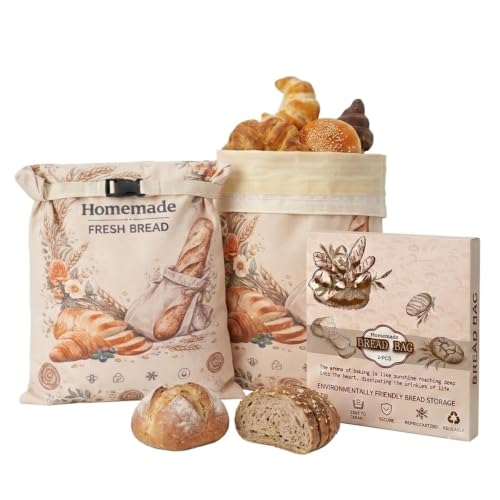
The LURKA 2-pack pairs a beeswax-lined inner liner with a cotton-linen outer bag for countertop bread storage. It suits home bakers keeping sourdough, artisan loaves, and rolls fresh between servings. Each 13 by 17 inch bag uses a roll-top plus buckle closure, and the removable liner rinses clean, offering a reusable alternative to plastic and paper.
Pack2 bags
Size13 x 17 inches
LinerRemovable beeswax
ExteriorCotton-linen
ClosureRoll-top plus buckle
CareRinse liner in cool water, air dry
Best useCountertop storage
FitsBoules, artisan loaves, baguettes, rolls
Pros
- Two bags for storing or separating loaves
- Large 13 by 17 inch size fits big boules
- Roll-top buckle adapts to loaf shapes
- Removable liner rinses clean on its own
- Cotton-linen exterior adds rustic style
- Reusable alternative to plastic and paper
Cons
- Built for countertop use, not freezing
- Wax liner needs cool-water care only
- Roll-top offers less seal than a zipper
- Specs are maker-stated, not independently tested
Read our full review → Check price on Amazon ›
Note: Availability and specifications change often. Always confirm the current details on Amazon before buying.