Home ›
Electronics › Can a Charger Overcharge Your Phone? What an Auto-Stop Charger Actually Stops
Electronics
Can a Charger Overcharge Your Phone? What an Auto-Stop Charger Actually Stops
PBy the Pickpedia Team·3 picks compared·Last verified October 2026
Affiliate disclosure: As an Amazon Associate, Pickpedia earns from qualifying purchases. Links on this page are paid links, and we may earn a commission at no extra cost to you. This never affects our picks or scores.
This page contains affiliate links. If you buy through one we may earn a
commission, at no cost to you.
A charger cannot overcharge a modern phone, and the reason is not that it is
clever enough to stop. It is that the charger was never the one deciding. The
part that decides sits inside the phone, on the far side of the connector, and it
stopped accepting current an hour after you went to bed. So the honest answer to
the overnight question is yes, there is a cost, and no, it is not the one in the
question. Getting that straight changes what you should buy, and mostly it
changes it towards buying nothing.
The charger is the follower, not the leader
Start with who is in charge, because the whole myth rests on getting this
backwards. On USB-C the two ends negotiate. The device asks for a voltage it can
use, the charger offers what it has, and once a supply contract is agreed the
device draws whatever current it wants up to that limit. The charger does not
inject power. It makes power available and waits.
Behind that, the phone's own charge controller runs a two phase routine that
has been standard for lithium-ion cells for decades. In the first phase it pulls
a roughly constant current and the cell voltage climbs. When the cell reaches its
upper voltage limit, typically about 4.2 volts per cell for the common graphite
chemistries as a rule of thumb rather than a figure we measured, the controller
switches to holding that voltage steady and lets the current fall. The current
does not level off at some small value and keep dripping. It decays, the
controller watches it cross a cutoff threshold, and then it latches the charge
circuit off.
That is why there is nothing to protect you from. A full cell is one whose
controller has disconnected the charge path. Leaving the cable in means leaving a
power source available to a circuit that is not asking for any.
So why does the advice feel right
Because there is a real cost to that night, and it has been sitting next to
the wrong explanation for so long that the two have fused.
Nothing is being pushed in after the taper. The cost of the night is the hours
spent inside the shaded band, which is a different quantity entirely, and it is
the one a cut off address only partly.
Look at the lower curve first. It is the current, and it is effectively zero
for about eight of the nine hours. Whatever damage the night did, it was not done
by electricity entering the battery, because almost none did.
Now look at the shaded band. A lithium-ion cell wears out in two separate
ways. One is cycling, the familiar count of charges. The other is simply elapsed
time, and that clock runs faster when the cell is held at a high state of charge,
because a nearly full cell holds its positive electrode at its highest potential,
which is exactly the condition that speeds up the slow parasitic reactions
consuming usable lithium at the electrode surfaces. Temperature multiplies it.
For this chemistry the rule of thumb is that the rate of those reactions roughly
doubles for every 10 degrees Celsius, which is standard reference behaviour for
the family rather than a number from any particular phone.
So the night costs you something, and the cost is measured in hours spent near
the top of the chart at whatever temperature the phone happened to be. Not in
hours of cable attached. Those two usually coincide, which is why the folk advice
lands in roughly the right place for completely the wrong reason.
What a cut off actually buys, and what it cannot
This is where the distinction stops being pedantic, because once you know what
the mechanism is you can see exactly which part of it a product can touch.
Compare the two futures in the chart. With the cable attached, the phone sits
pinned to the line. Every time it slips a percent it gets topped back up, which
both holds it at the ceiling and adds a small fragment of a cycle. Cut the supply
at full and neither happens: the state of charge drifts gently downward all night,
away from the worst region, with no top ups at all. That is a genuine
improvement, and it is a modest one, because the battery still arrived at 100
percent and still spent the early hours there.
The large lever is at the other end. Not reaching the top at all is worth far
more than leaving it promptly, which is why phone makers build in optimised or
limited charging that parks the battery around 80 percent and finishes only when
you need it. A cut off works on the hour you leave. A charge limit works on the
hours you never spend. If your phone has that setting, it is free, it is more
effective than any adapter, and it makes the hardware question largely moot.
What the chargers in our catalogue actually claim
With that frame, the specifications read differently. A
140W smart auto-stop
USB-C charger is the one built around this idea, and its record is worth
reading precisely. The maker states full charge detection and a physical auto
disconnect once charging completes, and describes the purpose as avoiding endless
overnight trickle charging. That last phrase is the maker's framing, and the
chart above is why we would put it differently: there is no endless trickle to
avoid, because the taper already ended. What the physical disconnect does do is
the real thing in the paragraph above, which is let the charge drift down instead
of being held and topped up, and it does it on devices that have no charge limit
setting of their own. Its own record also notes the practical catch, that full
speed depends on the device and the cable, and that it is a single port, so it is
not the charger for a desk. Details in our
review of the 140W auto-stop
charger.
The word overcharge appears on other listings too, and it means something
different there. An
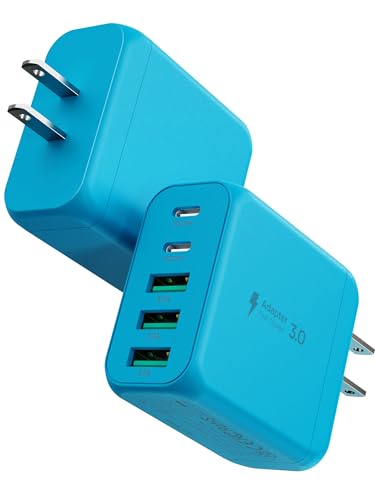
EIZLXQ 50W five port
USB-C charger block lists overheat, overcurrent, overcharge and short circuit
protection alongside IEC 62368-1 and FCC certification and a fireproof ABS and PC
housing. Read that as fault protection, not as battery care. Those circuits exist
for the case where something has gone wrong, a shorted cable or a failed
regulator, and they are a reason to prefer a certified block over an uncertified
one. They are not a feature that improves the life of a healthy battery, because
a healthy battery was never in danger. Its genuine limitation is unrelated and
already covered: 50W is a shared pool, which we went through in
USB-C
charger wattage explained, and the rest is in our
review of the
EIZLXQ five port block.
One place the ageing mechanism bites harder than on your phone is a battery you
charge and then forget. A
Luvknit 20,000mAh solar
power bank holds cells that follow exactly the same chemistry, and its record
lists USB-C and USB-A outputs, 15W USB-C input, about 230 grams at 0.65 inches
thin, a built-in torch, and protection against overcharge, overcurrent and short
circuits. The difference is in how it lives. A phone cycles daily and spends most
of its time part full. A power bank gets topped to 100 percent and then sits in a
drawer for months at the top of the shaded band, which is the worst place to store
one. Charging it to somewhere around half before a long rest, and topping it up
before a trip rather than after, costs nothing and is the single most useful thing
you can do for it. Its own published limits, the trickle-only solar panel and the
usable output falling short of the printed mAh, are set out in our
review
of the Luvknit bank and the arithmetic behind them is in
power
banks explained.
The honest limit
For most people the right answer to this question is not a purchase. If your
phone offers optimised or limited charging, turn it on and the overnight problem
is solved at the end of the curve where solving it actually matters. Take the case
off a phone that is fast charging, keep it off the bed and out of the sun, and you
have addressed the temperature term, which multiplies everything else. Both of
those are free, and together they do more than any adapter can.
Where a cut off earns its place is narrower and real: a device with no charge
limit setting, something left on a bench for days, or a battery you would rather
not leave connected to a live supply unattended. Buy it for that, not to prevent
overcharging, because nothing has been overcharging.
And the limit that no charger touches at all. Every lithium-ion battery is
losing capacity today whether it is plugged in, unplugged, or sitting in a box,
because calendar ageing does not need a charger to proceed. A phone four years
old has a weaker battery than it did regardless of how carefully it was charged,
and at some point the honest fix is a new cell rather than a new accessory. That
is an unsatisfying conclusion for a page with affiliate links on it, and it is
still the correct one.
Can a Charger Overcharge Your Phone? What an Auto-Stop Charger Actually Stops at a glance
Luvknit Solar Power Bank 20000mAh (USB-C Portable Charger)
Portable phone charging for travel, camping and emergencies
Useful 20,000mAh, 2 to 3 phone charges
Solar only trickle-charges, not a real solar charger
Why you can trust this guide
We compared these picks using verified manufacturer specifications, current retailer listings, and patterns in owner feedback, alongside editorial research. We focus on measurable differences such as performance, capacity, usability, and build quality. Pickpedia does not present editorial research as laboratory testing, and we do not claim hands-on testing unless it was actually performed.
Best for Safe overnight and high-power USB-C charging
8.8/ 10 Pickpedia editorial score
A compact 140W USB-C fast charger with smart full-charge detection that physically cuts the connection when charging completes, made for safe overnight use.
TypeUSB-C wall charger
Max powerUp to 140W
Smart featureFull-charge detection and physical auto disconnect
Device supportWide USB-C: phones, tablets, many laptops
Best for Charging several devices from one outlet at home or travel
8.8/ 10 Pickpedia editorial score
A compact 50W USB wall charger with five ports (dual USB-C and three USB-A), a 20W single USB-C fast-charge port, IEC 62368-1 and FCC certification with multiple safety protections, and a fireproof housing, sold as a two-pack for home and travel.
BrandEIZLXQ
TypeMulti-port USB wall charger
Total output50W shared
Ports5 total: 2 USB-C, 3 USB-A
Single USB-CUp to 20W
CertificationIEC 62368-1, FCC
ProtectionOverheat, overcurrent, overcharge, short circuit, auto-stop
HousingFireproof ABS and PC
Pack2 chargers
ColourBlue
Pros
Five ports, dual USB-C and three USB-A
20W USB-C port for fast phone top-ups
One outlet replaces a cluster of chargers
IEC and FCC certified with safety protections
Compact and travel-friendly
Good-value two-pack
Cons
50W is a shared total, not per port
Simultaneous charging is slower per device
Value brand, so you trust the stated certifications
Best for Portable phone charging for travel, camping and emergencies
8.6/ 10 Pickpedia editorial score
A slim, light 20,000mAh power bank with USB-C and USB-A outputs, 15W USB-C input, a built-in LED flashlight, multi-protection safety and a built-in solar panel for emergency trickle-charging, delivering roughly two to three full phone charges.
BrandLuvknit
TypeSolar power bank
Capacity20,000mAh
Real outputRoughly 2 to 3 phone charges
OutputsUSB-C and USB-A
Input15W USB-C
SolarBuilt-in panel, trickle charge
WeightAbout 230g (0.5 lb), 0.65 in thin
ExtrasLED flashlight, safety protection
ColourOrange
Pros
Useful 20,000mAh, 2 to 3 phone charges
Slim and light for the capacity
USB-C and USB-A outputs
Solar panel as an off-grid backup
Built-in torch and safety protections
Good value
Cons
Solar only trickle-charges, not a real solar charger