Lenses 6 Ultra-Wide Lenses for Sweeping Landscapes
P
By the Pickpedia Team
·6 picks compared
·Last verified October 2026
Affiliate disclosure: As an Amazon Associate, Pickpedia earns from qualifying purchases. Links on this page are paid links, and we may earn a commission at no extra cost to you. This never affects our picks or scores.
Quick answer
For sweeping landscapes, a rectilinear ultra-wide zoom keeps horizons straight and packs foreground and sky into one frame. Native mirrorless mounts, wide focal reach, and a bright aperture matter most. Fisheye and clip-on options suit creative or action work, not classic scenic vistas.
6 Ultra-Wide Lenses for Sweeping Landscapes at a glance
Why you can trust this guide
We compared these picks using verified manufacturer specifications, available manuals and documentation, current retailer listings, and patterns in owner feedback, alongside editorial research. We focus on measurable differences such as performance, capacity, usability, and build quality. Pickpedia does not present editorial research as laboratory testing, and we do not claim hands-on testing unless it was actually performed.
How we chose: We compared six ultra-wide options across focal reach, distortion control, mount compatibility, and how well each frames wide scenery.
Wide open scenery rewards a lens that pulls in foreground rock, distant ridge, and full sky without bending straight edges into curves. Ultra-wide glass does this, though every design trades reach, distortion, and portability differently.
This roundup spans native APS-C zooms, a medium format performer, a full-frame fisheye, and clip-on accessory lenses for action cameras. Choices below rest on published specifications, owner feedback, and how reviewers describe each lens in real field use.
Our top picks
Built for Canon EOS R Series APS-C bodies, this zoom covers 10 to 18mm, roughly 16 to 29mm equivalent, so tight canyons and open valleys both fit one frame. A completely new optical design keeps detail strong from center to edge, according to Canon specifications. Image stabilization rated at four stops helps handheld dawn shots, and 0.5x magnification in manual focus opens up close foreground work. Reviewers praise its light body for travel. One limitation: the variable maximum aperture narrows toward the long end, so low light demands higher ISO or a tripod.
Focal length10 to 18mm
Equivalent16 to 29mm
Stabilization4 stops
Max magnification0.5x manual focus
Pros
- Wide reach in a compact, travel-friendly body
- Stabilization steadies handheld scenic shots
- Sharp corner to corner per Canon design notes
Cons
- Slower aperture at the telephoto end
- Limited to Canon RF-S mount bodies
Check price on Amazon ›
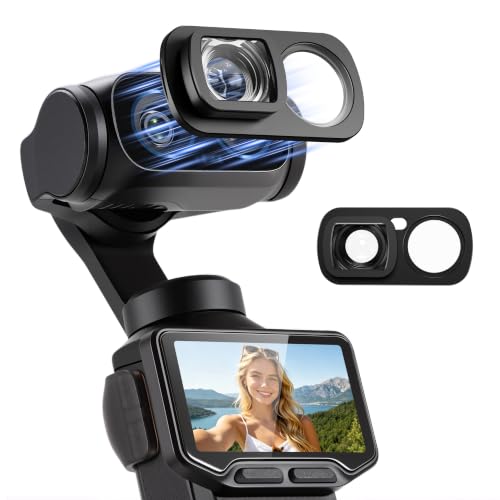
This clip-on accessory expands the field of view on the Insta360 Luna Ultra, letting travel and action clips take in wider scenes than the stock optic. A simple mounting design means quick installation with no tools, which owners report as its main draw. Marketed for travel, sports, and vlogging, it suits anyone who wants a broader perspective from a pocket camera. It is an accessory, not a standalone camera lens, so it only helps if you already own the matching Luna Ultra body, which narrows its usefulness sharply.
TypeWide angle accessory lens
FitsInsta360 Luna Ultra
MountingSimple attach design
UseTravel, sports, vlogging
Pros
- Widens the frame for immersive footage
- Fast, tool-free attachment
- Handy for travel and action clips
Cons
- Works only with the Luna Ultra
- Not a full camera lens on its own
Check price on Amazon ›
Marketed as one of the smallest and lightest ultra-wide zooms for APS-C cameras, this Sony E mount lens targets landscapes, travel, and video. A constant F2.8 aperture across the 10 to 18mm range gives it an edge for dim interiors, star fields, and blue-hour scenes where variable-aperture zooms struggle. Content creators like the expressive rendering and low pack weight on long hikes. As an APS-C lens, it will not cover a full-frame sensor without heavy cropping, so it fits crop-body Sony shooters best rather than those on a full-frame E mount body.
Focal length10 to 18mm
ApertureConstant F2.8
MountSony E APS-C
StandoutVery small and light
Pros
- Bright constant F2.8 across the zoom
- Compact and light for travel
- Strong for landscapes and video
Cons
- Designed for APS-C, not full frame
- Fixed to Sony E mount only
Check price on Amazon ›
Aimed at the Hasselblad X System and 907X cameras, this 20 to 35mm zoom pairs a 16 element, 12 group design with a broad 108 to 76 degree angle of view. Sweeping vistas and detailed interiors both sit within reach, and the variable f/3.2-4.5 aperture allows real depth-of-field control. An integrated leaf shutter syncs flash up to 1/2000 second, giving daylight fill-flash flexibility few zooms match. Robust construction targets professional field use. The catch is its narrow ecosystem: it only mounts on Hasselblad medium format bodies, so it serves a specialized audience rather than everyday shooters.
Focal length20 to 35mm
Optics16 elements, 12 groups
Angle of view108 to 76 degrees
Flash syncUp to 1/2000 sec
Pros
- Exceptional sharpness across the range
- Leaf shutter enables fast flash sync
- Built for demanding professional use
Cons
- Only fits Hasselblad medium format bodies
- Heavier commitment for a niche system
Check price on Amazon ›
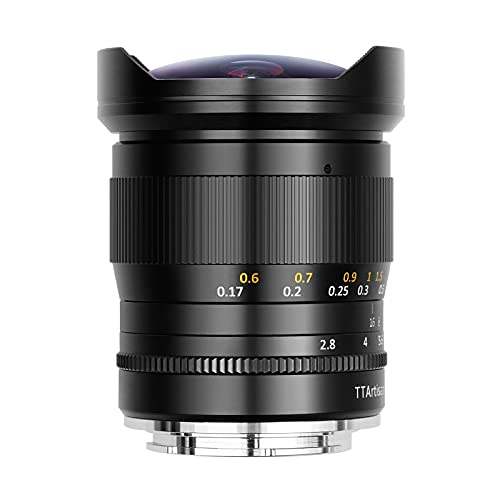
This 11mm F2.8 full-frame fisheye leans into distortion as a creative tool, giving landscapes, interiors, and street scenes a bold, exaggerated curve. A 12 element, 10 group optical design improves edge rendering that fisheye lenses often struggle with, per the maker. Its very large depth of field keeps foreground and horizon sharp together, and the wide F2.8 aperture helps in dim rooms. Distortion can be straightened later in Lightroom for a rectilinear ultra-wide result. Bear in mind it is manual focus only, so quick candid grabs take more care than an autofocus lens.
Focal length11mm fisheye
ApertureF2.8
Optics12 elements, 10 groups
FocusManual
Pros
- Bold fisheye look for creative work
- Large depth of field keeps scenes sharp
- Distortion can be corrected in editing
Cons
- Manual focus only
- Curved perspective is not for every scene
Check price on Amazon ›
Made for the Insta360 Luna Ultra, this compact external lens widens the field so cityscapes, group shots, and landscapes fit the frame. A magnetic mount lets you attach and remove it in seconds, which owners note as its friendliest feature. The 6063 aluminum frame and optical glass aim for high-resolution footage without light leakage, and the metal edge is soft enough that it will not scratch the lens. Versatility spans video, selfies, architecture, and portraits. As a Luna Ultra accessory, it does nothing on other cameras, so its appeal stays tied to that single device.
FitsInsta360 Luna Ultra
MountMagnetic
Frame6063 aluminum
GlassOptical glass
Pros
- Magnetic mount attaches in seconds
- Metal and glass build resists scratches
- Widens many everyday shooting scenes
Cons
- Compatible only with the Luna Ultra
- Accessory, not a standalone lens
Check price on Amazon ›
What to look for
Rectilinear versus fisheye
For classic sweeping vistas, rectilinear ultra-wides keep horizons and building edges straight. Fisheye designs bend those lines for drama, then let you straighten them in software. Decide which look you want before buying, since the two serve very different scenic goals.
Match the mount first
An ultra-wide only helps if it fits your camera. Canon RF-S, Sony E, and Hasselblad X mounts each need their own glass. Accessory clip-on lenses go a step further, working with just one specific action camera model. Confirm compatibility before anything else.
Aperture and low light
A constant bright aperture like F2.8 holds steady across the zoom, which helps at dawn, dusk, and indoors. Variable-aperture zooms narrow as you extend, so they lean on higher ISO or a tripod in dim scenes. Weigh how often you shoot in low light.
Weight and travel
Landscape work often means long walks to a viewpoint. Compact, light zooms reward hikers, while medium format and heavier pro glass suit shooters who prioritize ultimate detail over pack weight. Think honestly about how far you carry gear before choosing.
Frequently asked questions
What focal length counts as ultra-wide?
Roughly anything wider than about 24mm on full frame, or the crop equivalent on smaller sensors. The lenses here reach from 10mm on APS-C to 20mm on medium format, all pulling in expansive scenery.
Is a fisheye good for landscapes?
It can be, for a bold creative look. Fisheye lenses like the TTArtisan 11mm curve straight lines, then you straighten them in Lightroom if you want a natural result. For traditional vistas, a rectilinear zoom stays simpler.
Do the clip-on lenses work on any camera?
No. The Insta360 Luna Ultra accessories only fit that one camera. They widen its field of view but do nothing on other bodies, so confirm you own the matching device first.
Why choose a constant F2.8 zoom?
A constant aperture stays bright across the whole zoom range, helping in dim interiors, blue hour, and night skies. The Sigma 10-18mm F2.8 holds that brightness where variable-aperture rivals dim as they extend.
Are these lenses good for video too?
Yes. Several, including the Canon and Sigma zooms, are marketed for both stills and video. Wide angles suit vlogging, walkthroughs, and scenic clips, and stabilization or magnetic mounts add convenience for moving footage.
What does image stabilization add?
It steadies handheld shots at slower shutter speeds, useful at dawn or dusk. The Canon RF-S 10-18mm is rated at four stops of stabilization, which helps when a tripod is not practical on the trail.
Can APS-C lenses cover a full-frame sensor?
Not properly. The Canon and Sigma zooms are built for APS-C image circles and will crop or vignette on full frame. Match the lens to your sensor size for the intended field of view.
Which pick suits a professional the most?
The Hasselblad XCD 20-35mm targets medium format pros with its 16 element design and leaf shutter. It demands a Hasselblad body, so it fits shooters already invested in that system rather than newcomers.
The verdict
Canon RF-S 10-18mm F4.5-6.3 IS STM Ultra-W...
9.1/10
The Canon RF-S 10-18mm stands out as the best overall for its reach, stabilization, and compact body on APS-C. Sony crop shooters gain a brighter option in the constant F2.8 Sigma 10-18mm, ideal for low light and hiking. Hasselblad owners get uncompromising detail from the XCD 20-35mm, while the TTArtisan fisheye suits creative distortion. Luna Ultra users pick either clip-on for a wider, simple frame.
Check price on Amazon ›
Our top pick, secure checkout via Amazon
Note: Availability and specifications change often. Always confirm the current details on Amazon before buying.