Thermal Leak Detectors Best Thermal Leak Detectors: 9 Picks Ranked
P
By the Pickpedia Team
·9 picks compared
·Last verified November 2026
Affiliate disclosure: As an Amazon Associate, Pickpedia earns from qualifying purchases. Links on this page are paid links, and we may earn a commission at no extra cost to you. This never affects our picks or scores.
Quick answer
The BLACK+DECKER Thermal Leak Detector (TLD100) is the top pick for most homes, using a simple five-step guide to track drafts around doors, windows, and outlets. For sharper imaging, the Klein Tools TI290 and Bosch GTC600C are strong upgrades for detailed hot and cold spot readings.
Best Thermal Leak Detectors: 9 Picks Ranked at a glance
Why you can trust this guide
We compared these picks using verified manufacturer specifications, available manuals and documentation, current retailer listings, and patterns in owner feedback, alongside editorial research. We focus on measurable differences such as performance, capacity, usability, and build quality. Pickpedia does not present editorial research as laboratory testing, and we do not claim hands-on testing unless it was actually performed.
A thermal leak detector turns invisible temperature differences into something you can see, which makes it useful for finding drafts, missing insulation, and damp patches. The simplest handheld units point you toward a leak and help you fix it, while imaging cameras show a full thermal picture of a wall or ceiling.
We compared nine models across sensor resolution, temperature range, alerts, storage, and battery life. Some are pocket tools built for quick home checks, and others are full inspection cameras for contractors and serious DIY work. The right choice depends on how much detail you need and where you plan to use it.
Our top picks
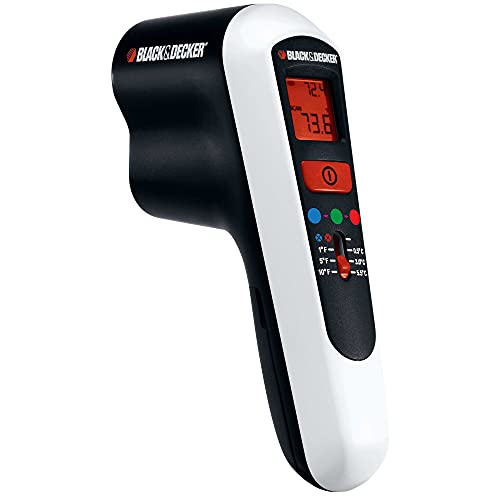
This is the easiest entry point for tracking down power-draining drafts around a house. A five-step guide walks you through basic energy leaks so you can act on what you find. It is built for quick home checks rather than full thermal imaging.
TypeHandheld thermal leak detector
Included guide5-step energy leak guide
Primary useDrafts around the home
Stated benefitHelps reduce heating and cooling bills
Pros
- Simple five-step guide for beginners
- Focused on finding drafts that drain energy
- Straightforward tool for basic home checks
Cons
- No full thermal image display
- Limited to leak detection tasks
Check price on Amazon ›
With over 76,800 pixels, the TI290 gives a detailed thermal picture for troubleshooting hot and cold spots. High and low temperature alarms run from -40 to 752 degrees Fahrenheit. Adjustable emissivity from 0.01 to 0.99 helps accuracy across most materials.
ResolutionOver 76,800 pixels
Temperature range-40 to 752 F (-40 to 400 C)
EmissivityAdjustable 0.01 to 0.99
Durability6.6-foot (2 m) drop rating
Pros
- High pixel count for clearer images
- Adjustable emissivity for varied materials
- Rated to survive a 6.6-foot drop
Cons
- More camera than a basic draft check needs
Check price on Amazon ›
The GTC600C stores up to 500 thermal images and records voice notes through a built-in mic and speaker. Its measuring range runs from -4 to 1112 degrees Fahrenheit. It runs on the Bosch 12V Max battery system for exchangeable power.
Image storageUp to 500 thermal images
Voice notesUp to 350 notes
Temperature range-4 to 1112 F (-20 to 600 C)
PowerBosch 12V Max battery system
Pros
- Wide temperature range
- Voice notes speed up job documentation
- Uses the Bosch 12V Max battery system
Cons
- Battery and charger details depend on the kit
Check price on Amazon ›
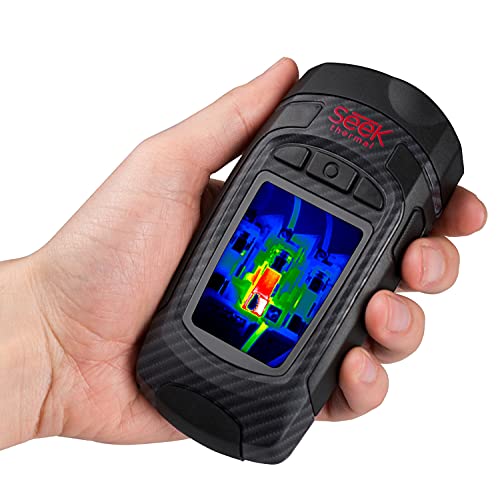
The RevealPRO pairs a 206 x 156 thermal sensor with a 36 degree field of view. Its temperature range runs from -40 to 626 degrees Fahrenheit. A 300 lumen light helps in tight spaces, and it lasts up to 10 hours in continuous imaging mode.
Sensor206 x 156 thermal sensor
Field of view36 degrees
Temperature range-40 to 626 F
RuntimeUp to 10 hours continuous
Light300 lumen
Pros
- Long 10-hour imaging runtime
- Built-in 300 lumen light
- Compact handheld shape
Check price on Amazon ›
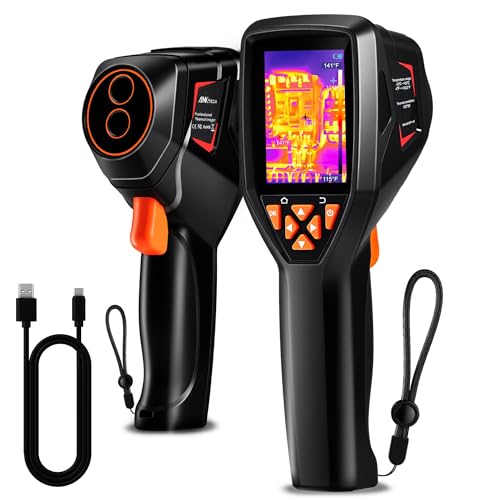
The DP15L offers 512x384 TISR resolution and a 50 mK NETD rating for small temperature differences. It measures from -4 to 1022 degrees Fahrenheit with plus or minus 2 percent accuracy. USB transfer to a PC enables 2D and 3D analysis and automated report creation.
Resolution512x384 TISR
NETD50 mK
Temperature range-4 to 1022 F
Storage8GB, 20,000+ images
Battery2600mAh, up to 4 hours
Pros
- PC software for 2D and 3D analysis
- Fusion modes help pinpoint problems
- Large 8GB built-in storage
Cons
- Heavier than pocket models at 357 grams
Check price on Amazon ›
The DP10 uses 120x90 native IR enhanced to 320x240 super resolution. A 25Hz refresh rate keeps wall and subfloor scans smooth. Hot and cold spot tracking with customizable alarms flags abnormal heat, and 8GB storage holds over 20,000 images.
Resolution120x90 native, 320x240 super resolution
Refresh rate25Hz
Temperature range-4 to 1022 F
Storage8GB, 20,000+ images
Battery8 hours
Pros
- Smooth 25Hz imaging
- Customizable high and low temperature alarms
- Large 8GB image storage
Cons
- Native sensor is lower than the boosted figure
Check price on Amazon ›
The TC004 Mini starts at 128x128 IR and enhances to 240x240 with TISR technology. It runs up to 15 hours and carries an IP54 rating with a 2-meter drop tolerance. Smart alerts warn when temperatures exceed preset levels and capture a photo automatically.
Resolution128x128 IR, 240x240 TISR
Temperature range-4 to 842 F (-20 to 450 C)
BatteryUp to 15 hours
Storage512MB, up to 8,000 photos
RatingIP54, 2-meter drop
Pros
- Very long 15-hour runtime
- Auto photo capture on alerts
- Five color palettes
Cons
- Charging head not included
Check price on Amazon ›
The HT-18+ has 256x192 IR resolution at 25Hz with thermal sensitivity under 40mk. A 3.2 inch color display shows 300,000 pixels for clear detail. It records JPG photos and MP4 video and connects by micro USB for analysis software.
IR resolution256x192 at 25Hz
Thermal sensitivityUnder 40mk
Display3.2 inch color
Temperature range-4 to 1022 F
Battery4 to 5 hours
Pros
- Large 3.2 inch color display
- Records both photos and video
- Weighs under one pound
Cons
- Battery runs shorter than some rivals
Check price on Amazon ›
This camera uses a 320x240 sensor with 300,000 pixels and plus or minus 2.5 degrees Fahrenheit accuracy. Five color palettes help visualize thermal data on a 3.2 inch display. A 3GB memory card stores over 1,000 images for later analysis.
Resolution320x240, 300,000 pixels
Accuracy2.5 F (plus or minus 1.4 C)
Memory3GB card, 1,000+ images
Palettes5 adjustable
Battery2 to 3 hours
Pros
- High 320x240 resolution
- Five color palettes
- Ergonomic non-slip grip
Cons
- Shorter 2 to 3 hour battery runtime
Check price on Amazon ›
What to look for
What a thermal leak detector actually shows
These devices read surface temperature and display it as color or a signal. Warmer and cooler areas reveal drafts, missing insulation, and moisture that evaporates and cools a patch. A basic detector points you at the spot, while an imaging camera shows the whole scene so you can judge size and shape.
Matching resolution to the job
Simple draft detectors are enough for doors, windows, and outlets. For walls and ceilings, sensor resolution matters because small differences are easier to see with more pixels. Models here range from a 206 x 156 sensor to 320x240, with several using super resolution to sharpen the image.
Temperature range and alerts
A range from -4 to 1022 degrees Fahrenheit covers most home and electrical work. High and low temperature alarms help when you scan a large area and want a warning at a set limit. Adjustable emissivity, found on models like the Klein TI290, improves accuracy on different surfaces.
Storage, battery, and reporting
Built-in storage lets you save images for later review, and some cameras record video or voice notes. Battery life varies widely, from a few hours to 15 hours on the TOPDON TC004 Mini. If you write reports, look for USB transfer and PC analysis software.
Frequently asked questions
What is the best thermal leak detector for a typical home?
The BLACK+DECKER TLD100 is the simplest choice for home draft hunting because it includes a five-step guide for basic energy leaks. If you want a full thermal image of walls and ceilings, step up to an imaging camera like the Klein TI290.
Can a thermal camera find water leaks behind a wall?
Yes. Moisture changes how a surface holds heat, so damp drywall often reads cooler than dry areas. The ANXTECH DP10 is built around spotting damp patches and ceiling seepage, and fusion modes on other models help confirm the exact spot.
How much resolution do I need for home inspections?
For quick draft checks, a basic detector is fine. For walls and ceilings, more pixels make small temperature differences easier to see. Cameras with 240x240 or higher enhanced resolution give clearer detail than entry-level sensors.
Do these cameras measure temperature accurately?
Accuracy depends on the model and on emissivity settings. The AIOMEST DP15L states plus or minus 2 percent accuracy, while the 320x240 camera states plus or minus 2.5 degrees Fahrenheit. Adjustable emissivity helps on different materials.
What temperature range should I look for?
A range starting near -4 degrees Fahrenheit and reaching several hundred degrees covers most home and electrical checks. The Bosch GTC600C reaches 1112 degrees Fahrenheit, which suits hotter equipment and industrial work.
How long do the batteries last?
Runtime varies a lot. The TOPDON TC004 Mini runs up to 15 hours, the Seek RevealPRO lasts up to 10 hours, and the 320x240 camera runs 2 to 3 hours. Long inspections favor the higher-capacity models.
Can I save and share the thermal images?
Most imaging cameras store images internally and transfer by USB. The Bosch GTC600C stores up to 500 images and records voice notes, and the AIOMEST DP15L supports PC software for 2D and 3D reports.
Is a simple leak detector or a full camera better for me?
Choose a simple detector if you mainly want to find drafts and fix basic leaks quickly. Choose a full camera if you need to inspect walls, ceilings, electrical panels, or HVAC systems and keep records of what you find.
The verdict
BLACK+DECKER Thermal Leak Detector (TLD100...
9.0/10/10
For most homes, the BLACK+DECKER TLD100 is the practical starting point because it turns draft hunting into a simple guided task. Owners who want detailed thermal images should look at the Klein Tools TI290 or the Bosch GTC600C, both of which add resolution, wide temperature ranges, and documentation features for bigger jobs.
Check price on Amazon ›
Our top pick, secure checkout via Amazon
Note: Availability and specifications change often. Always confirm the current details on Amazon before buying.