Studio Monitor Speakers Best Studio Monitor Speakers for Every Home Setup
P
By the Pickpedia Team
·9 picks compared
·Last verified November 2026
Affiliate disclosure: As an Amazon Associate, Pickpedia earns from qualifying purchases. Links on this page are paid links, and we may earn a commission at no extra cost to you. This never affects our picks or scores.
Quick answer
For most home studios, the KRK RP5G5 ROKIT 5 pair is the best studio monitor speakers pick, with a 1 inch silk dome tweeter and combo XLR/TRS input. The Yamaha HS5 pair and JBL 104-BT are strong alternatives for flat response and compact desks.
Best Studio Monitor Speakers for Every Home Setup at a glance
Why you can trust this guide
We compared these picks using verified manufacturer specifications, available manuals and documentation, current retailer listings, and patterns in owner feedback, alongside editorial research. We focus on measurable differences such as performance, capacity, usability, and build quality. Pickpedia does not present editorial research as laboratory testing, and we do not claim hands-on testing unless it was actually performed.
Choosing studio monitor speakers comes down to how much space you have, what you plug into them, and how low you need to hear. A 5 inch woofer suits most bedroom desks, while 3.5 inch models fit tighter setups and still cover vocal and guitar work.
We compared eight real pairs on driver size, amplifier power, input types, and cabinet features. The list below starts with the pair that balances connectivity and high frequency detail for the widest range of home producers, then moves through options for flat referencing, USB-C desks, and portable rigs.
Our top picks
The ROKIT 5 Generation Five pairs a redesigned 1 inch silk dome tweeter with a combo XLR and 1/4 inch TRS input, so it accepts an interface or a keyboard without adapters. The 5 inch woofer size suits a desk or a small treated room. Owners report a familiar KRK voicing that stays comfortable over long sessions.
Tweeter1 inch silk dome
InputXLR and 1/4 inch TRS combo
Woofer5 inch
ConfigurationPowered pair
Pros
- Combo XLR and TRS input covers most interfaces
- Redesigned tweeter for clearer high mids
- Pair included in one box
Cons
- Five inch cabinet needs a reasonable desk depth
- Rear port needs some space from the wall
Check price on Amazon ›
The HS5 is a two way bass reflex near field monitor with a 5 inch cone woofer and a 1 inch dome tweeter. Its 45W LF plus 25W HF bi amp system totals 70 watts, and the rated response runs from 54 Hz to 30 kHz. The pair ships as two matched cabinets for a stereo desk.
Woofer5 inch cone
Tweeter1 inch dome
Frequency response54 Hz to 30 kHz
Amplification45W LF plus 25W HF, 70W total
Pros
- Wide 54 Hz to 30 kHz rated range
- Bi amped with separate LF and HF power
- Two monitors included
Cons
- Neutral voicing exposes rough mixes
- Bass reflex cabinet wants wall clearance
Check price on Amazon ›
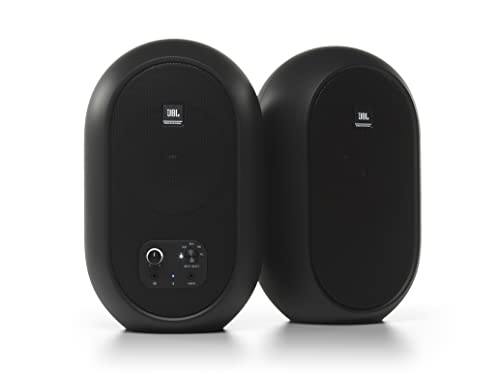
The 104-BT is a 60 watt compact powered system with 4.5 inch low frequency drivers and 3/4 inch high frequency drivers, sold as a pair. Bluetooth lets you stream from a phone or tablet between sessions. The smaller cabinet suits a shelf or a tight desktop.
System power60 watts
LF driver4.5 inch
HF driver3/4 inch
ConnectivityBluetooth
Pros
- Bluetooth for quick reference playback
- Compact 4.5 inch cabinet
- Sold as a matched pair
Cons
- Smaller woofer limits low end reach
- Fewer wired input details than larger models
Check price on Amazon ›
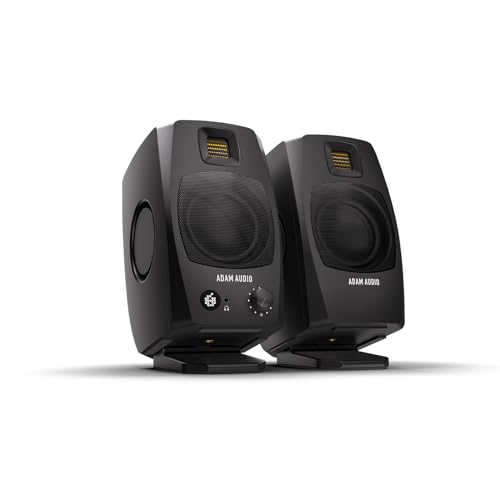
The D3V connects straight to computers and mobile devices over USB-C. Each pair uses 3.5 inch aluminum woofers with 80 W amplifiers and dual sided passive radiators that extend response to 45 Hz. A 1.5 inch D-ART ribbon tweeter handles highs, and the left backplate adds balanced 1/4 inch inputs plus DSP switches for placement issues.
InputUSB-C and balanced 1/4 inch
Woofer3.5 inch aluminum
Tweeter1.5 inch D-ART ribbon
Low end45 Hz with passive radiators
Pros
- USB-C direct connection
- DSP switches for room placement
- Front headphone out and volume knob
Cons
- Ribbon tweeter has a distinct character
- Small woofer relies on radiators for bass
Check price on Amazon ›
The Eris 3.5 pair uses 50 watts of built in amplification with 3.5 inch woven composite woofers and 1 inch silk dome tweeters. Rated response spans 80 Hz to 20 kHz. The compact cabinets fit beside a laptop, and the woven cones aim to keep bass tight at low volumes.
Amplification50 watts
Woofer3.5 inch woven composite
Tweeter1 inch silk dome
Frequency response80 Hz to 20 kHz
Pros
- Very small footprint
- Silk dome tweeter smooths harsh highs
- Pair included
Cons
- 80 Hz low end limit leaves sub bass out
- Small drivers run out of headroom in larger rooms
Check price on Amazon ›
The KH 120 II combines a 5.25 inch woofer and a 1 inch tweeter in a bi amped cabinet, with 80W for lows and 80W for highs. DSP processing is built in. This listing is for a single monitor, so a stereo pair means ordering two.
Woofer5.25 inch
Tweeter1 inch
LF amplifier80W
HF amplifier80W
Pros
- Balanced 80W per driver
- DSP processing onboard
- Larger 5.25 inch woofer
Cons
- Sold as a single unit
- DSP features need setup time
Check price on Amazon ›
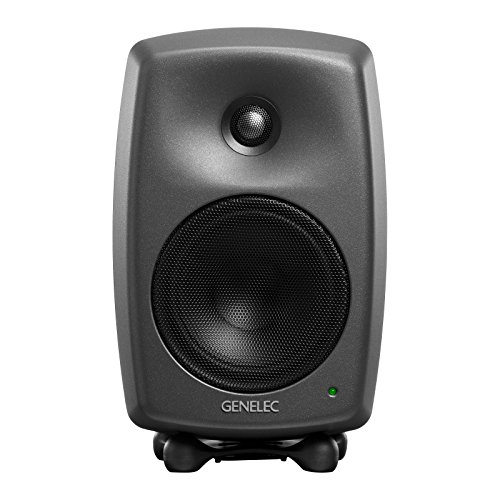
The 8030C uses Intelligent Signal Sensing to wake on an audio signal and drop to standby without one, cutting draw below 0.5W. A 50W high frequency amplifier drives the 3/4 inch tweeter and a 50W low frequency amplifier drives the 5 inch woofer. A rear facing reflex port extends bass, and the matching subwoofer can be added later.
Tweeter3/4 inch, 50W
Woofer5 inch, 50W
Standby drawUnder 0.5W
PortRear facing reflex
Pros
- Automatic signal sensing and standby
- Separate 50W amps per driver
- Subwoofer can extend the low end
Cons
- Sold as a single monitor
- Rear port placement matters
Check price on Amazon ›
The iLoud Micro Monitor pair runs class D amplifiers for 50W RMS total and reaches down to 55 Hz at -3dB. Each cabinet holds a 3/4 inch silk dome tweeter, a 3 inch composite woofer, and a front firing bass reflex port. Bluetooth plus stereo RCA and 1/8 inch aux inputs cover phones, tablets, and turntables.
Power50W RMS total
Low end55 Hz at -3dB
Tweeter3/4 inch silk dome
InputsBluetooth, RCA, 1/8 inch aux
Pros
- Very portable pair
- Bluetooth plus analog inputs
- Front port allows closer wall placement
Cons
- 3 inch woofer limits output
- Small cabinets suit near field only
Check price on Amazon ›
The Truth 3.5 is a 64 watt reference class monitor with 1 inch silk dome tweeters and long throw 3.5 inch woofers using glass fiber cones. The waveguide shapes high frequency dispersion across the desk. The compact cabinet suits a small recording corner.
Power64 watts
Tweeter1 inch silk dome
Woofer3.5 inch glass fiber
WaveguideAdvanced waveguide technology
Pros
- Glass fiber cones resist deformation
- Waveguide controls high frequency spread
- Small cabinet for tight spaces
Cons
- 3.5 inch woofer limits low end
- Fewer connection details than larger models
Check price on Amazon ›
What to look for
Match driver size to your room
A 5 inch woofer like the ROKIT 5 or HS5 covers most home desks and gives usable low mid information. Step down to 3.5 or 4.5 inch cabinets when space is tight, and accept that sub bass will be limited. Rear ported models need a little distance from the wall behind them.
Check the inputs before you buy
Most monitors take XLR or 1/4 inch TRS from an audio interface. The ROKIT 5 uses a combo jack that accepts both. If you want to plug a computer or phone straight in, look for USB-C on the ADAM D3V or Bluetooth on the JBL 104-BT and iLoud Micro Monitor.
Plan for placement and DSP
Small rooms cause uneven bass at the desk. The ADAM D3V includes DSP switches to address common placement issues, and the Neumann KH 120 II has DSP processing built in. The Genelec 8030C adds signal sensing that drops to standby when nothing plays.
Think about single versus pair listings
Some listings ship one cabinet, including the Genelec 8030C and Neumann KH 120 II, so a stereo setup means buying two. The KRK, Yamaha, JBL, PreSonus, ADAM, iLoud, and Behringer entries are sold as pairs. Read the listing carefully before you commit.
Frequently asked questions
What should bedroom producers look for in a compact monitor?
Prioritize a cabinet that fits your desk, an input that matches your interface, and a port you can place away from the wall. The KRK ROKIT 5 and PreSonus Eris 3.5 both suit small rooms, and the ADAM D3V adds DSP switches for placement problems.
Are USB-C studio monitors good for streaming and home vocals?
Yes. A USB-C model like the ADAM D3V connects straight to a computer or mobile device without a separate interface, which keeps a streaming or vocal desk simple. It also has balanced 1/4 inch inputs and a front headphone socket.
Can small monitors handle guitar recording and podcasts?
A 3.5 inch pair such as the PreSonus Eris 3.5 or Behringer Truth 3.5 covers vocals and guitar well at close range. If you also mix bass heavy material, a 5 inch model gives more low end information.
How do I compare monitors for a beginner podcast setup?
Check the input type, the amplifier power, and whether the listing is one cabinet or a pair. Easy setup usually means a combo jack or USB-C input and a volume control you can reach, which the ROKIT 5 and ADAM D3V both offer.
Do I need a subwoofer with 3.5 inch monitors?
Small cabinets roll off early, and the Eris 3.5 is rated from 80 Hz. The Genelec 8030C can pair with a matching subwoofer to monitor a wider range. Start with the monitors and add low end only if your work demands it.
Which monitors work well for Bluetooth playback?
The JBL 104-BT and IK Multimedia iLoud Micro Monitor both include Bluetooth, so you can stream from a phone between sessions. The iLoud also has stereo RCA and 1/8 inch aux inputs for turntables and older players.
What problems come up in small untreated rooms?
Uneven bass and early reflections are the usual issues. Rear ported cabinets like the HS5 and 8030C need wall clearance, and DSP switches on the D3V or KH 120 II help correct placement related problems. Near field listening at modest volume reduces room influence.
Is it better to buy a pair or a single monitor?
Buy a pair if you want stereo mixing right away. Single listings such as the Genelec 8030C and Neumann KH 120 II suit engineers building a system over time, but you need two cabinets for a stereo image.
The verdict
KRK RP5G5 ROKIT 5 Generation Five 5" Power...
9.2/10/10
The KRK RP5G5 ROKIT 5 pair earns the top spot for its combo input and redesigned tweeter, which suit most home desks. Choose the Yamaha HS5 for flat referencing, the JBL 104-BT for Bluetooth, or the ADAM D3V if you want USB-C. Match the cabinet size to your room and check whether the listing is one monitor or a pair.
Check price on Amazon ›
Our top pick, secure checkout via Amazon
Note: Availability and specifications change often. Always confirm the current details on Amazon before buying.