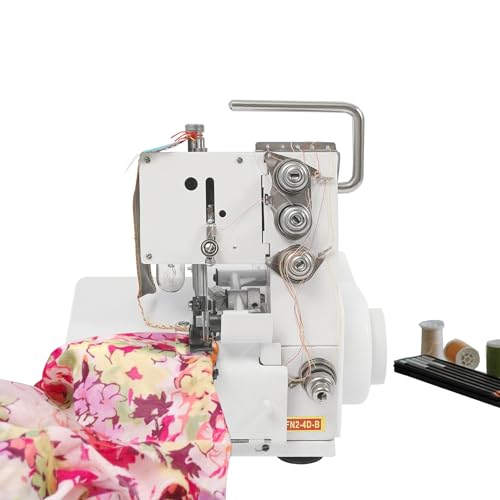
Serger Machines Best Serger Machines: 9 Overlockers Ranked
P
By the Pickpedia Team
·9 picks compared
·Last verified November 2026
Affiliate disclosure: As an Amazon Associate, Pickpedia earns from qualifying purchases. Links on this page are paid links, and we may earn a commission at no extra cost to you. This never affects our picks or scores.
Quick answer
The Brother Sewing 1634DX is our top pick, offering 3 and 4 thread setups plus differential feed. Next is the Singer Heavy Duty 0460 with 13 built-in stitches, and the Bernette B44 completes the top three on stitch variety and control. These three sergers cover the range well.
Best Serger Machines: 9 Overlockers Ranked at a glance
Why you can trust this guide
We compared these picks using verified manufacturer specifications, available manuals and documentation, current retailer listings, and patterns in owner feedback, alongside editorial research. We focus on measurable differences such as performance, capacity, usability, and build quality. Pickpedia does not present editorial research as laboratory testing, and we do not claim hands-on testing unless it was actually performed.
A serger finishes fabric edges, trims the seam allowance and sews the seam in one pass, which is why it earns a place in most serious sewing rooms. The best serger machines split into two camps: 3 and 4 thread overlockers for everyday garment work, and heavier machines built for denim and layered fabric.
We compared the supplied specs across nine models, looking at thread configurations, stitch counts, maximum speed, differential feed and how easy each machine is to thread. Speeds here run from 1,100 to 1,300 stitches per minute, and every machine on the list handles at least 3 threads. Scores reflect our editorial judgement, not customer ratings.
Our top picks
The 1634DX covers the core serger jobs: seam finishing, rolled hems, blind hems and ruffles on both knits and wovens. It runs 1-needle 3-thread and 2-needle 4-thread setups and reaches 1,300 stitches per minute. Differential feed is built in to keep stretchy fabric from distorting.
Thread setups1-needle 3-thread, 2-needle 4-thread
Max speed1,300 stitches per minute
Differential feedYes
Stitch usesSeam finishing, rolled hems, blind hems, ruffles
Pros
- Handles knit and woven fabric
- Fast 1,300 stitches per minute
- Covers rolled, blind and ruffled finishes
Cons
- No stitch count published for this model
- Threading is manual
Check price on Amazon ›
The 0460 packs 13 built-in stitches across 4, 3 and 2 thread capability, including flatlock and rolled hem techniques. Rolled hems run without changing the presser foot or stitch plate, which saves setup time mid-project. The stainless steel bed plate and LED-lit looper are part of the build.
Built-in stitches13
Thread capability4, 3 and 2 thread
TechniquesSerger, flatlock, rolled hem
ExtrasStainless steel bed plate, LED-lit looper
Pros
- 13 stitches with flatlock included
- Rolled hem without swapping the presser foot
- Accessory set includes 2-thread converter and spare knife
Cons
- No speed figure published
- Heavy Duty build suits thicker fabric best
Check price on Amazon ›
The B44 offers 2, 3 and 4 thread stitching with color-coded threading, a built-in threader and an LCD display for control. A powerful motor and sturdy frame let it handle denim, silk and layered fabric with crimp-free seams. Presser foot adjustment and an LED light round out the working setup.
Thread capability2, 3 and 4 thread
ThreadingColor-coded with built-in threader
ControlsLCD display, presser foot adjustment
IncludedAccessory pack, extension table, cover
Pros
- Handles denim, silk and quilt layers
- Built-in threader and color-coded guides
- Extension table and cover included
Cons
- No stitch count or speed published
- LCD and threader add setup steps to learn
Check price on Amazon ›
The SewLaVie 360 opens up the threading area so you can reach the loopers or fix a mistake without dismantling anything. A visual alignment guide plus 2, 3 and 4 thread capability gets beginners sewing in minutes. It runs 1,300 stitches per minute with 12 built-in stitch types and differential feed.
Thread capability2, 3 and 4 thread
Built-in stitches12
Max speed1,300 stitches per minute
ThreadingWide-open area with alignment guide
Pros
- Open threading area for quick fixes
- Fast 1,300 stitches per minute
- Differential feed for stretch fabrics
Cons
- No extension table listed
- Newer model with a shorter track record
Check price on Amazon ›
VEVOR builds this serger around a 0.7 and 2.0 differential feed that manages stretchy fabric without distortion. It switches between 2, 3 and 4 threads with adjustable stitch length and runs up to 1,250 stitches per minute. The spec sheet claims it handles up to 6 layers of denim.
Thread capability2, 3 and 4 thread
Differential feed0.7 and 2.0
Max speed1,250 stitches per minute
Stitch stylesOverlock, rolled hem, edging, lettuce hem
Pros
- Differential feed range suits stretch fabric
- Trim trap and tool storage included
- Free arm for cuffs and hems
Cons
- No stitch count published
- Lettuce hem and edging need tension tuning
Check price on Amazon ›
This overlocker ships with a manual plus rethreading instructions and a video guide for the quick-threading system. It runs 3 and 4 thread setups with automatic edge trimming and 12 stitch patterns at up to 1,250 stitches per minute. Adjustable blades and presser foot handle cotton, denim and knits.
Thread capability3 and 4 thread
Stitch patterns12
Max speed1,250 stitches per minute
FeaturesDifferential feed, adjustable blades, LED light
Pros
- Video guide supports first-time threading
- Differential feed prevents wrinkling and stretching
- Foot controller included
Cons
- No 2-thread option
- Beginners should watch the guide before threading
Check price on Amazon ›
The FY505 uses a metal frame for long-term reliability on heavy-duty projects. Color-coded thread guides with numbered upper and lower loopers cut setup time, and 2, 3 and 4 thread capability covers different fabric weights. Top speed is 1,100 stitches per minute with a built-in rolled hem.
Thread capability2, 3 and 4 thread
FrameMetal
Max speed1,100 stitches per minute
Stitch featureBuilt-in rolled hem
Pros
- Color-coded, numbered threading path
- Metal frame for heavy-duty sewing
- Built-in rolled hem
Cons
- Slowest top speed on this list
- No stitch count published
Check price on Amazon ›
This four-thread overlocker locks, trims and cuts fabric edges in one pass to cut finishing steps. A 100W motor reaches 1,200 stitches per minute under foot-pedal control. Needle pitch adjusts from 0.1 to 0.13 inch and hemming width from 0.18 to 0.22 inch, with individual thread tension controls for cotton, silk and denim.
Thread setup4-thread overlock
Motor100W
Max speed1,200 stitches per minute
Dimensions9.06 x 9.06 x 19.29 inches
Pros
- Individual thread tension controls
- Cast iron body with anti-slip mats
- Compact footprint for small rooms
Cons
- Four-thread setup only
- No differential feed listed
Check price on Amazon ›
A cast iron body with a painted finish resists abrasion and scratches without deforming, which suits steady heavy sewing. The four-line lockstitch configuration produces a locking edge width of 0.18 to 0.22 inch for a compact finish that resists slipping. A 100W motor drives up to 1,200 stitches per minute.
Thread setup4-thread lockstitch
Motor100W, 110V
Max speed1,200 stitches per minute
Needle pitch0.1 to 0.13 inch
Pros
- Cast iron body built for heavy tasks
- Adjustable needle pitch for stitch width
- Foot controller included
Cons
- Four-thread configuration only
- No differential feed listed
Check price on Amazon ›
What to look for
How thread count changes what a serger can do
Thread count decides which stitches you get. A 4-thread setup gives the strongest seam for garment construction, while 3-thread work covers overlocking and rolled hems. Machines that also run 2-thread setups, like the Singer 0460 and the Bernette B44, add flatlock and narrow edge finishes. If you mainly sew knits, look for 3 and 4 thread capability with differential feed.
Speed, differential feed and stitch length
Top speeds on this list run from 1,100 to 1,300 stitches per minute, and the difference shows up on long seams and batch work. Differential feed matters more than speed for stretch fabric: it controls how the feed dogs move the fabric so knits do not stretch and lightweight fabric does not pucker. Adjustable stitch length and thread tension controls let you dial in each fabric.
Threading, setup and included accessories
Threading the loopers is the step that discourages new serger owners. Color-coded guides, numbered loopers and open threading areas all shorten setup, and a video walkthrough helps on first use. Check what comes in the box: a 2-thread converter, spare lower knife, tweezers, needles and a dust cover save separate purchases. An extension table adds support for larger projects.
Matching the machine to your sewing
Denim and layered fabric need a sturdy frame and enough piercing power, which is where metal and cast iron builds earn their place. Dressmaking leans on rolled hems, blind hems and clean seam finishing across knits and wovens. Small workrooms benefit from a compact footprint, while heavier daily use points to a machine rated for abrasion and long sessions.
Frequently asked questions
What should I look for in a serger for dressmaking?
Prioritize 3 and 4 thread capability, differential feed and a rolled hem that does not require changing the presser foot or stitch plate. The Singer 0460 and the Brother 1634DX both cover those needs, and the Brother adds blind hem and ruffle work.
Do I need an automatic needle threader on a serger?
It helps most with the loopers, which are the hardest part to thread. The Bernette B44 includes a built-in threader with color-coded guides, and the SewLaVie 360 uses an open threading area plus an alignment guide. Either approach shortens setup time noticeably.
Can a serger handle denim and thick layers?
Yes, if the frame and motor are up to it. The VEVOR model is rated for up to 6 layers of denim, and the Bernette B44 is built for denim, silk and layered fabric. Cast iron and metal frames, as on the FEIYUE FY505, add stability for heavy work.
Is adjustable speed useful for sewing classes?
It is. Beginners benefit from running slower while learning to guide fabric into the knife and loopers. Machines with foot controllers, including the VEVOR, the 2026 model and the cast iron heavy duty unit, let you control pace with pedal pressure.
How many stitches per minute do I actually need?
Every machine here reaches at least 1,100 stitches per minute, which is plenty for home and small business work. The Brother 1634DX and SewLaVie 360 top out at 1,300. Higher speed pays off on long seams and repeat production runs.
What does differential feed do for stretch fabric?
It adjusts the ratio between the front and rear feed dogs so knit fabric does not stretch out of shape and lightweight fabric does not pucker. The VEVOR lists a 0.7 and 2.0 differential feed range, and the 2026 model uses differential feed for the same purpose.
Can a serger work for a small business?
A serger speeds up edge finishing and seam construction, which matters when you produce repeat items. Look for consistent speed, a sturdy frame and easy rethreading so a broken thread does not stall a batch. The Brother 1634DX and Singer 0460 both fit that pattern.
Do I need an extension table?
An extension table supports larger pieces so fabric does not drag while you feed it. The Bernette B44 includes one in its accessory bundle. If your machine lacks one, a compact footprint, as on the four-thread overlocker at 9.06 inches wide, helps in tight spaces.
The verdict
Brother Sewing 1634DX 3/4 Thread Serger |...
9.2/10/10
The Brother Sewing 1634DX is our pick for most sewers: it covers 3 and 4 thread work, runs 1,300 stitches per minute and handles rolled, blind and ruffled finishes on knits and wovens. Choose the Singer 0460 if 13 stitches and flatlock matter, or the Bernette B44 if you sew denim and quilt layers and want a built-in threader with an LCD display.
Check price on Amazon ›
Our top pick, secure checkout via Amazon
Note: Availability and specifications change often. Always confirm the current details on Amazon before buying.