Portable Solar Chargers Best Portable Solar Chargers for Phones and Power Stations
P
By the Pickpedia Team
·7 picks compared
·Last verified November 2026
Affiliate disclosure: As an Amazon Associate, Pickpedia earns from qualifying purchases. Links on this page are paid links, and we may earn a commission at no extra cost to you. This never affects our picks or scores.
Quick answer
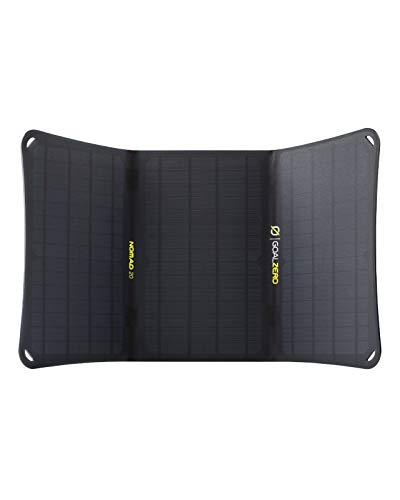
The Goal Zero Nomad 20 is the top pick for most people, pairing an 8mm cable and USB port with a 2.25 lb frame. For power stations, the MHPOWOS 220W and the 110W SOKIOVOLA deliver higher voltage with multi-connector cables, so this portable solar charger suits a range of setups.
Best Portable Solar Chargers for Phones and Power Stations at a glance
Why you can trust this guide
We compared these picks using verified manufacturer specifications, available manuals and documentation, current retailer listings, and patterns in owner feedback, alongside editorial research. We focus on measurable differences such as performance, capacity, usability, and build quality. Pickpedia does not present editorial research as laboratory testing, and we do not claim hands-on testing unless it was actually performed.
A portable solar charger is a folding panel you carry to keep a phone, tablet, power bank or small power station topped up away from an outlet. The choice comes down to what you are charging: USB devices want a panel with the right ports, while a power station needs matching voltage and a compatible connector.
We compared output, weight, water resistance and the cables included across seven panels. USB-only models suit backpackers and travelers, and higher-voltage panels suit campers running a power station. Every spec below comes from the manufacturer listings.
Our top picks
The Nomad 20 is a 20W monocrystalline panel at 18-22V with a built-in 8mm charging cable plus a USB port, so it covers both a phone and a small power station. It weighs 2.25 lbs and folds to 11.5 x 7.4 x 1.25 inches. A 180-degree kickstand and hang points make it easy to aim at the sun.
Panel output20W, 18-22V
Weight2.25 lbs
Folded size11.5 x 7.4 x 1.25 in
OutputsBuilt-in 8mm cable and USB port
Pros
- Built-in 8mm cable plus USB port covers two device types
- Adjustable 180-degree kickstand for aiming at the sun
- Folds flat and weighs 2.25 lbs
Cons
- Lower wattage than the large folding panels
- One-year manufacturer warranty
Check price on Amazon ›
At 1.23 lbs and folding to laptop size, this Renogy panel is built for a pack. It offers USB-C PD3.0 at 20W max and USB-A QC3.0 at 18W max, plus a 30W DC output for small power stations. A parallel design keeps at least 75% output when one section is shaded.
Weight1.23 lbs
Folded size10.55 x 8.86 x 0.71 in
OutputsUSB-C PD3.0 20W, USB-A QC3.0 18W, 30W DC
RatingIP67 water and dust resistant
Pros
- Very light at 1.23 lbs
- Keeps output up under partial shading
- IP67 rating with six hanging holes and four carabiners
Cons
- 30W total limits larger power stations
- USB-C PD tops out at 20W
Check price on Amazon ›
This 110W folding panel uses N-Type cells rated at 25.5% conversion efficiency and ETFE coating. It weighs 7.82 lbs and folds to 22.83 x 23.22 x 1.18 inches, with two built-in brackets for propping it up. The included cable splits into XT60, DC5521, DC7909 and Anderson connectors.
Panel output110W
Efficiency25.5% N-Type 16BB cells
Weight7.82 lbs
ConnectorsXT60, DC5521, DC7909, Anderson
Pros
- Highest stated efficiency in this group at 25.5%
- Four connector types cover most power station brands
- ETFE coating and IP68 rating
Cons
- Heavier than the USB panels at 7.82 lbs
- Power station input limits can cap the delivered wattage
Check price on Amazon ›
This 110W panel runs at 21.6V with 23.5% mono-crystalline cells and an IP67 rating. A bifold layout with two kickstands keeps setup simple on flat ground. The 7-in-1 adapter cable includes XT60, Anderson and DC connectors for Jackery, EcoFlow, Bluetti and Anker stations.
Panel output110W, 21.6V
Efficiency23.5% mono-crystalline
Weight4.5 kg
Cable7-in-1 with XT60, Anderson, DC
Pros
- Two-panel bifold is quick to unfold and prop up
- Multi-interface cable fits several power station brands
- IP67 rating and zippered port pocket
Cons
- Heavier than the USB-only panels
- Delivered power can be capped by your station's input limit
Check price on Amazon ›
The MHPOWOS panel pushes 220W at 40V from mono-crystalline cells rated at 23.5% efficiency. It weighs 8.5 kg and has four kickstands plus thickened handles. Check your power station's maximum input voltage first, since the 40V output exceeds some limits.
Panel output220W, 40V
Efficiency23.5% mono-crystalline
Weight8.5 kg
SetupFour kickstands, thickened handles
Pros
- Highest wattage here for large stations and generators
- Four kickstands hold the angle on flat ground
- IP67 water and dust protection
Cons
- 40V output is incompatible with some stations
- The heaviest panel in this comparison
Check price on Amazon ›
This 28W BigBlue panel uses 25.4% efficiency cells and adds a digital ammeter showing real-time current. It weighs 1.47 lbs and offers USB-A at 5V/2.4A and USB-C at 3A, with a combined 5V/4A. The IP44 fabric shell handles occasional rain, and a zippered compartment stores your device.
Panel output28W
Efficiency25.4% cells
Weight1.47 lbs
PortsUSB-A 5V/2.4A, USB-C 3A, 5V/4A combined
Pros
- Digital ammeter shows live current output
- Light at 1.47 lbs with four folding sections
- Zippered compartment holds a device or cables
Cons
- IP44 rating is lower than the IP67 and IP68 panels
- USB ports and ammeter must stay dry
Check price on Amazon ›
The upgraded BigBlue panel delivers 35W across two USB-C ports and one USB-A port. Type-C1 offers PD 25W with PPS, and USB-A offers QC 18W. It folds to 8.29 x 4.84 x 1.89 inches at 1.54 lbs and carries an IP68 rating, though the USB junction box is not waterproof.
Panel output35W
PortsTwo USB-C, one USB-A
Fast chargingPD 25W with PPS, QC 18W
Weight1.54 lbs
Pros
- PD 25W with PPS for cooler, faster USB-C charging
- IP68 rating on the panel itself
- Folds small enough for a daypack
Cons
- Type-C1 does not support Apple devices
- USB junction box is not waterproof
Check price on Amazon ›
What to look for
Match the panel to what you charge
USB-only panels suit phones, tablets and power banks, while folding panels with 8mm, XT60 or Anderson outputs suit power stations. Decide your target device before comparing wattage. A 20W to 35W panel is enough for USB gear, and 110W or more suits a station.
Check voltage and input limits
Power stations cap how much they accept, so a 220W panel may deliver less than its rating. Confirm your station's maximum input voltage before buying, especially with 40V panels. The SOKIOVOLA and the bifold 110W panel include multi-connector cables that fit common brands.
Weigh portability against output
The lightest panels here sit near 1.2 to 1.5 lbs and fold to backpack size. Larger 110W and 220W panels weigh several pounds but charge a station far faster. Hikers should favor low weight, and basecamp users should favor output.
Look at weather protection and setup
IP67 and IP68 ratings cover rain and dust, while IP44 handles only occasional damp. Kickstands and hanging holes matter because panel angle drives output. The Goal Zero kickstand and the Renogy carabiners both make aiming easier.
Frequently asked questions
Should I choose a portable solar charger with USB-C PD for long trips?
Yes, if your devices charge over USB-C. The Renogy panel offers PD3.0 at 20W max, and the BigBlue 35W reaches PD 25W with PPS. Note that on the BigBlue 35W, Type-C1 does not support Apple devices.
Can these panels charge a family's phones and tablets?
A 28W to 35W panel with multiple ports can top up several USB devices across a sunny day. The BigBlue 28W has a combined 5V/4A output, and the BigBlue 35W has three ports. Output still depends on direct sunlight.
What matters most for frequent travelers?
Weight, folded size and port type. The Renogy panel weighs 1.23 lbs and folds to laptop size, while the BigBlue 35W folds to 8.29 x 4.84 x 1.89 inches. Match the ports to your phone and tablet.
Do these chargers store power for later?
No. The BigBlue panels charge connected devices directly in sunlight and do not store energy. For stored power, pair a panel with a power bank or portable power station.
Which panel works best for a desk or patio setup?
A folding panel with a kickstand works well on a flat surface in direct sun. The Goal Zero Nomad 20 and the MHPOWOS 220W both use kickstands to hold the angle. USB-only panels are simpler for charging a phone nearby.
How do I pick a panel for iPhone users?
Check the port compatibility first. The BigBlue 35W Type-C1 does not support Apple devices, so use its USB-A port or choose a panel without that limit. The BigBlue 28W lists USB-C at 3A and USB-A at 5V/2.4A.
Which portable solar charger is best for a power station?
The MHPOWOS 220W suits large stations, and the SOKIOVOLA 110W suits mid-size ones. Verify your station's maximum input voltage and connector type before buying. The SOKIOVOLA cable includes XT60, DC5521, DC7909 and Anderson plugs.
What problems can come up outdoors?
Shade, panel angle and heat all cut output. The Renogy parallel design keeps at least 75% output when one section is shaded. Keep USB ports and junction boxes dry even on waterproof-rated panels.
The verdict
Goal Zero Nomad 20
9.1/10/10
The Goal Zero Nomad 20 is the safest starting point for most buyers, with an 8mm cable and USB port in a 2.25 lb frame. Backpackers should look at the 1.23 lb Renogy 30W, and anyone charging a power station should compare the 110W SOKIOVOLA and 220W MHPOWOS against their station's input limits.
Check price on Amazon ›
Our top pick, secure checkout via Amazon
Note: Availability and specifications change often. Always confirm the current details on Amazon before buying.