Portable Power Stations Best Portable Power Stations: 9 Top Picks Ranked
P
By the Pickpedia Team
·9 picks compared
·Last verified November 2026
Affiliate disclosure: As an Amazon Associate, Pickpedia earns from qualifying purchases. Links on this page are paid links, and we may earn a commission at no extra cost to you. This never affects our picks or scores.
Quick answer
For most people, the Jackery Explorer 300 is the best portable power station to start with, since it weighs just 7.5 lbs. If you need more capacity for home backup, the Anker SOLIX C1000 Gen 2 and the EF ECOFLOW Delta 3 Classic are the strongest step-ups.
Best Portable Power Stations: 9 Top Picks Ranked at a glance
Why you can trust this guide
We compared these picks using verified manufacturer specifications, available manuals and documentation, current retailer listings, and patterns in owner feedback, alongside editorial research. We focus on measurable differences such as performance, capacity, usability, and build quality. Pickpedia does not present editorial research as laboratory testing, and we do not claim hands-on testing unless it was actually performed.
A portable power station is a battery in a box with wall outlets on the front. Capacity, measured in watt hours, sets how long it runs; output, measured in watts, sets what it can start. The nine models here span 183Wh to 2,048Wh, so the right pick depends on what you plan to plug in.
We compared the supplied specs on weight, battery chemistry, recharge time and outlet count. LiFePO4 cells now dominate this category, and several units here recharge to 80 percent in under an hour. Owners report that weight and outlet layout matter as much as raw capacity.
Our top picks
At 7.5 lbs with 292Wh, this is the easiest unit here to carry on a hike or load into a car. It runs laptops, drones and cameras from 2 AC outlets plus a 100W USB-C port. The LiFePO4 battery is rated for over 4,000 cycles to 70 percent capacity.
Capacity292Wh
Output300W rated, 600W peak
Weight7.5 lbs
BatteryLiFePO4, 4,000+ cycles
Pros
- Very light at 7.5 lbs
- 100W USB-C PD port built in
- LiFePO4 chemistry rated for 4,000+ cycles
Cons
- 300W output limits larger appliances
- Solar panel sold separately
Check price on Amazon ›
A 1,024Wh LiFePO4 battery paired with a 2,000W inverter and ten ports. HyperFlash tech brings a full charge in 49 minutes at 1,600W. Anker says it is 14 percent smaller and 11 percent lighter than similar models.
Capacity1,024Wh
Output2,000W, 3,000W peak
RechargeFull in 49 min at 1,600W
BatteryLiFePO4, 4,000 cycles to 80%
Pros
- Ten ports for a full desk or van setup
- Full recharge in 49 minutes
- Solar input of 600W refills in 1.8 hours
Cons
- Fastest charging needs the Anker app
- Heavier than the small camping units
Check price on Amazon ›
The Delta 3 Classic pairs 1,024Wh with an 1,800W inverter and 3,600W surge, and X-Boost pushes output to 2,600W for heavier loads. A sub-10ms UPS switch keeps PCs and routers alive when mains power drops. X-Stream AC charging reaches 80 percent in 45 minutes.
Capacity1,024Wh
Output1,800W, 3,600W surge
UPS switchUnder 10ms
Recharge0 to 80% in 45 min
Pros
- Sub-10ms UPS protects computers
- X-Boost raises output to 2,600W
- 500W solar recharge in 2.5 hours
Cons
- Solar panel optional
- Large footprint compared with 300Wh units
Check price on Amazon ›
A compact 183Wh unit with 200W running and 400W peak output. Nine outlets include a 100W USB-C port and three 30W USB-C ports. A top handle and weather resistant shell suit it to car camping and short outages.
Capacity183Wh
Output200W running, 400W peak
Outlets9 total
Warranty2 year limited
Pros
- Nine outlets for its size
- 100W USB-C port included
- LED display shows battery level and charge time
Cons
- No AC power adapter included
- Low capacity for appliances
Check price on Amazon ›
This 299Wh unit weighs 6.8 lbs yet delivers 600W continuous and 1,200W peak through a pure sine wave inverter. The 140W USB-C PD port charges gaming laptops at full speed. An integrated 2W LED light adds steady, strobe and SOS modes.
Capacity299Wh
Output600W, 1,200W surge
Weight6.8 lbs
USB-C140W PD
Pros
- 6.8 lbs with 600W output
- 140W USB-C beats typical 60W ports
- Pure sine wave inverter
Cons
- Only 2 AC outlets
- 12 month warranty
Check price on Amazon ›
At 9.4 lbs, this 288Wh station delivers 600W continuous, and Power Lifting Mode raises output to 1,500W for small kettles or toasters. A 10ms UPS protects routers and CPAP machines during blackouts. Wall charging reaches 80 percent in 45 minutes.
Capacity288Wh
Output600W, 1,500W with Power Lifting
Weight9.4 lbs
Recharge0 to 80% in 45 min
Pros
- 10ms UPS for critical devices
- Power Lifting Mode reaches 1,500W
- Low standby draw of 4.5W
Cons
- 288Wh limits long appliance runs
- Solar panel sold separately
Check price on Amazon ›
A 576Wh LiFePO4 battery with a 1,000W pure sine wave inverter and 2,000W peak, at 14.8 lbs. Nine ports include four AC outlets and a 100W USB-C PD port. Solar, wall and car charging all work, and pass-through charging keeps devices running while it refills.
Capacity576Wh
Output1,000W, 2,000W peak
Weight14.8 lbs
BatteryLiFePO4, 3,000+ cycles
Pros
- Four AC outlets
- Pass-through charging supported
- 12-layer BMS protection
Cons
- Reaches 70 percent, not 80, in 1.8 hours on AC
- Solar panels and car cables sold separately
Check price on Amazon ›
A 2,000W inverter with 3,600W surge, wrapped in aluminum casing with rubber bumpers and an IPX4 weather resistance rating. The LiFePO4 battery is rated for 4,000 cycles. Wall charging reaches 80 percent in under an hour.
Output2,000W, 3,600W surge
BatteryLiFePO4, 4,000 cycles
RatingIPX4 weather resistant
Outlets4 AC, 6 USB, 12V vehicle
Pros
- IPX4 shell with port shields
- 4 AC outlets plus a 140W USB-C port
- Vibration tested for rough roads
Cons
- Heavy for one-person carrying
- Capacity not listed in the supplied specs
Check price on Amazon ›
The largest unit here at 2,048Wh, with 2,400W output and 3,600W surge. A built-in TT-30 outlet plugs straight into an RV, and the 20ms UPS keeps essentials running. It runs at 25dB and recharges to 80 percent in about an hour.
Capacity2,048Wh
Output2,400W, 3,600W surge
Noise25dB
RV portTT-30
Pros
- TT-30 outlet built for RVs
- Quiet 25dB operation
- Five charging input options
Cons
- Very heavy for solo lifting
- Larger than most campers need
Check price on Amazon ›
What to look for
Capacity and output decide the job
Watt hours set runtime and watts set what starts up. A 292Wh unit runs a laptop for days but will not start a fridge. Units near 1,000Wh and above handle fridges, microwaves and power tools, especially with surge ratings of 3,000W or more.
Battery chemistry and cycle life
LiFePO4 now appears across this whole list, and the supplied cycle ratings run from 3,000 to 4,000 charges before capacity drops to 70 or 80 percent. That chemistry also tolerates heat better than standard lithium-ion, which matters for a unit stored in a garage or van.
Recharge speed and solar input
Wall recharge times vary widely. Several units here hit 80 percent in 45 to 60 minutes, while others take closer to two hours. Solar input matters for off-grid use, and the panels are usually sold separately, so check the wattage the station accepts before buying panels.
Weight, ports and UPS switching
Portable is relative: this group runs from 6.8 lbs to a 2,048Wh unit built for an RV. Count the AC outlets and look for a high-wattage USB-C port if you charge laptops. A UPS switch under 20ms protects computers, routers and CPAP machines during an outage.
Frequently asked questions
What size portable power station do I need for camping?
For phones, lights and a laptop, 183Wh to 300Wh is enough, and units like the Jackery Explorer 300 or Westinghouse iGen400s cover that. Add a car fridge or an electric kettle and you should look at 576Wh or more with a 1,000W inverter.
Can a portable power station run a refrigerator?
Yes, if the output and surge ratings are high enough. The EF ECOFLOW Delta 3 Classic offers 1,800W with 3,600W surge, and the Renogy unit delivers 2,400W with 3,600W surge, both of which are built for fridge loads.
How long does a power station take to recharge?
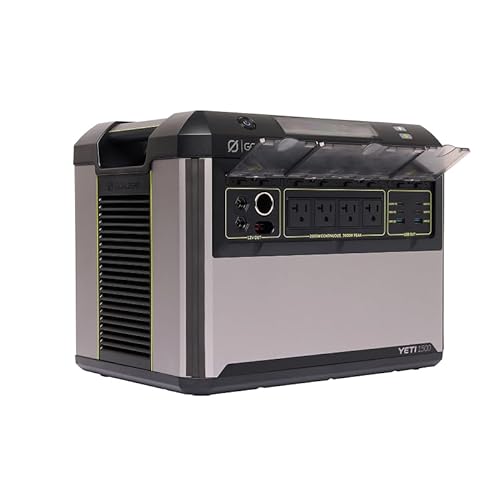
It depends on the model. The Anker SOLIX C1000 Gen 2 fully recharges in 49 minutes at 1,600W, the Goal Zero Yeti 1500 reaches 80 percent in under an hour, and the CYBPULTE and Westinghouse units take about two hours or more.
Is LiFePO4 better than other lithium batteries?
The supplied specs show LiFePO4 units rated for 3,000 to 4,000 cycles, which translates to roughly a decade of daily use. LiFePO4 also handles heat better, and the 576Wh model lists stability up to 700 degrees Celsius.
Do I need a solar panel to charge a power station?
No. Every unit here charges from a wall outlet, and most accept car charging too. Solar panels are optional on the Jackery, BLUETTI, EF ECOFLOW and 576Wh models, so plan for panels separately if you want off-grid charging.
What is a UPS mode on a power station?
UPS mode passes wall power through to your devices and switches to battery within milliseconds when the grid fails. The EF ECOFLOW and BLUETTI units switch in under 10ms, and the Renogy unit restores power in about 20ms.
How much weight can one person carry?
The Jackery Explorer 300 at 7.5 lbs and the CYBPULTE at 6.8 lbs are easy one-hand carries, while the larger 1,500Wh class units typically weigh 30 lbs or more and suit a cart or a second person.
Which power station is quietest to run indoors?
Units with no cooling fan at low loads are the quietest. The Jackery Explorer 300 stays fanless for small devices, and models with active cooling ramp up only under heavy output, so check the listed noise figures if you plan to sleep nearby.
Can I charge a power station and run devices at the same time?
Most models support pass-through charging, which lets you power a laptop while the station tops up from the wall. Check the manual for the specific unit, since some limit output during recharge to protect the battery.
What should I check before buying a power station?
Confirm the continuous and surge wattage against your largest appliance, match capacity to your daily energy use, and note the recharge time and port types. The Jackery Explorer 300 is a sensible starting point for light loads, with larger units for fridges and kettles.
The verdict
Jackery Explorer 300 Portable Power Statio...
9.2/10/10
The Jackery Explorer 300 wins on the basics: 7.5 lbs, a 100W USB-C port and a LiFePO4 battery rated for over 4,000 cycles. Step up to the Anker SOLIX C1000 Gen 2 for fast recharging and more ports, or to the EF ECOFLOW Delta 3 Classic if a sub-10ms UPS for home backup is the priority.
Check price on Amazon ›
Our top pick, secure checkout via Amazon
Note: Availability and specifications change often. Always confirm the current details on Amazon before buying.