Pizza Ovens 7 Pizza Stones for a Crispier Homemade Crust
P
By the Pickpedia Team
·7 picks compared
·Last verified September 2026
Affiliate disclosure: As an Amazon Associate, Pickpedia earns from qualifying purchases. Links on this page are paid links, and we may earn a commission at no extra cost to you. This never affects our picks or scores.
Quick answer
Pick a stone by how you bake. Cordierite handles very high grill and oven heat with strong thermal shock resistance, while classic clay suits standard ovens. Cast iron and perforated steel pans offer easier handling and cleanup. Match surface, size, and heat tolerance to your setup for a crisper crust.
7 Pizza Stones for a Crispier Homemade Crust at a glance
Why you can trust this guide
We compared these picks using verified manufacturer specifications, available manuals and documentation, current retailer listings, and patterns in owner feedback, alongside editorial research. We focus on measurable differences such as performance, capacity, usability, and build quality. Pickpedia does not present editorial research as laboratory testing, and we do not claim hands-on testing unless it was actually performed.
How we chose: We compared seven pizza surfaces across material, heat tolerance, size, included accessories, and cleaning demands.
A good pizza stone pulls moisture from the dough and pushes even heat into the base, so crusts brown instead of steaming. Materials behave differently, though. Clay and ceramic suit everyday oven baking, cordierite tolerates fierce grill heat, and metal pans trade some crisping for lighter handling.
This roundup groups seven surfaces so you can match one to how you actually cook. Some arrive as full kits with a peel and cutter, others as a single plate. Owners repeatedly note that the right size and heat rating matter more than any single feature.
Our top picks
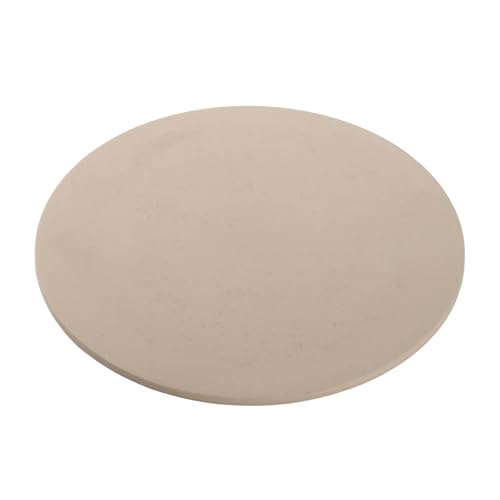
Crafted from a blend of lead-free clays, this 16-inch round soaks up oven heat and transfers it evenly across the base. Owners report crisp crusts on pizza, and the surface also handles bread, pastries, and roasted vegetables. Its non-cracking build gives it a durable reputation among long-term users. The generous width fits most standard ovens without crowding. One clear limitation: the maker recommends staying at or under 500 degrees in a standard home oven, and the stone should never be washed with soap, so it suits conventional baking rather than blazing grill work.
MaterialLead-free clay blend
ShapeRound, 16 inch
Heat guidanceUp to 500 degrees
CleaningWipe only, no soap
Pros
- Even heat transfer for a crisp base
- Wide surface fits most ovens
- Reputation for not cracking
Cons
- Capped near standard oven heat
- No soap allowed when cleaning
Check price on Amazon ›
This five-piece set pairs a 13-inch cordierite stone with an oak peel, serving rack, stainless cutter, and parchment sheets. Rated safe up to 1472 degrees, the stone suits both oven and grill, and its micro-pores draw off moisture for a crisp base. Reviewers like the serving rack, which lets the hot stone double as a stand and shields the table. The oak peel resists cracking and oil absorption. Its main drawback is the modest 13-inch surface, which limits pie size, so cooks chasing large pizzas may find it tight for family batches.
MaterialCordierite stone
ShapeRound, 13 inch
Heat ratingUp to 1472 degrees
IncludesPeel, rack, cutter, parchment
Pros
- Complete toolkit in one purchase
- Very high heat tolerance
- Serving rack protects the table
Cons
- Smaller surface limits pie size
- Several parts to store
Check price on Amazon ›
American Metalcraft built this 13-inch round from durable ceramic meant to resist cracking and warping under high oven heat. The material absorbs and radiates warmth evenly, which reviewers say helps eliminate hot spots and soggy centers on pizza, flatbread, or calzones. Backed by a brand with more than seventy years in foodservice, it targets both home and commercial kitchens. Cleanup stays simple: let it cool, then wipe with a damp cloth. Note the listing name mentions dishwasher use, yet the guidance says avoid soap and never submerge it, so hand care remains the safer route to protect the surface.
MaterialHeat-resistant ceramic
ShapeRound, 13 inch
Best usesPizza, flatbread, calzones
CleaningCool, then damp wipe
Pros
- Even radiant heat, few hot spots
- Resists cracking and warping
- Trusted foodservice heritage
Cons
- Soap and soaking discouraged
- Standard 13-inch footprint
Check price on Amazon ›
GoodCook takes a metal approach with this 16-inch perforated carbon steel pan. The holes let moisture escape, which the brand says drives a crisp crust on both homemade and frozen pizzas. A nonstick coating makes release and cleanup quick, and molded cutting guides help you portion even slices. Small feet keep the hot pan raised off the counter to guard against heat damage. Carbon steel resists warping for long service. The trade-off versus a true stone is thermal mass: a thin pan heats and cools faster, so it will not hold and radiate heat the way a dense baking stone does.
MaterialNonstick carbon steel
ShapeRound, 16 inch, perforated
FeaturesCutting guides, raised feet
CleanupNonstick, quick wipe
Pros
- Perforations vent moisture well
- Nonstick surface releases easily
- Cutting guides aid even slices
Cons
- Less thermal mass than stone
- Nonstick needs gentle utensils
Check price on Amazon ›
This 16-inch set pushes into serious heat, rated to withstand roughly 1800 degrees for both oven and grill work. The porous stone stores and releases warmth to build a crisp crust while venting moisture so pies stay soft inside and crunchy underneath. An acacia wood peel handles flipping and serving, a rocker cutter with a safety cover slices cleanly, and a long-handled metal brush with a steel scraper clears tough residue. The wide surface suits larger pizzas. Its bulk is the honest downside: a big stone plus a full accessory kit needs real storage space and adds weight when moving it to a grill.
MaterialPorous cordierite-style stone
ShapeRound, 16 inch
Heat ratingUp to about 1800 degrees
IncludesPeel, rocker cutter, brush
Pros
- Extremely high heat tolerance
- Wide surface for bigger pies
- Cleaning brush and scraper included
Cons
- Heavy and needs storage room
- Full kit is bulky to move
Check price on Amazon ›
Lodge answers with pre-seasoned cast iron in a 15-inch rimless design that supports edge-to-edge baking for crisp crusts. Cast iron holds heat well, and reviewers note uniform cooking with fewer hot spots once it comes up to temperature. Dual assist handles move it confidently from oven to grill to table, and the finish uses only iron and oil, so it stays free of PFOA, PTFE, and PFAS. The pan is famously long-lived. Weight is the honest catch: seasoned cast iron is heavy and needs proper care rather than soap-heavy scrubbing, so it rewards owners willing to maintain a seasoning layer.
MaterialPre-seasoned cast iron
ShapeRound, 15 inch, rimless
FinishPFOA, PTFE, PFAS free
HandlingDual assist handles
Pros
- Retains heat for even bakes
- Handles oven, grill, and table
- Non-toxic seasoned finish
Cons
- Heavy to lift and store
- Needs seasoning care
Check price on Amazon ›
Weber aims this 16.7-inch cordierite stone squarely at grill cooks. The porous material absorbs moisture to deliver light, crisp thin-crust pizza with melted cheese and grilled toppings. Its standout feature is integration: the stone drops into the Gourmet BBQ System cooking grate so it stays put while you grill, and an included carry rack makes moving a hot stone quick and safe. The wide surface leaves room for a generous pie. The clear catch is fit. This stone is built around Weber's Gourmet BBQ System grate, so owners without that setup lose the locking benefit and should confirm compatibility first.
MaterialCordierite stone
ShapeRound, 16.7 inch
Designed forGourmet BBQ System grate
IncludesCarry rack
Pros
- Locks into compatible Weber grate
- Carry rack eases hot transport
- Cordierite vents moisture for crisp crust
Cons
- Built for a specific grill system
- Grilling only, not an oven kit
Check price on Amazon ›
What to look for
Match the material to your heat
Cordierite tolerates the fierce temperatures of a grill and shrugs off thermal shock, while clay and ceramic suit steady home-oven baking. Cast iron holds heat and travels well between heat sources. Perforated steel vents moisture but stores less warmth, so think first about where and how hot you bake.
Size the surface to your oven and pies
A 16-inch stone leaves room for a full pizza but demands a roomy oven and careful lifting. Smaller 13-inch surfaces fit tighter spaces and lighter batches. Measure your rack before buying, since a stone that crowds the walls blocks airflow and bakes unevenly.
Weigh the accessories you truly need
Full kits bundle a peel, cutter, rack, and brush, which helps beginners start in one purchase. Experienced cooks who already own tools may prefer a single plate. Extra parts mean extra storage, so buy the bundle only if you will actually use each piece.
Follow the cleaning rules to protect the surface
Most stones warn against soap and soaking because the porous surface absorbs it. Let the stone cool fully, then wipe with a damp cloth or scrape residue with a brush. Cast iron needs its seasoning kept intact, while nonstick metal pans wipe clean but want gentle utensils.
Frequently asked questions
Do I need to preheat a pizza stone?
Yes. Owners consistently report better crusts when the stone heats with the oven or grill for a stretch first. A cold stone steams the dough instead of searing it, so give it time to reach full temperature before the pizza goes on.
Can I use soap to clean my stone?
Most makers here say no. The porous surface soaks up soap, which can taint later bakes. Let the stone cool, then wipe with a damp cloth or scrape stuck bits. Ceramic and cast iron follow the same low-soap guidance.
What is the difference between cordierite and clay stones?
Cordierite handles far higher heat with strong thermal shock resistance, which suits grills reaching well past standard oven ranges. Clay stones perform well in conventional ovens but often carry a lower recommended heat ceiling, so choose based on your heat source.
Are metal pizza pans as good as stones?
They serve different goals. Perforated steel and cast iron are lighter to handle and quick to clean, and the Lodge pan holds heat strongly. Dense stones store more warmth for a blistered base, so pick by whether crisping or convenience matters more.
Will a pizza stone crack over time?
It can if shocked by sudden temperature swings. Several picks emphasize non-cracking clay or shock-resistant cordierite. Heat and cool the stone gradually, avoid dropping cold dough onto a blazing surface abruptly, and never plunge a hot stone into water.
What size stone should I buy?
Measure your oven rack or grill grate first, then leave clearance for airflow. A 16-inch stone suits larger pies and roomy ovens, while a 13-inch surface fits tighter spaces. Bigger stones weigh more, which affects handling and storage.
Can I bake more than pizza on a stone?
Yes. Owners bake bread, flatbread, sourdough, scones, pastries, and even roasted vegetables. The even heat that crisps a crust also suits many baked goods, so a stone earns its shelf space beyond pizza night alone.
Does a stone work on a grill?
Some do. Cordierite picks rated for very high heat suit grills, and the Weber stone is designed to lock into its Gourmet BBQ System grate. Confirm the heat rating and any grate compatibility before taking a stone outdoors.
The verdict
Old Stone Round Pizza Stone, 16-Inch
9.1/10
For most home ovens, the Old Stone 16-inch clay round is our top pick, with even heat and a crack-resistant reputation. Grill cooks chasing very high heat should look at the 16-inch cordierite set or the Weber stone for locking grate fit. Beginners who want every tool at once suit the Gyreuni kit, while the Lodge cast iron rewards those who value durability and easy oven-to-table moves.
Check price on Amazon ›
Our top pick, secure checkout via Amazon
Note: Availability and specifications change often. Always confirm the current details on Amazon before buying.