Lenses 8 Micro Four Thirds Lenses for Light Travel
P
By the Pickpedia Team
·8 picks compared
·Last verified October 2026
Affiliate disclosure: As an Amazon Associate, Pickpedia earns from qualifying purchases. Links on this page are paid links, and we may earn a commission at no extra cost to you. This never affects our picks or scores.
Quick answer
For light travel on Micro Four Thirds, a compact bright prime like the SG-image 25mm f1.8 covers most walk-around shooting. Pair it with the Olympus 40 to 150mm zoom for reach, or add a wide pancake for streets. Choose autofocus for convenience, manual primes for control.
8 Micro Four Thirds Lenses for Light Travel at a glance
Why you can trust this guide
We compared these picks using verified manufacturer specifications, available manuals and documentation, current retailer listings, and patterns in owner feedback, alongside editorial research. We focus on measurable differences such as performance, capacity, usability, and build quality. Pickpedia does not present editorial research as laboratory testing, and we do not claim hands-on testing unless it was actually performed.
How we chose: We compared eight Micro Four Thirds lenses, weighing packed weight, aperture brightness, focal reach, and whether autofocus or manual suits a traveling kit.
Traveling light means every lens has to earn its slot in the bag. Micro Four Thirds shines here because the sensor size keeps glass small while still delivering flexible reach. This roundup pulls together primes and zooms that owners lean on for streets, landscapes, and the occasional distant subject.
None of these lenses were tested in a lab by us, so every claim below rests on published specifications and how reviewers describe real use. Some are autofocus, some are strictly manual, and a couple aim at niche jobs like fisheye or extreme telephoto. Match the pick to your shooting style rather than chasing one do-everything option.
Our top picks
Weighing just 133 grams, this prime slips into any travel bag without notice. Its bright f1.8 aperture opens up low-light rooms and streets while producing soft background blur. A stepping motor drives quick, quiet autofocus that suits both photos and video, and the all-metal barrel with included metal hood gives it a solid feel. The roughly 50mm equivalent view sits close to natural sight, which reviewers find easy to compose with. One tradeoff is the single focal length, so you cannot zoom and must move your feet to reframe distant or tight subjects.
Focal length25mm
Max aperturef1.8
Weight133g
FocusAutofocus STM
Pros
- Very light and pocketable
- Bright aperture for dim scenes
- Solid metal build with hood
Cons
- Fixed focal length, no zoom
- Third-party autofocus reliability varies by body
Check price on Amazon ›
This metal manual prime gives a roughly 50mm equivalent view with a natural 61 degree field, handy for portraits, food, and cityscapes. The f2 aperture and seven-blade diaphragm render smooth bokeh, while a 0.25 meter minimum focus distance lets you fill the frame with flowers or plates. At 166 to 189 grams it stays portable, and it fits a long list of Olympus and Panasonic bodies. The catch is the fully manual design with a clicked aperture ring, so focusing takes practice and slows you down for quick moving moments. Patient shooters get plenty of control in return.
Focal length25mm
Max aperturef2
Weight166 to 189g
Min focus0.25m
Pros
- Close focusing for detail shots
- Smooth seven-blade bokeh
- Broad body compatibility
Cons
- Manual focus only
- Clicked aperture slows fast shooting
Check price on Amazon ›
Covering an 80 to 300mm equivalent range, this 3.75x zoom brings distant subjects close without weighing down a travel kit. Nearly silent autofocus handles both movies and stills, making it a natural second lens beside a wide prime. Reviewers point to portraits and sports as its comfort zone, helped by a 90 centimeter macro focus range for tighter framing. The lens stays light and portable despite its reach. Its main limitation is the variable f4.0 to 5.6 aperture, which narrows as you zoom in and asks for good light or higher ISO when the sun drops.
Focal length40 to 150mm
Equivalent80 to 300mm
Max aperturef4.0 to 5.6
Zoom3.75x
Pros
- Long reach in a light body
- Quiet autofocus for video
- Strong second-lens value for travel
Cons
- Aperture narrows when zoomed
- Not ideal in dim light
Check price on Amazon ›
Optically the same telephoto zoom in a silver finish, this lens reaches an 80 to 300mm equivalent through a 3.75x range. Owners rely on it for portraits and sports, backed by nearly silent autofocus that works for stills and clips alike. A 0.90 meter macro focus range adds flexibility for closer subjects on the road. Light and portable, it makes an easy companion to a compact prime. As with the black version, the f4.0 to 5.6 aperture dims toward the long end, so bright conditions or a steady hand help keep shutter speeds usable when zoomed all the way in.
Focal length40 to 150mm
Equivalent80 to 300mm
Max aperturef4.0 to 5.6
FinishSilver
Pros
- Matches silver camera bodies
- Quiet, video-friendly autofocus
- Portable telephoto reach
Cons
- Slower aperture at 150mm
- Same low-light limits as black model
Check price on Amazon ›
For something playful, this circular fisheye pushes a 225 degree view that warps scenes into a dramatic sphere. Ten glass elements in eight groups and a fisheye coating help hold down flare and ghosting for cleaner frames. At 201 grams and about 60 by 54mm it hides easily in a travel pouch, and an 8.5 centimeter closest focus lets you exaggerate foreground objects. The metal build feels smooth in hand. Keep in mind it is a manual focus specialty lens with heavy distortion baked in, so it serves creative projects rather than everyday framing, and some bodies need release-without-lens enabled.
Focal length4mm
Angle of view225 degrees
Weight201g
Min focus0.085m
Pros
- Extreme 225 degree perspective
- Compact and light for the effect
- Coating limits flare and ghosting
Cons
- Manual focus with heavy distortion
- Niche creative use, not daily shooting
Check price on Amazon ›
This pancake wide-angle almost disappears on a body, which is why owners grab it for street and snapshot travel. Its slim profile keeps the whole kit compact, and the f2.5 aperture handles dim scenes while producing gentle background separation. A 28mm equivalent view suits interiors, group shots, and tight city streets where you cannot step back. The 46mm filter thread keeps accessories easy to source. Its limitation is a moderately fast rather than ultra-bright aperture, so it trails the f1.8 primes for the darkest rooms, though the size and reach tradeoff still favors travelers who prize a low profile.
Focal length14mm
Equivalent28mm
Max aperturef2.5
Filter46mm
Pros
- Extremely slim pancake design
- Useful wide equivalent view
- Common 46mm filter size
Cons
- Aperture not the brightest here
- Wide view limits subject isolation
Check price on Amazon ›
Built from nine elements in seven groups, this 17mm prime aims for sharp, low-distortion frames that flatter landscapes and buildings. The 65 degree angle captures expansive scenes indoors and out, while the bright f1.8 aperture and seven-blade diaphragm shape smooth background blur. A 15 centimeter minimum focus with 0.2x magnification opens up close-up creativity most wides cannot reach. At 172 grams it stays travel friendly. The compromise is manual focus only, so fast street candids take more effort, but photographers who value precise, deliberate control over their focus point will appreciate the payoff.
Focal length17mm
Max aperturef1.8
Weight172g
Max magnification0.2x
Pros
- Bright aperture in a wide prime
- Close focus for creative shots
- Compact and light body
Cons
- Manual focus only
- Wide view less suited to portraits
Check price on Amazon ›
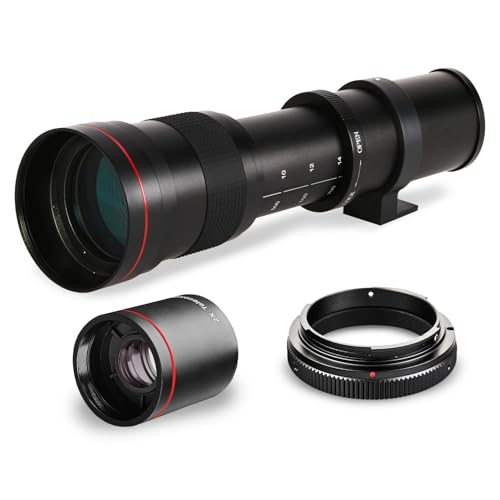
When distance is the whole point, this manual telephoto stretches from 420 to 800mm and reaches 1600mm with its 2X teleconverter. That extreme range targets wildlife, sports, and far-off scenery that ordinary zooms cannot touch. Multi-coated optical glass aims for vibrant, sharp results, and a 62mm filter thread adds protection or effects. It mounts to Panasonic Micro Four Thirds bodies with ease. The heavy caveats are a dim f8.3 aperture and fully manual operation, which together demand bright daylight, a sturdy tripod, and patience. This is a specialist tool for distant subjects, not a casual walk-around lens.
Focal length420 to 800mm
With teleconverter1600mm
Max aperturef8.3
Filter62mm
Pros
- Huge reach for distant subjects
- Teleconverter extends range further
- Multi-coated glass elements
Cons
- Dim f8.3 aperture needs bright light
- Manual focus and tripod essentially required
Check price on Amazon ›
What to look for
Prime or zoom for travel
Primes like the 25mm f1.8 stay small and open wide for dim light, while zooms such as the 40 to 150mm trade some brightness for flexible reach. Many travelers carry one of each to cover close and far without repacking constantly.
Weight is the real currency
Every gram matters when a lens rides on your shoulder all day. A 133 gram prime or a slim pancake keeps you shooting longer, so weigh the reach you gain against the fatigue you accept before adding heavy telephoto glass.
Autofocus versus manual
Autofocus lenses grab fleeting street and family moments, while manual primes reward patience with precise control and often smaller bodies. If you shoot fast and unpredictable scenes, favor autofocus. For deliberate landscapes, manual focus rarely holds you back.
Match the focal length to the trip
Wide options near 14mm and 17mm suit interiors, streets, and architecture, a 25mm feels natural for daily scenes, and long zooms chase wildlife and sports. Picture the trip first, then pack the focal lengths those scenes demand.
Frequently asked questions
Which lens is best for general travel photography?
The SG-image 25mm f1.8 hits a natural view, stays very light, and focuses automatically, making it the easiest single choice for everyday travel scenes.
Do I need autofocus lenses?
Not always. Autofocus helps with fast candids and video, but manual primes like the Laowa 17mm f1.8 work well for landscapes and architecture where you have time to focus.
What lens should I add for distant subjects?
A telephoto zoom such as the Olympus 40 to 150mm reaches an 80 to 300mm equivalent and stays portable. For extreme distance, the 420 to 1600mm manual lens goes much further but needs a tripod.
Are these lenses compatible with my camera?
Most fit standard Micro Four Thirds bodies from Olympus and Panasonic. Check the listed model compatibility, and note some manual lenses need release-without-lens enabled in the menu.
Which lens is smallest for packing light?
The Panasonic 14mm f2.5 pancake has an extremely slim profile, and the 133 gram SG-image prime is also very compact. Both slip into a bag with room to spare.
What is a fisheye lens good for?
The 7Artisans 4mm f2.8 produces a dramatic 225 degree circular view for creative, experimental shots. It is a specialty tool rather than a general travel lens.
Do brighter apertures matter for travel?
Yes for low light and background blur. An f1.8 prime gathers more light than an f4.0 to 5.6 zoom, helping in dim interiors and evenings without pushing ISO too high.
Can I use manual telephoto lenses handheld?
It is difficult. Long manual lenses like the 420 to 1600mm option have narrow apertures and demand a sturdy tripod and bright light for sharp results.
The verdict
SG-image AF 25mm f1.8 Autofocus Prime Lens
9.1/10
For most travelers, the SG-image 25mm f1.8 is the top pick, blending a natural view, low weight, and easy autofocus. Add the Olympus 40 to 150mm zoom when reach matters, or the slim Panasonic 14mm pancake for streets. Manual fans should look at the Laowa 17mm f1.8, while the fisheye and extreme telephoto serve specialists chasing very specific shots rather than everyday framing.
Check price on Amazon ›
Our top pick, secure checkout via Amazon
Note: Availability and specifications change often. Always confirm the current details on Amazon before buying.