Home & Kitchen 9 Meat Tenderizers for Softer, Juicier Cuts
P
By the Pickpedia Team
·9 picks compared
·Last verified September 2026
Affiliate disclosure: As an Amazon Associate, Pickpedia earns from qualifying purchases. Links on this page are paid links, and we may earn a commission at no extra cost to you. This never affects our picks or scores.
Quick answer
For everyday steaks and cutlets, a dual-sided mallet handles both flattening and softening tough fibers. Blade-style tenderizers open marinade channels for deep flavor, while a meat chopper suits ground beef. Match the tool to your cuts, grip comfort, and how you cook most often.
9 Meat Tenderizers for Softer, Juicier Cuts at a glance
Why you can trust this guide
We compared these picks using verified manufacturer specifications, available manuals and documentation, current retailer listings, and patterns in owner feedback, alongside editorial research. We focus on measurable differences such as performance, capacity, usability, and build quality. Pickpedia does not present editorial research as laboratory testing, and we do not claim hands-on testing unless it was actually performed.
How we chose: We compared eight meat tenderizers, weighing head design, grip comfort, cleanup, and how well each suits different cuts and tasks.
A good tenderizer turns tough, chewy cuts into meals that carve easily and cook evenly. Owners generally split between two styles. Mallets pound and flatten, while bladed tools pierce fibers to open marinade channels without changing the shape of the meat.
Your choice depends on what you cook. Steak and cutlet fans lean toward a dual-sided hammer, marinade lovers prefer needle blades, and ground-beef cooks want a chopper. Below, each pick is grounded in its listed features, with one honest limitation noted for every option.
Our top picks
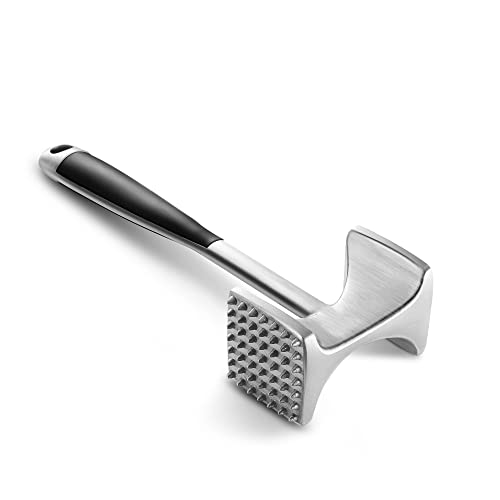
KITEXPERT lists an ergonomic handle meant to let the mallet and gravity carry the effort, which owners tend to appreciate during longer prep. Its dual-sided head pairs a textured face for softening chew with a smooth face for flattening steak. Measuring roughly 9.4 inches long and about 9.5 ounces, it handles crushing ice, garlic, and hard candy too, based on the listing. Cleanup is described as dishwasher safe or a quick rinse. One caveat: reviewers note textured faces can trap minced meat, so the brand recommends washing right after use rather than letting residue set.
Head styleDual-sided textured and smooth
Length9.4 inches
Weight9.5 ounces
CleaningDishwasher safe
Pros
- Comfortable grip eases longer pounding sessions
- Two faces cover softening and flattening
- Doubles for ice, garlic, and nuts
Cons
- Textured side needs prompt washing
- Lighter head means more swings on thick cuts
Check price on Amazon ›
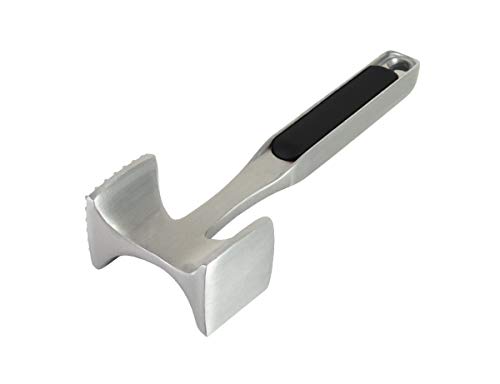
KitchenAid keeps this one simple and light. Aluminum construction gives a strong, durable tool that stays easy to control, which suits cooks who dislike heavier heads. A textured surface works across varied meats, while the smooth side flattens cutlets cleanly. The ergonomic handle includes a hole for hanging storage, a small touch owners often mention. Care is straightforward, with a hand wash in warm water and mild detergent, then a quick dry. The honest tradeoff is that aluminum is not dishwasher friendly here, so you sacrifice some convenience for the lighter, corrosion-resistant build and trusted brand reputation.
MaterialAluminum
Head styleTextured and smooth
StorageHandle hanging hole
CleaningHand wash only
Pros
- Light head is easy to maneuver
- Hanging hole saves drawer space
- Trusted kitchen brand
Cons
- Hand wash only, not dishwasher safe
- Lighter weight demands more force on tough cuts
Check price on Amazon ›
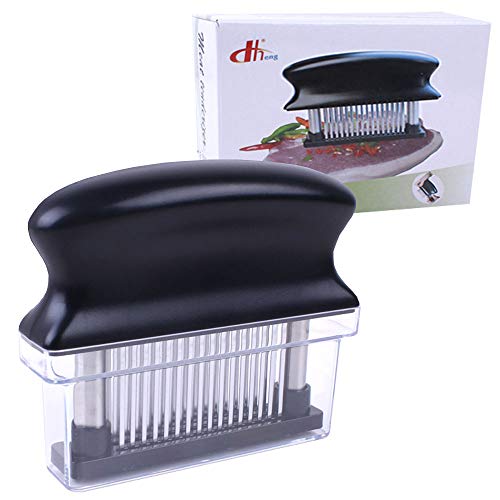
This bladed tool takes a different route from a mallet. Its 48 stainless needles slice tiny channels without changing the shape of the cut, and the listing claims cooking times drop as much as 40 percent while marinade soaks deeper. Blades are sharpened on both sides for lasting performance, and the ABS grip aims for a secure hold. A spring mechanism retracts the needles when no pressure is applied, and a cover isolates them for safer storage. The limitation worth noting is that dozens of fine blades need careful cleaning, so the brand suggests a warm soapy soak and a brush before it goes in the dishwasher.
Blades48 stainless steel needles
SharpeningBoth sides
SafetyAuto-retract with cover
WarrantyOne year
Pros
- Deepens marinade absorption fast
- Keeps the meat's shape intact
- Retracting blades store safely
Cons
- Many fine blades take care to clean
- Sharp needles require cautious handling
Check price on Amazon ›
Built from heavy-duty stainless steel, this dual-sided hammer targets cooks who want a tool made for daily use. The textured face breaks down steak and beef fibers, while the flat face flattens chicken breast, pork, and cutlets evenly. Beyond meat, the listing notes it cracks crab and lobster shells, smashes garlic, crushes nuts, and cracks ice. An ergonomic non-slip handle aims to cut hand fatigue during repeated pounding, and the whole tool is dishwasher safe. The honest caveat: a solid steel head adds heft, so cooks with wrist or grip concerns may find extended sessions more tiring than with a lighter aluminum option.
MaterialStainless steel
Head styleTextured and flat
HandleErgonomic non-slip
CleaningDishwasher safe
Pros
- Sturdy steel build for daily use
- Non-slip handle reduces fatigue
- Cracks shells and nuts too
Cons
- Steel head feels heavy over time
- Metal-on-counter contact can be loud
Check price on Amazon ›
Aliglow leans on a balanced design that lets the mallet and gravity handle the work, which reviewers link to less effort per swing. The textured side suits varied meats like chicken, while the smooth side flattens cutlets for tender, easier-to-chew results. A soft handle absorbs pressure and works comfortably for both left and right-handed users, a thoughtful detail. Made from zinc alloy, it measures about 8.9 inches long with a 2.0 inch head and roughly 10 ounces. It also crushes ice, cracks crab, and shells nuts. The tradeoff is its compact head diameter, which can mean more passes when flattening larger cuts.
MaterialZinc alloy
Length8.9 inches
Head diameter2.0 inches
Weight10 ounces
Pros
- Comfortable for either hand
- Balanced head eases swinging
- Handles ice, crab, and nuts
Cons
- Small head covers less area per pass
- Zinc alloy heavier than aluminum picks
Check price on Amazon ›
GORILLA GRIP centers this mallet on a patented soft-touch rubber handle built for slip resistance and comfort, even during longer prep. The dual-sided aluminum alloy head resists rust and, at 9.6 ounces, aims to maximize force without wearing you out. Measuring 10.4 inches long, the oversized design targets easy control. The flat side flattens cuts to cook evenly, while the textured side hammers down tough proteins for easier chewing. It is BPA-free, food grade, and dishwasher safe. One honest limitation: the larger, longer body takes up more drawer room than compact mallets, so tight kitchens may need to plan storage.
MaterialAluminum alloy
Weight9.6 ounces
Length10.4 inches
SafetyBPA-free, food grade
Pros
- Grippy handle stays secure when wet
- Balanced weight limits fatigue
- Dishwasher safe and food grade
Cons
- Oversized body needs more storage room
- Textured face can splatter thin cuts
Check price on Amazon ›
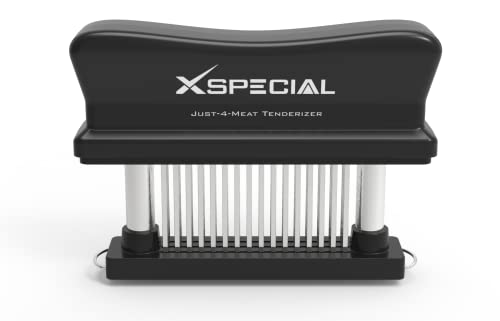
XSpecial answers the biggest complaint about bladed tenderizers, which is cleaning. Its detachable design pops apart so nothing gets trapped, and the components are dishwasher safe for proper hygiene after every use. The 48 stainless steel blades break fibers deeply and create pathways so seasonings reach the core, which owners say speeds up marinade flavor considerably. A rust-resistant, weighted build delivers steady pressure with a secure grip, and the blades are engineered for even coverage across the cut. The honest caveat is that a detachable tool has parts to reassemble, so you trade a little setup time for the far simpler cleanup.
Blades48 stainless steel
DesignDetachable for cleaning
MaterialRust-resistant steel
CleaningDishwasher safe parts
Pros
- Comes apart for thorough cleaning
- Opens deep marinade channels
- Weighted grip applies even pressure
Cons
- Parts need reassembly after washing
- Sharp blades demand careful handling
Check price on Amazon ›
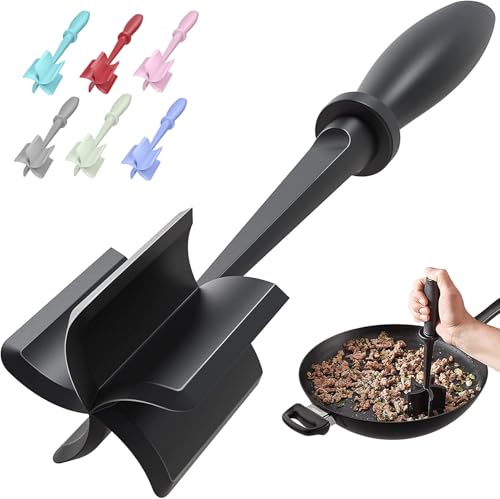
PGYARD serves a different job entirely, breaking up ground meat rather than pounding cuts. Its five wide beveled pinwheel blades chop and crumble ground beef, turkey, and chicken faster than three or four-blade designs, per the listing. Made from solid nylon that is BPA-free and non-stick, it resists heat up to 447 degrees Fahrenheit, so it is safe on non-stick and coated cookware. Cleanup is easy in the sink or dishwasher, and it comes in seven colors. The clear limitation is that it is not made for frozen meat and should not sit in a hot pan too long, so it stays a cooked-food tool.
Blades5 beveled pinwheel
MaterialNylon, BPA-free
Heat resistance447 degrees Fahrenheit
ColorsSeven options
Pros
- Crumbles ground meat quickly
- Safe on non-stick cookware
- Easy sink or dishwasher cleanup
Cons
- Not for frozen meat
- Should not sit long in a hot pan
Check price on Amazon ›
OXO brings its familiar Good Grips comfort to a two-in-one tool for pounding and tenderizing poultry, pork, and beef. The textured side uses pyramid-shaped teeth to soften fibers, while the smooth side maximizes surface area to flatten meat quickly. Owners often point to the head, whose angle and weight are optimized for efficient flattening, meaning fewer tiring swings. Soft, non-slip grips keep it controllable even in wet hands, and it is dishwasher safe for easy sanitizing. The honest tradeoff is a straightforward, no-frills feature set. It does not double as a nut cracker or ice crusher the way some rival mallets advertise.
Head stylePyramid teeth and smooth
HandleSoft non-slip grip
DesignWeighted for flattening
CleaningDishwasher safe
Pros
- Comfortable grip in wet hands
- Balanced head flattens efficiently
- Dishwasher safe for quick cleanup
Cons
- Fewer extra uses than rivals
- Simple feature set only
Check price on Amazon ›
What to look for
Mallet or blades, which style fits you
Mallets pound and flatten, well suited to steak, cutlets, and evening out thickness so meat cooks uniformly. Bladed tenderizers pierce fibers to open channels for marinade without altering shape. Marinade-focused cooks favor blades, while those flattening cutlets reach for a mallet. Some kitchens keep both for full coverage.
Weight and handle comfort
Head weight decides how much effort each swing takes. Heavier steel heads deliver force in fewer strikes but can tire wrists over time. Lighter aluminum needs more passes yet feels nimble. A non-slip, ergonomic handle matters most if you tenderize often or work with wet hands.
Cleaning and hygiene
Raw meat contact makes cleanup a safety issue, not just convenience. Smooth mallets rinse fast, while textured faces trap residue, so wash them promptly. Bladed tools need extra care, and detachable designs simplify that considerably. Dishwasher-safe labeling helps, though some aluminum tools call for hand washing only.
Versatility beyond meat
Many mallets double as kitchen multitaskers, cracking crab shells, crushing ice and garlic, or shelling nuts. If drawer space is tight, that flexibility earns its keep. Purpose-built tools like a ground-meat chopper trade versatility for speed on one specific job, so match the tool to your routine.
Frequently asked questions
Do I need a mallet or a bladed tenderizer
It depends on your goal. Choose a mallet to flatten cutlets and even out thickness. Pick a bladed tool to open channels that pull marinade deep into the cut without changing its shape.
Which side of the mallet do I use
Use the textured or teeth side to break down tough fibers and soften chew. Switch to the smooth flat side to pound and flatten meat evenly for faster, more consistent cooking.
Are bladed tenderizers safe to use
Yes, when handled carefully. Many include covers and auto-retracting needles that hide the blades when no pressure is applied. Keep fingers clear during use and store with the guard in place.
Can these tools go in the dishwasher
Several are dishwasher safe, and detachable bladed models simplify deep cleaning. Some aluminum mallets, though, call for hand washing only, so check the product's care notes before your first wash.
What weight should I look for
Heavier heads apply more force per strike but can tire your hands sooner. Lighter heads feel easy to control but need more passes. Reviewers often favor a balanced head that limits fatigue without sacrificing power.
Will a tenderizer work on frozen meat
Most mallets and blades are meant for thawed cuts. Ground-meat choppers are for cooked food only. Frozen meat can damage blades or nylon tools, so thaw first for the best results and longer tool life.
Can one tool handle both steak and ground beef
Not usually. Mallets and bladed tenderizers work on whole cuts, while a chopper crumbles ground beef in the pan. Cooks who do both often keep a mallet and a separate meat chopper on hand.
How do textured faces affect flavor
Breaking fibers helps marinades and seasonings penetrate deeper, which owners link to juicier, more flavorful results. Bladed channels take this further, letting flavor reach the core in less time than surface pounding alone.
The verdict
KITEXPERT Meat Tenderizer Hammer with Comf...
9.1/10
The KITEXPERT hammer earns our top pick for its comfortable grip and all-around dual-sided design. Marinade lovers should reach for the 48-blade tenderizer, while the OXO Good Grips suits anyone who flattens often and wants wet-hand control. Ground-beef cooks are better served by the PGYARD chopper. Choose by your cuts, your grip comfort, and how often you cook, and any of these will earn a place in your kitchen.
Check price on Amazon ›
Our top pick, secure checkout via Amazon
Note: Availability and specifications change often. Always confirm the current details on Amazon before buying.