Lenses 8 Macro Lenses for Sharp Close-Up Photography
P
By the Pickpedia Team
·8 picks compared
·Last verified October 2026
Affiliate disclosure: As an Amazon Associate, Pickpedia earns from qualifying purchases. Links on this page are paid links, and we may earn a commission at no extra cost to you. This never affects our picks or scores.
Quick answer
For beginners, a clip-on macro lens is the simplest way to shoot sharp close-ups without a full camera. Match magnification to your subject: 10x to 15x suits flowers, coins, and insects, while dedicated kits with fill light or filters add polish for new shooters.
8 Macro Lenses for Sharp Close-Up Photography at a glance
Why you can trust this guide
We compared these picks using verified manufacturer specifications, available manuals and documentation, current retailer listings, and patterns in owner feedback, alongside editorial research. We focus on measurable differences such as performance, capacity, usability, and build quality. Pickpedia does not present editorial research as laboratory testing, and we do not claim hands-on testing unless it was actually performed.
How we chose: We compared eight macro options across magnification, working distance, build, and how forgiving each is for first-time close-up shooters.
Macro photography rewards patience, and beginners often get there fastest with a clip-on lens that turns a phone into a close-up tool. Most kits here mount in seconds, need no app, and reveal textures your eye alone misses.
Choosing well comes down to magnification, working distance, and whether extras like a light or polarizer help your subjects. We grounded every note below in the maker specifications and what reviewers commonly report, so you know each real strength and where it falls short.
Our top picks
Xenvo pairs a Clarus 15x macro lens with a wide angle option, a clip, and a rechargeable GlowClip LED fill light, which makes it a rounded first kit. The macro glass captures fine detail when positioned about half an inch from the subject, and the warm light with three brightness settings helps in dim rooms where phone flash looks harsh. Aircraft-grade aluminum and coated glass keep flare in check, according to the maker. The lanyard and case make it travel-ready. One catch: the tight working distance means you cannot shoot skittish or distant subjects, so it favors still close-ups.
Macro magnification15x (Clarus)
Also included0.45x wide angle lens
Working distanceAbout 1/2 inch
ExtrasRechargeable LED, clip, case, lanyard
Pros
- Includes fill light for low-light close-ups
- Wide angle lens adds versatility
- Sturdy aluminum and coated glass build
Cons
- Very short working distance limits subjects
- More parts to carry than single-lens kits
Check price on Amazon ›
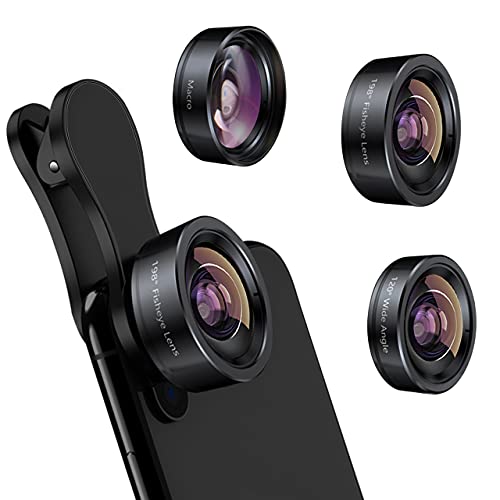
KEYWING bundles three separate lenses, so a beginner can explore a 20x macro, a 120 degree wide angle, and a 198 degree fisheye from one clip. The macro focuses best between 1.18 and 3.54 inches, giving a little more room than tighter close-up lenses. Lanthanide optical glass in an aluminum shell aims to cut reflection and ghosting, and the soft-rubber clip guards against scratches. It suits playful experimentation more than pure precision work. Note the maker advises removing your phone case and avoiding the zoom camera, since the lens must sit over the main sensor, which trips up some newcomers at first.
Macro magnification20x
Macro focus range1.18 to 3.54 inches
Also included120 wide, 198 fisheye
MountUniversal clip, soft rubber
Pros
- Three lenses cover many creative styles
- Slightly roomier macro focus range
- Padded clip protects the phone
Cons
- Must remove case and avoid zoom lens
- Three lenses mean more to align correctly
Check price on Amazon ›
Ailun offers a familiar three-lens formula with a 10x macro, a 0.65x wide angle, and a 180 degree fisheye on a detachable clamp. Lanthanide optical glass and top-grade aluminum aim to reduce glare while holding up to daily handling. The clamp fits most phones with a single rear camera and lenses under 13mm. For macro, owners suggest keeping one to two centimeters from the subject for crisp results. Two honest quirks: the wide angle must be used together with the macro element, and some Android phones may show vignetting, which the maker suggests cropping out in editing. Simple and approachable overall.
Macro magnification10x
Also included0.65x wide, 180 fisheye
Suggested distance1 to 2 cm
Fits camerasUnder 13mm diameter
Pros
- Approachable three-lens starter
- Detachable clamp with soft rubber
- Works across many single-camera phones
Cons
- Wide lens only works paired with macro
- Possible vignetting needs cropping on some phones
Check price on Amazon ›
APEXEL focuses on one job and does it with a 10x macro built from five glass elements, each carrying three to five coating layers to lift transmission and cut reflection. The larger lens cone and exit pupil help produce softer, more natural background blur than many pocket lenses, and the maker claims no distortion or dark corners. Soft silicone feet clip on without an app or special case, with an optimum distance of roughly four to seven centimeters. It is a strong pick for detail-focused beginners. The single limitation is scope: this is macro only, with no wide or fisheye options, and it should not be cleaned with alcohol.
Macro magnification10x
Optics5 glass elements, coated
Working distance4 to 7 cm (1.5 to 2.7 in)
MountSilicone feet clip, no app
Pros
- Multi-element glass for cleaner detail
- Pleasant natural background blur
- Comfortable roomier working distance
Cons
- Macro only, no wide or fisheye
- Avoid alcohol when cleaning the coating
Check price on Amazon ›
This Krunia camera steps away from clip-on lenses, offering a standalone point-and-shoot with 5K video, 80MP photo output, and both wide-angle and macro lenses in the box. Responsive autofocus and simple controls target teens, students, and first-time users, while a 180 degree flip screen suits selfies and vlogging. A built-in flash and nineteen creative filters help in low light and for quick sharing. For someone who wants close-ups plus everyday video without a phone, it covers a lot. Keep expectations realistic, though: high stated megapixel counts do not guarantee true detail, and it is bulkier than a slim lens clip.
TypeStandalone digital camera
Video5K recording
Photo output80MP stated
Lenses includedWide angle and macro
Pros
- Standalone, no phone required
- Flip screen aids selfies and vlogging
- Bundled wide and macro lenses
Cons
- High megapixel claim can overstate real detail
- Bulkier than a clip-on lens
Check price on Amazon ›
This iPhone-oriented kit pairs a macro and wide angle lens with a CPL polarizing filter, a step most starter sets skip. The macro reveals textures on flowers, insects, jewelry, and crafts, while the wide angle opens up landscapes and indoor scenes with minimal distortion. The polarizer cuts glare and reflections, deepening skies and colors, which genuinely helps outdoor beginners. A 47 to 52mm adapter ring broadens phone compatibility, and the light kit makes an easy gift. The trade-off is that it leans toward iPhone fit through the adapter ring, so Android users should confirm mounting before buying.
LensesMacro and wide angle
ExtraCPL polarizing filter
Adapter47 to 52mm ring
Best forClose-ups and outdoor scenes
Pros
- Included polarizer tames glare outdoors
- Macro plus wide covers many scenes
- Adapter ring widens compatibility
Cons
- Geared mainly toward iPhone fit
- Android users must verify mounting first
Check price on Amazon ›
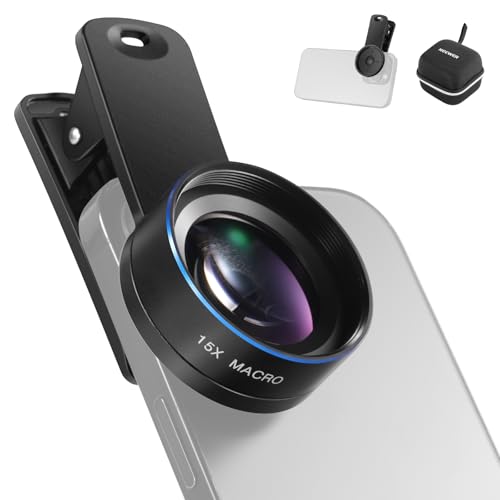
NEEWER strips things back to essentials with a 15x macro lens on a threaded 37mm clamp, focusing on function over extras. It shoots at a 0.8 to 1.6 inch distance, pulling fine detail from insects, coins, jewelry, and plants with a natural bokeh effect. HD optical glass in two elements minimizes glare and ghosting, and protective coatings resist water, fingerprints, and scratches. The aluminum alloy shell reads as durable for outdoor use. It stays compatible with recent iPhone and Galaxy models. Beginners should note vignetting can appear on some phones, fixed by tightening the lens and nudging magnification slightly past 1x.
Macro magnification15x
Working distance0.8 to 1.6 inches
Optics2 element HD glass, coated
Clamp37mm threaded
Pros
- Simple, well-built single macro lens
- Coatings resist water and scratches
- Threaded clamp holds the lens securely
Cons
- Vignetting possible on some phone models
- No bonus wide or fisheye lenses
Check price on Amazon ›
K&F Concept aims squarely at DJI Osmo Pocket 4 and 3 owners with a 10x close-up lens that snaps on magnetically for fast swaps. It supports an ultra-close 20 to 40mm focusing distance, drawing out fine detail for macro video and stills. Imported AGC optical glass targets accurate color with little effect on image quality, while 28 multilayer coatings repel water, dust, and grease and resist scratches. A protective case is included. For gimbal shooters, this is a tidy, purpose-built upgrade. The obvious limitation is fit: it only works with the Osmo Pocket 4 and 3, so it suits no phone or other camera.
Macro magnification10x
Focus range20 to 40mm
MountMagnetic, quick swap
Coatings28 multilayer, protective
Pros
- Fast magnetic mount for gimbal use
- Quality AGC glass keeps color accurate
- Durable multilayer coatings
Cons
- Fits only DJI Osmo Pocket 4 and 3
- No use with phones or other cameras
Check price on Amazon ›
What to look for
Match magnification to your subject
Higher numbers are not automatically better. A 10x lens gives a wider, more forgiving frame that beginners find easier to hold steady, while 15x to 20x pulls in tiny textures on coins or insect wings. Start lower, then reach for more magnification once you are comfortable filling the frame.
Mind the working distance
Every macro lens has a sweet spot, often half an inch to a few centimeters. Sit too close or too far and the shot goes soft. Check each lens's stated distance and practice sliding gently until detail snaps into focus, since this hand control matters more than any spec.
Light your close-ups
At tight distances your phone or hand can shade the subject. A small fill light, like the one bundled with some kits, spreads soft even light and beats a harsh built-in flash. Outdoors, a polarizing filter cuts glare on shiny petals, water, and glass for richer color.
Expect and fix vignetting
Dark corners show up on some phones, especially certain Android models. Makers commonly suggest tightening the lens, disabling macro mode, or nudging zoom just past 1x. Light cropping in editing removes the rest, so a little post-processing is normal rather than a defect.
Frequently asked questions
Do I need a full camera to start macro photography?
No. A clip-on lens turns a phone you already own into a capable close-up tool, and several kits here add wide or fisheye options too. A standalone beginner camera with a bundled macro lens is another route if you prefer not to use a phone.
What magnification should a beginner choose?
A 10x lens is the friendliest starting point because the frame is easier to fill and hold steady. Once you are confident, 15x or 20x lenses reveal even finer detail on subjects like insects, coins, and jewelry.
How close do I hold the lens to my subject?
It depends on the lens, but many work best from about half an inch to a few centimeters away. Check the stated working distance, then slide slowly toward or away from the subject until the detail looks sharp on screen.
Why are the corners of my photos dark?
That is vignetting, common on some phone models. Try tightening the lens, turning off macro mode, or zooming just past 1x. Any remaining dark edges crop away cleanly in editing.
Can I use these lenses with a phone case on?
Often not. Several makers advise removing the case so the lens sits flush over the main camera. Some kits also warn against using the zoom lens, since the attachment must cover the primary sensor.
Do these lenses work on both iPhone and Android?
Most clip-on kits fit a wide range of phones with a single rear camera. A few, like adapter-ring iPhone kits or the DJI Osmo Pocket lens, are made for specific devices, so confirm compatibility before buying.
Will a fill light or polarizer really help?
Yes, in the right setting. A soft fill light lifts detail in dim rooms without the harshness of phone flash, while a polarizing filter cuts glare and deepens color when shooting shiny outdoor subjects.
How do I keep macro shots sharp?
Steady hands matter most. Brace your elbows, tap to focus, and consider a small tripod for still subjects. Clean the lens first, since fingerprints and dust show clearly at close range.
The verdict
Xenvo Pro Lens Kit for iPhone and Android,...
9.2/10
For most beginners, the Xenvo Pro kit is our top pick, since its 15x macro, wide angle, and fill light cover the basics in one bag. Detail seekers should look at the multi-element APEXEL, outdoor shooters at the CPL-equipped iPhone kit, and minimalists at the well-built NEEWER 15x. Osmo Pocket owners get the tidiest fit from K&F Concept. Start with the magnification and working distance that match your subjects, then build from there.
Check price on Amazon ›
Our top pick, secure checkout via Amazon
Note: Availability and specifications change often. Always confirm the current details on Amazon before buying.