Lenses 8 Lenses That Cover a Full Wedding Day Well
P
By the Pickpedia Team
·8 picks compared
·Last verified October 2026
Affiliate disclosure: As an Amazon Associate, Pickpedia earns from qualifying purchases. Links on this page are paid links, and we may earn a commission at no extra cost to you. This never affects our picks or scores.
Quick answer
A wedding day needs one bright zoom for ceremony reach plus a fast prime for portraits and low light. Pair those with a few creative refraction or diffusion filters for artistic frames. Choose glass that matches your mount, focuses fast, and stays light enough to carry all day.
8 Lenses That Cover a Full Wedding Day Well at a glance
Why you can trust this guide
We compared these picks using verified manufacturer specifications, available manuals and documentation, current retailer listings, and patterns in owner feedback, alongside editorial research. We focus on measurable differences such as performance, capacity, usability, and build quality. Pickpedia does not present editorial research as laboratory testing, and we do not claim hands-on testing unless it was actually performed.
How we chose: We compared eight kits across eight listings, weighing aperture, autofocus, mount fit, weight, and the creative looks each piece delivers.
Covering a full wedding means shifting from wide vows to distant kiss shots without missing a beat. Reach, brightness, and quick focus decide whether you catch fleeting moments or lose them. This roundup mixes working glass with creative tools reviewers reach for during receptions.
Based on specifications and what owners report, we grouped picks by job rather than by hype. Some entries are true lenses, while others are prisms, diffusion filters, or novelty gifts a photographer might enjoy. Read each honestly and build the kit that fits your camera and shooting style.
Our top picks
This bright f/2.8 telephoto zoom sits at the heart of most wedding kits, and Canon built it for the RF mount. A constant f/2.8 aperture keeps subjects lit during dim ceremonies while separating them from busy backgrounds. Optical stabilization rated up to five stops steadies handheld shots, and dual Nano USM drives fast, quiet autofocus that suits solemn moments. Owners report a compact, lightweight build for its class, plus a close focusing distance near 2.3 feet for detail frames. It fits full frame RF bodies like the R5 and R6. One limitation worth noting: it works only on Canon RF mount cameras, so DSLR and rival shooters cannot use it.
TypeTelephoto zoom lens
ApertureConstant f/2.8
StabilizationUp to 5 stops
MountCanon RF full frame
Pros
- Bright constant f/2.8 across the zoom range
- Fast, quiet dual Nano USM autofocus
- Compact and light for a professional telephoto
Cons
- Limited to Canon RF mount bodies
- Telephoto reach less useful in tight venues
Check price on Amazon ›
Rather than a lens, this is a handheld prism you hold in front of any lens to bend light into creative refractions. Because it is not threaded, it works independent of focal length and pairs with most cameras, which the maker highlights. A two-finger handle lets you control the effect quickly, so you can add ghosting and multi-refraction to portraits, night scenes, and landscapes. Solid optical glass gives high light transmittance, according to the listing. It suits reception experimentation when you want unexpected frames between formal shots. The honest limitation: results depend heavily on your handling and lighting, so it takes practice, and the effect can distract if overused during key wedding moments.
TypeHandheld prism filter
CompatibilityMost cameras, any focal length
GripTwo-finger handle
MaterialSolid optical glass
Pros
- Works with almost any lens and camera
- Simple handle makes effects easy to control
- Adds refraction without editing software
Cons
- Effect quality depends on your technique
- Handheld use slows down fast-moving shoots
Check price on Amazon ›
Wedding portraits often benefit from a gentle glow, and this Grade 1 diffusion filter delivers exactly that. It softens fine facial details, blemishes, and wrinkles while glowing highlights and mildly lowering contrast for an ethereal feel. Tiffen builds it with ColorCore glass for consistent optical performance, and the slim profile helps reduce vignetting on many wide-angle lenses. Made in New York, it targets portraits, weddings, and video content where subjects should look their best yet realistic. Its sparkling front face can even help subjects feel welcome on camera. The clear limitation is fit: at 58mm it suits only matching threads, and the diffusion effect is baked in, so you cannot fully remove it later.
TypeDiffusion filter
GradeGlimmerglass 1
Thread58mm
GlassTiffen ColorCore
Pros
- Softens skin while keeping a natural look
- Slim profile limits wide-angle vignetting
- Glowing highlights suit wedding portraits
Cons
- Single 58mm thread size only
- Baked-in effect cannot be undone in post
Check price on Amazon ›
This handcrafted filter turns light into a warm liquid golden glow that spreads softly across the frame. Reviewers note it produces dreamy highlights and cinematic diffusion, which flatters portraits, golden hour sessions, and wedding films. A specialized liquid optical structure reacts dynamically to light, so each scene generates its own glowing textures. Designed for photographers, filmmakers, and content creators, it aims to add mood directly in camera without editing. The 77mm thread fits lenses supporting that diameter and slots into professional setups. Honest limitation: the strong golden cast is a stylistic choice that will not suit every couple or venue, and the fixed 77mm size restricts which lenses can mount it.
TypeGolden glow diffusion filter
Thread77mm
BuildHandcrafted liquid optical
LookWarm cinematic highlights
Pros
- Adds warm cinematic glow in camera
- Reacts naturally to changing light
- Suits golden hour and wedding film work
Cons
- Strong golden cast will not fit every scene
- Locked to 77mm thread lenses
Check price on Amazon ›
Sold as a three-piece set, these prismatic filters let you add blur and refraction effects that a bare lens cannot create. Each is designed for focal lengths from 30mm to 85mm with apertures from 1.4 to 5.6, matching common wedding primes. High quality LED crystal gives a refractive index near 1.6 for bright, brilliant refractions, and the crystals are micro polished like high-end lenses. A thin 5mm profile ring helps reduce vignetting at wide angles, and the mirror finish adds its own creative reflections. A carrying case keeps them handy so you can grab one for a few frames, then keep shooting. The limitation: they are handheld tools that reward practice, so rushed use during key moments can produce messy results.
TypePrism filter set
Pieces3-pack
Focal range30mm to 85mm
Ring profile5mm thin
Pros
- Three prisms for varied creative looks
- Thin ring limits wide-angle vignetting
- Carrying case keeps them shoot-ready
Cons
- Handheld use needs practice to control
- Best within a set focal and aperture range
Check price on Amazon ›
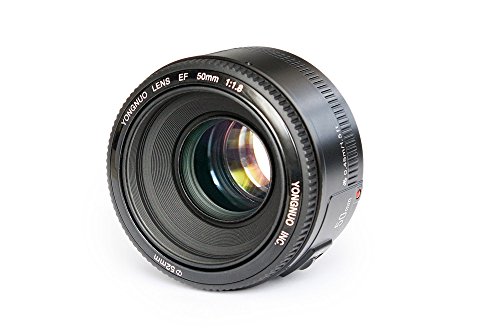
A fast fifty is a wedding workhorse, and this f/1.8 prime gives you a bright aperture for blurred backgrounds and dim reception light. It supports both auto and manual focus across full frame and APS-C Canon EF bodies, using a six-element, five-group design. A focus distance indicator marks a 0.45 meter minimum, helping you gauge depth of field, while multi-coated glass improves light transmission. It records aperture data in EXIF and works in M, Av, Tv, and P modes, and gold-plated contacts aim to improve signal reliability. The honest limitation: it fits only Canon EF mount cameras, and as a straightforward prime it lacks image stabilization, so slow shutter handheld shots need steady hands.
TypeStandard prime lens
Aperturef/1.8
MountCanon EF
Min focus0.45 meter
Pros
- Bright f/1.8 for low light and blur
- Auto and manual focus on EF bodies
- EXIF aperture data across shooting modes
Cons
- Canon EF mount only
- No image stabilization built in
Check price on Amazon ›
Not a lens at all, this is a novelty mug shaped like an EF 24-105mm lens, and it makes a fun gift for a wedding photographer. The bundle includes a non-spill screw-on lid, a retractable sipper lid, a stainless steel spoon, and a bag. Insulated stainless steel lining keeps drinks hot longer, while a food grade ABS outer shell keeps hands cool. It holds about 13.5 ounces without the lid and 11 ounces sealed, and the maker pitches it as a conversation starter on set. It also works for cold drinks or as a pen holder. The obvious limitation: it captures no photos, so treat it as a gift or desk piece, never as shooting gear.
TypeNovelty lens-shaped mug
Capacity13.5oz open, 11oz sealed
LiningInsulated stainless steel
Bundle2 lids, spoon, bag
Pros
- Realistic lens replica photographers enjoy
- Two screw-on lids resist spills
- Insulated lining keeps drinks warm longer
Cons
- Purely a gift, takes no photos
- Smaller sealed capacity with lid attached
Check price on Amazon ›
This double sided filter creates ghosting and prism-style refractions directly in camera, so you skip extra editing steps for artistic frames. It uses a 77mm thread that mounts matching lenses, and an included adapter widens compatibility to other diameters. Premium optical glass in an aluminum alloy frame delivers clear results while supporting durability through frequent shoots. Rotating the filter changes the effect, letting you explore multiple refractions, with a recommended aperture range from 2.8 to 7.0 for creative control. Reviewers point to weddings, music videos, commercials, and night photography as ideal scenes. The limitation: the ghosting look is a strong stylistic effect, so it suits accent frames more than every shot, and it needs a lens near 77mm or the adapter.
TypeDouble sided prism filter
Thread77mm with adapter
FrameAluminum alloy
Aperture range2.8 to 7.0
Pros
- Ghosting and refraction without editing
- Rotate to vary the effect on demand
- Adapter widens lens compatibility
Cons
- Strong effect best used for accent shots
- Needs 77mm thread or the adapter
Check price on Amazon ›
What to look for
Start with two working lenses
Most wedding days run smoothly on a bright telephoto zoom plus a fast prime. The zoom handles ceremony reach and candid moments from a distance, while the prime opens wide for portraits and dim reception light. Everything else in a kit is a creative accent.
Match the mount before anything
A lens is only useful if it fits your camera. Canon RF glass suits mirrorless EOS R bodies, while an EF prime fits DSLR and adapted setups. Confirm the mount and thread size so your purchase actually attaches and communicates.
Use filters as accents, not crutches
Prisms and diffusion filters add mood, glow, and refraction that raw lenses cannot. They shine for a handful of artistic frames, yet handheld prisms reward practice. Capture your safe, sharp shots first, then experiment when the timeline allows.
Weight and focus speed matter all day
Weddings run long, so a lighter body-and-lens combo saves your arms across hours of shooting. Fast, quiet autofocus keeps solemn moments undisturbed and catches fleeting expressions. Owners consistently report these traits shape whether a kit feels enjoyable or exhausting.
Frequently asked questions
What lens covers the most of a wedding day?
A bright telephoto zoom such as a 70-200mm f/2.8 covers ceremonies, candids, and detail shots from a respectful distance. Pair it with a fast prime for portraits and low light, and you can shoot most of the day comfortably.
Do I need a prime lens if I have a zoom?
A fast prime like an f/1.8 fifty adds brighter light gathering and stronger background blur than most zooms. For dim receptions and flattering portraits, that extra brightness helps, so many photographers carry both a zoom and a prime.
Are prism and diffusion filters worth using at weddings?
They add creative refraction, ghosting, or a soft glow that plain lenses cannot produce. Reviewers use them for a handful of artistic frames rather than every shot. Get your reliable images first, then add these accents when time allows.
Will these lenses fit any camera?
No. The Canon RF zoom fits only RF mount mirrorless bodies, and the YONGNUO prime fits Canon EF mount cameras. Always confirm your mount and, for filters, the thread diameter before buying.
What does image stabilization do for wedding shots?
Stabilization steadies handheld frames, which helps in dim venues where shutter speeds drop. The telephoto zoom here lists up to five stops of correction, while the fifty prime has none, so steady hands or higher shutter speeds matter with it.
Can beginners use handheld prism filters?
Yes, though results depend on your handling and lighting. A simple handle lets you control the effect, but it takes practice to place refractions well. Start during relaxed moments before trying them on key wedding shots.
Which filter thread size do I need?
Match the filter to your lens thread, printed on the lens or inside the cap. Several picks here use 77mm, one uses 58mm, and some prisms are handheld and need no thread at all.
Is the lens-shaped coffee mug usable gear?
No. It is a novelty gift shaped like a lens, with insulated lids and a spoon. It takes no photos, so treat it as a fun present for a photographer rather than shooting equipment.
The verdict
Canon RF 70-200mm F2.8 L IS USM Telephoto...
9.4/10
For most couples, the Canon RF 70-200mm f/2.8 is the anchor lens, pairing reach with bright, quiet focus on RF bodies. Add the YONGNUO YN50mm f/1.8 as a fast prime for portraits and dim receptions on Canon EF. Reach for the Tiffen Glimmerglass or Fractal prisms when you want creative, flattering accents, and keep the lens-shaped mug as a fun gift, not gear.
Check price on Amazon ›
Our top pick, secure checkout via Amazon
Note: Availability and specifications change often. Always confirm the current details on Amazon before buying.