Lenses 5 L-Mount Lenses Made for Smooth Video Work
P
By the Pickpedia Team
·5 picks compared
·Last verified October 2026
Affiliate disclosure: As an Amazon Associate, Pickpedia earns from qualifying purchases. Links on this page are paid links, and we may earn a commission at no extra cost to you. This never affects our picks or scores.
Quick answer
For smooth L-mount video, prioritize quiet stepping-motor autofocus, a clickable aperture ring, and a focal length that suits your scenes. The Viltrox 16mm leads for wide interior work, while the Panasonic 24-60mm covers most shooting situations. Lightweight primes suit run-and-gun creators wanting minimal gear.
5 L-Mount Lenses Made for Smooth Video Work at a glance
Why you can trust this guide
We compared these picks using verified manufacturer specifications, available manuals and documentation, current retailer listings, and patterns in owner feedback, alongside editorial research. We focus on measurable differences such as performance, capacity, usability, and build quality. Pickpedia does not present editorial research as laboratory testing, and we do not claim hands-on testing unless it was actually performed.
How we chose: We compared five L-mount options across autofocus quietness, aperture control, focal reach, and video-friendly handling.
L-mount cameras from Panasonic, Leica, and Sigma share one growing lens ecosystem, and video shooters now have real choice. What matters most for motion work is quiet autofocus, smooth aperture transitions, and glass that stays sharp wide open. This roundup groups options by shooting style rather than by one narrow use case.
Every pick here is judged on published specifications, owner feedback, and how each design handles common video tasks. We flag a real limitation on each item so you can match the right tool to your workflow. Nothing here was tested in a lab, and claims stay grounded in stated features.
Our top picks
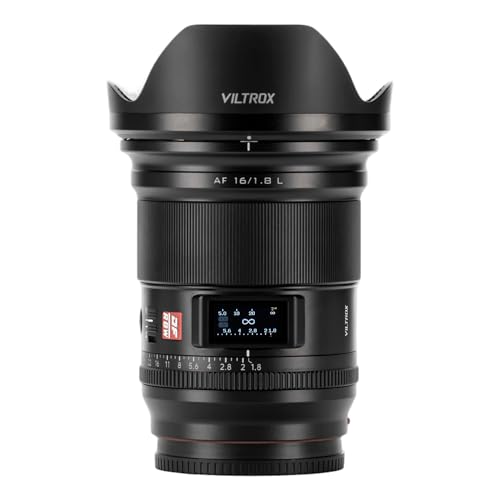
This 16mm prime pairs a bright F1.8 aperture with an STM stepping motor, so autofocus stays fast and nearly silent during clips. Its 15-element design with four ED and three aspheric elements aims to control chromatic aberration and distortion for clean edges. A dedicated aperture ring, click switch, and electronic display give tactile control that video shooters appreciate. Close focus reaches 0.27m with 0.1x magnification for detail inserts. Owners report smooth background blur in dim rooms. One tradeoff: at 16mm the ultra-wide field can distort faces up close, so it favors environments over portraits.
Focal Length16mm
ApertureF1.8
Min Focus0.27m
AutofocusSTM stepping motor
Pros
- Bright aperture handles low light
- Quiet, quick autofocus for clips
- Aperture ring and click switch
Cons
- Ultra-wide distorts close faces
- Single fixed focal length
Check price on Amazon ›
Covering 24mm through 60mm at a steady F2.8, this zoom handles landscapes, portraits, and talking-head video without lens swaps. A focus ring that doubles as a customizable control ring lets you shift aperture or exposure mid-shot, a first for the S Series. Linear and non-linear manual focus modes support seamless pulls between subjects. Closest focus of 0.62ft with 0.3x magnification brings you near small objects. Hybrid Zoom extends reach on supported bodies. The main limit: the 24-60mm range is shorter than many kit zooms, so distant subjects need extra reach.
Focal Range24-60mm
ApertureF2.8 constant
Max Magnification0.3x
FocusLinear/non-linear MF
Pros
- Constant F2.8 across the range
- Customizable control ring
- Smooth manual focus pulls
Cons
- Range shorter than typical zooms
- Hybrid Zoom limited to certain bodies
Check price on Amazon ›
This two-pack kit is not a lens, but it keeps your video kit safe between shoots. The body cap shields the sensor and internal components from dust and moisture, while the rear cap guards lens elements against scratches and fingerprints. Both are made from lightweight ABS and fit Panasonic LUMIX S5II, S1, S1R, S1H, Leica SL, CL, and Sigma FP bodies and lenses. It also replaces the Leica T body cap and SL rear cap. Reviewers note the fit is snug on listed models. The obvious limit: it protects gear rather than capturing footage, so treat it as an accessory.
TypeBody + rear caps
Pack2 sets
MaterialABS plastic
FitPanasonic, Leica, Sigma L
Pros
- Guards sensor and rear elements
- Broad L-mount compatibility
- Lightweight spare set
Cons
- Not an imaging lens
- Fit tied to listed models
Check price on Amazon ›
A 114-degree field opens up cramped interiors, sweeping landscapes, and starry skies where standard lenses feel boxed in. The F2.8 aperture pulls in enough light for nightscapes and city scenes, and dual aspherical elements in a 13-element design aim to keep distortion near zero. Eight aperture blades render crisp sunstars around point lights. A full-metal body weighs about 440g, staying manageable for travel and street work. Owners appreciate the compact build. One clear tradeoff: this is a manual-focus lens without a stepping motor, so run-and-gun autofocus video is off the table.
Focal Length14mm
ApertureF2.8
Field of View114 degrees
WeightAbout 440g
Pros
- Very wide framing for tight spaces
- Controlled distortion design
- Compact all-metal body
Cons
- Manual focus only
- No autofocus motor for video
Check price on Amazon ›
Weighing only about 90g, this 40mm prime almost disappears on a gimbal or a small body. Its STM stepping motor supports real-time face and eye tracking, so subjects stay sharp in both video and stills. The F2.5 aperture delivers soft, atmospheric bokeh with a hint of bubble character, and it gathers enough light for dim scenes. A 40mm view balances scene context with subject focus, suiting street and market footage. A clicked aperture ring and one-touch AF/MF switch speed up handling. The tradeoff: F2.5 is dimmer than faster primes, so extreme low light needs support.
Focal Length40mm
ApertureF2.5
WeightAbout 90g
AutofocusSTM with eye tracking
Pros
- Extremely light and portable
- Reliable eye and face tracking
- Handy aperture and AF/MF controls
Cons
- Aperture dimmer than fast primes
- Single focal length only
Check price on Amazon ›
What to look for
Match the focal length to your scenes
Wide primes near 14mm to 16mm exaggerate space and suit interiors, architecture, and vlogging at arm's length. A 40mm feels natural for street and interviews, while a 24-60mm zoom bridges most situations. Pick the range you shoot most, then fill gaps later.
Quiet autofocus keeps audio clean
Video punishes noisy focus motors because on-camera mics pick up every whir. Stepping-motor designs, labeled STM here, move smoothly and near silently. If you record dialogue with the built-in mic, that quiet operation matters more than raw focus speed.
Aperture rings and control rings help on the move
A clickable aperture ring lets you set exposure by feel without diving into menus. Some lenses add a customizable control ring for exposure compensation or other settings. These tactile controls speed up solo shooting and gimbal work considerably.
Weight changes how you shoot all day
Light primes near 90g reduce fatigue and balance easily on compact gimbals. Heavier zooms trade that portability for range and constant aperture. Consider your rig, your stamina, and whether you carry gear far before committing.
Frequently asked questions
Do all these fit any L-mount camera?
The lenses mount on L-mount bodies from Panasonic, Leica, and Sigma. Some features, like Hybrid Zoom on the Panasonic, depend on the specific camera model, so check compatibility for your body.
Which pick is best for talking-head video?
The Panasonic 24-60mm zoom suits interviews because it frames flexibly without swapping glass. For a fixed setup in a small room, the Viltrox 16mm or 7artisans 40mm also work well.
Is a manual-focus lens usable for video?
Yes, with practice. The TTARTISAN 14mm is manual focus, which suits locked-off or planned shots. For moving subjects and autofocus tracking, choose one of the STM lenses instead.
What does STM autofocus mean for me?
STM refers to a stepping motor that drives focus smoothly and quietly. That matters in video because it avoids audible hunting and delivers steady, gradual focus shifts on subjects.
Why include a lens cap kit in a lens roundup?
It is an honest accessory pick, not a lens. Protecting your sensor and rear elements between shoots keeps your actual lenses performing, so we listed it as a useful add-on.
Which lens is lightest for gimbal work?
The 7artisans 40mm at about 90g is the lightest here, making it easy to balance on compact gimbals. The TTARTISAN 14mm at about 440g stays reasonable for its wide coverage.
Can I shoot low light with these?
Brighter apertures help. The Viltrox F1.8 gathers the most light, followed by the F2.5 and F2.8 options. For very dark scenes, pair a bright aperture with steady support.
Do wide lenses distort faces?
Ultra-wide focal lengths like 14mm and 16mm can stretch faces when subjects sit close to the lens. Keep people away from the frame edges, or use the 40mm for flattering portraits.
The verdict
VILTROX 16mm F1.8 AF Full Frame Lens for L...
9.2/10
For most L-mount video shooters, the Viltrox 16mm F1.8 is our top pick thanks to bright glass, quiet STM autofocus, and real aperture control. Choose the Panasonic 24-60mm when you want one flexible zoom for varied scenes. The 7artisans 40mm suits gimbal and street creators who prize a featherweight body, while the TTARTISAN 14mm opens tight interiors for manual-focus work. Add the cap kit to protect whichever lens you carry.
Check price on Amazon ›
Our top pick, secure checkout via Amazon
Note: Availability and specifications change often. Always confirm the current details on Amazon before buying.