Kids Microscopes Best Kids Microscopes: 8 Top Picks for Young Scientists
P
By the Pickpedia Team
·9 picks compared
·Last verified November 2026
Affiliate disclosure: As an Amazon Associate, Pickpedia earns from qualifying purchases. Links on this page are paid links, and we may earn a commission at no extra cost to you. This never affects our picks or scores.
Quick answer
The AmScope M162C-2L-PB10-WM is our top pick for best kids microscopes, offering a real 40X-1000X compound scope with all-metal construction. For younger kids, the Educational Insights GeoSafari Talking Microscope is a fun, screen-free option. The Learning Resources Zoomy 2.0 is a great handheld digital choice.
Best Kids Microscopes: 8 Top Picks for Young Scientists at a glance
Why you can trust this guide
We compared these picks using verified manufacturer specifications, available manuals and documentation, current retailer listings, and patterns in owner feedback, alongside editorial research. We focus on measurable differences such as performance, capacity, usability, and build quality. Pickpedia does not present editorial research as laboratory testing, and we do not claim hands-on testing unless it was actually performed.
Choosing a kids microscope means balancing real optics with durability and ease of use. We compared eight models, from simple talking toys to digital handheld scopes, to find options that suit different ages and learning styles.
Whether you need a screen-free starter for a 4-year-old or a classroom-ready digital microscope for homeschool, this guide covers magnification, features, and practical considerations to help you decide.
Our top picks
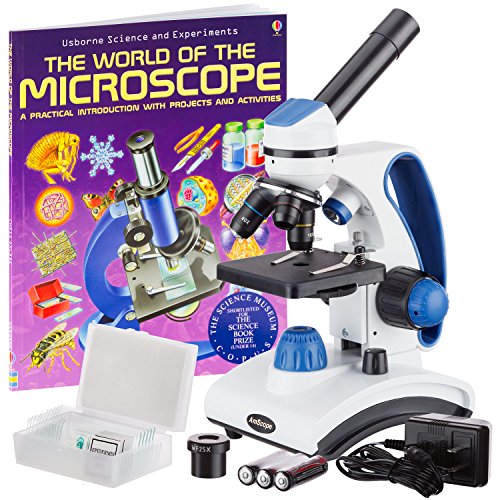
This all-metal compound microscope offers six magnification settings from 40X to 1000X, making it suitable for viewing everything from coarse details to fine cellular structures. It includes slides and a microscope book, and its sturdy build means it can handle years of use. Owners report it is a solid choice for homeschool science.
Magnification40X-1000X
ConstructionAll-metal
IncludedSlides and microscope book
TypeCompound microscope
Pros
- Real optical system with wide magnification range
- Durable all-metal body
- Includes starter slides and book
Cons
- Requires more careful handling than toy scopes
- Not designed for very young children
Check price on Amazon ›
Featuring Bindi Irwin, this talking microscope shares over 100 fun facts and quizzes on plants and animals. It comes with 60 full-color images on 20 slides and offers two modes: Fact Mode and Quiz Mode. It requires 3 AAA batteries and is a great screen-free option for young kids.
Age range3-5 years
Slides20 slides with 60 images
ModesFact Mode and Quiz Mode
Batteries3 AAA (not included)
Pros
- Engaging audio content with Bindi Irwin
- No screen time required
- Includes slide storage compartment
Cons
- Batteries not included
- Limited to prepared slides
Check price on Amazon ›
The Zoomy 2.0 is a handheld digital microscope that magnifies up to 54x and connects to a computer, projector, or whiteboard for easy sharing. It supports STEM activities and is suitable for ages 4 and up. Its compact size fits in a child's hand and allows for viewing objects at any angle.
Magnification54x
ConnectivityComputer, projector, whiteboard
Age range4+ years
TypeHandheld digital
Pros
- Easy to use and share images
- Encourages hands-on exploration
- Works with multiple devices
Cons
- Requires a separate display
- Lower magnification than compound scopes
Check price on Amazon ›
This handheld digital microscope offers 200-1000X magnification and a 4K HD camera with a 2.0-inch screen. It supports photo and video recording and features 8 built-in LED lights with 3 brightness levels. Weighing only 0.5 lbs, it comes with a neck strap for hands-free carrying.
Magnification200-1000X
Screen2.0-inch IPS
Weight0.5 lbs
Lighting8 LED lights, 3 brightness levels
Pros
- Lightweight and portable
- High-resolution imaging
- Easy to capture and share photos
Cons
- Screen size may be small for some
- Digital zoom may not match optical clarity
Check price on Amazon ›
This pocket microscope features 1000X magnification and a 2MP camera with manual focus. It is made from ABS plastic with CE/FCC/CPC safety certification and has oversized focus dials and a shock-absorbent rubber casing. It includes 8 adjustable LEDs and a 600mAh battery lasting up to 2 hours.
Magnification1000X
Camera2MP
Battery600mAh, up to 2 hours
SafetyCE/FCC/CPC certified
Pros
- Rugged, kid-friendly design
- Anti-shake and adjustable lighting
- Includes carry lanyard
Cons
- Manual focus may require practice
- No screen, relies on connected device
Check price on Amazon ›
This digital microscope offers 10x and 150x magnification with a built-in camera and 2.5x digital zoom. It has a 2.8-inch LCD display and includes 16 prepared specimens. It captures 5MP pictures and 1080p video, making it a good choice for biology-focused learning.
Magnification10x, 150x
Display2.8-inch LCD
Camera5MP photos, 1080p video
Included16 prepared specimens
Pros
- Built-in screen for easy viewing
- Comes with prepared slides
- Good for capturing images and video
Cons
- Lower magnification than some competitors
- Limited to digital zoom beyond 150x
Check price on Amazon ›
This introductory microscope offers 80x, 360x, and 720x magnification with a battery-powered LED light and an aperture wheel. It includes 8 prepared slides and exclusive audio content from the Wow in the World podcast. Designed for ages 6 and up, it is a solid first microscope.
Magnification80x, 360x, 720x
Slides8 prepared slides
LightingBattery-powered LED
Age range6+ years
Pros
- Engaging audio content
- Easy to use for beginners
- Includes prepared slides
Cons
- Requires batteries
- Limited magnification range
Check price on Amazon ›
The BEAVERLAB Finder features a 4.0-inch IPS screen and 1080P imaging with 100X-1600X magnification. It has a 2MP CMOS sensor and built-in hotspot for easy sharing to a mobile phone. Eight adjustable lights help illuminate specimens.
Magnification100X-1600X
Screen4.0-inch IPS
Camera2MP CMOS, 1080P video
Lighting8 adjustable lights
Pros
- Large screen for easy viewing
- High magnification range
- Built-in hotspot for sharing
Cons
- Higher magnification may be harder to focus
- Larger and heavier than pocket models
Check price on Amazon ›
This talking microscope includes 20 prepared slides with 60 specimens and over 120 quiz facts. It has adjustable focus and a light-up platform. A 24-page booklet provides additional information, making it a fun STEM learning tool for ages 3 and up.
Slides20 slides with 60 specimens
FactsOver 120 quiz facts
FocusAdjustable
Age range3+ years
Pros
- Interactive Q&A mode
- Includes many specimens
- Light-up platform for clear viewing
Cons
- Talking feature may be repetitive
- Limited to prepared slides
Check price on Amazon ›
What to look for
How to choose a kids microscope by age
For ages 3 to 5, consider a talking microscope or a simple handheld digital model that requires less fine motor control. Ages 6 to 8 can handle basic compound microscopes with prepared slides. Ages 9 and up may be ready for a full-featured compound microscope like the AmScope M162C. Always check the age recommendation and safety certifications.
Screen-free vs. digital microscopes
Screen-free microscopes, such as the GeoSafari Talking Microscope, encourage direct observation and are great for limiting screen time. Digital microscopes like the Zoomy 2.0 or BEAVERLAB Finder offer the advantage of capturing images and sharing them on a computer or projector, which can be useful for homeschool co-ops or classroom presentations. Consider your child's learning style and your family's screen time preferences.
Durability and storage for classroom or homeschool use
Look for microscopes with sturdy construction, such as all-metal bodies or shock-absorbent rubber casings. Easy storage is important for classroom use; models with slide storage compartments or carry cases help keep accessories organized. For homeschool families, a microscope that is easy to set up and store will see more frequent use.
Magnification and lighting: what matters
Higher magnification isn't always better for young kids; 40X to 400X is sufficient for most beginner specimens. Adequate lighting is crucial, so choose a microscope with built-in LED illumination and adjustable brightness. Prepared slides are a good starting point, but blank slides allow kids to create their own specimens. Consider whether the microscope uses batteries or a power adapter.
Frequently asked questions
What is the best kids microscope for a 4-year-old?
For a 4-year-old, the Educational Insights GeoSafari Talking Microscope is a great choice because it is screen-free, interactive, and designed for ages 3-5. The Learning Resources Zoomy 2.0 is also suitable for ages 4 and up if you want a digital option.
Can a kids microscope be used for classroom use?
Yes, many kids microscopes are durable enough for classroom use. Models like the AmScope M162C with all-metal construction or the 1000X Handheld Digital Microscope with shock-absorbent casing are built to withstand handling. Look for easy storage features and safety certifications.
How do I evaluate a microscope for homeschool families?
Consider the magnification range, ease of use, and durability. A compound microscope like the AmScope M162C offers real optics for long-term study, while digital models allow for sharing images. Also check if it comes with prepared slides and a guide book to support learning.
Are digital microscopes good for rainy days?
Digital microscopes can be great for indoor exploration on rainy days. Handheld models like the 4K 1000X or BEAVERLAB Finder let kids examine household objects and capture photos or videos. They are also portable enough to use outdoors when the weather clears.
What should I look for in a kids microscope for ages 4 to 6?
For ages 4 to 6, prioritize ease of use, durability, and safety. Talking microscopes or simple handheld digital models with large buttons and low magnification are ideal. Ensure the microscope is made from non-toxic materials and has rounded edges.
Which kids microscope combines reusable pieces and easy storage?
The Educational Insights GeoSafari Talking Microscope includes 20 slides and a slide storage compartment, making it easy to keep pieces together. The AmScope M162C also includes slides and a book, and its sturdy box can be used for storage.
How to pick a kids microscope with screen-free play for homeschool families?
Look for microscopes that do not require a screen, such as the GeoSafari Talking Microscope or the Wow in the World microscope. These encourage direct observation and include prepared slides and educational content. Consider models with built-in lighting and easy focus adjustments.
Is it worth getting a kids microscope with reusable pieces for birthday gifts?
Yes, a microscope with reusable slides and specimens offers lasting value. The Dr. STEM Toys Talking Microscope includes 20 slides with 60 specimens and quiz facts, making it a fun and educational gift. The AmScope M162C includes blank slides so kids can create their own.
The verdict
AmScope M162C-2L-PB10-WM "Awarded 2018 Bes...
9.5/10/10
The AmScope M162C-2L-PB10-WM stands out as the best kids microscope for its real optical quality and durable build. For younger children, the GeoSafari Talking Microscope provides engaging, screen-free learning. Digital options like the Zoomy 2.0 offer versatility for tech-savvy kids. Consider your child's age and interests to choose the right fit.
Check price on Amazon ›
Our top pick, secure checkout via Amazon
Note: Availability and specifications change often. Always confirm the current details on Amazon before buying.