Home & Kitchen 5 Fermentation Jars for Tangy Homemade Ferments
P
By the Pickpedia Team
·5 picks compared
·Last verified September 2026
Affiliate disclosure: As an Amazon Associate, Pickpedia earns from qualifying purchases. Links on this page are paid links, and we may earn a commission at no extra cost to you. This never affects our picks or scores.
Quick answer
For most home kitchens, a wide-mouth mason kit with airlocks and glass weights covers kimchi, kraut, and pickles reliably. Choose larger clamp jars for bigger batches, gallon jugs for kombucha or wine, and pipe-style lids if you want maintenance-free venting. Match jar count to how much you ferment weekly.
5 Fermentation Jars for Tangy Homemade Ferments at a glance
Why you can trust this guide
We compared these picks using verified manufacturer specifications, available manuals and documentation, current retailer listings, and patterns in owner feedback, alongside editorial research. We focus on measurable differences such as performance, capacity, usability, and build quality. Pickpedia does not present editorial research as laboratory testing, and we do not claim hands-on testing unless it was actually performed.
How we chose: We compared five fermentation setups across jar size, seal type, weight material, and how easily each moves from fermenting to storage.
Fermenting at home rewards good gear, and the jar system you pick shapes how forgiving the whole process feels. Airlocks vent carbon dioxide while keeping fresh air out, and submerging weights hold vegetables under brine so mold has no foothold. Getting both right matters more than any single feature.
Our picks span small starter kits, wide-mouth mason setups, and larger jugs for brewing. Each entry is grounded in the listed features and what owners commonly report, so you can match a jar to your batch size and patience. Read the tags to find the closest fit for your kitchen.
Our top picks
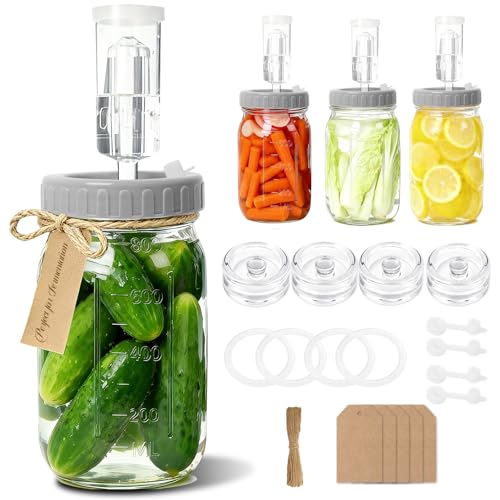
This all-in-one kit pairs four 32 oz wide-mouth jars with lead-free glass weights, dual-channel airlocks, and plastic lids meant to sidestep the rust that troubles metal bands. A wide 3.4 inch opening eases packing and cleaning, and molded ml and oz markings help you track brine levels. What owners appreciate most is the ferment-to-store workflow: pull the airlock, drop in the silicone stopper, and each jar seals like an ordinary mason. Twenty date tags round out the set for labeling batches. One limitation is the plastic lids, which feel less premium than metal and can loosen if overtightened repeatedly.
JarsFour 32 oz wide-mouth
Opening3.4 inch
WeightsLead-free glass
LidsPlastic with airlock
Pros
- Complete four-jar set with airlocks and weights
- Converts cleanly from fermenting to storage
- Plastic lids avoid rust concerns
Cons
- Plastic lids feel less sturdy than metal
- Airlocks need occasional topping with water
Check price on Amazon ›
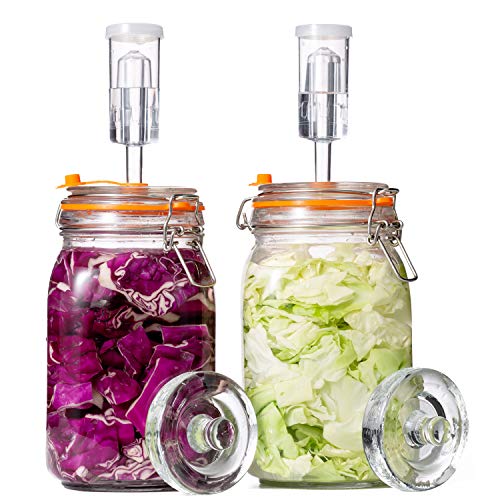
JILLMO gives you two thick 1.5L glass jars with clamp lids, silicone seals, grommets, airlocks, and matching glass weights. Each roomy jar swallows a full head of cabbage or a jar of cucumbers, and the clamp-and-gasket closure builds an airtight environment that vents gas on its own. Reviewers note the heavy glass feels built for repeated batches, and the jars display ferments handsomely on a counter. Dishwasher-safe glass keeps cleanup simple, though accessories want a gentle hand wash. The main drawback is bulk: at 1.5L each, these jars demand real shelf space and can feel heavy once fully packed with brine.
JarsTwo 1.5L wide-mouth
ClosureClamp lid with seal
WeightsGlass, included
CareDishwasher-safe jars
Pros
- Roomy 1.5L capacity per jar
- Thick glass built for repeat use
- Clamp seal vents gas automatically
Cons
- Large jars need ample shelf space
- Heavy when fully packed
Check price on Amazon ›
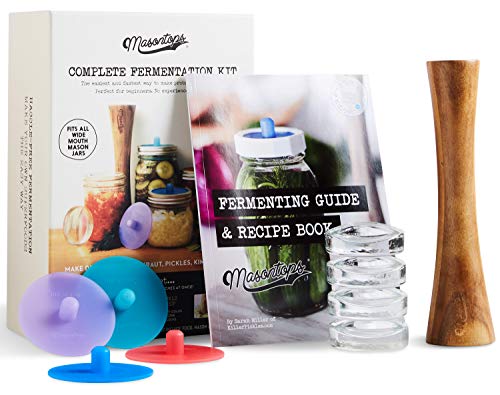
Masontops turns wide-mouth mason jars you already own into fermenters with four Pickle Pipe silicone lids, four Pickle Pebble glass weights, and an acacia wood tamper. The Pickle Pipe vents carbon dioxide without letting oxygen back in, so there is no need to burp or babysit jars, which beginners find reassuring. A printed recipe book walks you through kraut, kimchi, and brined vegetables step by step. Keep in mind this is a lid-and-weight kit, not a jar set, so you must supply your own wide-mouth mason jars. That extra sourcing step is the trade-off for a lower-fuss, flexible system.
Includes4 lids, 4 weights, tamper
Lid typeSilicone Pickle Pipe
WeightsGlass Pickle Pebbles
JarsNot included
Pros
- No burping or daily monitoring
- Silicone lids vent gas reliably
- Acacia tamper aids dry-salt packing
Cons
- Jars must be purchased separately
- Fits only wide-mouth mason jars
Check price on Amazon ›
Galssmagic keeps things simple with two 32 oz glass jars, matching lids, two fermenting weights, and two airlocks in one pack. The weights hold vegetables below the brine, and the airlock builds a controlled, low-oxygen environment so results stay consistent batch to batch. Clear glass lets you watch bubbles form and judge progress at a glance, which owners find satisfying and useful for timing. The compact two-jar footprint suits a solo cook or a tight counter. Its limitation is scope: with only two jars and a straightforward feature set, it lacks the extras and larger capacity that frequent fermenters eventually want.
JarsTwo 32 oz glass
WeightsTwo, included
AirlocksTwo, included
BodyClear glass
Pros
- Compact two-jar footprint
- Clear glass shows progress
- Weights keep veggies submerged
Cons
- Only two jars in the pack
- Minimal extras for scaling up
Check price on Amazon ›
This one-gallon glass jug leans toward liquid ferments, with a molded handle for lifting, a 6.5 rubber stopper, a two-piece airlock, and a black plastic storage lid. Owners lean on it for kombucha, wine, and beer, and it doubles as a vessel for a large yeast starter or fruit-flavor experiments. Made in the USA and backed by a replacement program for damaged arrivals, it reads as a dependable single-jug workhorse. The narrow-neck jug design suits liquids over solid vegetable ferments, so packing cabbage or cucumbers is impractical. Buy this when brewing, not brining, is your main goal.
Capacity1 gallon
Stopper6.5 rubber
AirlockTwo-piece
OriginMade in USA
Pros
- Ideal for kombucha, wine, and beer
- Handle eases lifting when full
- Backed by replacement program
Cons
- Narrow neck limits solid ferments
- Single jug rather than a set
Check price on Amazon ›
What to look for
Match jar size to your batch
Small 32 oz jars suit quick pickles and single servings, while 1.5L or gallon vessels handle full cabbage heads and brewing. Think about how much you ferment weekly, then size up slightly so brine has headroom above the food.
Airlocks versus silicone pipe lids
Water-channel airlocks vent gas through a small trap and need occasional topping up. Silicone pipe lids flex to release pressure with no water at all. Both keep oxygen out; pick pipes for lower maintenance, airlocks if you like watching bubbles confirm activity.
Why weights matter
Vegetables lifted above the brine invite mold and off flavors. Glass weights press food under the surface for a cleaner, more predictable ferment. Lead-free, non-porous glass never absorbs odors or colors, so it stays neutral across kimchi, kraut, and hot sauce.
Ferment-to-store convenience
Some kits swap the airlock for a solid stopper so the same jar seals for the refrigerator. That saves you from transferring finished ferments into new containers. If you batch ahead, this workflow keeps counters clear and reduces the number of jars you juggle.
Frequently asked questions
Do I really need an airlock?
An airlock or vented lid lets carbon dioxide escape while blocking fresh air, which lowers the odds of surface mold. You can ferment in an open jar with daily burping, but a sealed, self-venting setup is more forgiving for beginners.
What size jar should a beginner start with?
A 32 oz wide-mouth jar is a comfortable starting point. It holds enough for a small batch of kraut or pickles without committing a large amount of produce, and its opening makes packing and cleaning straightforward.
Are glass weights better than other types?
Lead-free, non-porous glass weights never absorb odors, flavors, or colors, so they stay neutral across batches. They hold vegetables under the brine reliably and rinse clean, which is why many kits include them by default.
Can I use these jars for kombucha or wine?
Wide-mouth mason kits favor solid vegetable ferments. For kombucha, wine, or beer, a gallon jug with a narrow neck and rubber stopper works better, since liquid ferments do not need a wide packing opening.
Why choose plastic lids over metal?
Plastic fermentation lids sidestep the rust that can affect metal bands in a moist, acidic environment. They also reduce wear on silicone grommets, helping the seal last across many batches.
How do I keep vegetables from floating?
Pack them firmly, then set a glass weight on top so everything stays below the brine line. Leaving headroom above the weight lets gas rise and escape through the airlock without pushing food upward.
Do I have to burp these jars daily?
Vented lids and airlocks release pressure on their own, so no daily burping is needed. That hands-off behavior is a major reason people choose pipe-style or airlock kits over plain sealed jars.
Can I convert a finished ferment for storage?
Several kits let you remove the airlock and add a silicone stopper, turning the fermenting jar into a sealed storage jar. That means you can move finished ferments straight to the refrigerator without transferring.
The verdict
4-Pack Mason Jar Fermentation Kit With Fou...
9.2/10
For most kitchens, the four-jar mason kit is the strongest all-around choice, pairing airlocks, glass weights, and a clean ferment-to-store switch. Choose JILLMO for bigger cabbage batches, Masontops if you want hands-off pipe lids on jars you already own, Galssmagic for a compact two-jar start, and the North Mountain gallon jug when kombucha or wine is your focus. Match jar count and size to how often you ferment.
Check price on Amazon ›
Our top pick, secure checkout via Amazon
Note: Availability and specifications change often. Always confirm the current details on Amazon before buying.