Desks, Chairs & Home Office Best ergonomic chair for office: top picks that fit
P
By the Pickpedia Team
·7 picks compared
·Last verified October 2026
Affiliate disclosure: As an Amazon Associate, Pickpedia earns from qualifying purchases. Links on this page are paid links, and we may earn a commission at no extra cost to you. This never affects our picks or scores.
Quick answer
Haworth Soji is our best overall pick, with Steelcase Series 1 and Branch Ergonomic Chair Pro close behind. Soji stands out for its 4D armrests, lumbar support, seat depth adjustment, and fully assembled delivery, while the others bring strong ergonomic adjustability and workspace fit.
Best ergonomic chair for office: top picks that fit at a glance
Why you can trust this guide
We compared these picks using verified manufacturer specifications, available manuals and documentation, current retailer listings, and patterns in owner feedback, alongside editorial research. We focus on measurable differences such as performance, capacity, usability, and build quality. Pickpedia does not present editorial research as laboratory testing, and we do not claim hands-on testing unless it was actually performed.
Choosing the best ergonomic chair for office use starts with support that matches your body and work style. We compared chairs with adjustable backs, arms, seats, and lumbar features to find the strongest all-around options.
Mesh backs, tilt controls, headrests, and footrests can all change how a chair feels through long workdays. The right pick depends on whether you want simple adjustability, broad fit, or the most personalized setup.
Our top picks
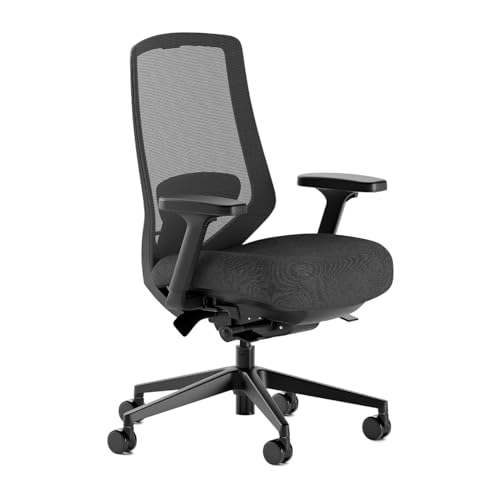
The Soji combines seat height control, 4D armrests, lumbar support, back lock, tilt tension control, and seat depth adjustment. It supports up to 350 lb and arrives fully assembled, which makes setup easy.
Armrests4D armrests
SupportLumbar support
CapacityUp to 350 lb
AssemblyFully assembled
Pros
- Arrives ready to use
- Strong adjustment range
- Certified and warranty backed
Cons
- No forward tilt
- Mesh-back feel may not suit everyone
Check price on Amazon ›
This chair offers adjustable seat depth, height, tilt functions, dynamic lumbar support, a 5-level adjustable back, and a 3D adjustable headrest. It also includes a nap footrest and 3D armrests for more personalized positioning.
Seat depth17"-20"
Height20.1"-22.4"
Weight limit400 lbs
Headrest3D adjustable
Pros
- Very wide adjustability
- Includes nap footrest
- Supports heavier users
Cons
- Large feature set may feel complex
- Best fit depends on careful setup
Check price on Amazon ›
The Series 1 focuses on essential ergonomics, space efficiency, and weight-activated controls. Optional 4-dimensional arm support and an adjustable headrest add flexibility, and assembly takes less than 2 minutes with no tools.
ControlsWeight-activated controls
Arm supportOptional 4-dimensional arm support
HeadrestAdjustable headrest
AssemblyLess than 2 minutes
Pros
- Very fast assembly
- Space-efficient design
- Solid ergonomic foundation
Cons
- Optional features are not standard
- Less adjustable than top rivals
Check price on Amazon ›
Branch gives you 14 points of adjustment and 5D armrests, including height, width, depth, pivot, and pad position. That makes it a strong choice for dialing in seating comfort across different tasks.
Adjustments14 points
Armrests5D armrests
Seat typeMesh office chair
UseAll-day ergonomic support
Pros
- Highly customizable
- Strong armrest flexibility
- Good for long work sessions
Cons
- Many settings take time to dial in
- Best results depend on setup
Check price on Amazon ›
The SIHOO M18 provides four support points, proper lumbar support, and adjustable seat height, headrest, lumbar support, and back support. It suits people from 5'6" to 6'2" and supports up to 150 kg.
Support points4
Height range5'6" to 6'2"
CapacityUp to 150 kg
Warranty3-year
Pros
- Clear support structure
- Fits a wide user range
- Simple assembly
Cons
- Less feature-rich than top picks
- Tighter fit range than some rivals
Check price on Amazon ›
Hbada pairs a breathable mesh back with a dual-back design, 3D lumbar support, 360° 3D adjustable armrests, and a footrest. The cushion uses premium elastic material, and the chair suits users between 5'4" and 6'2".
Lumbar support3D adjustable
Armrests360° 3D adjustable
FootrestIncluded
User range5'4" to 6'2"
Pros
- Strong lumbar adjustability
- Includes footrest
- Comfort-focused materials
Cons
- Feature set is more specialized
- Headrest is listed as 2D in the title
Check price on Amazon ›
GABRYLLY provides four support points, proper lumbar support, adjustable seat height, headrest, backrest, and flip-up arms. It has a wide seat, a 90 to 120 degree recline, and a 300 lb loading capacity.
Support points4
Recline90-120° tilt lock
Loading capacity300 lbs
ArmrestsFlip-up
Pros
- Wide seating area
- Good recline range
- Armrests save space
Cons
- Best for a narrower height range
- Less refined than higher-ranked models
Check price on Amazon ›
What to look for
What makes an ergonomic office chair worth buying
The best chairs combine lumbar support, adjustable arms, and seat controls that match different desks and bodies. Breathable materials can help during longer sitting sessions. Weight support and fit range matter just as much as the feature count.
Mesh versus cushioned seating
Mesh chairs usually focus on airflow and a lighter feel. Cushioned models can offer a more cradled sit. Your choice depends on whether you prioritize cooling or a softer seat feel.
Which adjustments matter most
Seat height, armrest position, and lumbar support are the core settings most people notice first. Seat depth and tilt controls can improve comfort when you sit for many hours. A headrest can help if you lean back often.
How to match the chair to your work style
If you type most of the day, arm support and lumbar shape matter a lot. If you switch between focus work and reclining, look for tilt, back lock, and a headrest. Taller and bigger users should pay close attention to stated fit ranges and capacity.
Frequently asked questions
What should I look for in the best ergonomic chair for office use?
Start with lumbar support, adjustable seat height, and armrests. After that, look at seat depth, tilt, and fit range so the chair matches your body and desk.
Is a mesh chair better for long office days?
Mesh can feel cooler and more breathable during long sessions. Some people still prefer cushioned seating for a softer, more supported feel.
Do adjustable armrests really help?
Yes, adjustable armrests can reduce shoulder and elbow strain. They also make it easier to keep your arms positioned well for typing.
Why does seat depth matter?
Seat depth helps the chair fit your legs and back together. When it is adjustable, you can better match the seat to your posture.
What is the benefit of a headrest?
A headrest gives extra support when you recline or pause between tasks. It can also help if you alternate between upright and leaned-back sitting.
Are big and tall chairs always better for larger users?
Often they are, because they usually offer a wider seat and higher capacity. The best choice is the one whose dimensions and support features match your frame.
How much does assembly matter?
It matters if you want to start using the chair quickly. Some chairs arrive fully assembled, while others use tool-free or simple assembly steps.
Which chair is best if I want the most adjustability?
The FLEXISPOT ErgoX is the strongest fit for maximum adjustment. Branch also stands out if you want many smaller tuning points.
The verdict
Haworth Soji Ergonomic Office Chair
9.6/10/10
Haworth Soji is the best ergonomic chair for office use overall because it blends major adjustments, solid support, and easy setup. Steelcase Series 1 and Branch Ergonomic Chair Pro are the next strongest picks for quick assembly and fine-tuned comfort.
Check price on Amazon ›
Our top pick, secure checkout via Amazon
Note: Availability and specifications change often. Always confirm the current details on Amazon before buying.