Home & Kitchen 6 Electric Pasta Makers for Fresh Noodles at Home
P
By the Pickpedia Team
·6 picks compared
·Last verified September 2026
Affiliate disclosure: As an Amazon Associate, Pickpedia earns from qualifying purchases. Links on this page are paid links, and we may earn a commission at no extra cost to you. This never affects our picks or scores.
Quick answer
For a hands-off machine that mixes, kneads, and extrudes, an automatic extruder like the Philips 7000 wins. Prefer classic sheeted pasta with a motor? Choose the Marcato Atlasmotor. Match your pick to whether you want dough made for you or rolled by you.
6 Electric Pasta Makers for Fresh Noodles at Home at a glance
Why you can trust this guide
We compared these picks using verified manufacturer specifications, available manuals and documentation, current retailer listings, and patterns in owner feedback, alongside editorial research. We focus on measurable differences such as performance, capacity, usability, and build quality. Pickpedia does not present editorial research as laboratory testing, and we do not claim hands-on testing unless it was actually performed.
How we chose: We compared six electric pasta makers, weighing automation type, shape variety, capacity, cleanup, and build materials.
Fresh pasta at home splits into two camps. Automatic extruders mix flour and water, then push dough through shaped discs, so you skip the messy kneading. Roller machines ask you to make dough first, then flatten and cut it into sheets and strands.
Neither approach is strictly better. Extruders suit cooks who want speed and variety with minimal effort, while roller sets reward those who enjoy the craft. Below, each machine is framed around its real features, its ideal user, and one honest drawback worth knowing before you commit.
Our top picks
Philips leans into full automation, mixing and extruding fresh pasta in under ten minutes according to its specifications. A large capacity handles up to eight portions in one run, so it fits family dinners and small gatherings. Eight discs cover common shapes, and the versatile mixing function stretches into cookie, pizza, and bread dough prep. Non-stick, dishwasher-safe parts keep cleanup manageable, and the HomeID app supplies step-by-step recipes including vegan and gluten-free options. Owners report the convenience is the main draw. The honest limitation: an extruder locks you into disc shapes, so you cannot roll wide lasagna sheets the way a classic flattening machine allows.
TypeAutomatic extruder
Motor150W
CapacityUp to 8 portions
Discs8 shapes
Pros
- Mixes and extrudes with little effort
- Large batch capacity for groups
- Dishwasher-safe, non-stick parts
Cons
- Shapes limited to included discs
- App needed for full recipe range
Check price on Amazon ›
VEVOR targets newcomers with four automatic modes and a printed ratio table that guides flour and water measurements. Its 500g flour capacity yields noodles for roughly four people in about fourteen minutes, and eight molds add shape variety. A two-way kneading rod with four-dimensional mixing aims to mimic hand-kneading texture. The package rounds things out with measuring cups, a spatula, cleaning brush, and dishwasher-safe parts. Reviewers note the guided ratios make early batches less intimidating. One real caveat: the manual warns that incorrect water amounts stop dough passing through and cause sticking, so precise measuring matters more than with a simple roller.
TypeAutomatic extruder
Motor150W
Flour capacity500g
Molds8 shapes
Pros
- Four one-click automatic modes
- Full accessory and measuring kit
- Guided flour-to-water ratios
Cons
- Sensitive to water measurement errors
- Smaller batch than family extruders
Check price on Amazon ›
GVODE takes the roller route with a premium aluminum body and a strong 700W maximum motor. Eight thickness settings span 0.4 to 2mm, letting you move from delicate spaghetti to heartier fettuccine. It attaches and detaches quickly, and it works with KitchenAid stand mixers, adding flexibility if you already own one. A cleaning brush is included, and it handles homemade spaghetti, lasagna, and fettuccine in larger quantities. Owners appreciate the motorized sheeting over hand-cranking. The clear limitation: the parts are not dishwasher safe, so every cleanup happens by hand with the brush rather than in a machine.
TypeMotorized roller
Motor700W max
Thickness0.4 to 2mm, 8 settings
BodyAluminum
Pros
- Powerful motor for smooth rolling
- Eight precise thickness settings
- Fits KitchenAid stand mixers
Cons
- Parts not dishwasher safe
- You still make dough yourself
Check price on Amazon ›
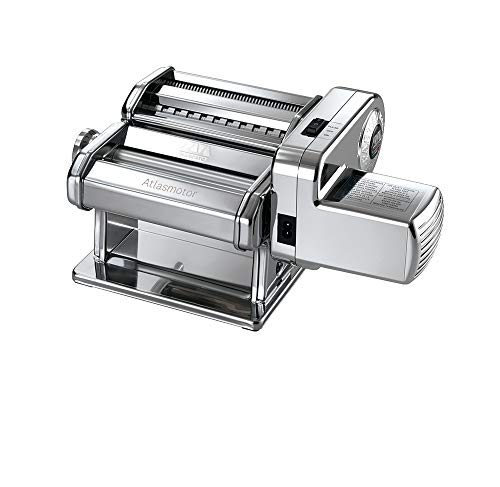
Marcato brings a heritage roller, fully made and assembled in Italy, bundling the Atlas 150, hand crank, clamp, and Pastadrive motor. Sheets reach up to 150mm wide, worked either by hand or by motor, and an adjustment knob offers ten clear thickness positions. Eleven separately available accessories expand the shape range over time. Cleanup stays simple: resin scrapers clean the rollers during use, and a dry brush handles residue after the dough rests. Reviewers often praise its long service life and chrome steel build. The honest note: shape attachments are sold separately, so the base set makes sheets and a limited cut range until you invest further.
TypeMotorized roller
WidthUp to 150mm
Thickness10 positions
OriginMade in Italy
Pros
- Durable Italian chrome steel build
- Hand-crank or motor operation
- Wide accessory ecosystem
Cons
- Extra shapes sold separately
- Requires making dough first
Check price on Amazon ›
INTBUYING aims at higher-throughput use, suiting homes plus small restaurants and food processing settings. Built from food-grade stainless steel and ABS, it runs a 550W motor with a 3mm round knife for steady output. An adjusting rod slides up and down for uniform dough thickness with little effort. Beyond noodles, removing the scraper lets it produce flat dough sheets for fettuccine, lasagna, spaghetti, dumplings, and more. Reviewers point to its sturdy stainless frame. The important limitation: the maker forbids washing it with water and asks you to oil the gears regularly, so maintenance is more involved than dishwasher-safe rivals.
TypeRoller noodle machine
Motor550W
Knife3mm round
MaterialStainless steel, ABS
Pros
- Sturdy stainless steel build
- Handles frequent batch cooking
- Slide-adjust thickness control
Cons
- Cannot be washed with water
- Gears need regular oiling
Check price on Amazon ›
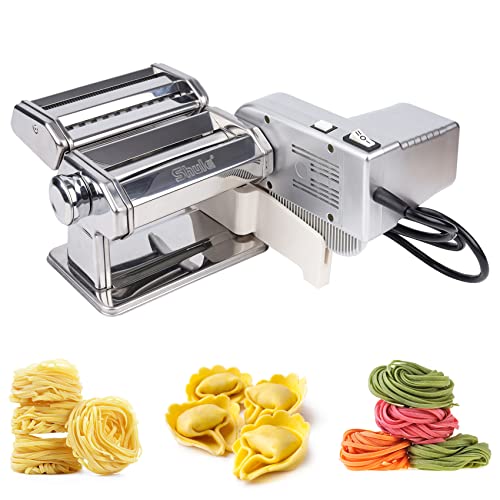
Shule packs two attachments into one roller: a pasta cutter for two noodle widths and a ravioli roller for 2cm square ravioli. Seven thickness settings adjust dough from 0.5 to 3mm, with sheets rolling up to 150mm wide. You can run it with the motor for faster, steadier output or fit the hand crank for a manual feel. Stainless steel construction and anodized aluminum cutters aim at a longer service life, and the box adds a clamp and instructions. Owners like the ravioli option most. The honest caveat: the maker states the motor makes noise during use and repeats a buy-carefully warning, so quiet operation is not its strength.
TypeMotorized roller
Thickness0.5 to 3mm, 7 settings
WidthUp to 150mm
ExtrasRavioli roller, hand crank
Pros
- Ravioli and noodle attachments included
- Motor or hand-crank operation
- Stainless steel with aluminum cutters
Cons
- Motor noise noted by maker
- Cutters need cleaning after each use
Check price on Amazon ›
What to look for
Extruder or Roller, Pick Your Style
Extruders mix and push dough through discs, doing the kneading for you, which suits speed-focused cooks. Roller machines flatten dough you prepare, then cut it into sheets and strands. Decide whether you value hands-off convenience or the craft of shaping pasta yourself, since that choice shapes everything else.
Capacity and Speed
Look at how many portions a machine handles per run. Family extruders like the Philips reach eight portions in one go, while compact units serve around four. Faster cycles help on weeknights, but larger batches mean fewer repeat runs when you cook for a crowd.
Cleanup and Maintenance
Cleaning varies widely. Some models offer dishwasher-safe, non-stick parts, while others must never touch water and need gear oiling instead. Read the maker instructions before buying, because a machine that cannot be rinsed adds real upkeep compared to one you simply load into the dishwasher.
Shape and Thickness Range
Extruders limit you to their discs, so shape variety depends on how many come included. Roller machines give thickness steps, often seven to ten positions, plus optional cutters and accessories. If you crave lasagna sheets or ravioli, confirm the machine supports them out of the box or through add-ons.
Frequently asked questions
Do electric pasta makers knead the dough for me?
Automatic extruders like the Philips and VEVOR mix and knead internally, then extrude shaped pasta. Roller machines, including the Marcato and GVODE, ask you to make and knead dough first, then flatten and cut it. Check the type before buying.
How long does fresh pasta take at home?
It depends on the machine. Philips lists fresh pasta in under ten minutes, and VEVOR notes about fourteen minutes for four servings. Roller machines add dough-resting time up front, so plan for extra minutes before flattening begins.
Can these machines make shapes beyond noodles?
Yes, to varying degrees. Philips mixing prep extends to pizza and bread dough, Shule includes a ravioli roller, and Marcato supports many separately sold accessories. Extruder disc sets and roller cutters define how many shapes each unit produces.
Are the parts dishwasher safe?
Some are, some are not. Philips and VEVOR list dishwasher-safe parts, while GVODE and INTBUYING require hand cleaning, and INTBUYING must avoid water entirely. Always follow each maker's cleaning instructions to protect the machine.
Which machine works with a KitchenAid mixer?
The GVODE roller set is described as compatible with KitchenAid stand mixers, adding flexibility if you already own one. The other machines in this roundup operate as standalone units with their own motors or hand cranks.
Is a motor better than a hand crank?
A motor speeds output and reduces effort, which helps with frequent or larger batches. Hand cranks give more control and a tactile feel. Marcato and Shule offer both, letting you switch depending on the task and your mood.
Do extruders limit which pasta shapes I can make?
Yes. Extruders only produce shapes matching their included discs, so you cannot roll wide lasagna sheets the way a flattening roller can. If sheet pasta matters to you, a roller machine like Marcato or GVODE fits better.
Are these machines noisy during use?
Motorized units produce some sound while running. Shule specifically states the machine makes noise when working and advises buyers to consider that. If quiet operation is a priority, a hand-crank roller run manually is the calmer option.
The verdict
Philips 7000 Series Pasta Maker, ProExtrud...
9.2/10
The Philips 7000 Series earns Best Overall for cooks who want fresh pasta made almost entirely for them, family-sized and fast. Beginners should lean toward VEVOR with its guided ratios and one-click modes. Purists who enjoy rolling and cutting will love the durable, Italian-made Marcato, while GVODE suits KitchenAid owners. Match your pick to whether you want the machine to do the work or to do it yourself.
Check price on Amazon ›
Our top pick, secure checkout via Amazon
Note: Availability and specifications change often. Always confirm the current details on Amazon before buying.