Home & Kitchen 5 Electric Meat Slicers for Deli-Style Slices
P
By the Pickpedia Team
·5 picks compared
·Last verified September 2026
Affiliate disclosure: As an Amazon Associate, Pickpedia earns from qualifying purchases. Links on this page are paid links, and we may earn a commission at no extra cost to you. This never affects our picks or scores.
Quick answer
For deli-style slices at home, pick a slicer with adjustable thickness, removable parts, and honest safety features. Compact 200W units handle most kitchens, while a 10-inch carbon or chromium blade suits frequent frozen-meat work. Match blade type and cleaning ease to how often you slice.
5 Electric Meat Slicers for Deli-Style Slices at a glance
Why you can trust this guide
We compared these picks using verified manufacturer specifications, available manuals and documentation, current retailer listings, and patterns in owner feedback, alongside editorial research. We focus on measurable differences such as performance, capacity, usability, and build quality. Pickpedia does not present editorial research as laboratory testing, and we do not claim hands-on testing unless it was actually performed.
How we chose: We compared five electric slicers across blade type, thickness range, safety design, cleaning, and how well each fits a home countertop.
Slicing your own deli meat, cheese, and bread gives you thickness you control and cuts that stay consistent. These five electric slicers span compact 200W home units and larger 10-inch machines built for heavier, frequent work. Every claim below rests on published specifications and features, not lab testing we did not run.
Choosing well comes down to blade type, thickness range, safety locks, and how easily parts come apart for cleaning. Reviewers note that removable carriages and pushers matter far more than raw wattage for most home kitchens. Read each pick against your counter space and how often you plan to slice.
Our top picks
Built around a 200-watt motor and a die-cast aluminum body, this slicer aims at everyday versatility. Two removable stainless steel blades let you switch between food types, and the thickness knob spans roughly 0 to 15 mm for thin deli cuts up to thicker slabs. Owners report that the blade, carriage, slide-rod extension, and pusher all detach, so cleanup stays manageable. Non-slip suction feet and a pusher that doubles as a blade guard add sensible safety. The main limitation is power: a 200W motor slices most foods well but can slow on dense frozen blocks compared with larger commercial units.
Motor200 watts
BladesTwo removable stainless steel, 7.5 inch
Thickness rangeAbout 0 to 15 mm
BodyDie-cast aluminum
Pros
- Two blades cover many food types
- Fully removable parts simplify cleaning
- Rustproof aluminum build feels sturdy
Cons
- 200W can lag on dense frozen meat
- Compact size limits very large cuts
Check price on Amazon ›
This 10-inch machine steps up to a 45-carbon-steel blade with a built-in sharpening stone, aimed at heavier and more frequent slicing. Its 240W motor runs at roughly 350 to 400 rpm, which the maker links to quicker passes through frozen meats, raw cuts, ham, and cooked items. Thickness adjusts from 0 to about 12 mm, and food-contact parts use food-grade materials with a wipe-clean stainless tray. Raised spikes on the pusher plus non-slip feet target stability during longer sessions. The trade-off is footprint and weight: a commercial-style 10-inch unit needs real counter space and stores less easily than compact home models.
Blade10 inch, 45 carbon steel
Motor240 watts, 350 to 400 rpm
Thickness range0 to about 12 mm
SharpeningBuilt-in stone
Pros
- Wide 10-inch blade handles big cuts
- Built-in sharpener keeps edge ready
- Faster passes through frozen meat
Cons
- Large footprint eats counter space
- Heavier and harder to store
Check price on Amazon ›
Nutrichef pairs a 200W motor with a 110V design and a 15-mm tuning range, wrapped in a compact black frame measuring 13.9 by 9.9 by 10.9 inches. A stainless steel tooth blade handles meats and other foods, while the safety guard and slicer knob steer operation. Owners report that the detachable food carriage and blade make cleaning straightforward, and the center hub simplifies blade removal. The on-off switch keeps controls minimal and clear. One honest caveat: it ships with a single tooth blade, so unlike dual-blade rivals you cannot swap between serrated and smooth edges for different textures without buying more.
Motor200 watts, 110V
Thickness rangeUp to 15 mm
BladeStainless steel tooth
Dimensions13.9 x 9.9 x 10.9 inches
Pros
- Compact size stores easily
- Detachable carriage and blade clean fast
- Simple, intuitive controls
Cons
- Single blade limits texture options
- 200W better suited to lighter tasks
Check price on Amazon ›
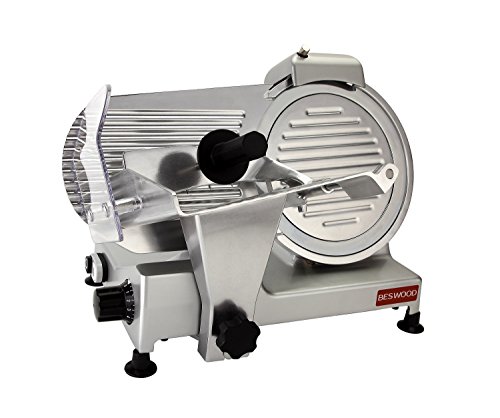
BESWOOD centers on a premium chromium-plated steel blade built to resist corrosion, which the maker says removes the need to sharpen it often. That suits anyone who wants to slice meat, cheese, veggies, ham, and fruit precisely without ongoing blade upkeep. A double illuminated on-off switch runs at 24V to reduce shock risk, and the unit carries ETL listing and certification to a USA standard. Reviewers note the low-maintenance edge as a real convenience over blades that dull quickly. The listing shares fewer motor and thickness numbers than rivals, so match your expectations to the corrosion-resistant blade and safety certification rather than published wattage figures.
Blade10 inch chromium-plated steel
MaintenanceInfrequent sharpening
SwitchDouble illuminated, 24V
CertificationETL listed and certified
Pros
- Corrosion-resistant blade needs little upkeep
- Low-voltage switch adds shock protection
- ETL certified to a USA standard
Cons
- Listing shares limited motor specs
- Fewer stated thickness details
Check price on Amazon ›
OSTBA drives a high-torque 200W motor and claims steady speed through frozen meat and dense deli items for quicker batch work. Its standout is a dual-blade system: serrated and non-serrated 7.5-inch stainless blades cover frozen meat, hard cheese, crusty bread, and delicate fruit or soft cheese. Thickness dials from 0 to about 15 mm, roughly ultra-thin up to three-quarter inch. Safety leans strict, requiring you to press a lock and power button together, backed by suction feet and a full set of removable parts including a ring-guard cover. The honest limit is the same 200W ceiling: it manages frozen meat but works best in measured batches, not nonstop commercial runs.
Motor200 watts, high torque
BladesSerrated and non-serrated, 7.5 inch
Thickness range0 to about 15 mm
SafetyDual-press lock, ring-guard cover
Pros
- Two blade styles for many textures
- Strict two-step safety start
- Fully removable parts including ring guard
Cons
- 200W suits batches, not nonstop use
- Frozen blocks still slow it somewhat
Check price on Amazon ›
What to look for
Blade type and size
Blade choice shapes what you can slice. Serrated edges grip crusty bread and firm cheese, while smooth blades give clean deli cuts on meat. A 10-inch blade handles bigger roasts, and 7.5-inch blades keep units compact. Chromium-plated or carbon steel resists wear differently, so weigh upkeep against how often you slice.
Thickness control
Adjustable thickness separates a real slicer from a novelty. Most home models tune from near zero to about 15 mm, covering paper-thin deli sheets up to hearty slabs. Reviewers note that a firm, repeatable knob matters more than the exact maximum, since consistent slices depend on the dial holding its setting.
Safety features
Look for a pusher that shields your fingers, non-slip suction feet, and a clear on-off switch. Some units add a two-step lock or a low-voltage illuminated switch to cut accidental starts and shock risk. These details matter most when you slice in batches and momentum tempts you to rush.
Cleaning and upkeep
A slicer you dread cleaning gets used less. Removable blades, carriages, pushers, and slide rods let you reach every crevice where residue hides. Food-grade contact parts and a wipe-clean stainless tray shorten the job. Owners report that fully detachable designs stay more sanitary over months of regular use.
Frequently asked questions
Can these slicers cut frozen meat?
Several can, especially the 10-inch and high-torque 200W models, though partially thawed meat slices more smoothly. Fully frozen blocks strain smaller motors and slow the pass. For frequent frozen work, a wider carbon-steel blade with a stronger motor handles the load better.
What thickness range should I look for?
Most home slicers tune from about 0 to 15 mm, which covers thin deli shavings up to roughly three-quarter inch slabs. That span suits sandwiches, roasts, and vegetables. Confirm the dial holds its setting, since a loose knob undermines consistent slices more than a limited maximum.
How hard are they to clean?
Cleaning ease depends on removable parts. Models with detachable blades, carriages, pushers, and slide rods let you wash every surface food touches. Reviewers note that seamless designs and food-grade materials speed the job. Always unplug first and handle blades carefully during washing.
Do I need two blades?
Two blades help if you slice varied textures. A serrated edge suits bread and hard cheese, while a smooth blade gives clean cuts on meat and soft items. Single-blade units still work well for straightforward deli slicing, so match blade count to your range of foods.
Are electric slicers safe for home use?
They are when you respect the safety features. Use the pusher to keep fingers clear, rely on non-slip feet, and engage any lock before powering on. Certifications like ETL listing add assurance. Owners report that most accidents trace to rushing rather than the machine itself.
How much counter space do these need?
Compact 200W units fit most cabinets and counters, with footprints near 14 by 10 inches. A 10-inch commercial-style slicer needs more room and stores less easily. Measure your space before buying, and consider weight if you plan to move the unit between uses.
Will the blade need sharpening?
It depends on the blade. Chromium-plated steel resists wear and rarely needs frequent sharpening, while some 10-inch models include a built-in sharpening stone. Carbon steel holds a keen edge but benefits from occasional upkeep. Follow the maker guidance for your specific blade material.
What can I slice besides meat?
Most of these handle cheese, vegetables, ham, fruit, and bread alongside meat. A serrated blade widens the range to crusty loaves and firm cheeses. Precision thickness control lets you shave delicate items or cut thicker slabs, making one machine cover much of your prep.
The verdict
Meat Slicer, 200W Electric Food Slicer wit...
9.1/10
For most kitchens, the 200W dual-blade slicer stands out as our top pick, balancing versatility, easy cleaning, and a sturdy aluminum build. Batch cooks who slice frozen meat often should size up to the VEVOR 10-inch. Tight counters favor the compact Nutrichef, while the BESWOOD suits anyone wanting a certified, low-upkeep blade. The OSTBA rewards those who value strict safety locks and two blade styles. Match blade type and footprint to how you actually cook.
Check price on Amazon ›
Our top pick, secure checkout via Amazon
Note: Availability and specifications change often. Always confirm the current details on Amazon before buying.