Educational Puzzles Best Educational Puzzles: Top Picks for Learning
P
By the Pickpedia Team
·9 picks compared
·Last verified November 2026
Affiliate disclosure: As an Amazon Associate, Pickpedia earns from qualifying purchases. Links on this page are paid links, and we may earn a commission at no extra cost to you. This never affects our picks or scores.
Quick answer
Our top pick is the Melissa & Doug Self-Correcting Alphabet Wooden Puzzle, a 52-piece set that builds letter skills with self-checking pieces and a storage box. For logic challenges, the Learning Resources STEM Explorers Brainometry and the ThinkFun Fifteen Puzzle are strong runner-ups.
Best Educational Puzzles: Top Picks for Learning at a glance
Why you can trust this guide
We compared these picks using verified manufacturer specifications, available manuals and documentation, current retailer listings, and patterns in owner feedback, alongside editorial research. We focus on measurable differences such as performance, capacity, usability, and build quality. Pickpedia does not present editorial research as laboratory testing, and we do not claim hands-on testing unless it was actually performed.
Educational puzzles turn playtime into learning time. They build letter recognition, spatial reasoning, memory, and patience, all without a screen. The right one depends on your child's age and the skills you want to encourage.
We compared puzzles by educational value, durability, storage, and how well they hold attention. Our picks cover toddlers through teens, from wooden alphabet puzzles to 3D brainteasers and classic jigsaws.
Our top picks
This 52-piece wooden set pairs uppercase and lowercase letters with detailed illustrations. The self-correcting design lets kids check their own work, and the sturdy storage box keeps pieces together. It is a solid choice for ages 4 and up.
Pieces52
MaterialWood
StorageSturdy toy storage box
Recommended age4+
Pros
- Self-correcting pieces build confidence
- Wooden construction with a storage box
- Teaches letter recognition and matching
Cons
- Limited to alphabet skills
- May be too simple for older kids
Check price on Amazon ›
Brainometry uses 34 puzzle pieces and 10 double-sided challenge cards to build critical thinking and logic. The progressive difficulty grows with your child, and the portable storage box makes it easy to take along. It is designed for ages 5 and up.
Pieces34
Challenge cards10 double-sided
StoragePortable storage box
Recommended age5+
Pros
- Progressive challenge levels
- Encourages logic and critical thinking
- Portable storage box
Cons
- Small pieces require careful storage
- Limited to pattern-matching tasks
Check price on Amazon ›
The Fifteen Puzzle is a timeless sliding tile challenge that builds spatial reasoning and problem-solving skills. ThinkFun has sold over 50 million games, making this a trusted choice. It suits ages 8 through adult.
TypeSliding tile puzzle
Recommended age8 to adult
Brand salesOver 50 million games sold
SkillsCritical thinking, spatial reasoning
Pros
- Simple rules with deep challenge
- Compact and portable
- Works for solo play
Cons
- Only one puzzle type
- May frustrate younger kids
Check price on Amazon ›
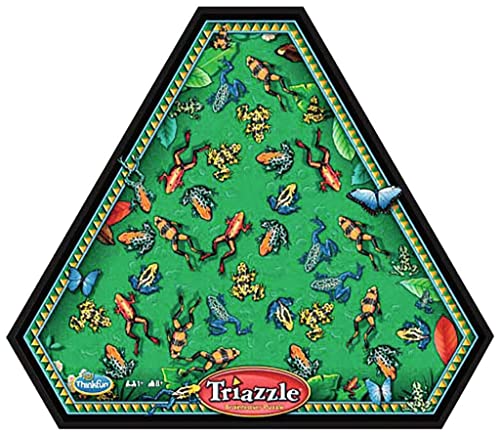
Triazzle uses 16 triangle pieces in a sturdy frame to create thousands of possibilities with only one solution. It is an award-winning puzzle with over 5 million sold. The strategic matching builds memory and thinking skills for ages 8 and up.
Pieces16 triangles
FrameSturdy frame
Recommended age8+
AwardsMultiple industry awards
Pros
- Thousands of combinations, one solution
- Award-winning design
- Sturdy frame holds pieces
Cons
- Only one correct solution
- Limited replay value once solved
Check price on Amazon ›
This 300-piece jigsaw features a colorful animal map with XXL pieces for easier assembly. Ravensburger has crafted puzzles since 1891, and the design supports memory, spatial awareness, and problem-solving. It suits ages 9 and up.
Pieces300
Piece sizeXXL
Brand historySince 1891
Recommended age9+
Pros
- XXL pieces are easy to handle
- Teaches geography and animal names
- Premium Ravensburger quality
Cons
- One-time assembly
- Large finished size needs table space
Check price on Amazon ›
This plastic 3D puzzle builds a 9-inch sphere featuring Anne Geddes artwork. With 540 pieces, it offers a challenging build that results in a decorative object. It is a distinctive option for experienced puzzlers.
Pieces540
MaterialPlastic
Finished size9-inch sphere
ThemeAnne Geddes "Pots"
Pros
- Unique 3D building experience
- Makes a decorative display
- Challenging piece count
Cons
- Plastic pieces may feel less premium
- Limited educational content
Check price on Amazon ›
This 500-piece jigsaw features a LEGO globe design and includes a reference poster. The completed puzzle measures 21.25 by 15 inches, a good size for solo or group work. It is recommended for ages 8 and up.
Pieces500
Finished size21.25 x 15 inches
IncludesReference poster
Recommended age8+
Pros
- Appeals to LEGO fans
- Poster aids assembly
- Good group activity size
Cons
- Standard jigsaw format
- Limited replay value
Check price on Amazon ›
This 300-piece puzzle shows the LEGO Creator Forest Animals: Red Fox design and comes with a reference poster. At 21.25 by 15 inches, it works well for solo or shared building. It is recommended for ages 9 and up.
Pieces300
Finished size21.25 x 15 inches
IncludesReference poster
Recommended age9+
Pros
- Bright LEGO fox artwork
- Fewer pieces for quicker completion
- Poster helps guide assembly
Cons
- Less challenging than larger puzzles
- Limited educational depth
Check price on Amazon ›
This set includes six wooden puzzles featuring a giraffe, frog, monkey, cow, lion, and puppy. The thick pieces are sized for little hands and made with solid wood and water-proof paint. It supports color and shape recognition for ages 1 to 3.
Pieces6 puzzles
MaterialSolid wood
Piece size5.8 x 5.8 x 0.2 inches
Recommended age1-3 years
Pros
- Chunky pieces for small hands
- Bright animal shapes
- Water-proof painted wood
Cons
- Simple designs may not hold older toddlers
- Limited to basic matching
Check price on Amazon ›
What to look for
Match the puzzle to the child's age and stage
For toddlers, look for thick wooden pieces and simple shapes. Preschoolers benefit from letter and number puzzles that teach recognition. Older kids can handle logic brainteasers, 3D builds, and larger jigsaws. Age recommendations on the box are a useful starting point.
Consider the skills you want to build
Alphabet puzzles support early literacy, while pattern-matching brainteasers build logic and critical thinking. Jigsaws develop spatial awareness and memory. Decide whether you want a focused skill or a broader challenge, then choose a puzzle that fits.
Think about storage and durability
Wooden puzzles and sets with storage boxes keep pieces contained and last longer. For classroom or homeschool use, durable materials and easy storage matter. Plastic and coated-card pieces can withstand frequent handling, but check that small parts are secure.
Plan for group or solo play
Some puzzles work best for one child, like the Fifteen Puzzle or Triazzle. Larger jigsaws and sets with challenge cards can be shared. For classrooms or family time, choose puzzles with enough pieces and clear goals to keep everyone involved.
Frequently asked questions
What should I look for in an educational puzzle for classroom use?
Prioritize durable materials, easy storage, and clear learning goals. Puzzles with storage boxes and sturdy pieces hold up to frequent handling. Consider how many children will use it and whether the challenge suits the age range.
How do I choose an educational puzzle for homeschool families?
Match the puzzle to your child's current skills and interests. A mix of letter puzzles, logic brainteasers, and jigsaws covers different subjects. Storage and durability help when materials are used daily.
Are educational puzzles good for rainy days?
Yes. Puzzles are screen-free activities that keep kids engaged indoors. Larger jigsaws and group challenges work well for siblings, while solo brainteasers suit independent play.
What is the best educational puzzle for kids ages 4 to 6?
The Melissa & Doug Self-Correcting Alphabet Puzzle is a strong choice for this age. It teaches letters with self-checking pieces. For logic, the Learning Resources Brainometry suits ages 5 and up.
Should I buy an educational puzzle for a birthday gift?
Puzzles make thoughtful gifts when you match the theme and difficulty to the child. Consider the child's age and interests. Wooden puzzles for toddlers and brainteasers for older kids are safe bets.
How can I tell if an educational puzzle is worth buying?
Look for clear learning goals, durable construction, and replay value. Puzzles that offer progressive challenges or multiple ways to play tend to justify the space they take up. Read the age recommendation and piece count.
What makes a puzzle suitable for group play?
A larger piece count and a shared goal help. Jigsaws like the Ravensburger Animals of the World work well for groups. Brainteasers with challenge cards can also be used cooperatively.
Do educational puzzles really help with learning?
Puzzles build memory, spatial awareness, and problem-solving skills. Letter and number puzzles support early literacy and math. The key is choosing a puzzle that matches the child's developmental stage.
The verdict
Melissa & Doug Self-Correcting Alphabet Wo...
9.4/10/10
The Melissa & Doug Self-Correcting Alphabet Puzzle stands out for its blend of early literacy, self-checking design, and sturdy storage. For logic and critical thinking, the Learning Resources Brainometry and ThinkFun Fifteen Puzzle are excellent next steps. Match the puzzle to your child's age and the skills you want to nurture, and you will find a screen-free activity that keeps them learning.
Check price on Amazon ›
Our top pick, secure checkout via Amazon
Note: Availability and specifications change often. Always confirm the current details on Amazon before buying.