Coffee Machines 7 Dual-Boiler Espresso Machines for No Waiting
P
By the Pickpedia Team
·7 picks compared
·Last verified September 2026
Affiliate disclosure: As an Amazon Associate, Pickpedia earns from qualifying purchases. Links on this page are paid links, and we may earn a commission at no extra cost to you. This never affects our picks or scores.
Quick answer
A dual-boiler machine runs one boiler for extraction and another for steam, so you pull a shot and texture milk at the same time with no switch-and-wait. Pick one with a 58mm portafilter, PID temperature control, and steam power that matches how many milk drinks you make.
7 Dual-Boiler Espresso Machines for No Waiting at a glance
Why you can trust this guide
We compared these picks using verified manufacturer specifications, available manuals and documentation, current retailer listings, and patterns in owner feedback, alongside editorial research. We focus on measurable differences such as performance, capacity, usability, and build quality. Pickpedia does not present editorial research as laboratory testing, and we do not claim hands-on testing unless it was actually performed.
How we chose: We compared seven dual-boiler espresso machines, weighing boiler independence, temperature stability, steam strength, grinder integration, and how well each format suits a home barista.
Single-boiler machines force a pause between pulling espresso and steaming milk, which stalls a busy morning. Dual-boiler designs give each job its own heat source, so extraction and frothing happen together. That difference matters most when you make back-to-back milk drinks for a household.
This roundup ranks seven machines on how their specifications support that no-waiting promise. Some pair the twin boilers with a built-in grinder and scales, others focus on steam power or a familiar 58mm barista format. We flag where each one fits and where owners report trade-offs.
Our top picks
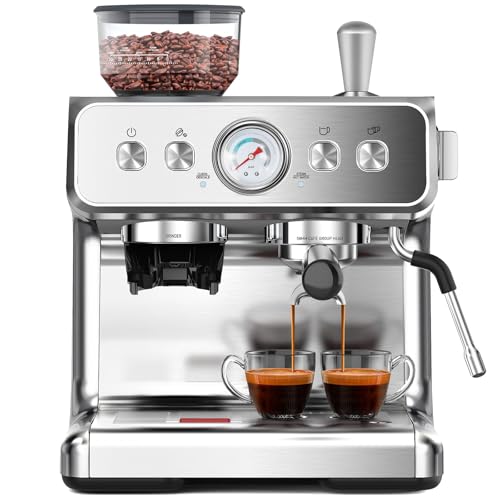
Meraki packs the most complete platform here into one semi-automatic body. A 350ml brew boiler and 550ml steam boiler run independently, so extraction and milk texturing happen at once, with PID control and a heated grouphead holding temperature steady. Built-in scales track dose and yield to a stated 0.2g, and the espresso-tailored burr grinder offers 45 marked settings with micro-adjustment and near-zero retention. A commercial rotary pump drives 9-bar extraction through an E61-compatible 58mm portafilter with controlled pre-infusion. The depth of control invites a learning curve, so beginners should expect practice before shots land consistently.
Boilers350ml brew, 550ml steam, PID
Portafilter58mm, E61-compatible
GrinderBurr, 45 settings, low retention
ExtrasBuilt-in dose and yield scales
Pros
- Independent boilers allow simultaneous brewing and steaming
- Integrated scales measure dose and yield precisely
- Rotary pump with pre-infusion and a heated grouphead
Cons
- Deep feature set means a real learning curve
- More machine than an occasional drinker needs
Check price on Amazon ›
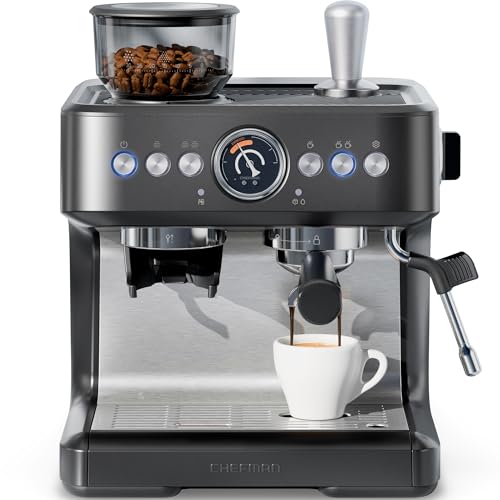
Chefman's Crema Deluxe folds grinding, brewing, and frothing into one semi-automatic routine. Its double boiler lets you steam milk and pull a shot together, trimming the morning wait. A 30-setting conical burr grinder dispenses straight into the 58mm portafilter, which carries single and double baskets, and the 15-bar pump handles everything from ristretto to lungo with adjustable temperature and volume. A built-in steam wand rounds it out for lattes and cappuccinos. Grind resolution tops out at 30 steps, so fine espresso dialing is less granular than machines with wider ranges.
BoilerDouble boiler system
Pump15-bar
GrinderConical burr, 30 settings
Portafilter58mm, single and double baskets
Pros
- Grinds, brews, and froths in one workflow
- Adjustable shot temperature and volume
- Two basket sizes for different drinks
Cons
- 30 grind steps limit fine dialing
- Direct-dispense grinding can leave residual grounds
Check price on Amazon ›
Breville's BES920XL earns its following on extraction quality. Dual stainless boilers and a heated group head, regulated by PID to within about 2 degrees Fahrenheit, keep water on target shot after shot. An over-pressure valve caps pump pressure to guard against bitterness, while low-pressure pre-infusion expands the puck gently for even flow. The powerful steam wand textures microfoam by hand for latte art, and an LCD with a shot clock guides timing. Register the machine and two bags of specialty coffee ship free. Its manual grinding workflow assumes you supply an accurate dose of 19 to 22 grams.
BoilersDual stainless, heated group head
Temp controlPID, about +/- 2F
Portafilter58mm, 19 to 22g dose
DisplayLCD with shot clock
Pros
- PID and heated head give very steady temperature
- Over-pressure valve and pre-infusion refine flavor
- Shot clock and LCD help dial in timing
Cons
- No built-in grinder, so you dose manually
- Manual microfoam takes practice to master
Check price on Amazon ›
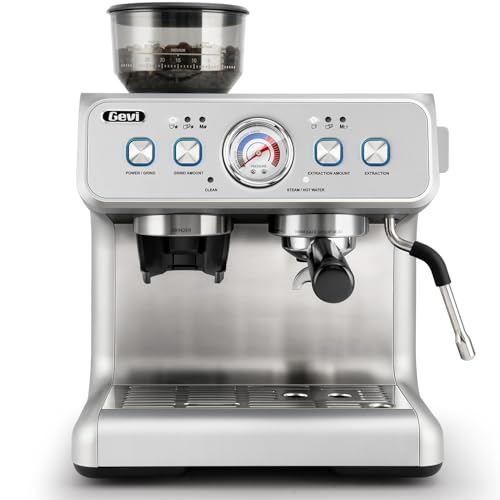
Gevi aims its dual-boiler machine at tighter counters and workspaces. A pressure control system regulates water flow for rich extraction, and NTC plus PID temperature control manages both the shot and the milk so foam forms quickly and evenly. The professional steam wand supports cappuccinos, lattes, and flat whites, while a detachable water tank and drip tray keep cleaning simple. In the box you get a frothing pitcher, portafilter, four interchangeable filters, a tamper, and a cleaning tool, backed by a 12-month warranty. Marketing leans hard on styled claims, so judge it on the listed hardware rather than the language.
BoilersDual boiler
Temp controlNTC and PID
DesignCompact, detachable tank and tray
IncludedPitcher, 4 filters, tamper, tools
Pros
- Compact footprint suits small kitchens
- Dual NTC and PID temperature control
- Generous accessory kit and 12-month warranty
Cons
- Listing relies on styled marketing claims
- Fewer stated grind and dose specifics
Check price on Amazon ›
Tuni's E2 Gen3 leads on steam and versatility. A commercial-grade all-metal 58mm brew head spreads water evenly across the puck, and a 20-bar ULKA pump with a visible gauge lets you watch pressure in real time. Dual boilers and an upgraded heater let you froth right after extraction, while PID plus NTC control holds temperature and an auto pressure-release tames portafilter sneezes. An adjustable Super Steam mode delivers continuous dry steam for fast, even microfoam, and a hot-or-cold function handles iced coffee. It arrives with pressurized and non-pressurized baskets. The 20-bar pump rating exceeds the pressure most shots actually use.
Brew head58mm all-metal, visible gauge
Pump20-bar ULKA
BoilersDual, PID and NTC
ModesSuper Steam, hot and cold brew
Pros
- Adjustable Super Steam mode froths quickly
- Visible gauge and auto pressure release
- Hot and cold brewing plus dual basket types
Cons
- Headline pump rating overstates working pressure
- Feature spread can overwhelm first-time users
Check price on Amazon ›
EUHOMY builds its pitch around a grinder that refuses to jam. A polished path ejects grounds instantly, even with oily beans, across 30 precision settings that span fine espresso to coarse drip. A 20-bar pump pulls thick crema, and a commercial-grade 58mm portafilter pairs with PID control stable to within about 1 degree Celsius for balanced, non-bitter shots. The high-pressure steam wand builds the dense microfoam latte art needs. Listing copy emphasizes the grinder and PID far more than boiler specifics, so confirm the dual-boiler behavior matches your simultaneous brew-and-steam expectations before buying.
GrinderAnti-clog, 30 settings
Pump20-bar
Portafilter58mm commercial-grade
Temp controlPID, about +/- 1C
Pros
- Anti-clog grind path handles oily beans
- Tight PID control for balanced shots
- High-pressure wand builds dense microfoam
Cons
- Listing says little about boiler independence
- Headline pump number overstates real pressure
Check price on Amazon ›
This upgraded model targets mess-free grinding and simple upkeep. A 20 percent wider polished chute and a reinforced helical auger eject grounds instantly, even with oily dark roasts, so jams stay rare. A 15-bar pump extracts flavor and crema, and the steam wand builds silky milk for lattes, cappuccinos, and flat whites. Cleaning stays easy thanks to a detachable drip tray and a large 2.8-liter removable water tank, and the machine carries ETL certification. Its listing highlights the grinder and frothing more than exact boiler figures, so verify the simultaneous brew-and-steam capability suits your routine.
GrinderWider anti-clog chute, helical auger
Pump15-bar
Water tank2.8L removable
SafetyETL certified
Pros
- Widened chute resists clogs from oily roasts
- Large removable tank and detachable tray
- ETL-certified for added peace of mind
Cons
- Boiler details are thin in the listing
- 15-bar pump exceeds pressure most shots use
Check price on Amazon ›
What to look for
Why a dual boiler changes your morning
One boiler heats water for extraction while a second stays ready for steam. That lets you pull a shot and froth milk at the same moment instead of waiting for a single boiler to switch temperatures. For anyone making more than one milk drink in a row, the time saved adds up fast.
Temperature control is the quiet hero
Stable water temperature separates a balanced shot from a bitter or sour one. Look for PID control, and machines that pair it with a heated group head or an NTC sensor. Reviewers consistently note that steadier temperature makes results easier to repeat day after day.
Grinder built in or bought separately
Some machines here integrate a burr grinder with marked settings, which keeps the workflow tidy. Others assume you bring your own dose. Based on specifications, more grind steps and micro-adjustment give finer control for espresso, while wider chutes reduce clogging with oily beans.
Steam power and the 58mm standard
Stronger, drier steam textures microfoam faster and more evenly, which matters for latte art. A 58mm portafilter is the familiar barista format and tends to spread water evenly over the puck. Owners report that all-metal brew heads hold heat better between shots.
Frequently asked questions
What does a dual boiler actually do?
It runs two separate boilers, one for brewing and one for steaming. Because each holds its own temperature, you can extract espresso and froth milk together without pausing to reheat, which is the main reason people choose this format.
Do I need a built-in grinder?
Not strictly. Integrated grinders keep everything in one workflow and save counter space. If you already own a good grinder or want maximum control, a machine like the Breville that expects your own dose can be a strong fit.
Is a 58mm portafilter worth it?
It is the standard barista size and spreads water evenly across a larger puck. Most machines in this roundup use it, which also means accessories and baskets are easy to find and swap.
How important is PID control?
Very. PID keeps water within a tight temperature window shot after shot. Combined with a heated group head or an NTC sensor, it makes your results consistent and reduces bitter or sour surprises.
Can beginners handle these machines?
Yes, though some suit newcomers better. All-in-one designs with automatic grinding ease the start. Feature-dense machines with scales and manual texturing reward practice but ask more of you up front.
What do the bar numbers mean?
Bar measures pump pressure. Espresso extracts well around 9 bar, so 15 or 20-bar ratings describe maximum pump capacity, not the pressure used during a shot. Treat high numbers as headroom rather than a quality guarantee.
Are these hard to clean?
Most include a removable water tank and a detachable drip tray. Larger tanks mean fewer refills, and anti-clog grind paths cut mess with oily beans. Regular backflushing and wand wiping keep any of them running smoothly.
Which machine suits a small kitchen?
The Gevi is built around a compact footprint with a detachable tank and tray. If counter space is tight but you still want cafe-style milk drinks, it fits the brief better than the larger, feature-heavy options.
The verdict
Meraki Dual Boiler Espresso Machine with G...
9.3/10
For the most complete package, the Meraki stands out with independent boilers, integrated scales, and a capable grinder, ideal for baristas who want precise, repeatable shots. Choose the Breville BES920XL if refined extraction and latte art matter most, or the Chefman for an easy grind-brew-froth flow. Milk-heavy homes should look at the Tuni for its steam power, while the Gevi fits compact spaces. Match the machine to how many drinks you pull and how much control you want.
Check price on Amazon ›
Our top pick, secure checkout via Amazon
Note: Availability and specifications change often. Always confirm the current details on Amazon before buying.