Camera Accessories 5 Dry Cabinets That Keep Camera Gear Safe and Dry
P
By the Pickpedia Team
·5 picks compared
·Last verified October 2026
Affiliate disclosure: As an Amazon Associate, Pickpedia earns from qualifying purchases. Links on this page are paid links, and we may earn a commission at no extra cost to you. This never affects our picks or scores.
Quick answer
Pick a dry cabinet sized to your kit and one with adjustable humidity near 30 to 60 percent. Larger bodies and long lenses need taller shelves, while a compact box suits a mirrorless setup. Locking doors and quiet thermoelectric operation matter most for bedroom or studio storage.
5 Dry Cabinets That Keep Camera Gear Safe and Dry at a glance
Why you can trust this guide
We compared these picks using verified manufacturer specifications, available manuals and documentation, current retailer listings, and patterns in owner feedback, alongside editorial research. We focus on measurable differences such as performance, capacity, usability, and build quality. Pickpedia does not present editorial research as laboratory testing, and we do not claim hands-on testing unless it was actually performed.
How we chose: We compared five electronic dry cabinets across capacity, humidity range, locking security, and noise, based on their listed specifications and owner reports.
Humidity quietly ruins camera gear, growing fungus on lens elements and corroding contacts long before you notice. A powered dry cabinet holds a steady low humidity so glass, sensors, and electronics stay protected between shoots. Unlike silica boxes, these units regulate moisture automatically once you set a target level.
This roundup lines up five cabinets from compact 30 liter boxes to a roomy 125 liter tower. We looked at how each controls humidity, how it locks, and how much space it gives long lenses. Every claim below draws from the maker specifications and what owners report, not from lab testing on our end.
Our top picks
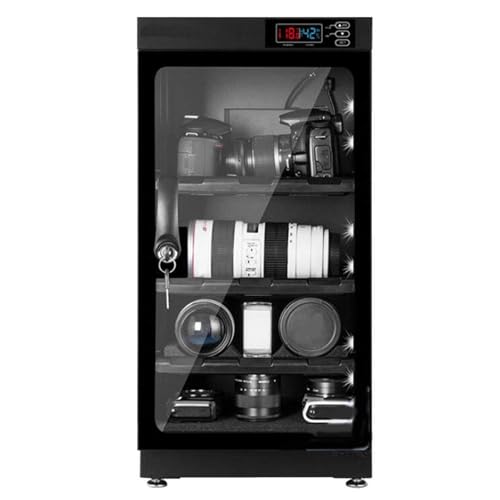
Roomy 125 liter capacity gives DSLR bodies, long lenses, and mirrorless kits real breathing space across five padded shelves. Thermoelectric desiccation holds a programmable humidity level anywhere from 30 to 60 percent, and a dual LED screen shows temperature and humidity at a glance. Slinger draws under 15 watts and runs silently, so a bedroom or studio placement works without radiation or noise worries. Aluminum and steel construction feels solid, and a combination lock plus see-through door balances security with visibility. The large footprint is the trade off, since this tower needs dedicated floor or shelf space that smaller rooms may not spare.
Capacity125 liters
Humidity range30 to 60 percent
Power drawUnder 15 watts
SecurityCombination lock
Pros
- Generous space for multiple bodies and long lenses
- Silent thermoelectric operation with low power use
- Bright dual display for humidity and temperature
Cons
- Large footprint needs dedicated space
- Combination lock less convenient than a key for some
Check price on Amazon ›
Ruggard keeps the setup straightforward with an electronically controlled dehumidifier that adjusts relative humidity from 35 to 60 percent. Adjustable plastic shelves carry fitted padded liners, so lenses and bodies rest without scuffing. A sealed locking door with handle and two included keys makes daily access easy, and interior LED lighting plus an easy to read LCD help you check conditions quickly. The included multi voltage power supply adds flexibility for different outlets. At 50 liters it suits a mid sized kit rather than a large collection, and the plastic shelving feels less rugged than metal, so very heavy lens setups call for careful loading.
Capacity50 liters
Humidity range35 to 60 percent
SecurityLocking door, two keys
LightingInterior LED
Pros
- Keyed sealed door with padded shelf liners
- Clear LCD and interior lighting
- Multi voltage supply for flexible use
Cons
- Plastic shelves less sturdy than metal
- Humidity floor stops at 35 percent
Check price on Amazon ›
Compact at 30 liters, the Autens box fits a desk corner while still guarding gear from moisture, rust, and oxidation. Its microprocessor and thermoelectric cold wafer design track conditions in real time, cycling dehumidification to hold a chosen level between 25 to 60 percent with quoted accuracy near one percent. Drawing only 8 watts, it stays quiet, heatless, and safe for a bedroom placement. A dual display, sealed toughened glass door, keyed lock, and switchable interior LEDs round out a tidy package, and slide out shelves ease viewing. The modest capacity is the limit, so a growing collection of long lenses will outgrow it fairly soon.
Capacity30 liters
Humidity range25 to 60 percent
Power draw8 watts
DoorSealed toughened glass
Pros
- Small footprint for tight rooms
- Very low 8 watt power draw
- Wide humidity range down to 25 percent
Cons
- Limited capacity for larger kits
- Fills quickly as gear grows
Check price on Amazon ›
Intbuying splits 50 liters across four levels, giving photographic equipment room while keeping the box compact. A thermoelectric cold wafer system runs quiet and heatless, drawing about 8 watts and holding humidity from 25 to 60 percent with quoted one percent accuracy. A touch control panel handles settings, adjustable shelves reshape the interior, and switchable LED lighting plus a sealed magnetic glass door keep contents visible and protected. Beyond cameras and lenses, owners store stamps, paper money, antiques, and jewelry here. The touch panel can feel less tactile than physical buttons, so gloved or quick adjustments take a moment longer to register.
Capacity50 liters, four levels
Humidity range25 to 60 percent
Power draw8 watts
ControlTouch panel
Pros
- Four adjustable levels for mixed gear
- Wide humidity range with quiet operation
- Sealed magnetic glass door
Cons
- Touch panel less tactile than buttons
- Mid capacity may not suit big collections
Check price on Amazon ›
Built from cold rolled steel with a rust resistant coating, this 30 liter cabinet leans on a sealed design to block dust, dirt, and moisture. A microprocessor watches humidity in real time, starting when levels rise and stopping once the target returns, across an unusually wide 25 to 70 percent range at quoted one percent accuracy. Internal dimensions of 13.4 by 11.4 by 10.2 inches with adjustable shelves keep bodies and lenses organized. Silent, vibration free operation suits bedrooms, offices, and studios. The 30 liter size handles a modest kit well, though larger telephoto lenses may crowd the interior once shelves are loaded.
Capacity30 liters
Humidity range25 to 70 percent
Interior13.4 x 11.4 x 10.2 inches
BuildRust resistant steel
Pros
- Rust resistant sealed steel construction
- Widest humidity range in this lineup
- Silent, vibration free for quiet rooms
Cons
- Compact interior crowds long lenses
- Modest capacity for growing kits
Check price on Amazon ›
What to look for
Match capacity to your kit
Size the cabinet to what you own plus a little room to grow. A 30 liter box holds a mirrorless body and a few lenses, while 50 liters suits a DSLR with a mid range collection. Long telephoto lenses and multiple bodies push you toward 125 liters, where taller shelves and wider spacing prevent cramped, hard to reach storage.
Understand humidity control
The core job is holding a steady low humidity, typically somewhere between 35 and 50 percent for camera gear. Cabinets with a wider adjustable range give you flexibility for other items like paper, stamps, or electronics. Look for real time sensing that cycles automatically, and a quoted accuracy figure that suggests tighter, more consistent regulation inside the box.
Weigh noise and power
Thermoelectric cold wafer systems run silently and stay heatless, which matters if the cabinet lives in a bedroom, office, or studio. Most units in this class draw only 8 to 15 watts, so continuous operation stays light on power. Vibration free performance also protects delicate gear and keeps the unit unobtrusive in quiet spaces you occupy daily.
Check security and build
A sealed, locking door keeps out both moisture and curious hands. Keyed locks offer quick access, while combination locks skip the loose keys. Steel and aluminum frames with rust resistant coatings last longer than lighter builds, and padded shelf liners protect finishes. A toughened glass door lets you check contents without breaking the seal each time.
Frequently asked questions
What humidity level is best for camera gear?
Most photographers keep lenses and bodies between roughly 35 and 50 percent relative humidity. That range is dry enough to stop fungus and corrosion, yet not so dry that lens lubricants and seals dry out. Cabinets with adjustable control let you fine tune within this band for your climate.
Do dry cabinets use much electricity?
No, thermoelectric models sip power. The units here draw about 8 to 15 watts, similar to a small light bulb, so leaving one running continuously adds very little to your usage. The steady, quiet operation is what keeps humidity stable around the clock.
Can I keep a dry cabinet in my bedroom?
Yes, these thermoelectric cabinets run silently, heatless, and vibration free, which suits bedrooms, nurseries, offices, and studios. Owners report no noticeable noise, and makers note no radiation concerns. Just leave a little clearance around the unit so air can circulate freely.
How long does gear stay protected inside?
As long as the cabinet holds its set humidity, protection is continuous. The sealed door and automatic cycling maintain conditions indefinitely while powered. Check the display occasionally to confirm the reading sits in your target range, especially after opening the door often on humid days.
Are these only for cameras?
Not at all. The wide humidity ranges suit stamps, paper money, old books, leather goods, antiques, musical instruments, jewelry, and electronic components. Anything harmed by moisture benefits, so many owners store mixed valuables alongside their photography equipment.
Do the shelves adjust for large lenses?
Most of these cabinets use adjustable shelves that reposition or slide out. That lets you clear vertical room for tall telephoto lenses or bulky bodies. On smaller 30 liter boxes, expect to sacrifice a shelf to fit longer glass, so plan your layout before loading.
Is a locking door worth it?
A lock adds two benefits. It keeps children or visitors from opening the cabinet, and a sealed locking door helps maintain the moisture barrier. Keyed models give fast access, while a combination lock removes the worry of misplaced keys.
How is a dry cabinet better than silica gel?
Silica packets absorb moisture until saturated, then need drying or replacing, and they offer no reading. A powered cabinet senses humidity, regulates it automatically, and shows the level on a display. That hands off consistency is why serious owners move up from boxes and packets.
The verdict
SLINGER 125L Dehumidifying Dry Cabinet Box
9.2/10
For most photographers, the SLINGER 125L stands out as the top pick, with room for multiple bodies, long lenses, and quiet, programmable humidity control. Tight on space, the Autens 30L or the steel built 30L cabinet with its wide range fit small rooms neatly. The Ruggard 50L rewards anyone who wants simple keyed access, while the Intbuying 50L flexes across cameras and mixed collectibles. Choose by capacity first, then humidity range.
Check price on Amazon ›
Our top pick, secure checkout via Amazon
Note: Availability and specifications change often. Always confirm the current details on Amazon before buying.