Digital Ph Meters Best Digital pH Meters for Water, Food and Labs
P
By the Pickpedia Team
·9 picks compared
·Last verified November 2026
Affiliate disclosure: As an Amazon Associate, Pickpedia earns from qualifying purchases. Links on this page are paid links, and we may earn a commission at no extra cost to you. This never affects our picks or scores.
Quick answer
For most people, the Apera Instruments PH700 is the best digital pH meter overall, with benchtop accuracy and a 3-in-1 electrode. The VIVOSUN kit adds TDS and EC testing for hydroponics, while the EZTOCH food meter suits canning and sourdough.
Best Digital pH Meters for Water, Food and Labs at a glance
Why you can trust this guide
We compared these picks using verified manufacturer specifications, available manuals and documentation, current retailer listings, and patterns in owner feedback, alongside editorial research. We focus on measurable differences such as performance, capacity, usability, and build quality. Pickpedia does not present editorial research as laboratory testing, and we do not claim hands-on testing unless it was actually performed.
A digital pH meter turns a vague guess about acidity into a number you can act on. That matters whether you are checking pool water, a hydroponic reservoir, a sourdough starter, or a lab sample. The meters below cover those jobs with different electrode styles, accuracy levels, and calibration routines.
We compared the supplied specifications and feature sets rather than running bench tests. Accuracy figures, calibration points, temperature compensation, and electrode design are the details that separate a dependable meter from a fussy one. The list starts with the most well-rounded unit and moves toward more specialized tools.
Our top picks
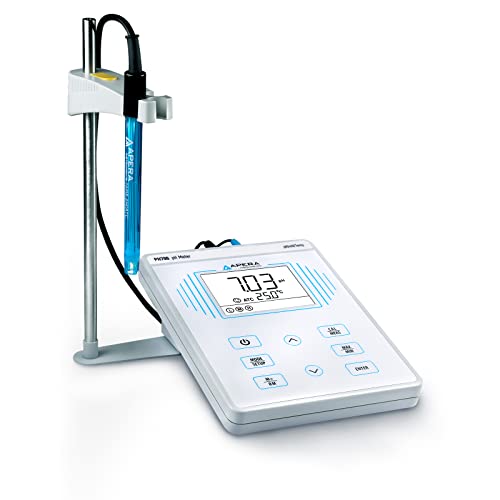
The PH700 pairs a 3-in-1 pH and temperature electrode with 0.01 pH accuracy and 1-3 point auto calibration. Self-diagnosis and an electrode condition display help you spot a probe that needs attention before readings drift. It also stores 50 data sets and carries an IP54 spill-proof and dust-proof rating.
Accuracy0.01 pH
Calibration1-3 points, auto
ElectrodeApera 201T-F 3-in-1 ATC pH/temp
Data storage50 sets
HousingIP54 spill-proof and dust-proof
Pros
- Auto calibration with self-diagnosis and electrode condition display
- Includes pre-mixed pH 4, 7 and 10 calibration solutions
- Electrode holder accommodates up to two electrodes
Cons
- Benchtop form is less convenient for field use
- Requires a flat surface and a stable spot to set up
Check price on Amazon ›
This VIVOSUN set bundles a pH meter with a 3-in-1 TDS meter, covering pH, ppm, conductivity and temperature. The pH side reads the full 0 to 14 range with 0.01 accuracy and automatic temperature compensation. Three calibration buffers come in the box, and the kit is UL certified.
pH range0 to 14
pH accuracy±0.01
TDS range0-9990 ppm
Conductivity range0-9990 µs/cm
Temperature range0.1-80.0°C / 32.0-176.0°F
Pros
- Two meters in one kit for pH and nutrient strength
- Automatic temperature compensation on pH readings
- Includes three calibration buffers
Cons
- TDS meter is not intended for sea water
- Two separate devices to store and maintain
Check price on Amazon ›
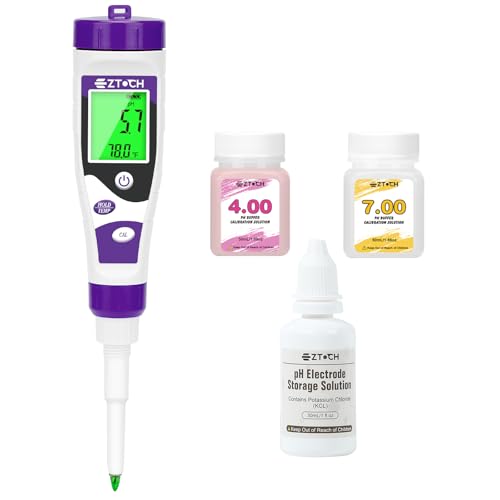
The EZTOCH is built for food, from canned tomato sauce to sourdough starter, and connects to the YINMIK app over Bluetooth. It stores up to 1,000 readings automatically and ships calibrated with pH 7.00 and pH 4.00 solutions. A backlit display and 30ml probe protective solution round out the kit.
ConnectivityBluetooth to YINMIK app
Data storageUp to 1,000 readings
CalibrationPre-calibrated, includes pH 7.00 and 4.00 solutions
DisplayBacklit
Extras30ml probe protective solution, auto shutdown
Pros
- Automatic data logging for repeatable food batches
- Backlight helps in dim kitchens
- Protective solution helps keep the probe moist
Cons
- App dependency for the logging features
- Food-focused design is less suited to plain water testing
Check price on Amazon ›
The YINMIK uses a spear pH probe aimed at sausages, salami, cheese, sushi rice and canned jam. Its 0.00 to 14.00 range and ±0.1 accuracy suit food safety checks rather than fine lab work. Three-point auto calibration is supported, and six bags of buffer powder are included.
pH range0.00 to 14.00
Accuracy±0.1 pH
Calibration3-point auto
Probe typeSpear
Buffer6 bags of buffer solution powder
Pros
- Spear probe reaches into solid and semi-solid foods
- Six buffer powder bags cover repeated calibration
- Straightforward three-point calibration routine
Cons
- ±0.1 accuracy is coarser than 0.01 pH meters
- Not the right tool for precise water chemistry
Check price on Amazon ›
The UIUZMAR combines pH, TDS, EC and temperature in one handheld unit for hydroponic solution. It uses three-point pH calibration with pH 4.0, 7.0 and 10.01 powders, while EC and TDS arrive pre-calibrated. Automatic temperature compensation covers 32 to 122°F, and the backlit LCD shuts off after 30 seconds.
FunctionspH, TDS, EC, temperature
pH calibration3-point (4.0 / 7.0 / 10.01)
Temperature compensation32-122°F
DisplayBacklit LCD, 30-second shutoff
Included2 sets of pH calibration powders
Pros
- Four measurements from a single handheld meter
- EC and TDS need no calibration out of the box
- Backlight makes reservoir checks easier in low light
Cons
- Backlight times out after 30 seconds
- Multi-function menu takes time to learn
Check price on Amazon ›
The KETOTEK pen reads 0.00 to 16.00 pH at 0.01 resolution and covers drinking water, pools, aquariums, hydroponics, wine and beer. Two-point automatic calibration at pH 4.01 and 6.86 takes about five seconds once the pen is in the solution. Automatic temperature compensation is built in.
pH range0.00 to 16.00
Resolution0.01 pH
Accuracy±0.01 pH
Calibration2-point auto (4.01, 6.86)
FeatureAutomatic temperature compensation
Pros
- Fast two-point automatic calibration
- Wide 0.00 to 16.00 pH range
- Pen format stores easily between uses
Cons
- Two calibration points rather than three
- No data logging
Check price on Amazon ›
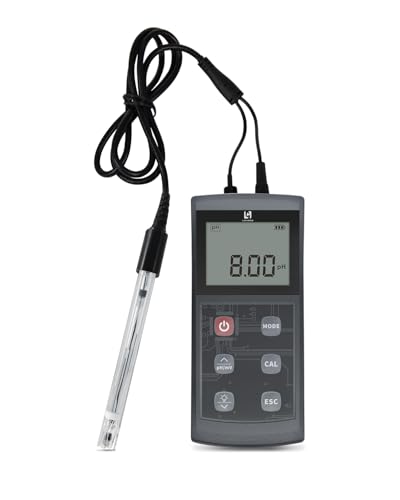
The LOHAND portable meter covers 0 to 14 pH at ±0.01 accuracy with automatic temperature compensation. It uses a composite electrode and a large backlit display, and the whole set lives in a dedicated carrying case. Three batteries and a screwdriver are included for maintenance.
pH range0 to 14
Accuracy±0.01 pH
ElectrodeHigh-performance composite
DisplayLarge backlight
IncludedCarrying case, 3 batteries, screwdriver
Pros
- Dedicated case keeps the meter and electrode together
- Backlit display for dim locations
- Spare batteries included
Cons
- Fewer calibration details than benchtop models
- Portable body may shift on a bench during use
Check price on Amazon ›
The Milwaukee MW102 reaches from -2.00 to 16.00 pH, wider than most meters here, at ±0.02 pH accuracy. It is a portable pH and temperature meter, so it suits work that moves between stations. The extended range helps with strongly acidic or alkaline samples.
pH range-2.00 to 16.00
Accuracy±0.02 pH
TypePortable pH/temperature meter
Pros
- Extended range past 0 and 14 pH
- Portable pH and temperature measurement
- ±0.02 pH accuracy
Cons
- Less accurate than 0.01 pH benchtop meters
- Fewer supplied accessories than kit-style meters
Check price on Amazon ›
The Extech PH100 is a waterproof kit built around a flat surface electrode, useful for moist solids and small sample volumes. Its stainless steel probe adjusts from 0 to 180 degrees with detents at 45, 90, 135 and 180 degrees. Readings respond quickly, and the meter powers off automatically after one hour.
Probe4.5-inch (114mm) stainless steel, flat surface
Probe adjustment0 to 180 degrees with detents
Temperature range-58 to 572°F (-50 to 300°C)
FeatureAuto power off after 1 hour
HousingWaterproof
Pros
- Flat electrode suits surface and semi-solid samples
- Waterproof housing for wet environments
- Adjustable probe angle with positive detents
Cons
- Flat electrode is less ideal for deep water samples
- Auto power off may interrupt long sessions
Check price on Amazon ›
What to look for
What a digital pH meter actually measures
A pH meter converts the electrical response of a glass electrode into a pH number. Accuracy figures like ±0.01 or ±0.1 pH describe how close that number should be. Temperature matters, so automatic temperature compensation keeps readings consistent as samples warm or cool. Benchtop meters such as the Apera PH700 add self-diagnosis so you know when the electrode is weakening.
Calibration support and clear markings
Every meter here needs calibration, but the routines differ. Some use two points at pH 4.01 and 6.86, while others use three points at 4.0, 7.0 and 10.01. Clear markings on buffers and a display that shows the recognized solution make calibration faster and less error-prone. For teaching laboratories and quality control, a meter that reports electrode condition is easier to trust over a long semester.
Matching the electrode to your samples
Water, hydroponic solution, pool water and drinking water work well with standard glass bulbs. Food tasks such as canning, cheese and sourdough call for a spear or flat surface electrode that can reach into solids. The YINMIK spear probe and the Extech flat electrode serve those cases. Compact pen meters are convenient for quick checks, while benchtop units stay put for repeated measurements.
Easy cleaning and compact design for classrooms
In school experiments and small research labs, meters get shared and stored often. A carrying case, a protective probe solution and a housing rated spill-proof all reduce wear. Compact pens fit in a drawer, but a benchtop meter with an electrode holder keeps the probe safe between uses. Decide whether portability or stability matters more before choosing a form factor.
Frequently asked questions
How often should I calibrate a digital pH meter?
Calibrate before important measurements and whenever readings seem slow or unstable. Meters that use three-point calibration, such as the Apera PH700 and UIUZMAR, give you more checkpoints. Keep fresh buffer solutions on hand, since the calibration is only as good as the solution.
Can a digital pH meter be used for quality control?
Yes, provided the accuracy suits the task. A 0.01 pH meter with calibration support and electrode diagnostics is a better fit for quality control than a pen with ±0.1 accuracy. Record calibration dates and readings so trends are visible.
Which meter is best for teaching laboratories?
Look for clear calibration markings, a stable base and an electrode that is easy to clean. The Apera PH700 benchtop design and self-diagnosis help students see when a probe needs attention. A carrying case, like the one with the LOHAND meter, also helps shared equipment survive storage.
Is a compact pen meter a good choice for small research labs?
A pen meter works for quick checks and limited bench space. If you need logged data or a wider pH span, a benchtop or kit meter is more practical. The KETOTEK pen covers 0.00 to 16.00 pH with two-point automatic calibration.
What should I look for in a meter for food and canning?
A spear or flat electrode reaches into solids, and accuracy around ±0.1 pH is common for food meters. The EZTOCH adds Bluetooth logging, which helps when comparing batches. Always recalibrate before a canning session.
Does automatic temperature compensation matter?
Yes. Samples at different temperatures can shift pH readings without compensation. The VIVOSUN, KETOTEK, LOHAND and UIUZMAR meters all list automatic temperature compensation, which keeps results comparable across conditions.
How do I keep the electrode in good condition?
Store the probe in a protective solution rather than letting it dry out. The EZTOCH kit includes 30ml of protective solution for this purpose. Rinse with clean water between samples and avoid wiping the glass bulb.
Can one meter handle water, pools and hydroponics?
A standard glass bulb meter covers all three. The VIVOSUN kit adds TDS and EC for nutrient tracking, while the UIUZMAR combines four functions for DWC setups. For pools, the KETOTEK pen is a simple option with a wide range.
The verdict
Apera Instruments
9.4/10/10
The Apera Instruments PH700 is the best digital pH meter for most buyers because it combines 0.01 pH accuracy, 1-3 point auto calibration and electrode diagnostics in a stable benchtop body. Choose the VIVOSUN kit if you also need TDS and EC, or the EZTOCH if food logging matters more than lab precision.
Check price on Amazon ›
Our top pick, secure checkout via Amazon
Note: Availability and specifications change often. Always confirm the current details on Amazon before buying.