Commuter Bike Lights Best Commuter Bike Lights: 9 Picks Ranked for Safety
P
By the Pickpedia Team
·9 picks compared
·Last verified November 2026
Affiliate disclosure: As an Amazon Associate, Pickpedia earns from qualifying purchases. Links on this page are paid links, and we may earn a commission at no extra cost to you. This never affects our picks or scores.
Quick answer
For most commuters, the Cygolite Metro 800 is the front light to get, with long daytime flash modes and an IP67 rating. Pair it with the Knog Plus rear light, and consider the NiteRider Lumina Micro 950 if you want a lighter, helmet-mountable front light.
Best Commuter Bike Lights: 9 Picks Ranked for Safety at a glance
Why you can trust this guide
We compared these picks using verified manufacturer specifications, available manuals and documentation, current retailer listings, and patterns in owner feedback, alongside editorial research. We focus on measurable differences such as performance, capacity, usability, and build quality. Pickpedia does not present editorial research as laboratory testing, and we do not claim hands-on testing unless it was actually performed.
A commuter light setup usually means two lights: a front headlight to see the road and be seen, and a rear taillight to alert traffic behind you. Daytime flash modes matter as much as raw brightness, because most commuting happens in traffic where being noticed is the whole job.
We compared the supplied specs across nine lights, weighing output, run times, waterproof ratings, and how each one mounts. Scores below are our editorial judgement based on those specs, not customer ratings.
Our top picks
The Metro 800 covers commuting well with nine modes, including a 12-hour Daylighting mode and an 18-hour Triple Flash. It weighs 140 grams and carries an IP67 waterproof rating, so wet rides are not a concern. The light activation lockout keeps it from draining in a bag.
Output800 lumens
Modes9
Daytime flash runtime12 to 18 hours
Weight140 grams
Pros
- Long daytime flash run times
- IP67 waterproof rating
- Light activation lockout
Cons
- Boost mode runs only about 1 hour
- Single front light only, no rear included
Check price on Amazon ›
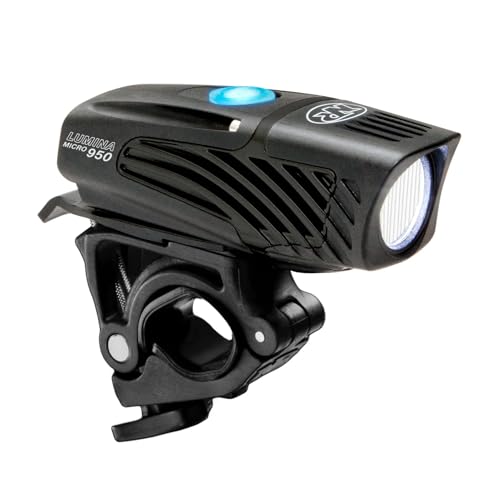
At 130 grams, the Lumina Micro 950 is the lighter of the two high-output front lights here. Five modes stretch run times from 2 to 41 hours, and it fits standard or oversized bars. The helmet-mountable form helps you aim light where you look.
Output950 lumens
Modes5
Runtime range2 to 41 hours
Weight130 grams
Pros
- Very light at 130 grams
- 41-hour maximum runtime
- Fits standard or oversized bars
Cons
- IP64 rating is lower than IP67
- Five modes is fewer than some rivals
Check price on Amazon ›
The Beamer 700 delivers 240 degrees of visibility to other traffic, which helps at junctions. Its Superflash Day mode runs up to 15 hours at 700 lumens. The A3 cam mount adjusts or removes without tools on bars from 22.0 to 31.8mm.
Output700 lumens
Visibility240 degrees
Day flash runtimeUp to 15 hours
Water resistanceIPX6
Pros
- 240-degree side visibility
- Tool-free cam mount
- Charges in 3.5 hours with included USB-C cable
Cons
- High mode runs 2.5 hours
- Lower output than the 800 and 950 lumen options
Check price on Amazon ›
The Macro Drive 1400+ pushes 1400 lumens in Over Drive mode with Tri-Focus Optics for a center spot inside a wide beam. Its 5200mAh battery reaches up to 300 hours in Femto mode. IPX7 waterproofing and a silicone strap suit varied bars.
Output1400 lumens
Modes7
Max runtime300 hours
Water resistanceIPX7
Pros
- Highest output in this lineup
- 300-hour Femto runtime
- IPX7 waterproof rating
Cons
- Charging cable not included
- Race Modes and power pack compatibility add complexity
Check price on Amazon ›
This Ascher set pairs a 1000-lumen aluminum-shell headlight with a red taillight, both Type-C rechargeable. The front battery runs 7 to 15 hours and the rear 6 to 12 hours. Four modes on each light keep operation simple.
Front output1000 lumens
Front battery4000 mAh
Rear battery400 mAh
Water resistanceIP65
Pros
- Front and rear included
- Long front run times
- Impact-resistant aluminum shell
Cons
- Front light weighs 5.9oz
- IP65 is below IP67
Check price on Amazon ›
The Esaytool taillight uses a 3D motion sensor to boost from 200 to 300 lumens when braking, with a 220-degree beam. Eight brightness levels and four modes give fine control. Auto on/off reacts to ambient light and motion.
Output200 lumens, 300 when braking
Beam angle220 degrees
Battery800 mAh
Water resistanceIP66
Pros
- Brake-sensing brightness boost
- Eight brightness levels
- Auto on at night, off in daylight
Cons
- Auto feature cannot be disabled
- Saddle mount only
Check price on Amazon ›
At just 17 grams, the Knog Plus is the lightest option here. COB technology makes it visible up to 450m, and it runs up to 40 hours per charge. It mounts to a seat post, seat stay, or clips onto clothing.
Weight17 grams
VisibilityUp to 450m
Max runtime40 hours
Water resistanceIP66
Pros
- Only 17 grams
- Clips to clothing or bags
- 40-hour runtime
Cons
- Rear light only
- Small body means less output than bigger taillights
Check price on Amazon ›
The Grid 2'Fer set includes a 175-lumen front and 55-lumen rear light. Color LEDs in the power button show battery level from green to red. Both meet the ANSI FL-1 standard and carry an IP-65 rating.
Front output175 lumens
Rear output55 lumens
Water resistanceIP-65
StandardANSI FL-1
Pros
- Color battery gauge on both lights
- Front and rear included
- Meets ANSI FL-1 standard
Cons
- Lower output than most front lights here
- Best suited to lit streets
Check price on Amazon ›
The Danger Zone uses two 0.5 watt Nichia red LEDs and runs up to 50 hours on two AAA batteries, which are included. It is the simplest light here: no charging cable, no app, no modes to learn. A solid backup or spare taillight.
LEDsTwo 0.5 watt Nichia red
Power2x AAA batteries included
Max runtime50 hours
Pros
- Up to 50 hours on AAA batteries
- Batteries included
- No recharging needed
Cons
- No USB charging
- Fewer features than rechargeable taillights
Check price on Amazon ›
What to look for
Front versus rear lighting
A commuter setup needs both ends covered. The front light lets you see the road and signals oncoming traffic, while the rear light is what drivers behind you notice first. Many riders buy a front light first and add a taillight soon after.
Why daytime flash modes matter
Most commuting happens in traffic, not on empty roads. Pulsing and flash modes stretch run times dramatically, like the 12-hour Daylighting mode on the Metro 800. A steady beam is for seeing; a flash mode is for being seen.
Waterproof ratings explained
IP ratings tell you how well a light handles water and dust. IPX7 and IP67 handle heavy rain and brief submersion, IP66 handles strong jets, and IP65 handles splashes. Any of these suits wet commutes; check the rating before buying.
Mounting and fit
Check that the mount fits your bars before ordering. Some lights use tool-free cam mounts for 22.0 to 31.8mm bars, others use silicone straps, and rear lights may be saddle-only or clip to clothing. Helmet-mountable front lights help you aim light where you look.
Frequently asked questions
How many lumens do I need for commuting?
A front light around 700 to 1000 lumens covers most commutes, with lower modes for lit streets. Rear lights in the 55 to 300 lumen range are typical. Run time and flash modes often matter more than peak output.
Do I need a front and rear light?
Yes. Front lights help you see and be seen by oncoming traffic, while rear lights alert drivers approaching from behind. A set like the Blackburn Grid 2'Fer covers both in one purchase.
How long do commuter bike lights last on a charge?
It varies widely by mode. The Cygolite Metro 800 runs 12 to 18 hours in its flash modes, the NiteRider Lumina Micro 950 reaches 41 hours, and the LEZYNE Macro Drive 1400+ reaches 300 hours in Femto mode.
Are these lights waterproof enough for rain?
The lights here carry ratings from IP65 to IPX7, which cover splashes through heavy rain. The Cygolite Metro 800 is IP67 and the LEZYNE Macro Drive 1400+ is IPX7, the highest rating in this lineup.
Can I mount a front light on my helmet?
The NiteRider Lumina Micro 950 is described as helmet-mountable, and its 130-gram body suits it. Check the mount hardware included with any light before relying on helmet mounting.
What is a brake-sensing taillight?
The Esaytool taillight uses a 3D motion sensor to boost output from 200 to 300 lumens when you brake. That extra brightness helps drivers behind you register that you are slowing down.
Should I use flash mode during the day?
Yes. Daytime flash modes are designed for visibility in traffic and usually run far longer than steady high modes. The Planet Bike Beamer 700 Superflash Day mode runs up to 15 hours at 700 lumens.
Do any of these lights use replaceable batteries?
The Portland Design Works Danger Zone runs on two AAA batteries, which are included, and lasts up to 50 hours. Every other light here is USB or USB-C rechargeable.
The verdict
Cygolite Metro 800 Lumen Bike Light
9.2/10/10
Start with the Cygolite Metro 800 for its long daytime flash modes and IP67 rating, then add a rear light such as the Knog Plus. If you want a lighter front light for helmet mounting, the NiteRider Lumina Micro 950 is the pick.
Check price on Amazon ›
Our top pick, secure checkout via Amazon
Note: Availability and specifications change often. Always confirm the current details on Amazon before buying.