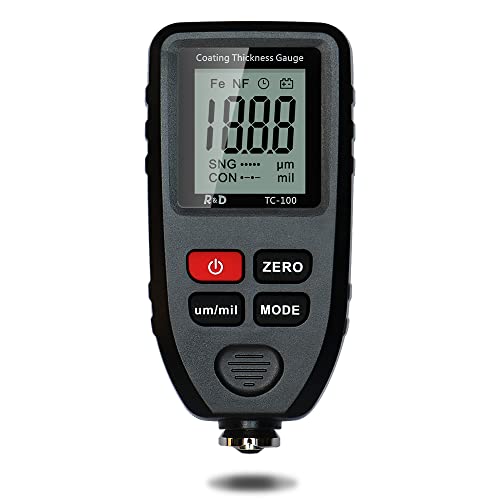
Electronics 8 Coating Thickness Gauges for Paint Layer Checks
P
By the Pickpedia Team
·6 picks compared
·Last verified October 2026
Affiliate disclosure: As an Amazon Associate, Pickpedia earns from qualifying purchases. Links on this page are paid links, and we may earn a commission at no extra cost to you. This never affects our picks or scores.
Quick answer
Pick a gauge with automatic Fe and NFe detection so one probe reads steel and aluminum panels. For used car inspection, choose factory calibrated meters with statistics and a wide micron range. Owners rely on these tools most for spotting repaint and filler on painted metal.
8 Coating Thickness Gauges for Paint Layer Checks at a glance
Why you can trust this guide
We compared these picks using verified manufacturer specifications, available manuals and documentation, current retailer listings, and patterns in owner feedback, alongside editorial research. We focus on measurable differences such as performance, capacity, usability, and build quality. Pickpedia does not present editorial research as laboratory testing, and we do not claim hands-on testing unless it was actually performed.
How we chose: We compared six coating thickness gauges, weighing substrate support, resolution, calibration, and how quickly each reads a panel.
Checking paint layers on a car or coated metal part comes down to trusting your readings. A good coating thickness gauge tells you whether a panel wears factory paint, refinished layers, or hidden filler. Most listings here promise automatic Fe and NFe detection, meaning one probe handles both steel and aluminum without manual switching.
We grouped these picks by real specifications and what owners report rather than lab claims we cannot verify. A couple of entries in this set are accessories rather than standalone gauges, so we flag that plainly. Read each summary and match the tool to the surfaces and workflow you actually inspect.
Our top picks
Built for corrosion protection work, this Gowe gauge measures coatings without damaging the surface. One probe reads both ferrous and non-ferrous substrates using magnetic induction and eddy current, selected manually or automatically. It stores 400 readings and shows five statistics, including average, max, min, and standard deviation. Bundled software and a USB cable let you move collected data to a computer for later analysis or printing. Calibration foils, iron and aluminum substrates, and a carrying case round out the kit. Reviewers note the older software workflow feels dated, so plan for a short setup before your first logged session.
Range0 to 1250um
SubstratesFerrous and non-ferrous
Memory400 readings
Data transferUSB and software CD
Pros
- Stores 400 readings with five statistics
- Single probe covers both metal types
- Ships with foils, substrates, and case
Cons
- Software workflow feels dated
- Requires calibration setup before use
Check price on Amazon ›
Simplicity drives the BUUBO 220H, which skips complicated calibration and asks only for a quick zero adjustment. Its digital probe identifies ferrous, non-ferrous, and non-metal substrates automatically, switching measurement modes in about half a second. Real-time temperature compensation aims to reduce error when ambient conditions shift, a useful touch for outdoor or workshop use. Owners describe a stable zero position and clear readings on painted metal. What you give up is depth: the listing focuses on core measurement and mentions no onboard statistics or data export. If you want fast spot checks without fuss, this meter keeps the process short and approachable.
SubstratesFe, NFe, non-metal detect
CalibrationZero adjustment only
Mode switchAbout 0.5 seconds
CompensationReal-time temperature
Pros
- No complex calibration required
- Fast automatic substrate switching
- Temperature compensation for accuracy
Cons
- No listed data export
- Fewer statistics than rivals
Check price on Amazon ›
RDINSCOS aims this mil gauge squarely at used car inspection, where consistent paint thickness across panels hints at accident history. Dual technology recognizes ferrous and non-ferrous substrates automatically, so steel doors and aluminum hoods both read without guesswork. Reviewers use it on cars, powder coated parts, anodized aluminum, bike frames, appliances, and more. A three-year replacement warranty backs the tool, which owners cite as reassurance for occasional users. The firm limitation is stated plainly: it works on metal substrates only and cannot read plastic, fiberglass, or wood. If most of your checks happen on painted metal panels, this gauge covers the core job cleanly.
DetectionAuto Fe and NFe
Best useAutomotive panels
WarrantyThree-year replacement
SurfacesMetal substrates only
Pros
- Automatic steel and aluminum detection
- Strong fit for panel inspection
- Backed by three-year replacement
Cons
- Metal substrates only
- Cannot read plastic or fiberglass
Check price on Amazon ›
Aimed at inspectors and detailers, the CM-208FN leans on fine resolution that steps from 0.001 mils on thin layers up through thicker ranges. An integrated ruby-tip sensor supports quick one-hand readings on flat and moderately curved surfaces. Magnetic induction and eddy current work together to identify steel and aluminum automatically, cutting manual switching and user error. Onboard statistics show average, minimum, maximum, and reading count, helping you judge coating uniformity across a panel. USB export moves data to a PC for documentation and comparison. Its stated comfort zone is flat to moderately curved metal, so tightly contoured edges may need extra care to read reliably.
Range0 to 2000um, 0 to 78 mils
ResolutionFrom 0.001 mils
SensorRuby-tip integrated probe
DataUSB export, statistics
Pros
- Very fine resolution on thin layers
- Ruby-tip sensor for one-hand use
- USB export with full statistics
Cons
- Best on flat to moderate curves
- Contoured edges need care
Check price on Amazon ›
The CM-205FN balances range, accuracy, and workflow, which lands it as our overall pick. Resolution reaches 0.1 micron with stated accuracy of plus or minus three percent plus two micron, covering doors, hood, roof, and fenders. It ships factory calibrated and ready after batteries, with a large backlit LCD that owners find easy to read. Automatic Fe and NFe detection suits modern cars mixing steel and aluminum body parts. Single mode handles spot checks while continuous mode scans large panels quickly to flag repaint or filler. One caveat: like the others, it reads metal substrates only, so plastic bumpers and trim fall outside its scope.
Range0 to 1500um, 0 to 59.1 mils
Resolution0.1 micron
AccuracyPlus or minus 3% plus 2um
ModesSingle and continuous
Pros
- Factory calibrated out of the box
- Single and continuous scan modes
- Automatic mixed-metal detection
Cons
- Metal substrates only
- Skips plastic and trim
Check price on Amazon ›
KREFINISH reaches to 2000 micron with stated accuracy of plus or minus three percent plus one micron and 1 micron resolution across its lower band. Separate F and N probe principles detect the substrate automatically, and the listing adds iron powder filler and iron-zinc coated recognition for trickier panels. Statistics cover average, min, max, and count, supporting consistent quality checks. Factory calibration, a high-contrast backlit screen, a battery indicator, and auto shutdown make daily use straightforward. As with its peers, non-metallic surfaces like plastic, fiberglass, and wood stay off limits. Reviewers who inspect coated metal regularly appreciate the added filler and zinc-coating recognition.
Range0 to 2000um
AccuracyPlus or minus 3% plus 1um
DetectionAuto Fe and NFe probes
ExtrasFiller and zinc recognition
Pros
- Recognizes filler and zinc coatings
- Clear stats for quality control
- Factory calibrated with auto shutdown
Cons
- Non-metal surfaces unsupported
- Resolution coarser on upper band
Check price on Amazon ›
What to look for
Why substrate detection matters
Cars mix steel doors with aluminum hoods, so a gauge that reads only one metal leaves gaps. Automatic Fe and NFe detection switches principles for you, using magnetic induction on ferrous metal and eddy current on non-ferrous. Every dedicated gauge here offers it, sparing you manual probe changes and reducing mistakes.
Calibration and setup effort
Some meters arrive factory calibrated and work right after batteries, while others expect a zero adjustment or foil calibration. First-timers usually prefer minimal setup, like the BUUBO 220H or the factory-ready CM-205FN. Shops logging formal data may accept extra steps in exchange for statistics and export.
Range and resolution
Thin factory paint needs fine resolution to reveal subtle differences, while heavy coatings need a wide micron ceiling. Gauges here span roughly 1250 to 2000 micron, with the CM-208FN stepping down to very small increments. Match the range to whether you check delicate repaint or thick industrial finishes.
Reading and recording data
Statistics such as average, minimum, maximum, and count help you judge whether a panel reads evenly. USB export, offered by the Gowe and CM-208FN, lets you document findings on a computer. Casual users may skip logging, but inspectors building reports will want it built in.
Frequently asked questions
What does a coating thickness gauge actually measure?
It reads how thick paint or coating sits on top of a metal substrate, usually in microns or mils, without damaging the surface underneath.
Can these gauges detect repaint on a used car?
Yes. Uneven readings across panels often signal refinished areas or filler, which is why owners lean on these tools during pre-purchase inspection.
Do I need separate probes for steel and aluminum?
No. Every dedicated gauge here uses automatic Fe and NFe detection, so one probe covers both ferrous and non-ferrous metal panels.
Will a gauge read paint on plastic bumpers?
No. These meters work on metal substrates only. Plastic, fiberglass, and wood fall outside their measurement principle and return no reliable result.
How much calibration do these need?
It varies. Several arrive factory calibrated and ready after batteries, while others ask for a quick zero adjustment or foil calibration before use.
Do these gauges work on both steel and aluminium panels?
Check the substrate support before buying. Ferrous and non-ferrous probes work differently, and several of these gauges are labelled FN, meaning they handle both. A ferrous-only unit will not read an aluminium panel at all, which matters on modern vehicles that mix the two.
What accuracy should I expect?
Listings quote figures around plus or minus three percent plus one to two micron. Treat these as manufacturer specifications rather than independently verified numbers.
Can I transfer readings to a computer?
Some can. The Gowe and CM-208FN list USB export with software, letting you document and compare readings for inspection reports.
The verdict
Gowe Digital Paint Coating Thickness Gauge...
8.7/10
For most buyers the CM-205FN stands out as our overall pick, pairing factory calibration with single and continuous modes for quick panel scans. Detailers wanting the finest resolution should look at the CM-208FN, while first-timers will find the BUUBO 220H the least fussy. Used car shoppers on a metal-only mission are well served by the RDINSCOS gauge.
Check price on Amazon ›
Our top pick, secure checkout via Amazon
Note: Availability and specifications change often. Always confirm the current details on Amazon before buying.