Home & Kitchen 7 Bread Proofing Boxes for Reliable Dough Rising
P
By the Pickpedia Team
·7 picks compared
·Last verified October 2026
Affiliate disclosure: As an Amazon Associate, Pickpedia earns from qualifying purchases. Links on this page are paid links, and we may earn a commission at no extra cost to you. This never affects our picks or scores.
Quick answer
For reliable dough rising, pick a proofer with steady temperature control, even heat, and good insulation. Heated folding boxes with an NTC sensor and multi-side warming suit sourdough bakers in cold kitchens. Bakers who only want to track rise can choose translucent containers with volume markings instead.
7 Bread Proofing Boxes for Reliable Dough Rising at a glance
Why you can trust this guide
We compared these picks using verified manufacturer specifications, available manuals and documentation, current retailer listings, and patterns in owner feedback, alongside editorial research. We focus on measurable differences such as performance, capacity, usability, and build quality. Pickpedia does not present editorial research as laboratory testing, and we do not claim hands-on testing unless it was actually performed.
How we chose: We compared 7 proofing options across temperature range, heating layout, insulation layers, capacity, and included accessories.
Dough rises best in a warm, stable, slightly humid space, and kitchen temperatures rarely cooperate. A dedicated proofing box removes that guesswork by holding a set temperature while your starter and loaves ferment. This roundup covers heated folding boxes, a mat-and-insulation bundle, and a set of tracking containers.
Every claim below is grounded in the listed specifications, not hands-on lab testing. We note capacity, heat distribution, timer length, and one honest limitation for each pick. Owners and reviewers report that consistent warmth matters more than any single feature, so match the range and size to your routine.
Our top picks
KomBella expands to roughly 23.6 by 15 by 12.2 inches, enough for a half sheet pan or two large baskets plus starter jars. An NTC sensor holds a set point across a 68 to 122 degrees Fahrenheit window, with a timer running up to 48 hours. Heat comes from three sides, left, right, and bottom, which reduces cold spots during long ferments. A 6-layer honeycomb structure keeps the walls sturdy and well insulated, then folds flat for storage. Its ceiling of 122 degrees sits a little below the warmest boxes here, so check your recipe target if you need high heat for yogurt.
Interior size23.6 x 15 x 12.2 in
Temp range68 to 122F
Timer0 to 48 hours
Insulation6-layer honeycomb
Pros
- Large capacity fits a half sheet pan or two baskets
- Three-sided heating limits cold spots
- Sturdy honeycomb walls that still fold flat
Cons
- Upper temperature range trails a few rivals
- Bulky footprint when set up
Check price on Amazon ›
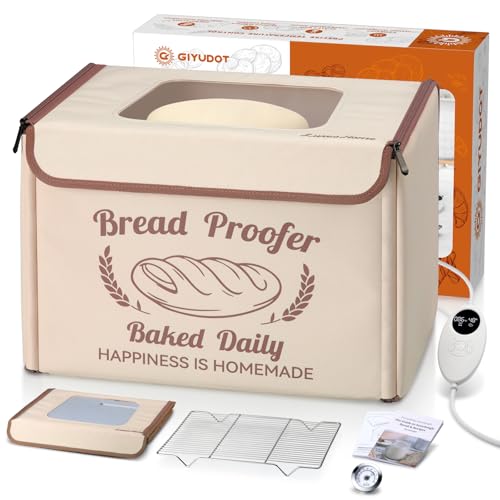
GIYUDOT pairs a 16 by 12 by 12 inch interior with three heating zones across the front, back, and bottom. You can dial 50 to 113 degrees Fahrenheit, run a timer up to 48 hours, and rely on an automatic shutoff at 131 degrees for safety. An acrylic viewing window lets you watch progress without lifting the lid, while five insulation layers and an NTC sensor hold the setting steady. The kit adds a stainless rack, a humidor, a manual, and a recipe guide, which suits newer bakers. Its ceiling of 113 degrees is lower than a couple of picks here, so very warm yogurt recipes may need patience.
Interior size16 x 12 x 12 in
Temp range50 to 113F
Timerup to 48 hours
Extrasrack, humidor, recipes
Pros
- Generous interior for multiple batches
- Clear window plus five insulation layers
- Includes rack, humidor, and recipe guide
Cons
- Top temperature caps at 113F
- Larger than compact single-jar proofers
Check price on Amazon ›
Brod and Taylor takes a different route with two 6L containers rather than a heated box. Translucent walls and volume markings show exactly when dough is ready, so you can nail timing without opening the lid. Each holds up to 3000 grams, and the wide base makes stretch and coil folds easy right inside. The sealing lid keeps moisture in to prevent a dry skin, and the low profile stacks neatly in a fridge or a folding proofer. BPA-free polypropylene resists stains and odors and is dishwasher safe. One caveat, these provide no heat, so you still need a warm spot or a separate proofer.
Capacity6L each, holds 3000g
Quantity2 containers
MaterialBPA-free polypropylene
Caredishwasher and freezer safe
Pros
- Volume markings make rise easy to judge
- Wide base suits folds inside the container
- Durable, stackable, and dishwasher safe
Cons
- No heating element of any kind
- Needs a warm space or separate proofer
Check price on Amazon ›
InnovifyHub stretches its range to 50 to 130 degrees Fahrenheit, higher than models that stop around 113. Surround heating across the front, back, and bottom targets the cold spots common in bottom-only warmers. A 24-hour countdown timer with an audible buzzer alerts you the moment a cycle ends, which helps prevent over-proofing. A one-touch Celsius and Fahrenheit switch matches any cookbook without conversion, and the interior fits two large mixing bowls or several bannetons. Five insulation layers and an NTC sensor keep warmth and humidity locked in, then it folds flat. The timer tops out at 24 hours, shorter than the 48-hour rivals here.
Temp range50 to 130F
Timerup to 24 hours
Heatingthree-sided surround
Insulation5-layer with NTC sensor
Pros
- Reaches a higher 130F ceiling
- Buzzer warns before over-proofing
- One-touch C and F switching
Cons
- Timer maxes out at 24 hours
- Large size needs drawer or shelf space
Check price on Amazon ›
Cozy Bread bundles a thermostat-controlled heating mat with a lightweight insulation box. Adjustable heat from the 10 by 21 inch mat works with the box to hold steadier proofing temperatures than oven-light or countertop workarounds. The mat warms in about one to two minutes, then the insulated cover retains that warmth around your dough, starter jar, or container. Setup is fast and hands-off, and the whole bundle stores easily when you are done. It suits bakers who want a dedicated warm environment without a bulky rigid box. Since the mat and box separate, this offers less enclosed structure than a folding proofer, so placement matters for even results.
Mat size10 x 21 in
Controladjustable thermostat
Warm-upabout 1 to 2 minutes
Designmat plus insulation box
Pros
- Compact and simple to store
- Mat warms in a minute or two
- Steadier than makeshift proofing spots
Cons
- Two-piece setup, less enclosed than a box
- Even results depend on placement
Check price on Amazon ›
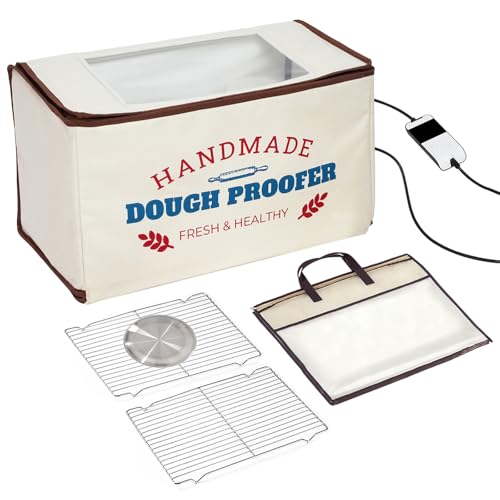
This folding box centers on a 12 by 12 by 12 inch interior with a window you can face forward or up. Front-facing works for watching a fermentation jar, while top-facing helps when you check a proofing bowl. Multiple heating zones warm the space quickly, the range runs 50 to 113 degrees Fahrenheit, and timers go up to 48 hours with an automatic shutoff at 131 degrees. Five insulation layers, a waterproof interior, and an NTC sensor keep ferments stable, and a stainless shelf prevents bottom overheating. The 12 inch cube fits jars or a single bowl well, though it is snug for very large or multiple loaves.
Interior size12 x 12 x 12 in
Temp range50 to 113F
Timerup to 48 hours
Windowfront or top facing
Pros
- Repositionable window for jars or bowls
- Waterproof interior wipes clean easily
- Stainless shelf guards against hot bottom
Cons
- Snug for large or multiple loaves
- Ceiling stops at 113F
Check price on Amazon ›
This kit combines a heated folding box with a full set of starter tools. Three heating zones cover the front, back, and bottom, the range spans 68 to 131 degrees Fahrenheit, and the timer runs an unusually long 99 hours with a safety shutoff at 194 degrees. Five insulation layers and a waterproof interior hold temperature steady, while a steel rack keeps dough off the hot base. The box ships with a proofing basket, metal scraper, a lame with five blades, and an ebook of nine recipes, so a beginner can start right away. A water tray adds humidity, and a clear panel shows progress. The bundled basket is a single size, which limits shaping variety.
Temp range68 to 131F
Timerup to 99 hours
Heatingthree-zone
Kitbasket, scraper, lame, rack
Pros
- Very long 99-hour timer for cold retards
- Complete starter tool kit included
- Wide 68 to 131F working range
Cons
- Single-size basket limits shaping options
- Full kit takes more storage space
Check price on Amazon ›
What to look for
Why a proofing box helps
Yeast and sourdough cultures work best in a warm, stable environment, which most kitchens cannot hold across seasons. A proofing box keeps a set temperature so rises stay predictable instead of stalling on a cold counter. That consistency shows up as better volume, texture, and timing on every bake.
Temperature range and control
Look at both the low and high ends of the range. Most boxes here run from around 50 to 113 degrees Fahrenheit, while a couple reach 130 or 131 for warmer recipes. An NTC sensor matters because it continuously reads air temperature and holds your setting, rather than simply heating on a fixed cycle.
Heating layout and insulation
Bottom-only warmers tend to leave cold spots, so three-sided or surround heating gives more even results. Insulation layers, often five or six, lock in warmth and humidity so the interior recovers quickly after you open the lid. Together these decide how stable the box stays through a long ferment.
Capacity, timers, and extras
Match interior size to your batches, from a single starter jar up to a half sheet pan or two baskets. Timers range from 24 hours to 99, which suits everything from quick proofs to cold retards. Bundled racks, baskets, and recipe guides add convenience, while heated boxes and plain tracking containers serve different needs.
Frequently asked questions
Do I need a heated box or just a container?
If your kitchen runs cold or swings with the seasons, a heated box holds a steady temperature that plain containers cannot. Translucent containers with volume markings are great for tracking rise, but they rely on a warm room or a separate proofer for heat.
What temperature is right for proofing dough?
Many bakers proof between about 75 and 85 degrees Fahrenheit for standard bread, though sourdough often prefers gentler warmth. Always follow your recipe, and use the box control to hold that target rather than guessing from the kitchen.
Why does even heating matter?
Bottom-only heat can create cold spots that make dough rise unevenly. Three-sided or surround heating spreads warmth around the dough, so the whole loaf ferments at a similar rate for more consistent results.
How important is the insulation rating?
Insulation layers keep temperature and humidity stable, especially when you open the lid to check progress. Boxes here use five or six layers, which helps the interior recover warmth quickly and hold your setting during long ferments.
Can these boxes make more than bread?
Yes, most heated boxes double as fermentation stations for yogurt, kefir, and kombucha, along with pizza dough and enriched doughs. A humidity tray and steady warmth make them useful well beyond a single loaf.
Are folding proofing boxes sturdy enough?
Folding designs pack flat for storage while staying rigid in use, thanks to honeycomb supports and multi-layer walls. Owners report they stay solid during proofing, though a fixed box may feel more substantial to some bakers.
How long can I run the timer?
Timers in this roundup range from 24 hours up to 99 hours. Longer timers suit cold retards and slow ferments, while shorter ones cover everyday proofing. Automatic shutoff features add a safety margin if you step away.
What accessories should come in the box?
A stainless rack that lifts dough off the base is common and useful. Some kits add a proofing basket, scraper, lame, humidor, and recipes, which lets a new baker start without buying extras separately.
The verdict
KomBella XL Foldable Bread Proofing Box, 2...
9.2/10
For most home bakers, the KomBella XL is our top pick, pairing the largest interior here with 6-layer honeycomb insulation, ideal for family batches. Cold kitchens benefit from InnovifyHub and its higher range with three-sided surround heating, while the all-in-one kit suits new sourdough bakers wanting every tool at once. Fridge proofers should grab the Brod and Taylor containers for tracking rise, and tight kitchens fit the compact Cozy Bread mat and box.
Check price on Amazon ›
Our top pick, secure checkout via Amazon
Note: Availability and specifications change often. Always confirm the current details on Amazon before buying.