Electronics 7 Auto Paper Feed Scanners for Stacks of Pages
P
By the Pickpedia Team
·7 picks compared
·Last verified October 2026
Affiliate disclosure: As an Amazon Associate, Pickpedia earns from qualifying purchases. Links on this page are paid links, and we may earn a commission at no extra cost to you. This never affects our picks or scores.
Quick answer
Pick an automatic feed scanner by stack size and speed. Epson ES-400 II suits most offices with a 50-sheet feeder and duplex scanning. ScanSnap iX1300 fits tight desks. Fujitsu fi-6140Z powers through heavy daily loads, while the Canon R10 travels light for on-the-go work.
7 Auto Paper Feed Scanners for Stacks of Pages at a glance
Why you can trust this guide
We compared these picks using verified manufacturer specifications, available manuals and documentation, current retailer listings, and patterns in owner feedback, alongside editorial research. We focus on measurable differences such as performance, capacity, usability, and build quality. Pickpedia does not present editorial research as laboratory testing, and we do not claim hands-on testing unless it was actually performed.
How we chose: We compared seven auto document feed scanners on feeder size, duplex speed, media handling, software, and reliability for stacks of pages.
Feeding pages one by one wastes hours, so an automatic document feeder changes how you clear a paper backlog. These scanners pull whole stacks through, capture both sides in one pass, and drop searchable files onto your computer or cloud. Choosing well comes down to how many pages you push through daily.
Our picks range from portable duplex units to a heavy-duty office workhorse. Some lean on space-saving footprints, others on barcode filing or flatbed versatility for bound books. Every claim here rests on published specifications and what reviewers and owners consistently report, not fabricated hands-on testing.
Our top picks
A 50-sheet automatic document feeder lets this Epson clear stacks quickly, and duplex capture reads both sides in one pass. ScanSmart software handles preview, automatic file naming, and sending straight to email or cloud services like Dropbox, Google Drive, and OneDrive. Optical character recognition turns scans into searchable PDFs or editable Word and Excel files. Auto crop plus blank page and background removal keep output clean. Included TWAIN driver ties it into most document management workflows. One drawback: it needs a computer connection rather than standalone scanning, so it stays tethered to a desk setup.
Feeder50-sheet ADF
ScanningColor duplex
SoftwareEpson ScanSmart, OCR
DriverTWAIN included
Pros
- Roomy 50-sheet feeder for stacks
- Searchable PDFs and editable files via OCR
- Sends direct to email and cloud
Cons
- Requires a computer connection
- No wireless option
Check price on Amazon ›
Space-saving design keeps this ScanSnap out of the way even mid-scan, a real help on a crowded desk. One touch starts duplex capture up to 30 pages per minute, with automatic de-skew, color optimization, and blank page removal handling quality for you. Connect over USB or Wi-Fi and send files to Mac, PC, mobile devices, Chromebook, or cloud services, even with no computer attached. ScanSnap Home software organizes documents, receipts, business cards, and photos in one place. It manages thick items and plastic cards too. The tradeoff is a smaller feeder capacity than office workhorses, so very large stacks need several loads.
SpeedUp to 30 ppm duplex
ConnectivityUSB and Wi-Fi
MediaDocuments, cards, photos
SoftwareScanSnap Home
Pros
- Compact, desk-friendly footprint
- Wireless and standalone scanning
- One-touch operation with auto adjustments
Cons
- Smaller feeder capacity
- Fewer advanced business drivers
Check price on Amazon ›
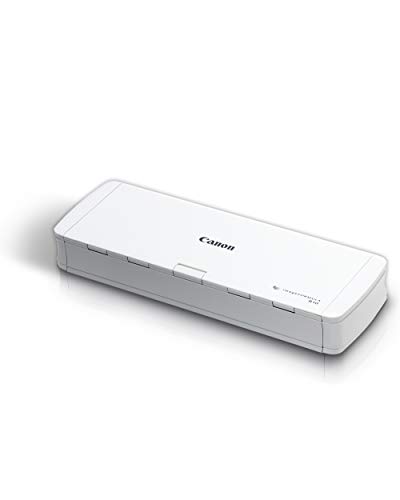
Weighing little and drawing power over USB, this Canon goes wherever you work, from home offices to classrooms. A 20-sheet feeder and duplex capture read both sides at once in color or black and white, up to 12 pages per minute. Built-in software needs no installation and updates itself, so setup stays painless. It digitizes receipts, business cards, plastic or embossed cards, reports, and legal documents into searchable PDFs and JPEGs. Works with both Windows and Mac. Energy draw sits at 2.5W or less. Its slower throughput and modest 20-sheet tray suit lighter loads more than constant high-volume filing.
SpeedUp to 12 ppm duplex
Feeder20-sheet ADF
PowerUSB powered, 2.5W or less
SoftwareBuilt-in, no install
Pros
- Lightweight and USB powered
- No-install built-in software
- Handles cards and mixed media
Cons
- Slower page throughput
- Small 20-sheet feeder
Check price on Amazon ›
Records-heavy offices get real filing muscle here. Duplex capture runs up to 30 pages per minute through a robust 50-sheet feeder, and paper handling stretches from plastic cards to documents as long as 200 inches. A built-in full text search engine compares every word of a query against scanned content, so a single term surfaces the right file. Barcode recognition can name files automatically, and DocAction II stores up to 255 customizable scan profiles triggered by one button. Software here targets organized document management over casual use, so the learning curve runs steeper than simpler one-touch scanners.
SpeedUp to 30 ppm duplex
Feeder50-sheet ADF
FilingBarcode naming, full text search
Profiles255 customizable
Pros
- Automatic barcode file naming
- Full text search across scans
- Handles very long documents
Cons
- Steeper software learning curve
- Aimed at filing over quick jobs
Check price on Amazon ›
Pairing a flatbed with an automatic feeder gives this Visioneer Xerox real range. Loose stacks feed through the ADF at up to 25 pages per minute or 50 images per minute at 300 dpi, while the flatbed handles bound books, fragile photos, and cards that a feeder cannot pull. Maximum feeder paper size reaches 8.5 by 118 inches, so long sheets fit. A compact 15.8 by 13 by 5 inch body keeps the dual design reasonably tidy. Included drivers cover PC and Mac. Its throughput trails dedicated feed scanners, and the flatbed adds bulk you skip on pure ADF units.
SpeedUp to 25 ppm / 50 ipm at 300 dpi
DesignFlatbed plus ADF
Max ADF size8.5 x 118 inches
Body15.8 x 13 x 5 inches
Pros
- Flatbed handles books and photos
- Feeder clears loose stacks
- Compact for a combo unit
Cons
- Slower than pure feed scanners
- Bulkier than ADF-only models
Check price on Amazon ›
Cloud-first users get plenty here. Duplex capture reads both sides in color up to 23 pages per minute through a 20-sheet feeder, then routes files straight to Dropbox, Google Drive, OneDrive, Box, QuickBooks Online, Evernote, or SharePoint. Nine configurable Magic Button profiles trigger routines with a single press. It converts paper into searchable PDFs and JPEGs, and handles receipts, photos, business cards, plastic or embossed cards, and long documents. A bundled business card organizer rounds out the software. Feeder capacity stays modest at 20 sheets, so large batches need repeated loading rather than one long run.
SpeedUp to 23 ppm / 46 ipm duplex
Feeder20-sheet ADF
CloudDropbox, Drive, OneDrive, more
Buttons9 Magic Button profiles
Pros
- Direct scan to many cloud apps
- Configurable one-press profiles
- Includes card organizer software
Cons
- Modest 20-sheet capacity
- Speed trails office workhorses
Check price on Amazon ›
Heavy daily loads meet their match in this Fujitsu. Capture races along at 60 pages per minute or 120 images per minute in color, grayscale, and monochrome, and still holds 40 pages per minute for full color at 300 dpi. Ultrasonic Intelligent MultiFeed detection catches double-fed pages before they cause errors, and Advanced Paper Protection guards against jams that damage originals. A robust 50-sheet feeder keeps stacks moving through long sessions. Reviewers point to its endurance under sustained volume. Built as a serious office tool, it carries a larger footprint and a more industrial feel than compact home scanners.
Speed60 ppm / 120 ipm
Color 300 dpi40 ppm / 80 ipm
Feeder50-sheet ADF
ReliabilityiMFF and paper protection
Pros
- Very fast sustained throughput
- Ultrasonic double-feed detection
- Paper protection guards originals
Cons
- Larger, industrial footprint
- More than casual users need
Check price on Amazon ›
What to look for
Match feeder size to your stacks
Feeder capacity decides how often you reload. A 20-sheet tray suits light, occasional batches, while a 50-sheet feeder clears bigger piles without babysitting. Departments pushing hundreds of pages daily want the largest tray plus proven endurance, so a heavy-duty unit pays back in saved reloads.
Why duplex scanning matters
Every model here captures both sides in a single pass, which roughly halves the time on two-sided documents. Look at the duplex speed rating in pages and images per minute, since a fast simplex number can hide slower two-sided performance. For mixed paperwork, steady duplex throughput matters more than a headline figure.
Software, OCR, and where files land
A scanner is only as useful as its output. Optical character recognition turns images into searchable PDFs and editable text, which transforms an archive you can actually find things in. Check whether it sends straight to your email and cloud apps, and whether filing extras like barcode naming or saved profiles fit how you work.
Media types and durability
Think beyond plain paper. If you scan plastic cards, receipts, photos, or bound books, confirm the unit handles them, and note that a flatbed companion covers items a feeder cannot pull. For constant use, features like double-feed detection and paper protection reduce jams and guard originals over the long haul.
Frequently asked questions
What does an automatic document feeder actually do?
An automatic document feeder, or ADF, pulls a whole stack of pages through the scanner one after another without you placing each sheet by hand. You load the tray, press start, and the scanner captures every page, which is what makes clearing large piles practical.
Is duplex scanning worth it?
Yes, for anyone handling two-sided documents. Duplex capture reads both sides in one pass instead of two, so it saves time and keeps pages in order. Every scanner in this roundup offers duplex, which has become standard for document work.
Can these scanners create searchable PDFs?
Several can, using optical character recognition to turn scanned images into text you can search and copy. The Epson ES-400 II, Canon R10, and IRIScan Pro 5 all convert scans to searchable PDFs, and some export editable Word or Excel files too.
Do I need a computer to use them?
It depends on the model. The ScanSnap iX1300 can scan without a computer over Wi-Fi to mobile or cloud destinations. Others, like the Epson ES-400 II, connect to a computer to operate, so check connectivity before buying.
Which one is best for a tight desk?
The ScanSnap iX1300 uses a space-saving design meant to stay out of the way even while scanning. For dual duty in a compact body, the Visioneer Xerox combo packs a flatbed and feeder into a 15.8 by 13 by 5 inch frame.
Can they scan photos, cards, or books?
Many handle more than paper. The ScanSnap and IRIScan units take plastic cards, receipts, and photos, while the Visioneer Xerox flatbed adds bound books and delicate originals a feeder cannot safely pull through.
How fast are they really?
Speeds range widely across these picks. The Canon R10 runs up to 12 pages per minute, mid-range units land near 23 to 30, and the Fujitsu fi-6140Z reaches 60 pages per minute in monochrome, based on published specifications.
What prevents jams and misfeeds?
Reliability features help under heavy use. The Fujitsu fi-6140Z uses ultrasonic detection to catch double-fed pages and paper protection to guard originals, which owners running large volumes tend to value most over long sessions.
The verdict
Epson Workforce ES-400 II High-Speed Color...
9.2/10
For most offices, the Epson Workforce ES-400 II hits the sweet spot with a 50-sheet feeder, duplex capture, and strong OCR software. Tight desks favor the wireless ScanSnap iX1300, and travelers want the featherweight Canon R10. Heavy daily volume belongs to the Fujitsu fi-6140Z with its speed and paper protection, while the Visioneer Xerox suits anyone mixing loose stacks with books and photos. Pick by your real workload.
Check price on Amazon ›
Our top pick, secure checkout via Amazon
Note: Availability and specifications change often. Always confirm the current details on Amazon before buying.