Lenses 4 70-200mm Lenses for Reach and Sharp Detail
P
By the Pickpedia Team
·4 picks compared
·Last verified October 2026
Affiliate disclosure: As an Amazon Associate, Pickpedia earns from qualifying purchases. Links on this page are paid links, and we may earn a commission at no extra cost to you. This never affects our picks or scores.
Quick answer
A 70-200mm lens gives flexible reach for portraits, events, and wildlife without swapping glass. Pick f/2.8 for low light and background separation, or a lighter f/4 for travel and long handheld days. Match the mount to your camera, then weigh weight against aperture.
4 70-200mm Lenses for Reach and Sharp Detail at a glance
Why you can trust this guide
We compared these picks using verified manufacturer specifications, available manuals and documentation, current retailer listings, and patterns in owner feedback, alongside editorial research. We focus on measurable differences such as performance, capacity, usability, and build quality. Pickpedia does not present editorial research as laboratory testing, and we do not claim hands-on testing unless it was actually performed.
How we chose: We lined up four 70-200mm lenses across Canon, Sony, Sigma, and Nikon mounts, focusing on aperture, stabilization, focus speed, and weather sealing.
A 70-200mm zoom is the workhorse most photographers reach for after their first kit lens. It covers tight portraits, sideline sports, stage work, and distant detail, all from one barrel. Reviewers note that constant aperture across the range keeps exposure steady while you zoom.
Choosing between them comes down to how you shoot. Faster f/2.8 glass isolates subjects and holds up in dim rooms, while f/4 versions stay lighter for handheld travel. Mount compatibility, stabilization, and autofocus motor design separate these four picks.
Our top picks
Built for Canon digital SLR bodies, this f/4 telephoto keeps weight down while holding a constant aperture through the range. Fluorite and UD elements are engineered for strong resolution and contrast, based on the specifications. A ring-type ultrasonic motor drives quick, quiet autofocus, and the image stabilizer claims up to four stops of shake correction for handheld work. Water and dust resistant construction suits outdoor use. The closest focus sits near 3.94 feet, so tight close-ups need distance. As a renewed unit, cosmetic condition may vary between listings, and the f/4 aperture gathers less light than f/2.8 rivals in dim rooms.
Focal length70 to 200mm
Maximum aperturef/4
StabilizationUp to 4 stops
Closest focus3.94 feet
Pros
- Lightweight for a telephoto zoom
- Quick, quiet USM autofocus
- Water and dust resistant build
Cons
- f/4 gathers less light than f/2.8
- Renewed condition varies by listing
Check price on Amazon ›
Sigma rounds out its F2.8 DG DN full-frame mirrorless trio with this telephoto, available for Sony E-mount and L-Mount. A High-response Linear Actuator drives autofocus, which reviewers expect to track moving subjects smoothly. Dust and splash resistant construction reflects the weather resistance of Sigma's Sports line, based on the specifications. The constant f/2.8 aperture separates subjects cleanly and helps in low light. Owners looking at f/2.8 telephotos should note these lenses tend to run heavier and larger than f/4 alternatives, so all-day handheld shooting asks more of your arms. Confirm the mount version matches your camera before ordering.
Focal length70 to 200mm
Maximum aperturef/2.8
MountsSony E and L-Mount
SealingDust and splash resistant
Pros
- Bright constant f/2.8 aperture
- Fast HLA autofocus motor
- Sports-line weather resistance
Cons
- Heavier than f/4 options
- Must match the correct mount
Check price on Amazon ›
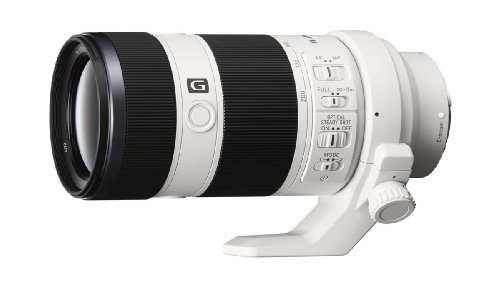
Sony's G-series interchangeable telephoto pairs with Alpha cameras and carries built-in OSS stabilization. Minimum focus runs about 1 to 1.5 meters in autofocus, giving useful working distance for portraits and details, based on the specifications. Maximum magnification reaches 0.13x, so it frames subjects rather than filling the frame like a macro. The f/4 aperture keeps the barrel manageable for travel and long walks. Reviewers see it as a balanced everyday choice within the Sony system. Because this is a renewed listing, condition and included accessories can differ, and the f/4 opening trails brighter f/2.8 glass when light drops indoors.
Focal length70 to 200mm
Maximum aperturef/4
Minimum focus1 to 1.5 m (AF)
Max magnification0.13x
Pros
- Compact for travel and daily use
- Built-in OSS stabilization
- Native Sony Alpha compatibility
Cons
- Modest 0.13x magnification
- Renewed condition may vary
Check price on Amazon ›
This fast G-type Nikkor holds a constant f/2.8 aperture across its 2.9x telephoto range, so exposure stays put while you zoom. Vibration Reduction offers the equivalent of a shutter speed three stops faster, which helps handheld shooting in dim settings, based on the specifications. A built-in Silent Wave Motor drives fast, quiet autofocus, and five ED glass elements target higher optical performance. The bright aperture separates subjects for portraits and events. Owners note that f/2.8 telephotos of this class are substantial to hold for extended sessions, and the distinctive white finish draws attention in crowds where you may prefer to blend in.
Focal length70 to 200mm
Maximum aperturef/2.8
StabilizationVR, 3 stops
GlassFive ED elements
Pros
- Bright constant f/2.8 aperture
- Fast, quiet Silent Wave AF
- Five ED elements for optics
Cons
- Heavy for long handheld sessions
- White finish stands out
Check price on Amazon ›
What to look for
Aperture decides your look
A constant f/2.8 opening gathers more light and blurs backgrounds harder, which suits indoor events and portraits. An f/4 version trims weight and bulk while still covering most daylight work. Decide how often you shoot in dim rooms before paying for the brighter glass.
Match the mount first
These lenses split across Canon DSLR, Sony Alpha, and Nikon DSLR systems, with Sigma offered in E-mount and L-Mount. A lens will not mount or communicate properly on the wrong system. Always confirm the exact mount against your camera body before ordering.
Stabilization earns its keep
Image Stabilizer, OSS, and VR systems all claim several stops of shake correction, letting you shoot slower shutter speeds by hand. That matters at 200mm, where small movements magnify into blur. Reviewers lean on stabilization for handheld events and travel.
Weight versus weather sealing
Faster f/2.8 telephotos add heft but often bring stronger dust and splash resistance for tough conditions. Lighter f/4 designs favor comfort on long walks. Weigh how much you carry against where you shoot to land on the right balance.
Frequently asked questions
What is a 70-200mm lens best for?
It covers portraits, events, sports, stage work, and distant detail from one zoom. The reach compresses backgrounds flatteringly while keeping you at a comfortable distance from subjects.
Should I pick f/2.8 or f/4?
Choose f/2.8 for low-light rooms and stronger background blur. Pick f/4 when you want a lighter lens for travel and long handheld days, based on the specifications.
Do these work on any camera?
No. Each lens targets a specific mount, such as Canon DSLR, Sony Alpha, or Nikon DSLR. Sigma's version comes in E-mount and L-Mount, so verify compatibility first.
Is stabilization necessary at this range?
It helps a lot. At 200mm, small hand movements blur shots, so IS, OSS, or VR systems claiming several stops make handheld shooting more reliable.
What does renewed mean here?
Renewed listings are inspected and restored units. Cosmetic condition and included accessories can vary between sellers, so read each listing carefully before buying.
How close can these focus?
The Canon focuses near 3.94 feet and the Sony from about 1 to 1.5 meters in autofocus. They frame subjects well but are not macro lenses.
Are f/2.8 lenses too heavy for travel?
They run heavier and larger than f/4 versions. If you walk long distances, the lighter f/4 options feel more comfortable over a full day.
Why is one Nikon lens white?
The finish reflects heat during long outdoor use, a common trait on telephoto glass. It performs the same optically but stands out more in a crowd.
The verdict
Canon EF 70-200mm f/4 L IS USM Lens (Renew...
9.0/10
For most mirrorless shooters, the Sigma f/2.8 stands out with bright aperture, fast focus, and Sports-line sealing across two mounts. Nikon DSLR owners get similar low-light reach with strong optics and VR. Prefer lighter kit? The Canon f/4 travels easily, and the Sony f/4 keeps Alpha bodies compact. Match the mount, then let aperture and weight guide your final call.
Check price on Amazon ›
Our top pick, secure checkout via Amazon
Note: Availability and specifications change often. Always confirm the current details on Amazon before buying.